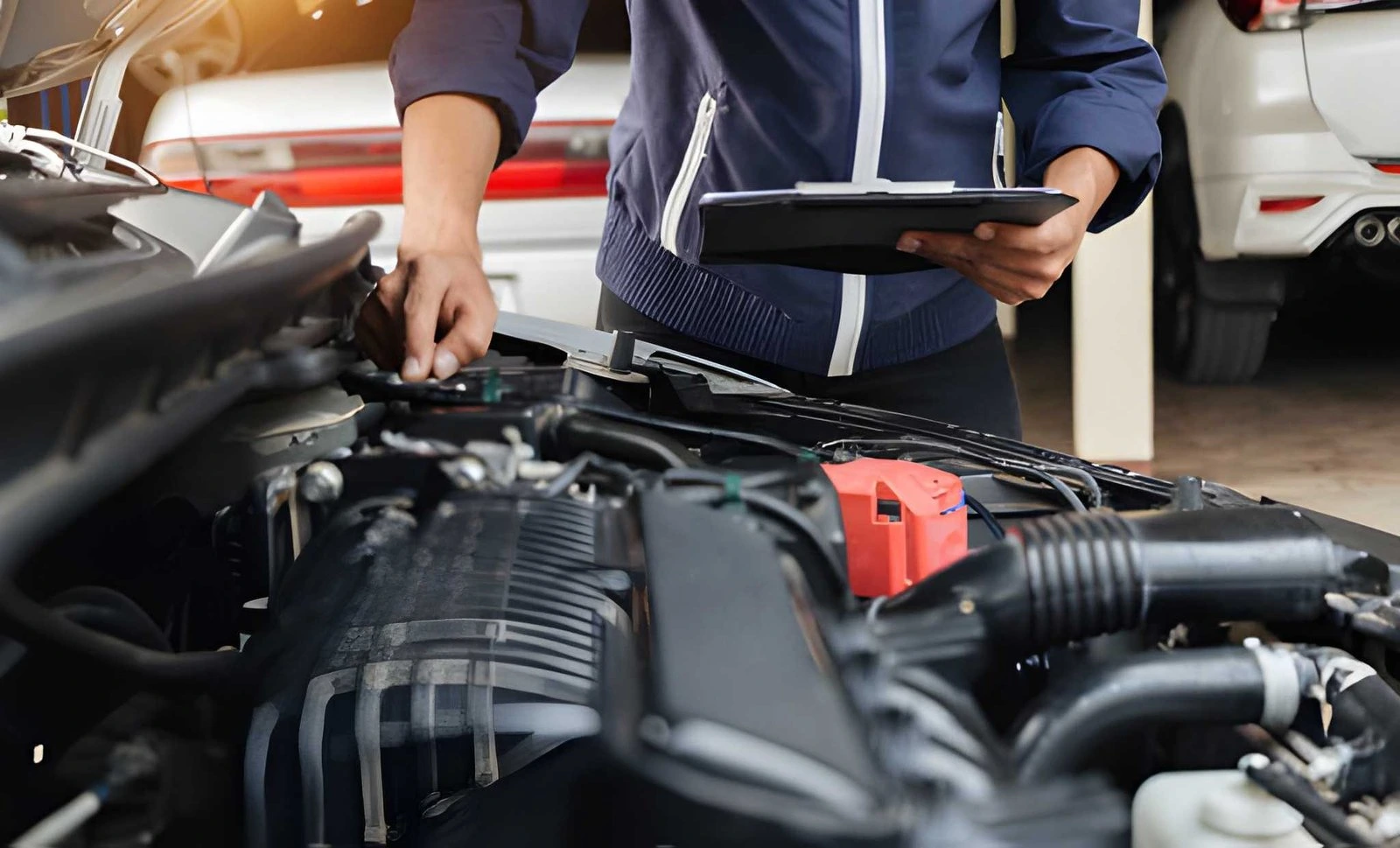
A pre inspection car checklist in Dubai covers two layers — what you can check yourself before booking a professional inspection, and what only a workshop finds on the lift. Car Garage Expert in Al Quoz runs full pre-purchase inspections covering paint thickness, fault history, odometer consistency, chassis integrity, engine and transmission assessment, and a written report. Here is the complete buyer’s guide for Dubai’s used car market.
Pre Inspection Car — What to Check Yourself First
Used car sellers in Dubai know exactly what to clean, what to hide, and what to fix cosmetically before a buyer arrives.
Fresh tyres give the impression of a well-maintained car. A professional detail makes a neglected interior look showroom-fresh. Fault codes cleared the day before make the dashboard scan clean.
A structured pre inspection car checklist — starting before you even book a professional inspection — puts the advantage back with the buyer.
Step 1 — Verify the VIN Before Anything Else
The 17-digit Vehicle Identification Number is stamped on the chassis, displayed on the dashboard near the windscreen, and printed on the registration card. All three must match.
A mismatched VIN means the registration card doesn’t belong to the car. A missing chassis stamp or one that looks disturbed means the vehicle may have been involved in serious structural damage or had its identity altered.
Check the VIN on the UAE Ministry of Interior vehicle inquiry portal or the RTA registration system before travelling to see the car. It takes two minutes and confirms ownership, registration status, and whether any traffic fines or loans are outstanding on the vehicle.
Step 2 — Read the Panel Gaps Before You Open a Door
Walk slowly around the car before touching anything. Look at the gaps between every adjacent panel — door to front wing, bonnet to wing, boot to rear quarter.
Factory panel gaps are consistent and even. A repaired panel rarely returns to exactly the original gap tolerance. Uneven gaps, especially if one side is tighter than the other, indicate a panel replacement or a repair that shifted the panel’s position.
This takes thirty seconds and doesn’t require any tools. It’s the first physical indicator of accident history before a paint thickness gauge is even applied.
Step 3 — Check the Jambs and Shuts
Open every door, the bonnet, and the boot lid. Look at the paint inside the jamb — the area between the door edge and the body.
Factory paint covers the jamb consistently. A repainted door or quarter panel often shows a colour or texture difference in the jamb — because overspray masking doesn’t always reach inside, or because the painter didn’t bother painting the jamb since it’s not visible when the door is closed.
A jamb that’s a slightly different shade than the outer panel means the outer panel was resprayed. This is the simplest indicator of body repair that requires no specialist equipment.
Step 4 — Inspect the Engine Bay With a Torch
A clean engine bay can mean well-maintained or recently pressure-washed before a sale. Both look identical.
What to check: consistent paint overspray lines along the inner wings — factory overspray follows consistent lines, a resprayed front end shows different spray patterns. Check the engine mounts for cracks. Look at the radiator support frame for straightening marks or welded repairs. Check all rubber hoses for cracking.
A front-end impact that was repaired properly and repainted still leaves traces in the engine bay paint and the radiator support area. This check is part of any proper pre inspection car process.
Step 5 — Start the Engine Cold
Arrange to see the car first thing in the morning before it’s been started. A cold start is the most honest engine assessment a buyer gets.
Listen for the first five seconds — a healthy engine starts cleanly with no abnormal noise. A timing chain rattle that clears in ten seconds is an early warning on TSI, N20, or N47 engines. A diesel knock that doesn’t clear in thirty seconds suggests injector wear. Blue smoke from the exhaust on cold start means oil burning — worn valve seals or piston rings.
Let the engine warm up and watch the temperature gauge. It should rise steadily to the normal range and hold there. A gauge that climbs past the midpoint and continues suggests a cooling fault. One that never reaches the midpoint means a thermostat stuck open.
Step 6 — Test Drive With Purpose, Not Pleasure
A test drive in an unfamiliar car is exciting. That excitement is what sellers count on.
Drive it with a checklist. From a standstill — does the transmission engage smoothly or shudder? In stop-start traffic — does it hunt between gears or hesitate? At 80 km/h on a straight road — does it pull to one side without steering input? Under braking — does the pedal feel firm or spongy, does the car pull left or right?
A pull under braking means brake pad wear is uneven or a caliper is sticking. A steering pull without braking means geometry is out. A transmission shudder from standstill on a VW or Kia with a dual-clutch box means clutch wear. These aren’t pass-or-fail issues necessarily — but they’re repair costs to factor into the offer price.
Pre Inspection Car — What Only a Workshop Finds
Paint Thickness — the Accident Map
The checks above tell you something may be wrong. A paint thickness gauge tells you exactly where.
Factory paint reads 90–150 microns across all panels. A resprayed panel reads 200–400 microns or more. Body filler underneath a respray reads even higher. Applied to every panel systematically, the gauge produces a map of every repair the car has had — regardless of how good the bodywork looks visually.
A pre inspection car at Car Garage Expert includes paint thickness measurement across all painted surfaces. A reading of 380 microns on the left rear quarter and factory readings everywhere else tells you exactly what happened and where — before you’ve committed to anything.
Full Fault History Scan — What Was Cleared Before Listing
Current fault codes can be cleared in thirty seconds with any OBD scanner. What can’t be erased is the fault occurrence counter that manufacturer-level diagnostic platforms retain.
Every time a fault stores, it’s counted — even if cleared. A gearbox fault stored and cleared nineteen times means the transmission has a real, recurring issue that was hidden before listing. An airbag fault stored thirty-eight times means the SRS system may not function correctly in a collision.
Our pre inspection car diagnostic scan reads all modules — engine, transmission, ABS, airbag, body control, and chassis — using brand-compatible platforms. ISTA for BMW, XENTRY-compatible for Mercedes, ODIS for VW and Audi, Techstream for Toyota and Lexus. The fault history tells the car’s story more honestly than the service book does.
Chassis and Underbody — the View Nobody Takes
The underbody reveals what a car park inspection never shows.
Structural repairs to chassis rails, subframe mounting points, and floor pan sections are visible from underneath on a lift. A cosmetically perfect exterior can hide significant structural repairs that a respray and detail have made invisible from above.
We inspect the full underbody during a pre inspection car visit — chassis rails, subframe, suspension pickup points, floor pan, and sill structure. Straightening marks, welded repair sections, and underseal applied to cover repairs all show clearly when someone is specifically looking for them.
Odometer Module Cross-Check
Modern vehicles store mileage in multiple control modules independently. A tampered odometer on the cluster doesn’t automatically update every module.
A pre inspection car diagnostic scan reads the mileage recorded in the instrument cluster, the ECU, and the body control module separately. A cluster showing 55,000 km while the BCM reads 130,000 km is visible immediately. A consistent reading across all three modules confirms the mileage is genuine.
On high-demand models in Dubai — Patrol, Land Cruiser, Prado, Tahoe — mileage tampering is a documented market issue. A module cross-check during a pre inspection car costs nothing extra and takes minutes.
Cooling System and Fluid Condition
A seller who changes the engine oil and coolant before listing hides their condition. A pressure test doesn’t lie.
We pressure-test the cooling system at every pre inspection car visit — holding pressure for a set period to reveal slow leaks invisible to the eye. Coolant condition is tested with a refractometer for inhibitor strength. Old coolant that looks fine can be corrosive to aluminium engine components — the colour alone doesn’t tell the story.
Brake fluid moisture content is measured with a tester. High moisture means the fluid hasn’t been changed in years and the boiling point has dropped. On a vehicle being presented as well-maintained, high moisture brake fluid says the maintenance history isn’t what the service book shows.
Where to Get a Pre Inspection Car Done in Al Quoz
The garage near me choice for a pre inspection car matters as much as the inspection itself. A workshop with brand-compatible diagnostic platforms, a paint thickness gauge, and a lift for underbody inspection produces a different result from a visual walk-around at the kerbside.
Car Garage Expert handles pre inspection car visits for buyers across Dubai — Jumeirah, Business Bay, Downtown, Sheikh Zayed Road, Satwa, and nearby areas. Arrange to meet the seller here, or have the car brought to us before the sale is finalised.
Our qualified car mechanic team handles every fault category identified in the pre inspection — mechanical, electrical, and structural — so if the car needs work, you have an immediate repair quote alongside the inspection report.
The car service packages cover ongoing maintenance for the vehicle once purchased — the same inspection standards applied at every scheduled service.
If the vehicle can’t be driven to us, our roadside assistance covers Al Quoz and nearby Dubai areas.
Need bodywork repaired after purchase? Our car painting team handles everything from stone chip touch-ups to full panel resprays with correct OEM paint codes.
And for buyers whose seller is located across Dubai, our mobile car mechanic service brings a technician to the vehicle’s location for an initial assessment before it comes into the workshop.
Frequently Asked Questions
What is a pre inspection car check in Dubai?
A structured assessment of a used vehicle before purchase — covering paint, faults, chassis, engine, transmission, and odometer consistency.
Can I do a pre inspection car check myself?
Partially — VIN check, panel gaps, jamb paint, cold start, and test drive are all DIY steps; paint thickness, fault history, and underbody inspection require workshop equipment.
How much does a pre inspection car service cost in Dubai?
AED 400–600 depending on vehicle type — recoverable many times over in negotiation leverage alone.
Does a pre inspection car check detect odometer tampering?
Yes — reading mileage across multiple control modules identifies inconsistencies that a cluster-only check misses.
How long does a pre inspection car take?
Two to three hours including road test, lift inspection, diagnostic scan, and written report.
Book a Pre Inspection Car at Car Garage Expert, Al Quoz
Car Garage Expert serves Dubai used car buyers across Al Quoz, Jumeirah, Business Bay, Downtown, Sheikh Zayed Road, Satwa, and nearby areas.
Full pre inspection car with paint thickness mapping, fault history scan, odometer module cross-check, chassis inspection, engine and transmission assessment, and a written report before any money changes hands.
Buying a car this week? Message us directly on WhatsApp to book your appointment — bring the seller’s car in or arrange for a mobile inspection at their location.
📍 Find us on Google Maps — Al Quoz, Dubai.
Car Garage Expert — pre inspection car specialists in Al Quoz, Dubai.