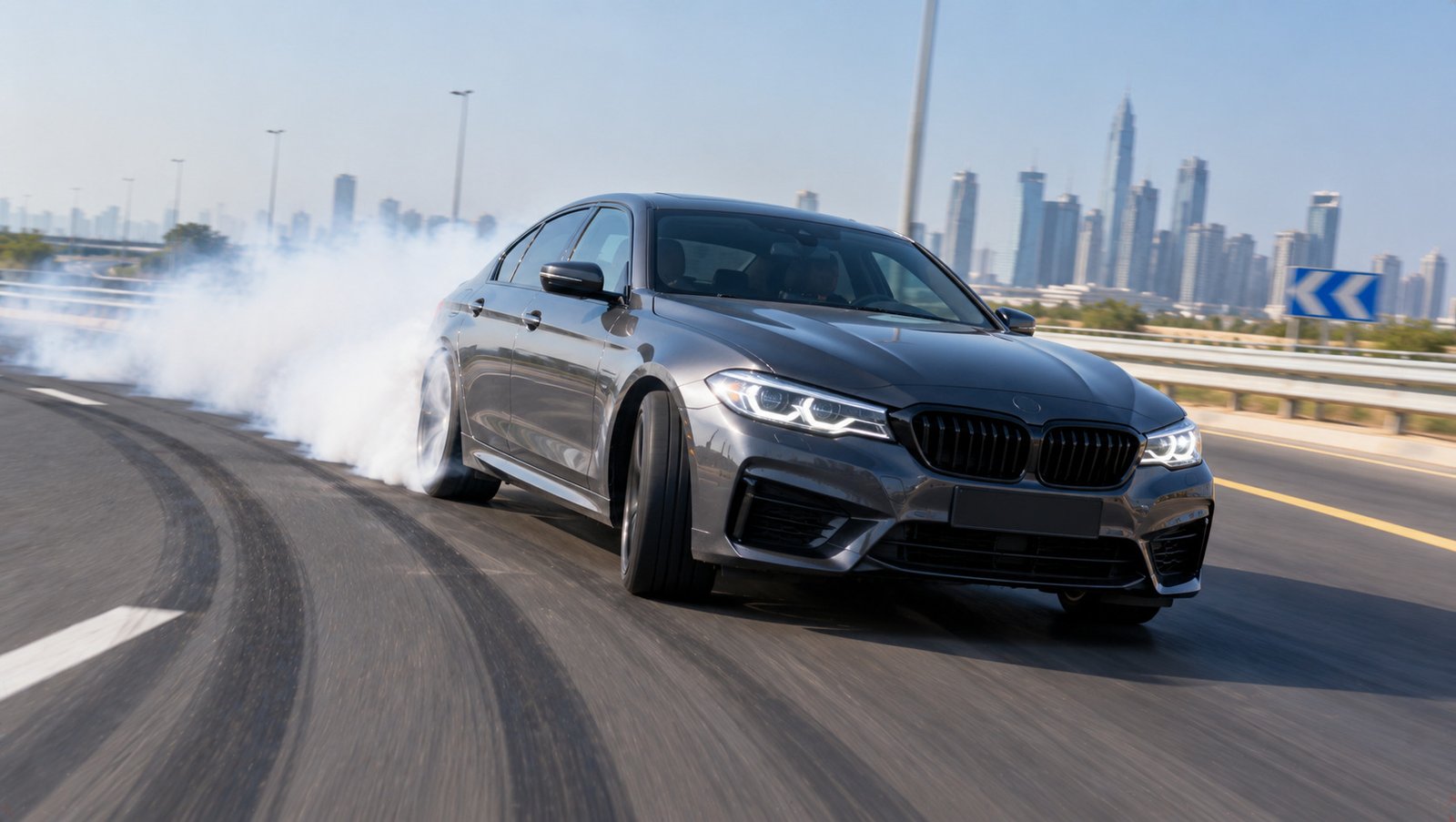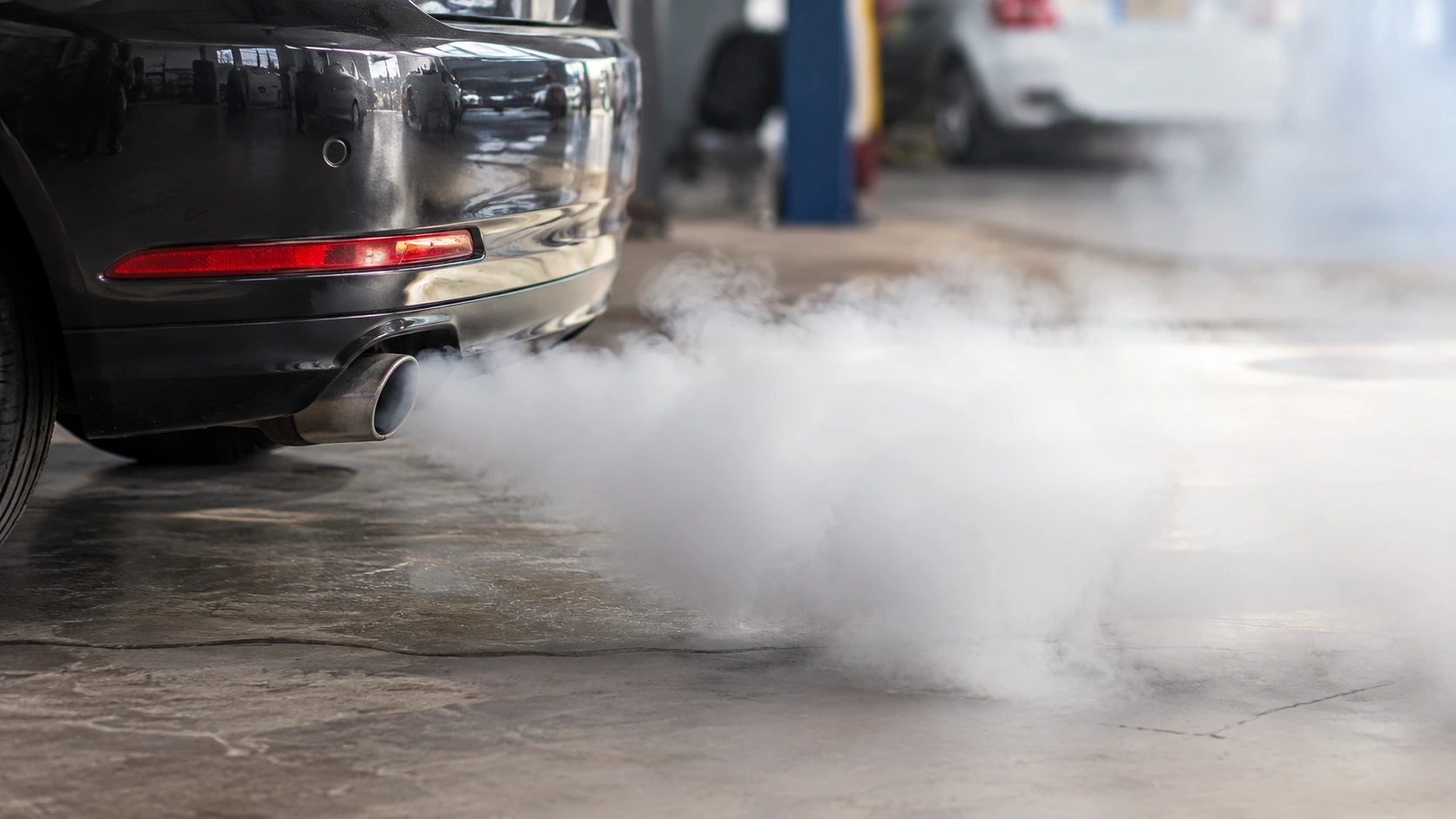
White smoke coming from your exhaust is one of those symptoms that either means nothing at all or means something very serious — and the difference between those two outcomes comes down to a few specific details you can observe from the driver’s seat. White smoke from exhaust that appears briefly on a cold morning and vanishes within a minute is harmless condensation burning off. White smoke that persists after the engine has warmed up, appears thick and continuous, or carries a sweet smell is coolant entering the combustion chamber — a fault that gets significantly more expensive the longer it continues.
At Rapid Rev Garage, our specialist engine repair in Dubai team diagnoses the exact cause before recommending any repair. This guide explains everything you need to know about white exhaust smoke, from the harmless to the urgent.
White Smoke from Exhaust — Quick Answer
Thin, wispy white smoke on a cold start that disappears within 60–90 seconds is normal condensation and requires no action. Thick, persistent white smoke with a sweet smell after the engine is warm almost always means coolant is burning inside the engine — most commonly from a blown head gasket, cracked cylinder head, or cracked engine block. This is serious. Stop driving as soon as it is safe to do so, check your coolant level, and do not continue driving if the level is low or the temperature gauge is rising. Get the car to a workshop for a combustion gas test before the repair bill multiplies.
The exhaust system releases the byproducts of combustion — what happens when the engine burns air and fuel together. Under normal conditions, these byproducts are water vapour, carbon dioxide, and a small amount of unburned hydrocarbons. The exhaust should appear colourless or very faintly grey in most conditions.
White smoke appears when something other than fuel is burning in the combustion chamber — specifically, when coolant has found a path into the cylinder where it vaporises and exits through the exhaust. The key question is always how that coolant got there, because that answer determines the repair.
The Difference Between Normal and Abnormal White Smoke
Before diagnosing anything, it helps to understand that not every white exhaust emission is a problem. The distinction is specific and observable.
Normal Condensation on Cold Starts
Water vapour naturally condenses in the exhaust system overnight, particularly in Dubai’s morning humidity. When the engine starts cold, this condensation burns off as thin, white steam. It looks like smoke but has no smell, disappears completely within 60–90 seconds of the engine warming up, and requires no attention whatsoever. Many owners misidentify this as a symptom and bring their car in unnecessarily — which is why the warm-up test matters before any diagnosis.
Abnormal Persistent White Smoke
Abnormal white smoke is thick, billowing, and continuous — it does not clear as the engine warms up, it often carries a sweet or slightly chemical smell (the smell of ethylene glycol coolant burning), and it typically accompanies other symptoms like a rising temperature gauge, a coolant reservoir that keeps needing topping up, or milky residue on the oil dipstick. This is the category that requires immediate action.
Causes of White Smoke from Exhaust
The causes of persistent white smoke from exhaust all share one thing in common — coolant has entered the combustion chamber or the exhaust system and is being burned. The specific entry point determines which component has failed.
Blown Head Gasket
The head gasket sits between the cylinder head and the engine block, sealing the combustion chambers from the coolant passages that run alongside them. A blown head gasket is the single most common cause of persistent white smoke from exhaust, and in Dubai’s heat it’s a fault we see regularly — because overheating is the primary cause of head gasket failure, and Dubai’s conditions accelerate overheating risk across the board.
How a Blown Head Gasket Produces White Smoke
When the gasket fails, coolant breaches the seal and seeps into one or more combustion chambers. The extreme heat and pressure of combustion vaporises the coolant instantly, and it exits through the exhaust as thick white smoke. The sweet smell comes from the ethylene glycol additive in the coolant burning alongside the fuel.
Why Dubai Overheating Makes This More Common Here
The head gasket is rated to withstand specific temperature and pressure limits. When an engine overheats — even briefly, even just once — those limits are exceeded and the gasket can be permanently compromised. Dubai’s heat, combined with stop-start traffic and the sustained AC load that raises engine thermal load, creates conditions where head gasket failure from overheating happens earlier on the vehicle’s life here than in cooler markets.
Cracked Cylinder Head
The cylinder head sits on top of the engine block and contains the combustion chambers, valve seats, and coolant passages. A crack — usually caused by thermal stress from overheating — allows coolant to leak directly into the combustion chamber or exhaust port. The symptoms are nearly identical to a blown head gasket: persistent white smoke, sweet smell, and falling coolant level.
How to Tell a Cracked Head From a Blown Gasket
Both faults produce the same visible symptoms and can only be reliably distinguished through a combustion gas test and, in some cases, cylinder pressure testing. A crack that isn’t identified and repaired correctly produces the same white smoke symptoms after a head gasket replacement, which is why proper diagnosis matters before any component is replaced.
Cracked Engine Block
A crack in the engine block is less common than a head gasket or cylinder head failure, but it’s the most serious of the three. Coolant passages run through the block, and a crack allows coolant into the oil passages or the cylinder bore. Milky, creamy engine oil — caused by coolant and oil mixing — is often the first indicator, alongside persistent white smoke.
Why This Outcome Is More Expensive Than the Others
A cracked block often cannot be economically repaired and typically requires engine replacement rather than repair. This is why continuing to drive with white exhaust smoke, and the overheating that causes it, is so costly — what starts as a head gasket fault that’s repairable becomes a cracked block scenario that isn’t.
Intake Manifold Gasket Failure
On some engine designs — particularly older V-configuration engines and certain GM V6 platforms common in the UAE market — the intake manifold gasket can fail and allow coolant to enter the intake ports and reach the combustion chambers. The symptom is the same: white smoke with a sweet smell. The repair is generally less involved than a head gasket job, but the correct diagnosis is essential before any teardown begins.
Turbocharger Coolant Seal Failure
Modern turbocharged engines — which now represent most new vehicles sold in Dubai — have coolant-cooled turbochargers. If the internal coolant seals in the turbocharger fail, coolant enters the exhaust housing and exits as white smoke. This is specific to turbocharged vehicles and is often accompanied by a loss of boost pressure or an unusual sound from the turbocharger.
Why Turbocharged Engines Need Correct Oil Change Intervals for Turbo Health
Degraded oil contributes directly to turbocharger seal wear, because the turbo bearing relies on clean oil for lubrication and cooling. In Dubai’s heat, with short-trip commuting that degrades oil faster than the service reminder indicates, turbocharger coolant seals are under additional stress that correct, timely oil changes directly reduce.
Symptoms That Accompany White Smoke from Exhaust
White smoke rarely appears in isolation. The combination of symptoms is what confirms the diagnosis and its urgency.
Falling Coolant Level
A coolant reservoir that needs topping up regularly — more than a very small amount over many thousands of kilometres — indicates an active coolant loss. When combined with white exhaust smoke, it confirms the coolant is going somewhere internal rather than leaking externally.
Milky or Creamy Oil on the Dipstick
Coolant mixing with engine oil produces a milky, coffee-coloured residue on the dipstick or under the oil filler cap. This is a serious finding — oil contaminated with coolant loses its lubricating properties, and bearing damage from contaminated oil happens quickly.
Sweet Smell From the Exhaust
Ethylene glycol, the main component of most coolants, has a distinctive sweet, slightly syrupy smell when it burns. If you can smell something sweet from the exhaust or outside the car after driving, that’s coolant burning — even if the white smoke itself isn’t thick enough to be clearly visible yet.
Rising Temperature Gauge
Coolant entering the combustion chamber means less coolant available in the cooling circuit to manage engine temperature. A temperature gauge that runs higher than its normal position, or that climbs during stop-start traffic, often accompanies the other symptoms above.
Our car mechanic team reads all of these symptoms together alongside diagnostic data — not just the visible smoke — before confirming which component has failed.
Diagnostic Process
Accurate diagnosis of white exhaust smoke requires specific tests, not an assumption based on the symptom alone. Two faults that look identical from the outside — a blown head gasket and a cracked cylinder head — need different repairs and sometimes different parts.
Combustion Gas Test
A chemical test of the coolant reservoir detects combustion gases that have entered the coolant system through a breach in the head gasket or cylinder head. This is the fastest and most reliable first test — it confirms internal coolant burning within minutes without any disassembly.
Cooling System Pressure Test
A pressure test of the cooling circuit, held at operating pressure for a timed interval, confirms whether the system is losing pressure internally. Combined with the combustion gas test, it identifies whether coolant is entering the combustion chamber, the oil system, or both.
Cylinder Compression and Leak-Down Testing
Individual cylinder compression readings identify which cylinder or cylinders are affected. A leak-down test — pressurising each cylinder and measuring how much pressure escapes, and where it goes — pinpoints the specific failure point between the combustion chamber and the coolant or oil passages.
Repair Process
The repair required depends on which specific component the diagnosis confirms has failed. No repair is recommended at Rapid Rev Garage until the diagnostic tests above have identified the precise fault.
Head Gasket Replacement
This is the most common repair following a white smoke diagnosis. The cylinder head is removed, the head gasket replaced, and the cylinder head surface inspected and resurfaced if necessary before reassembly. The cooling system is then pressure-tested to confirm the repair is complete before the vehicle is returned.
Cylinder Head Repair or Replacement
If the cylinder head itself is cracked or warped beyond the tolerance for surface resurfacing, the head is replaced rather than repaired. The engine is then reassembled and pressure-tested.
Turbocharger Replacement
For turbocharger coolant seal failure, the turbocharger is replaced and the oil and coolant lines inspected for any contamination from the failed unit.
Risks of Ignoring White Smoke from Exhaust
The progression from a blown head gasket to a cracked engine block is not theoretical — it’s the direct consequence of continuing to drive with persistent white exhaust smoke.
Coolant Contaminating the Engine Oil
Once coolant enters the oil circuit, the oil’s lubricating properties are compromised. Bearings, camshafts, and valve train components all rely on clean oil for protection. A head gasket fault that’s ignored long enough to contaminate the oil can cause bearing failure that makes the engine uneconomical to repair.
Complete Engine Overheating and Seizure
The coolant that’s being burned in the combustion chamber is no longer available to cool the engine. As coolant level falls, overheating risk increases. An engine that seizes from overheating caused by a head gasket fault that was never repaired is a total loss — the cost of replacement is many times what the head gasket repair would have been.
For immediate recovery if the car is unsafe to drive, our roadside assistance covers Al Quoz and nearby Dubai areas.
Can You Continue Driving?
The answer depends entirely on which category of white smoke you’re seeing.
Normal Cold-Start Condensation
If the smoke disappears completely within 90 seconds of the engine starting and the coolant level is correct, you can drive normally. There is nothing to repair.
Persistent White Smoke After Warm-Up
Stop driving as soon as it is safe to do so. Check the coolant level — if it is low, do not add cold coolant to a hot engine; wait until the engine is completely cool. Do not continue driving to “get to a workshop” if the temperature gauge is climbing. Recovery is safer than driving through an overheating event.
Prevention Tips
Preventing the faults that cause white exhaust smoke comes down to two consistent habits.
Keep Coolant in Good Condition
Coolant should be tested for concentration and replaced every two years — not just topped up. Old, acidic coolant corrodes the aluminium components in the engine and cooling system, weakening the head gasket over time.
Address Overheating Immediately
Every overheating event risks head gasket damage. A temperature gauge that reaches the red zone once, even briefly, warrants a cooling system inspection before the next drive. Our car service packages include a cooling system pressure test and coolant concentration check at every scheduled visit.
Dubai-Specific Advice
Dubai’s heat makes the causes of white exhaust smoke more common and more urgent than in moderate climates. An engine that overheats here can reach damaging temperatures faster than the driver has time to respond, which is why the temperature gauge deserves active attention rather than an occasional glance.
Any vehicle parked in direct sun accumulates underbonnet heat before the engine even starts. The cooling system is already managing elevated temperatures from the first moment of driving, which means any existing weakness — a slightly degraded head gasket, a marginal coolant level — manifests faster here than it would in a cooler climate. For exterior repairs needed alongside mechanical work, our car painting team handles colour-matched work at the same visit.
Why Rapid Rev Garage?
We confirm the cause before recommending any repair. A combustion gas test and cooling system pressure test happen on every white smoke diagnosis before any component is identified for replacement — because a head gasket replacement on an engine with a cracked head solves nothing, and a head gasket replacement when the actual fault is a turbocharger seal wastes the owner’s money completely.
Our mobile car mechanic covers Al Quoz and nearby Dubai areas for on-site initial assessment if the car cannot safely be driven in.
FAQ — White Smoke from Exhaust
These are the questions that come up most often when drivers notice white smoke from exhaust for the first time.
Is white smoke from exhaust always serious?
Not always — thin white steam on a cold start that disappears within 90 seconds is normal condensation and requires no repair. Thick, persistent white smoke after the engine is warm is serious and requires immediate diagnosis.
What does sweet-smelling white exhaust smoke mean?
The sweet smell is ethylene glycol from the coolant burning in the combustion chamber — it almost always indicates a blown head gasket, cracked cylinder head, or cracked block.
Can I drive with white smoke coming from my exhaust?
Only if it's cold-start condensation that clears quickly. Persistent white smoke after warm-up means stop as soon as safely possible — continuing risks engine seizure or catastrophic damage.
How long does a head gasket repair take?
Typically two to four days including cylinder head inspection, resurfacing if required, reassembly, and cooling system pressure testing to confirm the repair before the vehicle is returned.
Why does my oil look milky along with the white smoke?
Coolant has entered the oil system through the head gasket breach or a crack — this is urgent, because oil contaminated with coolant loses its lubricating properties and bearing damage follows quickly.
Conclusion
White smoke from exhaust that persists after the engine is warm is your car communicating a specific, serious fault — coolant is burning in the combustion chamber. The exact cause can be a blown head gasket, a cracked cylinder head, a cracked block, an intake manifold gasket failure, or a turbocharger seal failure. Only a combustion gas test and cooling system pressure test identify which one. Acting on the symptom early keeps the repair manageable. Ignoring it turns a head gasket job into an engine replacement.
Rapid Rev Garage is in Al Quoz, serving drivers across nearby Dubai areas — Business Bay, Jumeirah, Downtown, Barsha, Satwa, and the Sheikh Zayed Road corridor. Find us through garage near me searches, book your appointment on WhatsApp, or find us on Google Maps.
Rapid Rev Garage — White Smoke from Exhaust | Al Quoz, Dubai