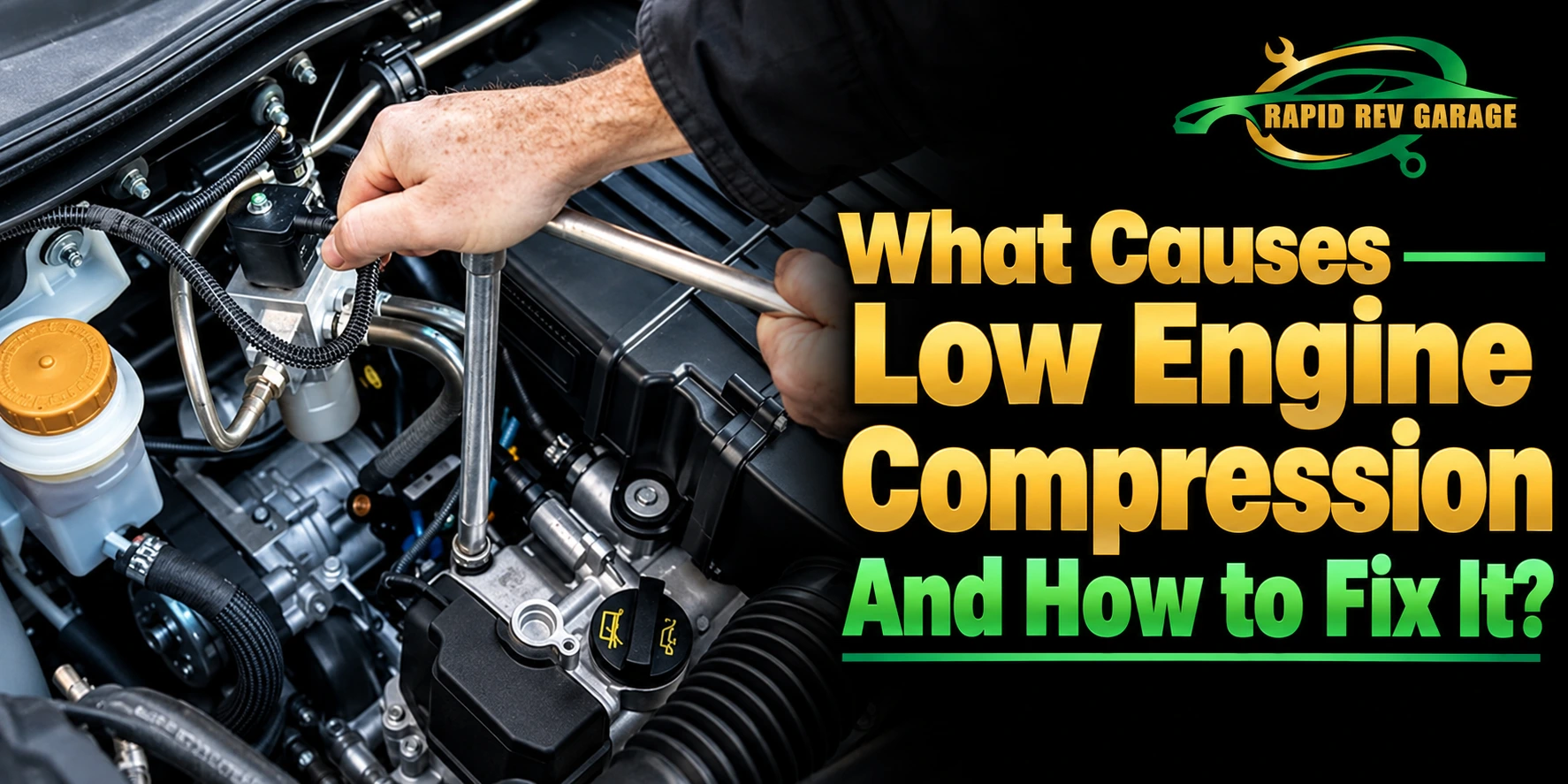
Low engine compression means one or more engine cylinders cannot build enough pressure during the compression stroke. This can happen because of worn piston rings, damaged pistons, burnt or stuck valves, a failed head gasket, or timing problems. Common signs include rough idling, misfires, weak acceleration, hard starting, high oil use, and poor fuel economy. A compression test helps find the weak cylinder. A wet compression test and leak-down test can then help identify whether the problem is in the rings, valves, piston, or head gasket. The correct repair depends on the cause and may range from valve work to an engine rebuild.
Table of Contents
- Problem Overview
- Symptoms
- Common Causes
- Diagnostic Process
- Repair/Service Process
- Risks of Ignoring It
- Can You Continue Driving?
- Repair/Service Time
- Cost Factors
- Estimated Repair Cost
- Prevention Tips
- Dubai-Specific Advice
- Why Choose Rapid Rev Garage for Engine Compression Repair?
- FAQs
- Related Services
- Final Thoughts
Problem Overview: What Does Low Engine Compression Mean?
An engine needs good compression to burn the air-fuel mixture correctly. Each cylinder must seal properly while the piston moves upward.
When low engine compression occurs, the cylinder loses some of the pressure needed for combustion. The result can be a weak engine, a misfire, or even a car that will not start.
A small difference between cylinders may not cause an immediate breakdown. A large difference is more serious.
The exact acceptable compression level varies by engine. More important is the difference between cylinders. Many engines should stay within roughly 10–15% of each other, but the vehicle manufacturer’s specification should always be used.
Symptoms of Low Engine Compression You Should Watch For
The symptoms depend on how much compression has been lost and which cylinder is affected.
Common warning signs include:
- ⚠️ Rough or shaky idle
- ⚠️ Engine misfires
- ⚠️ Poor acceleration
- ⚠️ Loss of engine power
- ⚠️ Difficult starting
- ⚠️ Higher fuel consumption
- ⚠️ Increased oil consumption
- ⚠️ Blue or white exhaust smoke
- ⚠️ Check engine light
- ⚠️ Uneven engine sound
- ⚠️ Engine vibration
- ⚠️ Low performance under load
A low engine compression problem can also create a cylinder-specific misfire code. For example, a P0301 code may point to a misfire on cylinder 1.
However, a misfire code does not automatically mean the engine has a mechanical compression problem. Spark, fuel, wiring, and sensor faults can cause similar symptoms.
Common Causes of Low Engine Compression
Worn or Damaged Piston Rings
Piston rings help seal the gap between the piston and cylinder wall. When they wear, combustion pressure can escape into the crankcase. This can also increase oil consumption.
Burnt or Stuck Valves
A valve must close tightly during compression. A burnt, bent, or stuck valve can allow pressure to escape. This type of valve problem can sometimes cause a low engine compression reading on one cylinder.
A valve issue may need cylinder head removal and valve repair or replacement.
Damaged Piston
A cracked, damaged, or badly worn piston can cause a major loss of compression. This is more serious and may require extensive engine work.
Blown Head Gasket
The head gasket seals the cylinder head to the engine block. If it fails between cylinders or into another passage, compression can escape. In some cases, a blown head gasket can leak compression into the cooling system.
Look for overheating, coolant loss, bubbles in the coolant reservoir, or white exhaust smoke.
Timing Chain or Timing Belt Problems
The camshaft controls when the valves open and close. If the timing belt or chain jumps, valve timing can become incorrect. This can reduce compression across several cylinders.
Cylinder Head Damage
A warped or cracked cylinder head can prevent the engine from sealing correctly. This can happen after severe overheating.
Diagnostic Process: How Mechanics Find the Real Problem
Testing should come before major engine repairs.
Step 1: Scan for Fault Codes
A diagnostic scan checks for stored misfire and engine fault codes. A cylinder misfire caused by low compression may appear alongside codes such as P0301, P0302, P0303, or P0304.
The code is a clue, not the final diagnosis.
Step 2: Perform a Compression Test
A compression gauge is fitted to each cylinder. The engine is then cranked so the technician can record the pressure. The readings are compared with each other and with the manufacturer’s specifications.
Step 3: Compare the Cylinders
The technician looks for a major difference between cylinders.
| Cylinder | Compression Reading | Possible Meaning |
|---|---|---|
| 1 | 175 PSI | Normal |
| 2 | 172 PSI | Normal |
| 3 | 105 PSI | Possible mechanical fault |
| 4 | 174 PSI | Normal |
One weak cylinder needs further testing.
If two side-by-side cylinders have low readings, a head gasket problem becomes one possibility. It is not proof by itself.
Step 4: Perform a Wet Compression Test
A small amount of engine oil is added to the weak cylinder before repeating the compression test. If the PSI jumps significantly, worn piston rings or cylinder-wall wear become more likely.
If the reading changes very little, a valve or head-gasket problem may be more likely. This is one way to understand whether low engine compression is related to piston-ring sealing.
Step 5: Perform a Cylinder Leak-Down Test
A leak-down test sends compressed air into the cylinder while the piston is positioned correctly. The technician listens for where the air escapes.
- Air from the intake = possible intake valve leak
- Air from the exhaust = possible exhaust valve leak
- Air from the oil filler = possible piston ring or cylinder wear
- Bubbles in coolant = possible head gasket or cylinder head problem
Knowing how to do a cylinder leak down test is useful for diagnosis, but this test should be performed by a trained technician with the correct equipment.
Repair/Service Process: How Low Compression Is Fixed
There is no single repair for low engine compression. The repair depends on what the tests find.
If the Problem Is the Valve
The cylinder head may need to be removed. The valve can then be inspected, repaired, or replaced.
If the Problem Is the Head Gasket
The cylinder head and gasket are inspected. The head may need machining before a new gasket is fitted. The cooling system should also be checked for damage caused by overheating.
If the Problem Is Piston Rings
The engine may need partial or complete disassembly. Depending on the condition, technicians may replace piston rings, inspect cylinder walls, and replace other worn parts.
If the Problem Is a Damaged Piston
A damaged piston normally requires major engine work. The affected piston and related components must be inspected before the repair plan is approved.
If the Problem Is Engine Timing
A timing belt or chain issue may be much simpler to repair if no internal engine damage has occurred. The timing system should be checked before assuming that the engine needs rebuilding.
Risks of Ignoring Low Engine Compression
Ignoring a compression problem can make a small mechanical fault much more expensive.
Possible risks include:
- More severe misfires
- Poor fuel economy
- Catalytic converter damage
- Increased oil consumption
- Overheating
- Reduced engine life
- More internal engine damage
- Complete engine failure
A persistent misfire should not be ignored.
Can You Continue Driving With Low Engine Compression?
It depends on how severe the problem is. A vehicle with a mild compression difference may still drive. However, continued driving can worsen the underlying fault.
Do not keep driving if the engine is shaking badly, losing major power, overheating, producing heavy smoke, or flashing the check engine light.
If the car cannot be driven safely, use roadside assistance instead of risking further engine damage.
Cost Factors for Low Engine Compression Repair
The cost depends on what caused the compression loss. A simple timing problem can cost far less than an engine rebuild.
The main cost factors include:
- Vehicle make and model
- Engine size
- Number of damaged cylinders
- Valve damage
- Piston condition
- Piston-ring wear
- Head gasket condition
- Cylinder head machining
- Replacement parts
- Labor time
- Additional damage from overheating
Estimated Repair Cost
| Service or Repair | Estimated Cost in Dubai |
|---|---|
| Basic engine diagnostic | AED 150–300 |
| Compression testing | AED 150–400 |
| Leak-down testing | AED 250–600 |
| Valve-related repair | AED 1,500–4,500+ |
| Head gasket repair | AED 2,500–7,000+ |
| Piston/ring repair | AED 4,000–10,000+ |
| Major engine rebuild | AED 6,000–15,000+ |
These are broad estimates, not fixed quotes. Luxury, European, turbocharged, and high-performance engines can cost much more.
For comparison, Rapid Rev Garage currently states that compression-related repairs can range from about AED 2,000 to AED 12,000 depending on the extent of the repair.
Prevention Tips for Better Engine Compression
You cannot prevent every internal engine failure, but good maintenance can reduce the risk.
Engine Maintenance Checklist
- ✅ Change engine oil on schedule
- ✅ Use the correct oil grade
- ✅ Check coolant regularly
- ✅ Never ignore overheating
- ✅ Replace spark plugs when required
- ✅ Keep the air filter clean
- ✅ Inspect timing belts at the recommended interval
- ✅ Check for oil and coolant leaks
- ✅ Investigate repeated misfires
- ✅ Do not continue driving with severe engine symptoms
Regular servicing is especially important for cars used in heavy Dubai traffic.
Dubai-Specific Advice for Engine Compression Problems
Dubai’s hot weather puts extra stress on cooling and engine systems.
Long periods of idling, traffic, high temperatures, and repeated short trips can expose existing engine weaknesses.
Overheating deserves special attention. Excessive heat can damage head gaskets, cylinder heads, valves, and other internal components.
If your car starts losing power after running for a long time in traffic, do not assume the problem is only the air conditioning system.
A proper engine compression test can help separate a mechanical engine fault from an ignition, fuel, or sensor problem.
If you are searching ‘garage near me‘, choose a workshop like Rapid Rev Garage that can perform both compression and leak-down testing rather than simply replacing parts based on a fault code.
Why Choose Rapid Rev Garage for Engine Compression Repair in Dubai?
Rapid Rev Garage provides engine diagnostics and repair services in Dubai, including compression-related engine work. Its workshop is in Al Quoz, and the company also promotes mobile diagnostics and emergency assistance.
The important point is proper diagnosis.
A compression problem should not be treated by guessing which part has failed. The team should first identify the weak cylinder, confirm the pressure loss, and determine whether the cause is the piston rings, valves, head gasket, timing system, or another internal issue.
Rapid Rev Garage also recommends a diagnostics-first approach instead of replacing parts without confirming the fault. For a serious low engine compression problem, this type of testing can help prevent unnecessary parts replacement and give the owner a clearer repair estimate.
Relevant Service Page
Our engine repair and diagnostic services help identify the cause of low compression, misfires, power loss, and difficult starting. Our technicians use proper testing methods to inspect the engine before recommending repairs. This helps you avoid unnecessary part replacements and understand the condition of your vehicle. Visit our Engine Repair Service Page to learn more about our services and book an inspection with Rapid Rev Garage.
Related Services for Engine Compression Problems
If your car has a compression or engine performance problem, related services may include:
- Engine diagnostic service
- Engine compression testing
- Cylinder leak-down testing
- Engine repair
- Cylinder head repair
- Head gasket replacement
- Piston and piston-ring repair
- Timing belt or timing chain repair
- Cooling system inspection
- Engine rebuild
- Mobile car mechanic service
- Roadside assistance
FAQs
What causes low engine compression in one cylinder?
Common causes include worn piston rings, a damaged piston, a burnt valve, a stuck valve, or a head-gasket leak affecting that cylinder.
Can a misfire be caused by low compression?
Yes. A cylinder misfire caused by low compression can happen when the cylinder cannot create enough pressure for proper combustion.
How do I know if low compression is caused by piston rings?
A wet compression test can help. If the compression PSI rises noticeably after adding a small amount of oil, worn piston rings or cylinder-wall wear may be involved.
What does a burnt valve do to compression?
A burnt valve may not seal correctly. This lets combustion pressure escape and can cause a low compression reading, misfire, rough running, and power loss.
What is an acceptable cylinder compression variance percentage?
Many engines are often considered acceptable when cylinders are within about 10–15% of each other, but the exact limit depends on the manufacturer and engine.
What does low compression in two side-by-side cylinders mean?
Low compression in two adjacent cylinders can point to a head-gasket problem between those cylinders. Other faults are possible, so further testing is needed.
Can a blown head gasket leak compression into the cooling system?
Yes. A failed head gasket can allow combustion gases to enter the cooling system. This may cause bubbles, overheating, coolant loss, or excessive cooling-system pressure.
Why does the engine spin fast when starting with no compression?
If one or more cylinders have very little compression, the starter may turn the engine faster than normal because there is less resistance during cranking.
Can low compression across all cylinders cause a car not to start?
Yes. Low compression across all cylinders won't start in some cases, especially when the pressure is far below the engine's required level. Incorrect valve timing is one possible cause.
How do you fix low engine compression?
Low engine compression is fixed by repairing the cause, such as worn piston rings, burnt valves, a damaged piston, or a blown head gasket.
What does low compression in an engine mean?
Low compression means a cylinder cannot build enough pressure for proper combustion, which can cause misfires, poor power, and hard starting.
Can I drive a car with low compression?
You may be able to drive briefly, but it is not recommended. Severe compression loss can cause more engine damage and should be checked quickly.
What happens if compression is low?
Low compression can cause misfires, weak acceleration, poor fuel economy, rough idling, hard starting, and possible engine failure.
What is the best engine rebuild and compression diagnostic shop near me?
Look for a workshop that offers compression testing, leak-down testing, engine diagnostics, and internal engine repair. In Dubai, Rapid Rev Garage offers engine diagnostics and repair services and has an Al Quoz workshop.
What is the burnt valve replacement cost for a cylinder head?
It depends on the engine and the amount of cylinder-head work required. A basic valve repair may cost much less than a full cylinder-head rebuild. A proper inspection is needed before giving a firm price.
Final Thoughts: Get Your Engine Compression Checked in Dubai
A compression problem should not be diagnosed by guesswork. A misfire, hard start, power loss, or fast cranking sound can have several causes.
If you suspect an internal engine fault, arrange a proper compression and leak-down inspection before approving major repairs.
For Dubai drivers looking for a car low compression repair specialist in Dubai, Rapid Rev Garage can help diagnose the cause and recommend the right repair. We provide engine repair and diagnostic services in Dubai and offer emergency assistance for vehicles that cannot safely reach the workshop. Book engine diagnostics with Rapid Rev Garage
You can also visit us at our Al Quoz, Dubai branch,
Rapid Rev Garage: https://maps.app.goo.gl/wjK13vovXTKx5SsH8