Quick Answer: What Causes Mercedes Limp Mode?
Mercedes Limp Mode happens when the car detects a fault that could damage the engine, transmission or other key parts. The system limits engine power and speed to protect the vehicle. Common causes include faulty sensors, transmission problems, turbocharger issues, low fluid levels, fuel system faults and electrical failures. Drivers may notice slow acceleration, limited speed or difficulty changing gears. A diagnostic scan helps identify the exact problem. If your Mercedes enters limp mode in Dubai, arrange a professional inspection instead of forcing the car to run. Early repairs can prevent more serious damage.
Table of Contents
- What Is Mercedes Limp Mode and Why Does It Happen?
- What Are the Common Symptoms?
- What Causes a Mercedes to Enter Limp Mode?
- How Do Mechanics Diagnose the Problem?
- How Can You Fix the Problem?
- What Happens If You Ignore Limp Mode?
- Can You Drive a Mercedes in Limp Mode?
- How Long Does Limp Mode Repair Take?
- What Affects the Repair Cost?
- How Can You Prevent Limp Mode?
- What Should Dubai Mercedes Owners Know?
- Why Choose Rapid Rev Garage for Mercedes Repairs?
- Frequently Asked Questions
What Is Mercedes Limp Mode and Why Does It Happen?
Mercedes vehicles use an electronic safety system to protect important components. When the car detects a serious fault, it may reduce engine power or limit gear selection.
This protective feature is called limp mode. It allows the vehicle to operate with limited performance while helping prevent further damage.
Mercedes Limp Mode can affect different models, including the C-Class, E-Class, S-Class, GLE, GLS and GLC.
The vehicle may also display a warning message on the dashboard. Some models limit engine speed, while others restrict transmission operation.
Understanding the warning early helps you avoid expensive repairs.
What Are the Common Symptoms of Mercedes Limp Mode?
Your Mercedes may show several warning signs before or after entering limp mode.
Watch for these common symptoms:
- Reduced engine power: The car feels weak during acceleration.
- Limited speed: The vehicle cannot reach its normal speed.
- Gear shifting problems: The transmission gets stuck in one gear.
- Check engine light: The dashboard displays an engine warning.
- Poor acceleration: The engine responds slowly when you press the accelerator.
- Turbo performance loss: The engine struggles to produce normal power.
- Warning messages: The dashboard displays an engine or transmission fault.
These symptoms can point to different problems. A proper inspection helps identify the real cause.
What Causes a Mercedes to Enter Limp Mode?
Several mechanical and electrical problems can trigger the safety system.
Here are the most common causes.
Can Faulty Sensors Trigger Limp Mode?
Yes. Modern Mercedes vehicles depend on sensors to monitor engine performance.
A faulty sensor may send incorrect information to the engine control unit.
Common sensor problems include:
- Mass airflow sensor failure.
- Crankshaft position sensor faults.
- Camshaft position sensor problems.
- Throttle position sensor failure.
- Boost pressure sensor faults.
The ECU may reduce engine power when it receives incorrect readings.
Can Transmission Problems Cause Limp Mode?
Transmission faults are another common reason.
Low transmission fluid, overheating, damaged solenoids or faulty speed sensors can affect gear changes.
You may notice:
- Delayed gear shifting.
- Sudden jerking.
- Transmission warning messages.
- The gearbox staying in one gear.
Ignoring these signs can lead to serious transmission damage.
Can Turbocharger Problems Reduce Engine Power?
Yes. Turbocharger faults can affect engine pressure and performance.
Common causes include:
- Boost leaks.
- Damaged turbo hoses.
- Faulty boost control valves.
- Turbocharger damage.
- Sticking wastegate components.
The ECU may activate a safety response when boost pressure falls outside the expected range.
Can Fuel System Faults Activate Limp Mode?
A weak fuel supply can prevent the engine from running properly.
Possible causes include:
- Blocked fuel filters.
- Weak fuel pumps.
- Faulty fuel pressure sensors.
- Dirty fuel injectors.
- Incorrect fuel pressure.
These problems can cause poor acceleration and engine hesitation.
Can Electrical Problems Trigger Limp Mode?
Electrical faults can also affect engine and transmission control systems.
Damaged wiring, weak battery voltage, poor connections or faulty control modules may create warning signals.
A complete electrical inspection can help locate the fault.
How Do Mechanics Diagnose the Problem?
A professional inspection helps identify why the vehicle entered limp mode.
At Rapid Rev Garage, technicians can use the following diagnostic steps.
How Do We Check Mercedes Fault Codes?
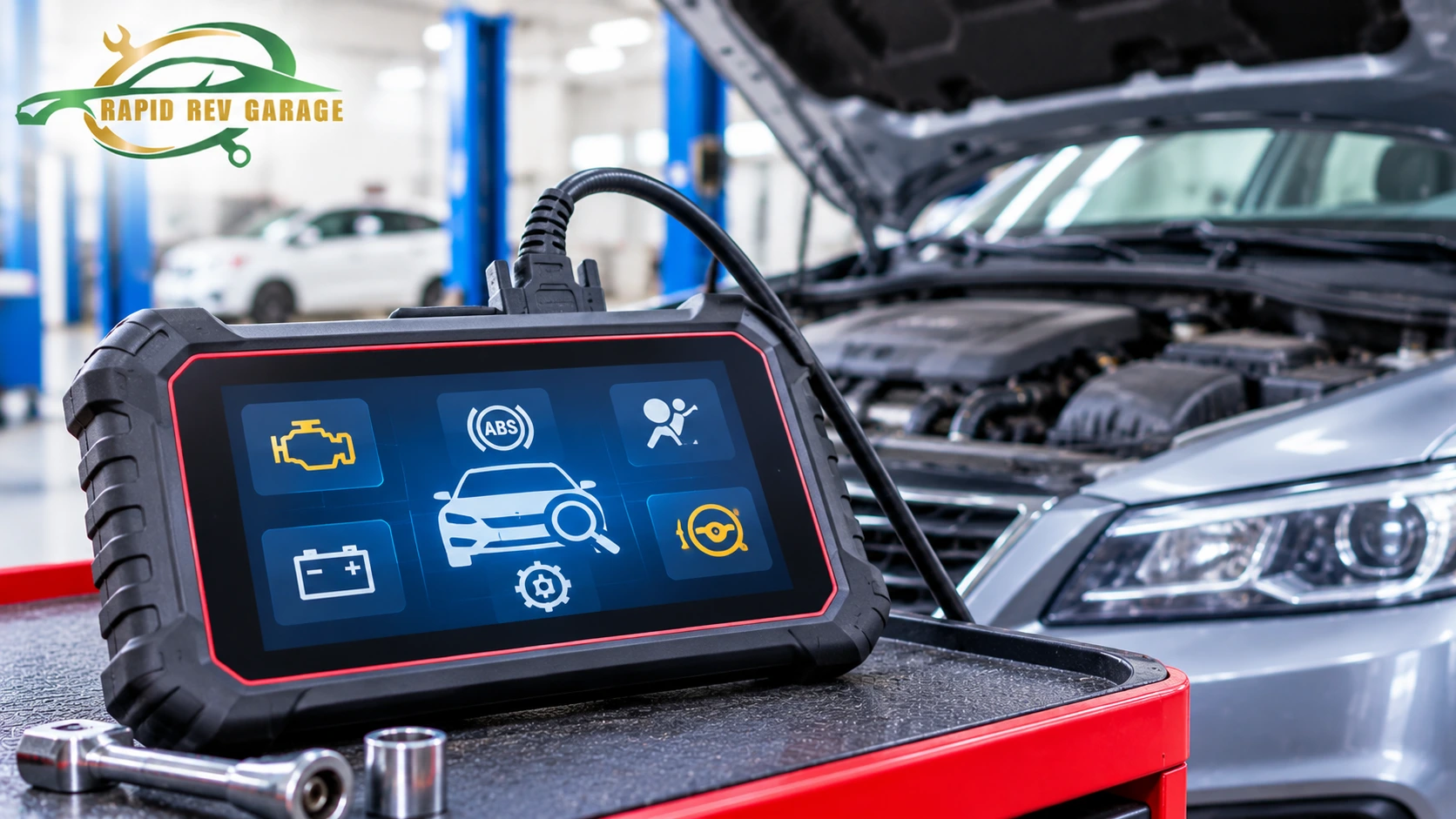
A diagnostic scanner reads stored fault codes from the vehicle’s control modules.
These codes can point to engine, transmission, sensor or electrical problems.
However, technicians should not replace parts based on codes alone. They must confirm the underlying fault.
How Do We Inspect Engine Sensors?
Technicians check sensor readings and compare them with the expected values.
They may inspect:
- Airflow readings.
- Boost pressure.
- Engine temperature.
- Fuel pressure.
- Throttle position.
This helps identify faulty sensors and incorrect readings.
How Do We Test the Transmission?
The technician checks transmission fault codes, fluid condition, operating temperature and shifting performance.
This helps identify gearbox problems that may activate the safety system.
How Do We Inspect Electrical Components?
Technicians check battery voltage, wiring, connectors, fuses and grounding points.
This step helps find electrical faults that affect the control modules.
How Can You Fix Mercedes Limp Mode?
The correct repair depends on the fault behind the warning.
Here are some common repair solutions.
|
Identified Problem |
Recommended Repair |
|---|---|
|
Faulty airflow sensor |
Inspect and replace the sensor if needed |
|
Transmission fault |
Repair damaged components and check fluid condition |
|
Turbo boost leak |
Repair hoses or boost connections |
|
Fuel pressure problem |
Inspect the fuel pump, filter and injectors |
|
Electrical fault |
Repair wiring and damaged connections |
|
Throttle body problem |
Clean, inspect or replace the throttle body |
| Faulty control module |
Test and repair or replace the module |
Mercedes Limp Mode may disappear after the underlying fault is repaired. However, clearing the fault codes alone does not fix the problem.
The technician should confirm the repair with another diagnostic scan and a suitable road test.
What Happens If You Ignore Limp Mode?
Ignoring the warning can turn a small problem into an expensive repair.
Here are some possible risks:
- Engine damage: Continuing to run with incorrect fuel or boost pressure can damage engine components.
- Transmission failure: Driving with gearbox faults can increase internal wear.
- Poor fuel economy: The engine may use more fuel than normal.
- Unexpected breakdowns: The vehicle may lose power while driving.
- Higher repair bills: Small faults can cause damage to other components.
Do not ignore warning lights or repeated power loss. Arrange an inspection as soon as possible.
Can You Drive a Mercedes in Limp Mode?
Avoid driving long distances when your Mercedes enters limp mode.
The system may allow limited driving, but the vehicle may not respond normally.
If the car shows a serious warning, overheats, makes unusual noises or suddenly loses power, stop in a safe place and switch off the engine.
If the vehicle cannot reach a safe repair location, contact roadside assistance.
Searching for a reliable garage near me can help you find professional support before the problem becomes worse.
How Long Does Mercedes Limp Mode Repair Take?
Repair time depends on the faulty component and the complexity of the problem.
|
Repair Type |
Estimated Repair Time |
|---|---|
|
Initial diagnostic scan |
30 minutes to 1 hour |
|
Sensor inspection |
30 minutes to 1 hour |
|
Sensor replacement |
1–2 hours |
|
Throttle body cleaning |
1–2 hours |
|
Fuel system inspection |
1–3 hours |
|
Turbocharger hose repair |
1–3 hours |
|
Transmission diagnosis |
1–2 hours |
|
Minor electrical repair |
1–3 hours |
| Major transmission repair |
1–3 days or longer |
These are general estimates. Actual repair time depends on the Mercedes model, parts availability and additional damage.
What Affects the Mercedes Limp Mode Repair Cost?
Repair costs vary depend on the cause of the fault.
Some problems need a simple sensor replacement. Others require major engine or transmission work.
|
Cost Factor |
How it Affects the Price |
|---|---|
|
Mercedes model |
Different models require different parts |
|
Faulty component |
Minor sensor repairs usually cost less than major repairs |
|
Transmission condition |
Internal gearbox damage increases costs |
|
Turbocharger condition |
Turbo repairs or replacement can be expensive |
|
Parts quality |
Genuine and aftermarket parts have different prices |
|
Diagnostic work |
Complex faults may require additional testing |
|
Labor charges |
Difficult repairs require more working time |
|
Additional damage |
Related component failures increase the final bill |
Always request a proper diagnosis before approving repairs.
How Can You Prevent Mercedes Limp Mode?
Regular inspection or maintenance helps reduce the risk of unexpected faults.
Follow these simple tips:
- Change engine oil at the recommended intervals.
- Check transmission fluid when required.
- Replace damaged air and fuel filters.
- Inspect turbocharger hoses for leaks.
- Keep the battery and electrical system in good condition.
- Fix dashboard warnings early.
- Schedule regular engine diagnostics.
- Use the correct fluids and replacement parts.
Dubai’s hot weather makes regular maintenance especially important. High temperatures can place extra stress on batteries, cooling systems and engine components.
What Should Dubai Mercedes Owners Know About Limp Mode?
Driving conditions in Dubai can place extra pressure on Mercedes vehicles.
Heavy traffic, long journeys, high temperatures and frequent stop-and-go driving can affect engine and transmission performance.
Keep these local factors in mind:
1. High temperatures: Extreme heat can increase engine and transmission temperatures. Check the cooling system regularly.
2. Traffic conditions: Frequent braking and acceleration can increase transmission workload.
3. Dust and sand: Dust can affect air filters and engine airflow. Replace dirty filters when needed.
4. Long-distance driving: Check fluid levels and warning lights before traveling on highways.
5. Early diagnosis: Do not continue driving when the car repeatedly loses power.
If your vehicle enters limp mode in Dubai, arrange a professional inspection at Rapid Rev Garage rather than repeatedly restarting the car and ignoring the warning.
Why Choose Rapid Rev Garage for Mercedes Repairs?
Finding the right workshop matters when your Mercedes develops engine or transmission problems.
Rapid Rev Garage near Al Quoz, Dubai, offers automotive repair and diagnostic support for drivers who need help with vehicle faults.
Here is why professional inspection matters:
- Engine diagnostics: Identify stored fault codes and performance issues.
- Electrical inspections: Check sensors, wiring and connections.
- Transmission checks: Investigate shifting problems and gearbox warnings.
- Engine repairs: Find and repair faults affecting engine performance.
- Roadside assistance: Get support when your vehicle cannot continue safely.
If your Mercedes shows reduced power or repeated warning messages, contact Rapid Rev Garage for professional help.
You can also explore our car garage near me services, roadside assistance and mobile car mechanic services.
Frequently Asked Questions
Why Does Mercedes Enter Limp Mode?
Mercedes enters limp mode when its computer detects a fault that may damage important components.
How Do I Reset Mercedes Limp Mode?
A diagnostic scan and proper repair can clear the underlying fault. Resetting codes alone may not solve it.
Can Low Battery Voltage Cause Limp Mode?
Yes. Low voltage or poor electrical connections can affect control modules and trigger warning messages.
Is Mercedes Limp Mode Dangerous?
It can be dangerous if the car loses power unexpectedly or has a serious engine or transmission fault.
Will Mercedes Limp Mode Go Away?
It may disappear temporarily, but the warning can return if the original problem remains.
What Is the Most Common Limp Mode Cause?
Sensor faults, transmission problems, turbocharger issues and electrical faults are common causes.
Can Roadside Assistance Help My Mercedes?
Yes. Roadside assistance can help arrange recovery when your Mercedes cannot be driven safely.
Final Call-to-Action: Get Your Mercedes Checked Before the Problem Gets Worse
Reduced power, gear shifting problems and dashboard warnings should never be ignored. These signs may indicate a fault that needs immediate attention.
A professional diagnosis can help identify the cause and prevent further damage.
If your Mercedes has entered limp mode in Dubai, contact Rapid Rev Garage near Al Quoz for diagnostic checks and repair support. Get the problem inspected before it leads to a bigger repair bill.
Location: Rapid Rev Garage – Google Maps