Quick Answer: What Does Audi Vibrates at Highway Speed Mean?
Your Audi vibrates at highway speed when one or more parts of the wheels, tires, suspension, steering or drivetrain aren’t working correctly. The problem often becomes noticeable between 80 and 120 km/h. Common causes include unbalanced tires, damaged wheel rims, worn suspension parts, bad wheel bearings and faulty CV joints. Sometimes, brake rotor problems can also cause shaking. Do not ignore these vibrations, as they may affect vehicle control and driving safety. A proper inspection can help identify the cause and prevent further damage.
Table of Contents
- Common Reasons Your Audi Vibrates at Highway Speed
- Warning Signs That Come With Audi Vibrations
- How Mechanics Diagnose Audi Vibrates at Highway Speed
- How to Fix Audi Vibrates at Highway Speed
- What Happens If You Ignore the Vibrations?
- Can You Drive If Your Audi Vibrates at Highway Speed?
- How Long Does Audi Vibration Repair Take?
- What Affects Audi Vibration Repair Costs in Dubai?
- How to Prevent Audi Vibrates at Highway Speed
- Dubai-Specific Advice for Audi Owners
- Why Choose Rapid Rev Garage for Audi Repairs?
- Frequently Asked Questions
Common Reasons Your Audi Vibrates at Highway Speed
Highway vibrations can come from several parts of your Audi. Some problems are simple to fix, while others need detailed inspection.
1. Unbalanced Tires
Unbalanced tires are one of the most main reasons for highway shaking.
When a tire does not have an even weight distribution, it can create vibrations as the wheel spins. You may feel the shaking through the steering wheel or car body.
Problems often becomes more noticeable at higher speeds.
A wheel balancing service can usually correct this issue.
2. Damaged or Bent Wheel Rims
Dubai roads can expose your Audi to potholes, road debris and hard impacts.
These impacts can bend or damage alloy wheels. Even a small bend can affect how smoothly the wheel rotates.
You may notice:
- Steering wheel shaking.
- Vibrations through the seats.
- Uneven tire wear.
- Shaking that increases with speed.
Our mechanic inspect the rims and check for damage.
3. Worn Suspension Components
Your Audi suspension keeps the tires in contact with the road. It also helps absorb bumps and control vehicle movement.
Worn suspension parts can cause unwanted vibrations.
Common affected components include:
- Control arm bushes.
- Ball joints.
- Shock absorbers.
- Suspension links.
- Tie rod ends.
If these parts become loose or damaged, your Audi may feel unstable at highway speeds.
4. Faulty Wheel Bearings
Wheel bearings help the wheels rotate smoothly.
When a bearing wears out, it can cause humming, grinding or vibration while driving.
The noise may become louder as your speed increases. You may also notice changes when turning.
A damaged wheel bearing needs prompt attention to prevent further damage.
5. Worn CV Joints or Driveshaft Problems
CV joints transfer engine power to the wheels while allowing the suspension to move.
When a CV joint becomes worn, it may cause vibrations during acceleration.
You may also hear clicking sounds when turning.
A damaged driveshaft can create similar problems, especially at higher speeds.
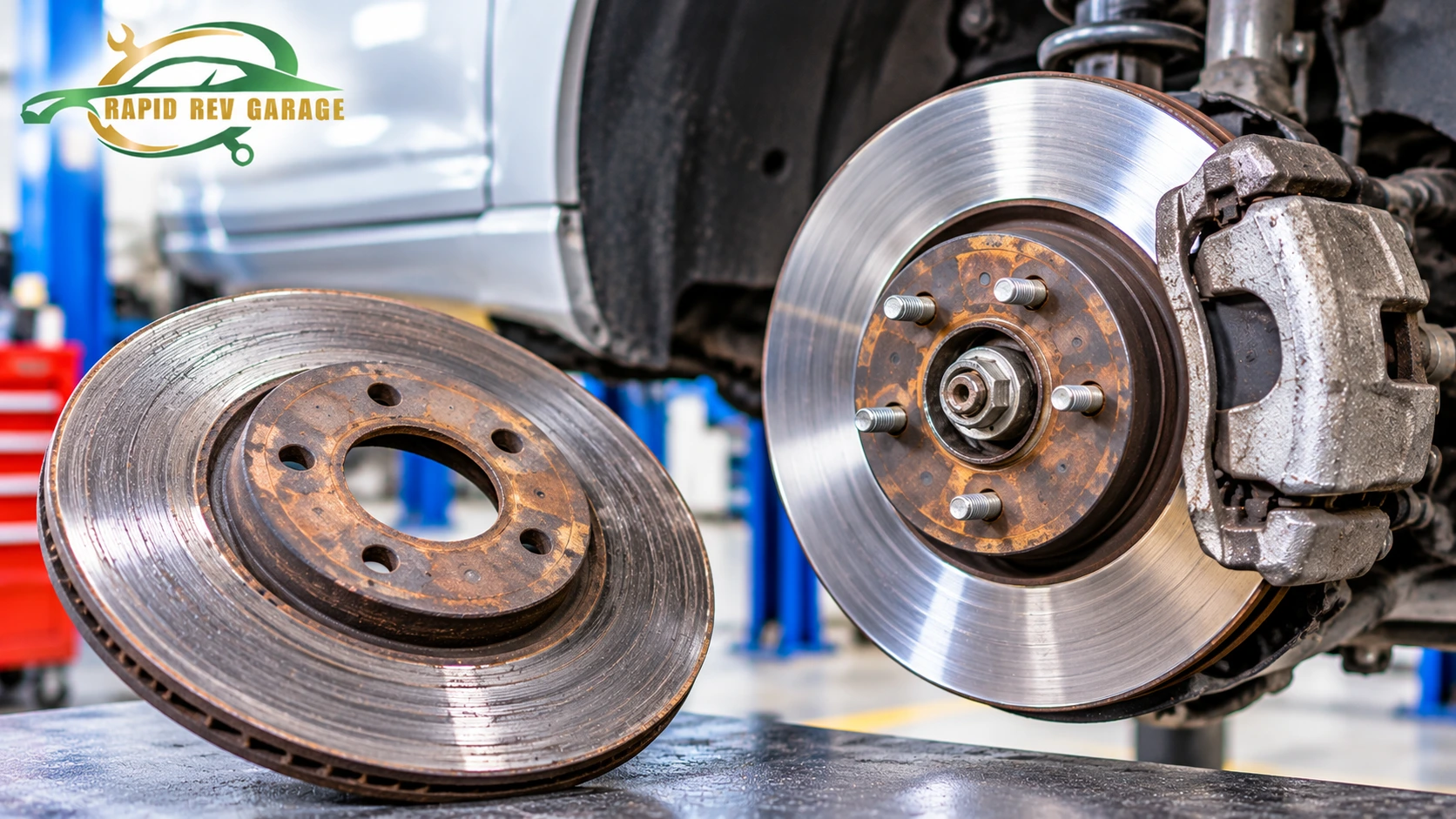
6. Warped Brake Rotors
Brake rotors can develop uneven surfaces because of heat and wear.
If you feel vibrations mainly when pressing the brake pedal, warped or uneven brake rotors may be responsible.
You may notice:
- Steering wheel shaking during braking.
- Pulsation through the brake pedal.
- Reduced braking comfort.
- Unusual brake noises.
A mechanic should inspect the rotors and brake pads before recommending repairs.
7. Wheel Alignment Problems
Incorrect wheel alignment can affect how your Audi handles the road.
Your car may pull to one side or show uneven tire wear.
Alignment problems don’t always cause direct vibrations, but they can make existing tire and suspension problems worse.
A wheel alignment check can help restore proper handling.
Warning Signs That Come With Audi Vibrations
When your Audi vibrates at highway speed, other symptoms can help identify the problem.
Pay attention to these warning signs.
Steering Wheel Shaking
If steering wheel shakes at higher speeds, the problem may involve wheel balancing, damaged rims or front suspension parts.
Vibrations Through the Seats
If you feel shaking through the seats or floor, the rear wheels, tires or drivetrain may need inspection.
Humming or Grinding Noise
A humming sound that increases with speed may point to a worn wheel bearing.
Grinding noises can also indicate damage to rotating components.
Shaking During Acceleration
If the vibration becomes stronger when you press the accelerator, worn CV joints, driveshaft problems or engine-related issues may be responsible.
Car Pulling to One Side
Your Audi may pull left or right because of incorrect alignment, uneven tire pressure or worn suspension parts.
Do not ignore this symptom, especially when driving at high speeds.
How Mechanics Diagnose Highway Speed Vibrations
Finding the exact cause is important before replacing any parts.
When an Audi vibrates at highway speed, a mechanic should inspect the wheels, suspension, steering and drivetrain.
1. Road Test and Symptom Check
The mechanic asks when the vibration starts and how it changes with speed.
They may also check whether the shaking happens during acceleration, braking or turning.
2. Tire and Wheel Inspection
The mechanic checks tire pressure, tread condition and visible damage.
They also inspect the rims for bends or cracks.
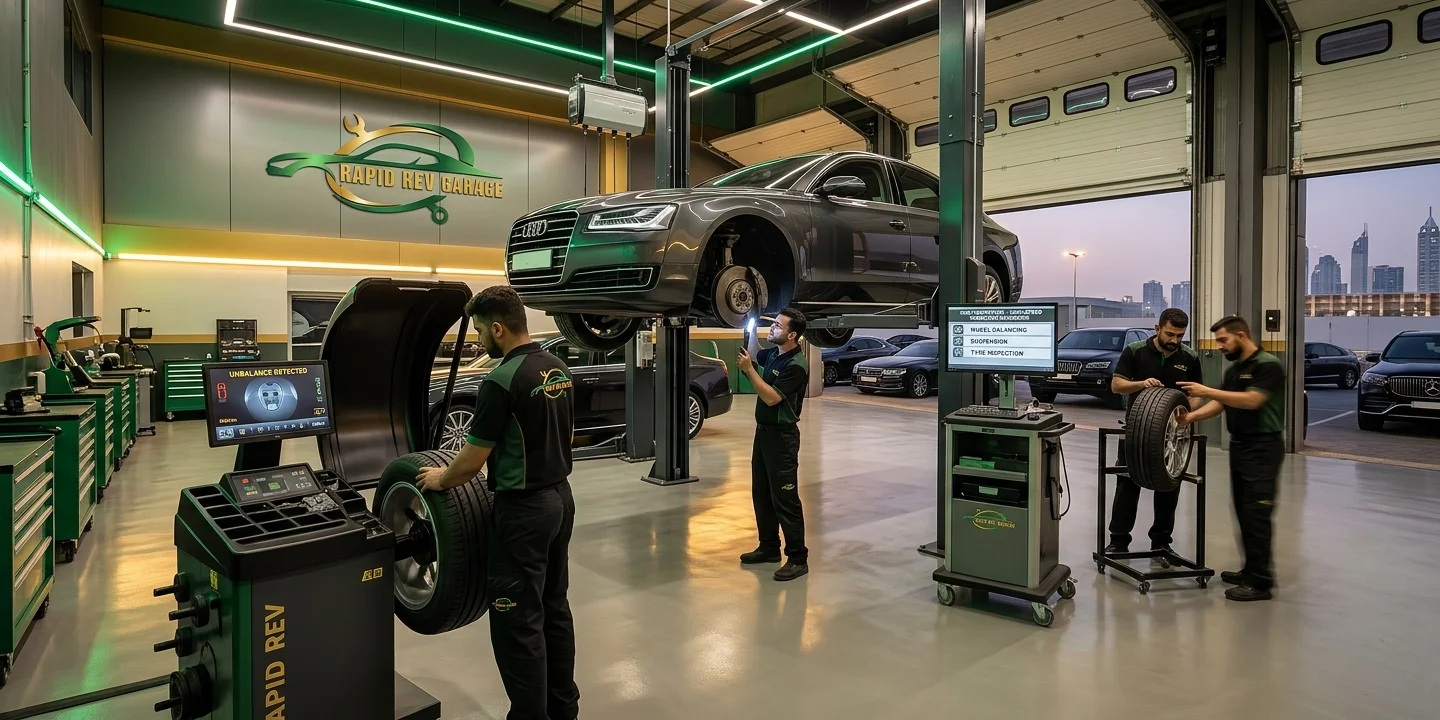
3. Wheel Balancing Test
A wheel balancing machine checks whether the wheels have uneven weight distribution.
This helps identify imbalance that may cause highway vibrations.
4. Suspension and Steering Inspection
The mechanic checks control arms, bushes, ball joints, shock absorbers and steering links.
Loose or worn components may cause poor handling and shaking.
5. Wheel Bearing and Drivetrain Check
The mechanic checks wheel bearings, CV joints and driveshaft components for wear or damage.
They may also use diagnostic equipment if the symptoms suggest an engine or transmission problem.
How to Fix Audi Vibrates at Highway Speed
The correct repair depends on the faulty component.
Here are some common repair solutions.
Wheel Balancing
If the tires are unbalanced, the mechanic adjusts their weight distribution.
This helps the wheels rotate smoothly and reduces vibration.
Wheel Rim Repair or Replacement
A bent rim may need professional repair or replacement.
Cracked or severely damaged wheels should not be used.
Suspension Component Replacement
Worn control arms, bushes, ball joints or shock absorbers may need replacement.
This helps restore stability and improve driving comfort.
Wheel Bearing Replacement
A damaged bearing needs replacement to restore smooth wheel rotation.
The mechanic should also inspect the hub and related components.
CV Joint or Driveshaft Repair
Worn CV joints may need replacement. A damaged driveshaft may also require repair or replacement.
Brake Rotor Replacement
If the brake rotors are damaged or outside the manufacturer’s limits, replacement may be necessary.
Our mechanic inspect the brake pads and related components at the same time.
What Happens If You Ignore the Vibrations?
Ignoring highway vibrations can allow a small problem to become more serious.
Possible risks include:
- Uneven tire wear: Damaged or unbalanced wheels can wear tires faster.
- Poor handling: Worn suspension parts can reduce vehicle stability.
- Bearing damage: A failing wheel bearing can become worse over time.
- Drivetrain damage: Ignoring worn CV joints can lead to further repairs.
- Reduced driving safety: Severe vibrations can affect vehicle control.
Early diagnosis can help protect your Audi and reduce repair expenses.
Can You Drive If Your Audi Vibrates at Highway Speed?
Avoid driving at highway speeds if your Audi has noticeable vibrations.
A mild vibration may come from wheel imbalance, but you should still arrange an inspection.
Stop driving and seek professional help if you notice:
- Severe steering wheel shaking.
- Grinding or loud mechanical noises.
- A damaged or visibly bent wheel.
- Loose steering.
- Strong vibrations during braking.
- A tire bulge or visible tire damage.
If the vehicle feels unsafe, arrange roadside assistance rather than continuing your journey.
How Long Does Audi Vibration Repair Take?
Repair time depends on the faulty part, vehicle model and damage level.
Here are some general repair estimates:
- Wheel balancing: 30–60 minutes.
- Wheel alignment: 30–60 minutes.
- Tire replacement: 30–60 minutes.
- Wheel bearing replacement: 2–4 hours.
- Control arm replacement: 2–4 hours.
- CV joint replacement: 2–4 hours.
- Brake rotor replacement: 1–3 hours.
- Driveshaft repair or replacement: 2–5 hours.
These are general estimates. Some Audi models need extra labor or special parts.
What Affects Audi Vibration Repair Costs in Dubai?
The final repair cost depends on several factors.
Audi Model
Different Audi models have different suspension and drivetrain designs.
An Audi A4 may need different parts and labor compared with an Audi Q7 or Q5.
Faulty Component
Wheel balancing usually costs less than replacing a wheel bearing or driveshaft.
Parts Quality
Genuine and aftermarket parts have different prices.
Labor Charges
Some components are difficult to access and require more working hours.
Damage Severity
Multiple damaged parts can increase the total repair cost.
Parts Availability
Imported Audi parts may take longer to source and can affect the final price.
Always request a proper inspection and estimate before approving repairs.
How to Prevent Audi Vibration Problems
Regular maintenance can help keep your Audi smooth and stable.
Follow these simple tips:
- Check tire pressure regularly.
- Balance your wheels when needed.
- Inspect tires for uneven wear.
- Avoid driving over potholes at high speed.
- Check wheel alignment during regular servicing.
- Inspect suspension parts for wear.
- Replace damaged tires and rims.
- Follow your Audi service schedule.
Regular inspections are especially important if you often drive on Dubai highways.
Dubai-Specific Advice for Audi Owners
Dubai’s hot weather and busy roads can place extra demands on your tires and suspension.
High temperatures can affect tire pressure. Road impacts can also damage wheels and suspension components.
If your Audi starts shaking, follow these steps:
- Reduce your speed safely.
- Avoid sudden braking or sharp steering.
- Check your tires for visible damage.
- Do not continue driving if the vibration becomes severe.
- Arrange a professional inspection.
If the problem happens on Sheikh Zayed Road or another busy highway, move to a safe location when possible and arrange roadside assistance.
Why Choose Rapid Rev Garage for Audi Repairs?
Audi vehicles need proper inspection and the right repair approach. Guessing the cause of a vibration can lead to unnecessary part replacements.
Rapid Rev Garage in Al Quoz, Dubai, provides vehicle inspection, maintenance and repair services for different Audi models.
Here is why you can consider Rapid Rev Garage:
- Professional diagnostics: Identify problems affecting vehicle performance.
- Suspension inspection: Check control arms, bushes and related parts.
- Wheel and tire checks: Find balancing and wheel-related problems.
- Drivetrain inspection: Check CV joints and driveshaft components.
- Repair support: Get suitable repair recommendations for your Audi.
If your Audi vibrates at highway speed, arrange an inspection before the problem becomes worse.
Visit our car garage near me page to learn more about our garage services.
If your Audi develops a serious problem while driving, you can also explore our roadside assistance service.
Frequently Asked Questions
1. Why Does My Audi Shake at 100 km/h?
Unbalanced tires, bent rims, worn suspension parts or wheel bearing problems can cause shaking at 100 km/h.
2. Can Wheel Balancing Stop Audi Vibrations?
Yes. Wheel balancing can fix vibrations caused by uneven wheel weight distribution.
3. Why Does My Audi Vibrate When Accelerating?
Worn CV joints, driveshaft problems or engine-related faults can cause vibrations during acceleration.
4. Are Audi Highway Vibrations Dangerous?
They can be dangerous if caused by damaged tires, loose suspension parts or failing wheel bearings. Get the problem checked promptly.
5. How Much Does Audi Vibration Repair Cost in Dubai?
The cost depends on the faulty part, Audi model, replacement parts and labor. A proper inspection is needed for an accurate estimate.
Final Call-to-Action: Keep Your Audi Smooth and Safe on Dubai Roads
Audi Vibrates at Highway Speed are not something Audi owners should ignore. The cause may be simple wheel imbalance or a more serious suspension or drivetrain fault.
A timely inspection can help protect your tires, improve handling and prevent expensive repairs.
Contact Rapid Rev Garage for professional Audi inspection and repair services in Al Quoz, Dubai.
Location: Rapid Rev Garage – Al Quoz, Dubai