Buying a used car in Dubai is exciting right up until you realise the car you just paid for has a hidden accident history, a cracked chassis rail, or an engine that’s been burning oil since the previous owner traded it in. It happens more than people think — and almost always to buyers who skipped a proper used car inspection before signing anything.
The used car market in Dubai moves fast. Dealers push for quick decisions. Private sellers say the car is “perfect condition, no problems.” And most buyers, caught up in the excitement of a good deal, take the car for a short test drive and trust what they’re told. A proper used car inspection by an independent workshop changes everything. It gives you facts, not sales pitch — and it either confirms the deal is solid or saves you from a very expensive mistake.
At Rapid Rev Garage, we see the aftermath regularly. Cars bought without a proper used car inspection that turn out to have frame damage, flooded interiors that were dried out and detailed, or engines that were running on thickened oil to mask a consumption problem. None of it shows up on a test drive. All of it shows up on a proper inspection.
Used Car Inspection: What a Proper Check Actually Covers
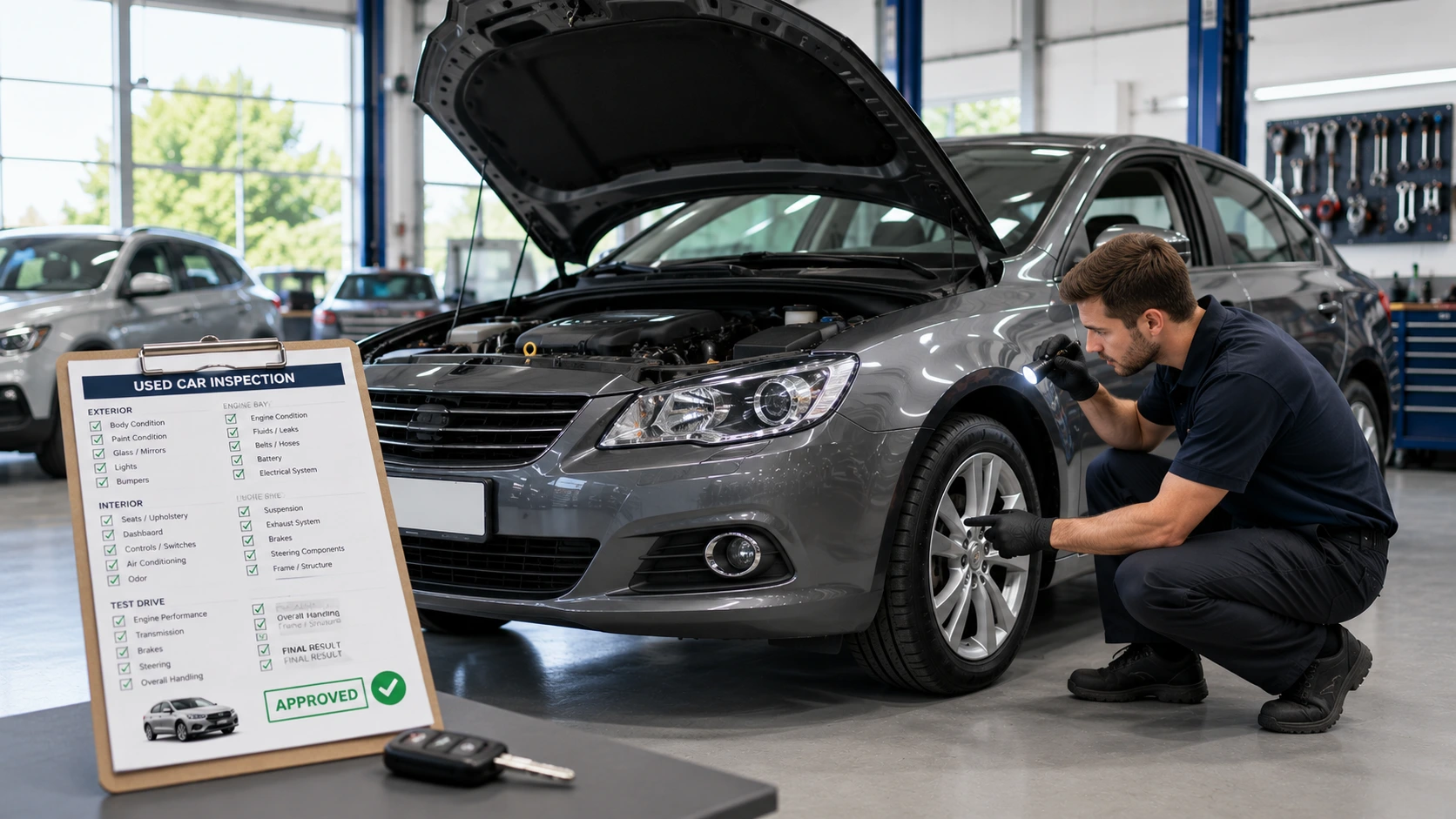
A genuine used car inspection isn’t a glance under the bonnet and a tyre kick. It’s a structured, systematic process that covers every major system in the vehicle — mechanical, electrical, structural, and cosmetic. Here’s what that actually looks like.
Used Car Inspection: Structural and Body Assessment
The first thing to check on any used car is whether it’s been in a significant accident. Paint overspray in door jambs, misaligned body panels, uneven gaps between the bonnet and wings, and mismatched paint under natural light are all signs of previous repair work.
More serious is chassis or frame damage. A used car inspection at a proper workshop involves putting the car on a ramp and checking the subframe, chassis rails, and floor pan for signs of impact, welding repairs, or straightening work. This is the part that matters most — structural damage affects safety in a future collision regardless of how good the car looks from the outside.
Our car mechanic team uses ramp access for every used car inspection, checking underneath properly rather than relying on what’s visible from ground level.
Engine and Drivetrain Checks
The engine is where most hidden problems live. During a proper used car inspection, the engine should be checked both cold and after running to operating temperature. A cold start reveals things a warm engine hides — oil consumption smoke, coolant leaks that only show when the thermostat opens, and unusual startup noises from timing chains or VVT systems.
Key checks include:
Oil Condition and Level Fresh oil on a used car can mean the seller changed it before selling — or it can mean they changed it to hide something. Black, sludged oil on the dipstick is a red flag. Milky or creamy oil means coolant contamination, which points to a head gasket issue.
Coolant Condition Brown or rusty coolant means the system hasn’t been maintained. Bubbles in the coolant reservoir with the engine running point to combustion gas entering the cooling system — another head gasket warning sign.
Timing Belt or Chain Condition On belt-driven engines, service history of the timing belt replacement is critical. A belt that’s overdue is a breakdown waiting to happen. On chain-driven engines, a rattling noise on startup indicates a worn tensioner — common on certain BMW, Kia, and Hyundai engines.
Transmission Behaviour During the test drive portion of a used car inspection, the gearbox gets put through every gear — smooth shifts, no slipping, no hesitation on kickdown. Automatic transmissions that shudder on light throttle or hunt between gears are showing signs of wear or degraded fluid.
We include full drivetrain assessment in our car service inspection package for used car buyers — covering engine, gearbox, transfer case on 4WDs, and differentials.
Full Electrical Diagnostic Scan
This is the step most used car buyers never think to ask for — and the one that reveals the most surprises. A proper used car inspection includes a full multi-system diagnostic scan across every module in the vehicle.
Fault codes get cleared before cars go on sale. A scan might come back clean. But live data tells a different story — sensors reading outside their normal range, modules logging intermittent faults, adaptive values that show how hard the engine or transmission has actually been working.
A customer asked us to inspect a 2019 Toyota Fortuner before purchase. The scan came back with no stored fault codes. But live data showed the fuel trims were running heavily negative, indicating a fuelling issue the ECU was compensating for — something that would eventually throw codes and cause drivability problems. The seller had no idea. The buyer avoided the purchase and found a cleaner car.
That’s what a proper used car inspection electrical scan actually does.
Our garage near me workshop in Al Quoz is equipped for full multi-module scanning on all makes — European, Japanese, American, and Korean vehicles.
Suspension, Steering, and Brakes
These systems take the most abuse on used cars — especially in Dubai, where speed bumps, parking ramps, and desert road trips all add up faster than regular highway driving.
During a used car inspection, suspension checks cover:
- Control arm bushings for cracking or excessive play
- Ball joints for looseness under load
- Shock absorbers for leaking or worn damping
- Wheel bearings for humming or roughness on rotation
- Steering rack for play or leaking seals
Brake checks cover pad thickness, rotor condition and thickness, caliper operation, and brake fluid moisture content. Warped rotors from heavy use, seized calipers from lack of use — both are common on used cars in Dubai and both affect safety immediately.
Our roadside assistance team has recovered cars that broke down within days of purchase because a used car inspection wasn’t done before the sale. Don’t let that be your car.
Tyre Condition and Wheel Assessment
Tyres are expensive to replace and easy to overlook on a used car viewing. A proper used car inspection checks tread depth across the full width of each tyre — uneven wear patterns reveal suspension misalignment, overinflation, or camber issues that have been present for some time.
Age matters as much as tread depth. Tyres over five years old should be replaced regardless of remaining tread — the rubber compounds degrade and increase blowout risk, particularly in Dubai’s summer heat. The manufacturing date is moulded into the sidewall as a four-digit code.
Alloy wheel condition also tells a story. Kerb rash is cosmetic. But a cracked or buckled alloy is a safety issue — and common on cars that have hit deep potholes or speed bumps hard at speed.
Interior and Air Conditioning Check
Dubai’s AC system works harder than almost anywhere else in the world. On a used car, the AC should be tested for cooling performance — how fast it brings the cabin temperature down, whether all vents work, and whether the compressor engages cleanly without noise.
Interior checks during a used car inspection cover all electrical functions — windows, mirrors, seat adjusters, central locking, infotainment system — and look for signs of water damage or flooding. Musty smells, stained carpet edges, and corrosion on seat rail bolts are all indicators of a car that’s been through water damage and cleaned up.
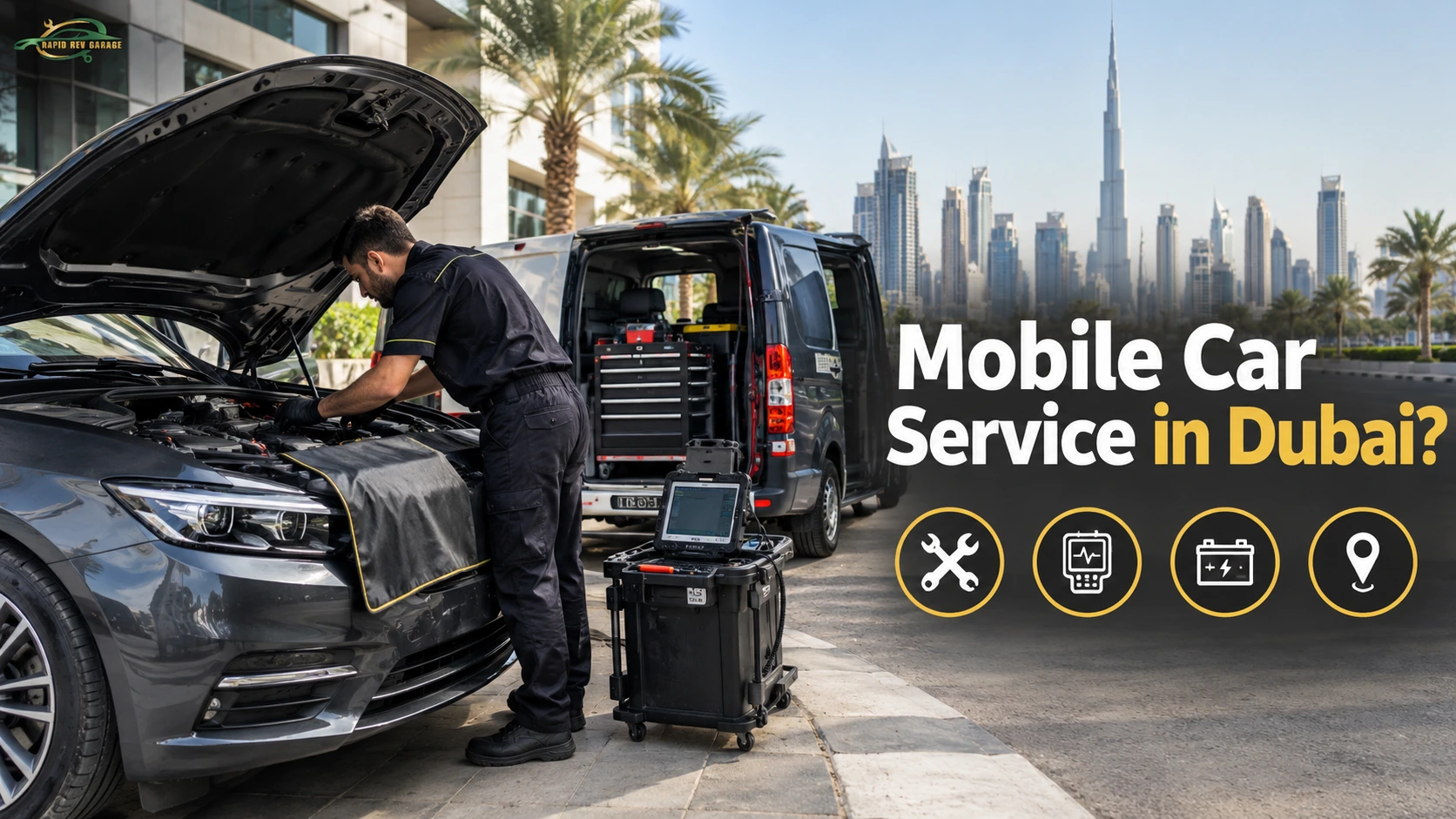
Our mobile car mechanic service can also perform initial used car inspection assessments at the seller’s location if the car can’t or shouldn’t be moved before purchase.
Service History and VIN Check
A used car inspection isn’t complete without checking the paperwork. Service history stamps confirm the car has been maintained. A VIN check through the relevant authority reveals accident records, ownership history, and whether the car has any outstanding finance or is listed as written off.
In Dubai, the RTA vehicle history check is worth doing on any used car before purchase. It won’t reveal everything — private repairs off the record won’t show — but it confirms registration history and any recorded accidents through official channels.
FAQ
How much does a used car inspection cost in Dubai?
Costs vary by workshop but typically range from AED 200–500 for a comprehensive pre-purchase inspection.
Can a used car inspection be done at the seller's location?
Yes — a mobile mechanic can perform basic checks on-site, though a full ramp inspection requires a proper workshop.
What's the most important check in a used car inspection?
Structural integrity and chassis condition — hidden accident damage affects safety and is impossible to spot without a ramp inspection.
Should I get a used car inspection even if the seller has service history?
Always — service history confirms maintenance but doesn't reveal accident damage, electrical faults, or hidden mechanical wear.
How long does a full used car inspection take?
A thorough inspection covering all systems typically takes 2–3 hours at a proper workshop.
In Conclusion
A used car that looks great on the outside and drives fine for a short test can still have serious problems hiding underneath, inside the wiring, or in the data stored across its control modules. A proper used car inspection costs a fraction of what a hidden fault will cost to repair — and it either confirms you’re buying a solid car or saves you from a mistake you’d be living with for years.
Book your appointment with Rapid Rev Garage before committing to any used car purchase. We carry out thorough used car inspection checks for buyers across Al Quoz and nearby Dubai areas — ramp inspection, full diagnostic scan, mechanical and electrical assessment, all documented in a clear report. Find us on Google Maps and get the facts before you sign anything.