A car pulls out in front of you at a junction in Al Barsha and clips your front bumper and wing. Nobody is hurt and the car still drives, but it clearly needs body work. Over the next few days, you have to deal with the police report, the insurer, the garage and the car itself. Preparing a car for body repair properly makes the claim faster, avoids disputes and gets the car back sooner.
In Dubai, accident repairs follow a clear order. The accident must be reported, the insurer notified, the damage assessed and the repair approved before work starts. Missing a step can delay the repair or cause a claim to be rejected. Preparing the car itself also matters, from taking photos to removing personal items and toll tags.
This guide walks through each step, from the moment of the accident to handing over the keys at the body shop. It uses information from Dubai Police services, insurance guides and UAE motoring sources, so you know what is required and what is simply good practice.
Preparing a Car for Body Repair: Quick Answer
Preparing a car for body repair after an accident starts with a police report and a quick call to your insurer. Then photograph the damage, gather your documents and choose an approved garage. Before handover, remove personal items, save dash cam footage and agree the repair in writing.
Dubizzle notes that a police report is mandatory for any repair or insurance claim, and that most policies require notification within 24 hours. Shory lists the documents needed and explains that the workshop estimate usually takes 1 to 4 days, approval 1 to 2 days and repairs about 2 weeks.
Table of Contents
- Step One: Make the Scene Safe
- Step Two: Report the Accident
- Step Three: Photograph Everything
- Step Four: Notify Your Insurer
- Step Five: Gather the Documents
- Step Six: Choose the Right Garage
- Step Seven: Arrange Getting the Car There
- Step Eight: Prepare the Car Itself
- Removing Valuables and Personal Items
- Salik Tag, Parking Permits and Accessories
- Saving Dash Cam Footage and Records
- Recording the Car’s Condition at Handover
- Agreeing the Repair Before Work Starts
- What if Fault Is Disputed?
- What to Tell the Body Shop
- Leased, Rental and Company Cars
- Getting a Second Quote
- Preparing for the Insurance Assessor
- Keeping a Simple Claim File
- What to Expect While the Car Is in the Body Shop
- Getting a Replacement Car
- How Dubai Heat Affects Accident Repairs
- What Happens if There Is Mechanical Damage Too?
- After the Repair Is Done
- FAQ
- Conclusion
Step One: Make the Scene Safe
Safety comes first. Dubizzle advises moving the car carefully to the side of the road if it can be moved. Turn on your hazard lights.
On a highway, move to the hard shoulder if the car can be driven. Stopping in a live lane because of a breakdown or collision brings a AED 1,000 fine and six black points under Article 98 of the UAE Federal Traffic Law.
If anyone is injured, call 999. Dubizzle notes that leaving the scene can bring a fine of AED 500, black points and possible impoundment. Stay until the report is made.
Step Two: Report the Accident
Dubizzle explains that every accident must be reported to the police, whatever the size. Minor accidents can be reported by calling 901 or through the Dubai Police app. Shory advises using the app’s report accident option and noting the reference number.
Gulf News has reported on Dubai Police’s On the Go service. It lets drivers get minor accident reports at more than 130 partner petrol stations, including Emarat, ENOC and ADNOC. Gulf News reported the cost was lowered from AED 1,927 to AED 420.
The report is colour coded. Dubizzle explains the colours. Green means the other party is at fault and red means you are at fault. White means no fault was assigned or there is a dispute.
The colour decides whose insurer pays.
If your parked car was hit and the other driver left, Dubai Police can issue an unknown party accident report.
Step Three: Photograph Everything
Take photos as soon as it is safe. Shory advises photographing the damage from several angles, the date and time, the driving conditions and the other vehicles and plates.
Take wide photos showing both cars and their positions, then close photos of each damaged area. Photograph the other driver’s licence plate, registration card and insurance details if they agree.
Back at home, take more photos in good daylight. These help the body shop and insurer see the full extent of the damage.
Step Four: Notify Your Insurer
Dubizzle notes that most policies require notification within 24 hours, and that late notification can lead to a claim being rejected. Shory advises notifying the insurer within 48 hours and submitting the claim documents within 7 days. Check your own policy for the exact deadlines.
Most insurers have helplines and apps. Give them the police report reference, photos and the other driver’s details.
If the other driver was at fault, their insurer generally pays, as dubizzle explains. Your own insurer can still help guide you through the process.
Step Five: Gather the Documents
Shory lists the documents usually needed for a claim:
- The original police or accident report
- Vehicle registration card (mulkiya)
- Driving licence and Emirates ID
- Claim intimation slip and insurance policy details
- Claim form from the insurer
- Car modification certificate, if the car has been modified
- Photos of the scene, the damage and the licence plates
Keep originals safe and make copies. The body shop and insurer will often ask for the same documents.
Step Six: Choose the Right Garage
Shory explains that policies with agency repair send the car to the maker’s agency body shop. Other policies use network approved workshops, often for cars over two or three years old.
Shory also warns that using a garage the insurer has not approved can lead to the claim being refused. Confirm with your insurer before booking.
If you are paying yourself, you can choose any body shop. Ask about paint booths, colour matching, sensor calibration and warranty. An experienced accident repair workshop can also help with insurance paperwork.
Step Seven: Arrange Getting the Car There
If the car is safe to drive, you can usually take it to the garage yourself. Check that lights, mirrors and bumpers are secure and that no parts are hanging or rubbing on tyres.
Dubizzle notes that Dubai Police may arrange for the car to be towed to a designated facility after some accidents. If the car is not safe to drive, use a flatbed tow truck rather than towing it on its wheels.
If the car broke down at the scene, call roadside assistance. If it is parked at home and you are unsure whether it is safe to drive, a mobile mechanic can check the damage first.
Step Eight: Prepare the Car Itself
Before handing the car over, a few simple steps make the repair smoother.
Do not wash the damaged area heavily before the assessor sees it. The assessor needs to see the damage clearly, but heavy cleaning can hide or change marks. A light rinse to remove dust is fine.
Note the fuel level and the odometer reading. Take photos of the dashboard, including any warning lights.
If the car has a dash cam, save the footage, as explained later.
Removing Valuables and Personal Items
Remove valuables, documents you do not want to leave, sunglasses, chargers, child seats, gym bags and shopping from the car. The body shop may need to remove seats, trim or boot carpets during repair.
Leave the spare key at home unless the body shop asks for it. Give them the main key only.
Remove personal items from the boot. Body shops often remove boot trim and tail lights when repairing the rear of a car.
Salik Tag, Parking Permits and Accessories
Many cars in Dubai have a Salik toll tag on the windscreen. If the windscreen is being replaced, the tag will be damaged and a new one will be needed. Contact Salik for a replacement tag before driving through toll gates again.
Remove or note parking permits and building access stickers on the windscreen. If the windscreen is replaced, these may need replacing too.
Note any accessories, such as dash cams, phone holders or roof racks. Remove them if they are near the damaged area, or ask the body shop to take care of them.
Saving Dash Cam Footage and Records
Dash cam footage can be very useful if fault is disputed. Save the footage as soon as possible, because many dash cams overwrite old recordings.
Copy the file to your phone or computer, and keep the original memory card safe. Share it with the police or insurer if asked.
Keep any other records too, such as witness names and numbers, and the time and location of the accident.
Recording the Car’s Condition at Handover
When you drop off the car, walk around it with the body shop. Note any old damage that is not part of the repair, such as scratches, chips or kerbed wheels.
Take photos of the whole car at handover, including the interior. This avoids disputes later about damage that was already there.
Ask for a job card or written estimate listing the work to be done. Shory advises getting the job card when you collect the car, so keep the original paperwork together.
Agreeing the Repair Before Work Starts
For insurance repairs, Shory explains that the workshop estimate usually takes 1 to 4 days. The insurer usually approves minor repairs within about 1 day and major repairs within about 2 days. A loss adjuster may be appointed for larger claims. Work should not start until the insurer confirms.
For repairs you pay yourself, agree a written quote that lists the panels to be repaired, replaced or blended, the parts used, sensor calibration and VAT. A professional car body repair quote should show each item.
Ask the body shop to call you before doing any extra work beyond the quote.
What if Fault Is Disputed?
If you and the other driver disagree about who caused the accident, the police may issue a white report. Dubizzle explains this means no fault was assigned or there is a dispute. That can slow down the claim.
Give the police and your insurer every piece of evidence you have: photos, dash cam footage, witness names and the exact location. Your insurer may then deal with the other insurer directly.
Do not start repairs privately while fault is disputed, unless your insurer agrees. Repairing first can remove evidence the insurer needs.
What to Tell the Body Shop
When you drop off the car, explain how the accident happened. A front corner hit at speed is likely to have damaged parts behind the bumper. A low speed scrape usually has not.
Tell the body shop about any warning lights, noises, pulling or vibration since the accident. These help them check for hidden damage.
Mention any earlier repairs on the same area, any paint protection film or ceramic coating, and any aftermarket parts such as lights or body kits. These affect the repair method and price.
Leased, Rental and Company Cars
If the car is leased, rented or owned by your company, tell the owner straight away. Most lease and rental contracts set out who must be contacted and which garages can be used.
The leasing or rental company may handle the insurance claim and choose the body shop. Using a different garage without permission can breach the contract.
Keep copies of every document you send them, along with the police report.
Getting a Second Quote
For private repairs, getting a second quote is often worth it, especially for larger damage. Compare what each quote covers, such as blending, parts type and sensor calibration, not just the total.
For insurance repairs, the insurer’s approved garage normally decides the method. You can still ask questions if you are unsure about any part of the estimate.
Preparing for the Insurance Assessor
On larger claims, the insurer may send an assessor or loss adjuster to inspect the car. Shory notes that a loss adjuster may be appointed if repair costs raise concerns.
Make the car easy to inspect. Leave the damage visible, clear the boot if the rear was hit and have your documents ready. Point out any warning lights or mechanical symptoms you noticed after the accident, so they are included in the assessment.
If you disagree with the assessment, ask the insurer to explain it in writing and share your own photos and quotes.
Keeping a Simple Claim File
Keep everything about the accident in one place, either a folder or a note on your phone. Include the police report and reference number, the claim number, photos, dash cam footage, the garage estimate, emails and the names of everyone you spoke to.
Note the date of each call and what was agreed. If the claim takes several weeks, this record makes follow ups much easier.
When the repair is finished, add the invoice, job card and warranty to the same file. Keep it until the warranty ends, as it helps if a paint or fit problem appears months later.
What to Expect While the Car Is in the Body Shop
Shory notes that insurance repairs usually take about 2 weeks, and that some imported parts can take 6 to 8 weeks. Smaller repairs paid privately can be quicker.
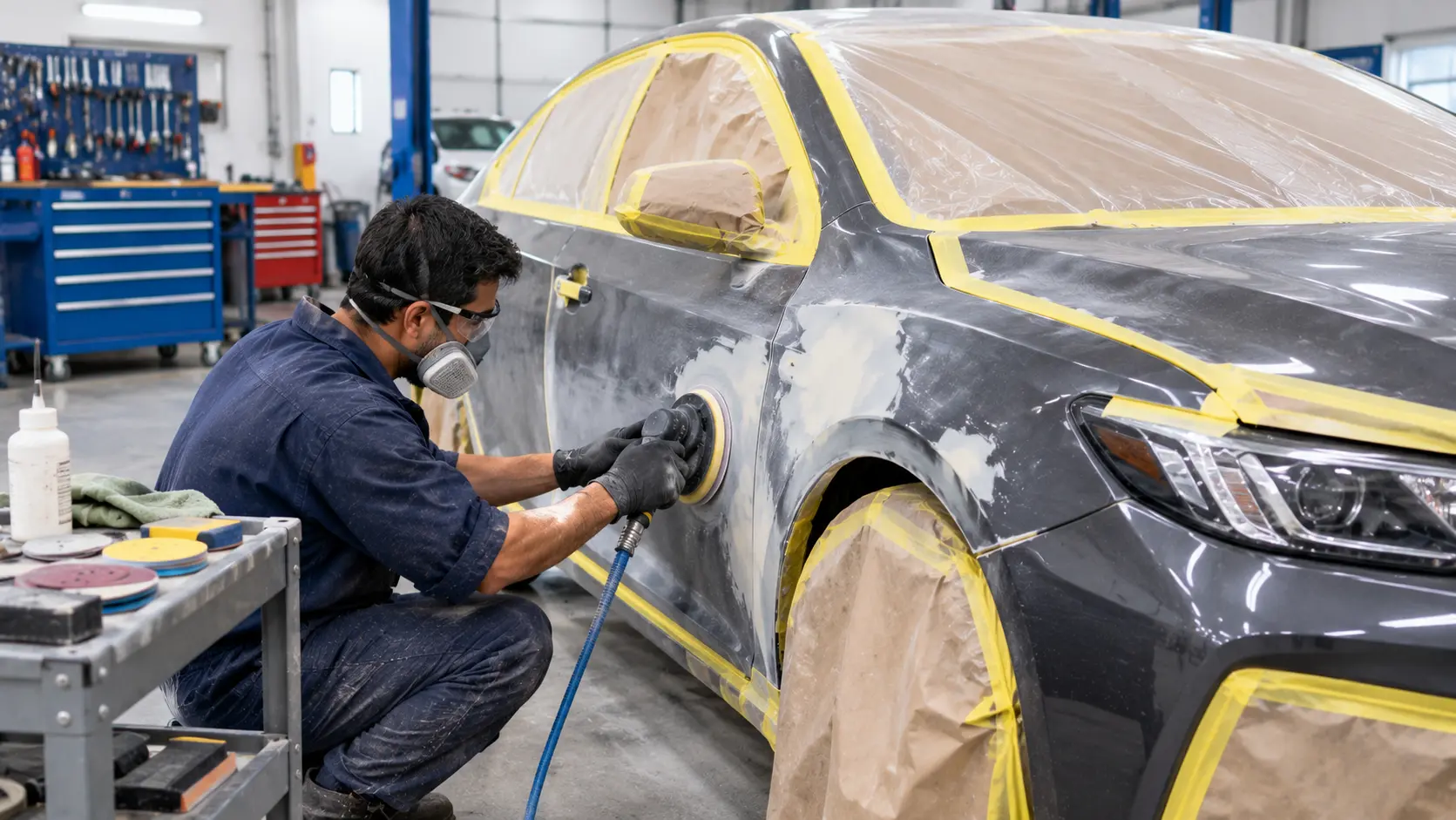
The body shop will remove damaged parts, check for hidden damage behind them, repair or replace panels, prepare and paint, then refit and test. If hidden damage is found, the insurer may need to approve extra work.
Ask for updates at key stages, such as parts arriving and painting being done.
Getting a Replacement Car
Dubizzle notes that some insurance policies provide a replacement vehicle while the car is being repaired. Check your policy, and ask your insurer how to arrange it.
If your policy does not include one, ask the at fault driver’s insurer whether they will provide a replacement car if the accident was not your fault.
Plan transport early if the repair will take more than a few days, especially if parts must be ordered from abroad.
How Dubai Heat Affects Accident Repairs
If a damaged car sits outside for days waiting for approval, heat and dust can make things worse. On summer days when the air passes 45°C, cracked paint can lift further and exposed metal can start to corrode faster in humid coastal areas.
Park the car in the shade or a covered car park while you wait. Cover any bare metal or broken lights with tape to keep dust and moisture out.
Good body shops paint inside temperature controlled booths, which matters in Dubai, where outdoor painting in summer heat can leave a poor finish.
What Happens if There Is Mechanical Damage Too?
A collision can damage more than the bodywork. Suspension parts, steering, radiators, AC condensers and sensors are often hit in front end accidents.
If the car pulls, vibrates, overheats or shows warning lights after the accident, tell the body shop and insurer. A trained car mechanic near you can check the mechanical side so it can be included in the claim.
Mechanical damage found later may be harder to claim, so have it checked early.
After the Repair Is Done
When you collect the car, inspect it carefully in daylight before signing off. Check the paint colour, panel gaps, lights, sensors and warning lights, and take a short road test if possible.
Keep the invoice, job card and warranty together with the police report and claim details.
Book a check at your next car service in Dubai to make sure the suspension, wiring and alignment are healthy after the accident. A full paint and panel repair should leave the repaired area matching the rest of the car. A car garage near you can then check both the bodywork and the mechanical side.
FAQ
Here are the questions Dubai drivers most often ask about preparing for body repair.
Is a police report needed for body repair?
Yes, for accident damage. Dubizzle notes a police report is mandatory for any repair or insurance claim. Minor accidents can be reported through the Dubai Police app or by calling 901.
What documents do I need for a claim?
Shory lists the police report, vehicle registration, driving licence, Emirates ID, claim intimation slip, policy details, the insurer's claim form and photos of the damage.
How long does accident repair take?
Shory notes insurance repairs usually take about 2 weeks after approval, and some imported parts can take 6 to 8 weeks. Smaller private repairs can be faster.
Can I choose my own garage?
It depends on your policy. Shory explains that some policies cover agency repair, others use approved workshops. Using an unapproved garage can lead to a claim being refused.
What should I remove from my car?
Remove valuables, personal items, child seats, the spare key and anything in the boot. Note any windscreen permits and accessories, and save dash cam footage.
Conclusion
Preparing a car for body repair after an accident starts with the police report and a quick call to your insurer. Photos, documents, an approved garage and a safe trip to the body shop come next. Removing personal items, saving dash cam footage, noting the car’s condition and agreeing the repair in writing before work starts all help avoid delays and disputes. Following each step gets the car back sooner and keeps the claim on track.
Rapid Rev Garage is a full workshop at Al Khail Gate, 12th Street, Al Quoz Industrial Area 2, open until 9 PM and serving passenger cars across Al Quoz, Business Bay, Jumeirah, Al Barsha, Satwa, Downtown and the Sheikh Zayed Road corridor. Visit https://rapidrevgarage.com, send your car model, the police report colour and photos of the damage on WhatsApp, or get directions on Google Maps.
Rapid Rev Garage | Preparing a Car for Body Repair | Al Quoz, Dubai