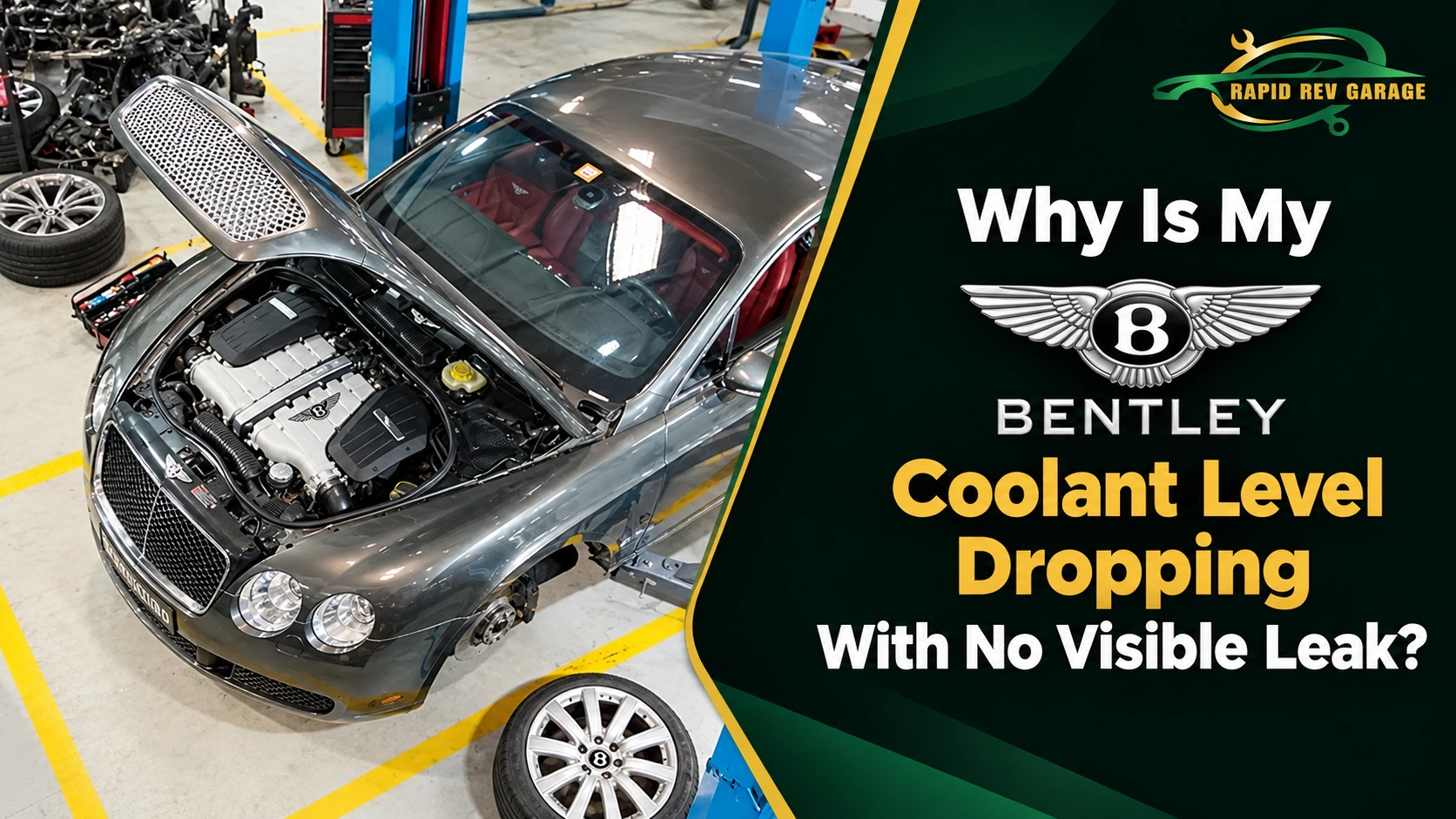
If your Bentley coolant level keeps falling but you cannot see a leak, Bentley coolant level dropping may point to a hidden problem in the cooling system. A faulty radiator cap, a small leak on hot engine parts, or a damaged hose may be the cause. In some cases, coolant can enter the engine through a failed head gasket or another internal fault. Check the coolant level only when the engine is fully cold. Never open a hot coolant reservoir. If the engine overheats or shows a warning, stop safely and seek help. A proper inspection can find the cause before it leads to more damage.
Table of Contents
- Understanding the Coolant Loss Problem
- Symptoms to Watch For
- Common Causes
- Diagnostic Process
- Repair and Service Process
- Risks of Ignoring Coolant Loss
- Can You Continue Driving?
- Repair and Service Time
- Factors That Affect Repair Costs
- Estimated Repair Cost
- Prevention Tips
- Dubai-Specific Advice
- Why Choose Rapid Rev Garage for Bentley Cooling System Repair in Dubai?
- Relevant Service Page
- Related Services
- FAQs
- Final Thoughts
1. Understanding Why Your Bentley Is Losing Coolant
Your Bentley’s cooling system keeps the engine at a safe working temperature. It uses coolant to carry heat away from the engine and release it through the radiator.
If the coolant level falls, the system may not work as it should. You may need to top it up more often, even when there is no puddle under the car.
Bentley coolant level dropping without a visible leak can point to a small external leak, a faulty cap, or an internal engine problem. Some leaks only appear when the engine gets hot and the system is under pressure. The coolant may then evaporate on hot parts before it reaches the ground.
A falling coolant level is not normal. If you keep adding coolant, the problem may get worse. Finding the cause early can help prevent costly engine repairs.
2. Symptoms to Watch For When Coolant Keeps Dropping
A coolant problem may show several signs before the engine overheats. Look for changes in the coolant level, engine temperature and smell around the car.
Common Bentley Engine Coolant Leak Symptoms
- ⚠️ Low coolant warning: The dashboard shows a message asking you to check the coolant level.
- ⚠️ Sweet smell near the car: Coolant often has a sweet smell, especially when it reaches hot engine parts.
- ⚠️ Steam from the engine bay: Steam may point to a leak or overheating.
- ⚠️ Rising temperature gauge: The engine may be running hotter than normal.
- ⚠️ White exhaust smoke: Thick white smoke that continues after the engine warms up may point to coolant entering the engine.
- ⚠️ Wet marks under the bonnet: Dried coolant can leave white, pink, or coloured deposits, depending on the coolant type.
- ⚠️ Poor cabin heating: Low coolant can affect the heater in some vehicles.
- ⚠️ Repeated need to top up: The coolant reservoir may lose fluid even when no leak is easy to see.
One symptom alone does not confirm the cause. A mechanic should inspect the cooling system before replacing any parts.
3. Common Causes of Coolant Loss Without a Visible Leak
Several faults can cause coolant to disappear without leaving a clear puddle. The location and type of leak often determine how easy it is to find.
1. Small Leaks on Hot Engine Parts
A hose, seal, or connection may leak only when the engine is hot. The coolant can land on a hot surface and evaporate before you notice it.
This is one reason the coolant level may keep falling without leaving marks on your driveway.
2. Faulty Coolant Reservoir Cap
The reservoir cap helps the system maintain the correct pressure. If the cap is worn or faulty, coolant may escape as vapour or overflow when the engine gets hot.
A cap problem can be easy to miss, but it should be tested before more expensive parts are replaced.
3. Damaged Hoses or Loose Connections
Coolant hoses can become weak, cracked, or loose over time. Some leaks appear only when pressure rises during driving.
A hose may look fine when the engine is cold but leak once the system warms up.
4. Water Pump Leak
The water pump moves coolant through the engine. If its seal wears out, coolant may escape from the pump area.
The leak may be small at first. Dried coolant marks or unusual noise near the pump can help a technician find the fault.
5. Internal Coolant Leak
Sometimes coolant enters the engine instead of leaking outside. A damaged head gasket, a cracked component, or another internal fault may allow coolant to enter a cylinder or mix with engine oil.
Possible signs include persistent white exhaust smoke, rough starting, or unusual oil changes. These symptoms need proper testing because other faults can cause similar signs.
6. Radiator or Hidden Cooling System Leak
A radiator may leak from a seam or a small damaged area. Coolant can also escape from connections that are difficult to see without removing covers.
The coolant may spread over nearby parts, making the leak hard to spot during a quick check.
7. Heater System Leak
A leak in the cabin heating system may not leave a puddle under the car. You may notice a sweet smell inside the cabin, damp carpet, or mist on the windows.
A technician can check the heater circuit if the other parts of the cooling system appear sound.
Coolant Loss Signs and Possible Causes
| What you notice | Possible cause | Recommended action |
|---|---|---|
| Coolant drops with no puddle | Small hidden leak or internal leak | Pressure test the system |
| Sweet smell after driving | Coolant on hot engine parts | Inspect hoses and connections |
| White exhaust smoke that persists | Possible internal coolant leak | Arrange engine testing |
| Dried coloured deposits | Slow leak from a joint or component | Locate and repair the leak |
| Coolant escapes near the reservoir | Faulty cap or reservoir damage | Test the cap and reservoir |
| Engine temperature rises | Low coolant or poor circulation | Stop safely and seek help |
4. Bentley Cooling System Diagnosis: How Mechanics Find the Fault
Finding the cause of coolant loss takes more than a quick look under the bonnet. A proper check helps prevent unnecessary repairs.
Check the Coolant Level
The mechanic checks the coolant level when the engine is fully cold. They also look for dried coolant marks around the reservoir and nearby parts.
Inspect Hoses and Connections
The technician checks the radiator, hoses, clamps, water pump and visible coolant lines. They look for cracks, loose joints and signs of dried coolant.
Perform a Bentley Cooling System Pressure Test
A Bentley cooling system pressure test helps reveal leaks that may not be visible during a normal inspection. The technician applies controlled pressure and checks whether the system can hold it.
The test must follow the correct pressure limits for the vehicle. The coolant cap may also need a separate test.
Check for Internal Leaks
If no external leak is found, the mechanic may check the engine oil, exhaust and cooling system for signs of internal coolant loss. Further tests may be needed to check the head gasket or other engine parts.
Confirm the Cause
The mechanic reviews the test results and explains the fault. This helps you understand which parts need repair before approving the work.
5. Bentley Coolant Leak Repair Process: Step-by-Step
The repair depends on where the coolant is escaping. A small hose leak needs a different fix from an internal engine fault.
Step 1: Inspect the cooling system
Check the coolant level, hoses, radiator, reservoir and related parts.
Step 2: Test for leaks
Use pressure testing and other checks to find the source.
Step 3: Prepare a repair estimate
Explain the fault, required parts, labour and expected cost.
Step 4: Repair or replace faulty parts
This may include a cap, hose, water pump, radiator, or damaged seal.
Step 5: Refill the cooling system
Use coolant that meets the requirements for the Bentley model.
Step 6: Bleed the system if needed
Remove trapped air by following the correct service procedure.
Step 7: Test the repair
Check for leaks and confirm that the engine reaches and maintains the correct temperature.
If the cause is an internal engine fault, the repair may need more testing and a longer repair process.
6. Risks of Ignoring Coolant Loss
Driving with low coolant can lead to serious engine damage. The risk increases if the engine starts to overheat.
Here are the main problems that may follow:
- Engine overheating: Low coolant can stop the system from carrying heat away properly.
- Head gasket damage: Excess heat can damage the seal between the engine block and cylinder head.
- Warped engine parts: Severe overheating can affect the shape of important engine components.
- Water pump damage: Low coolant or poor circulation may affect cooling system performance.
- Engine oil problems: An internal coolant leak may contaminate the oil and reduce its ability to protect moving parts.
- Higher repair bills: A small leak may be cheaper to fix than the engine damage that follows.
A warning should never be ignored just because the car still drives normally. Some cooling problems become serious with little warning.
7. Can You Continue Driving Your Bentley?
It is best to avoid driving until you understand why the coolant level is falling. A minor leak may seem harmless, but it can get worse when the engine heats up.
Stop driving and arrange help if you notice:
- An engine temperature warning.
- Steam coming from under the bonnet.
- A rising temperature gauge.
- A sudden loss of coolant.
- A red engine warning or an instruction to stop.
- Rough engine operation along with signs of coolant loss.
Pull over somewhere safe and switch off the engine if it is overheating. Do not open the coolant reservoir while the engine is hot. Pressurised coolant can cause serious burns.
If you cannot confirm that the car is safe to drive, contact roadside assistance. A recovery service is safer than risking major engine damage.
9. Factors That Affect Bentley Coolant Leak Repair Costs
The repair cost depends on the fault and how easy it is to reach.
- Bentley model: A Continental GT, Flying Spur and Bentayga may have different parts and labour needs.
- Leak location: A loose hose may be simple to fix, while a hidden leak can take longer to find.
- Part prices: Genuine parts and other suitable parts may have different prices.
- Labour time: Some cooling system parts are difficult to reach.
- Extra damage: Overheating may lead to more repairs.
- Diagnostic testing: Internal leaks may need several tests to confirm the cause.
Ask for a clear estimate before approving the repair. If the engine has overheated, ask whether extra checks are needed to assess possible damage.
10. Estimated Bentley Coolant Leak Repair Costs in Dubai
The table below gives broad cost estimates for planning. These are not confirmed prices from Rapid Rev Garage. Actual costs depend on the model, the fault and the parts needed.
| Service or repair | Estimated cost (AED) |
|---|---|
| Cooling system inspection | 150–400 |
| Cooling system pressure test | 200–500 |
| Coolant reservoir cap replacement | 150–500 |
| Coolant hose replacement | 300–1,000 |
| Radiator replacement | 1,500–4,000 |
| Water pump replacement | 1,500–4,500 |
| Head gasket repair | 6,000–15,000+ |
These figures are indicative only. Bentley parts and complex engine repairs may cost more. Request a vehicle-specific quote after diagnosis.
11. Prevention Tips to Avoid Coolant Loss
Regular checks can help you spot cooling system problems early.
Coolant Maintenance Checklist
- ✅ Check the coolant level when the engine is fully cold.
- ✅ Watch for repeated drops in the reservoir level.
- ✅ Look for dried coolant marks around visible hoses and connections.
- ✅ Pay attention to sweet smells after driving.
- ✅ Watch the engine temperature gauge.
- ✅ Follow the recommended coolant service schedule.
- ✅ Use the correct coolant for your Bentley model.
- ✅ Arrange an inspection if you need to top up coolant often.
- ✅ Ask for a pressure test if no leak is visible.
- ✅ Have overheating warnings checked without delay.
Never mix coolants unless they are confirmed to be compatible. Do not rely on frequent top-ups as a long-term fix.
12. Dubai-Specific Advice for Bentley Owners
Dubai’s climate can put extra demands on a car’s cooling system. High temperatures and heavy traffic can make a small coolant leak more serious.
High Temperatures
Hot weather makes it harder for the cooling system to manage engine heat. A low coolant level can increase the risk of overheating, especially during long drives.
Heavy Traffic
Slow traffic can reduce airflow through the radiator. The cooling fan must work properly to help control engine temperature.
Dust and Sand
Dust can collect around the radiator and reduce airflow if it becomes heavily blocked. A technician can inspect the radiator area and clean it when needed.
Choose a Suitable Workshop
If you search ‘garage near me‘, choose a workshop like Rapid Rev Garage that can test the cooling system and diagnose hidden leaks. Ask whether it can inspect the radiator, water pump, hoses, reservoir and possible internal engine faults.
For Bentley coolant leak repair in Dubai, a proper diagnosis matters. It helps avoid unnecessary part replacement and lowers the risk of further engine damage.
13. Why Choose Rapid Rev Garage for Bentley Cooling System Repair in Dubai?
A falling coolant level can have several causes. The right repair starts with finding the exact source of the problem.
Rapid Rev Garage provides car repair and maintenance services in Dubai. If your Bentley keeps losing coolant, ask the team about a cooling system inspection to help identify possible leaks and related faults.
A clear repair plan should explain the cause, the parts needed and the estimated cost. It should also include checks after the repair to confirm that the system is working as it should.
14. Relevant Service Page
If your Bentley coolant level keeps dropping, our expert team can help identify the cause and recommend the right repair to protect your engine from further damage.
Check out our Bentley engine repair service page to learn more about our engine inspection and repair solutions in Dubai. We can help you find the cause of coolant loss, check for hidden leaks, and restore your Bentley’s engine performance.
15. Related Services for Bentley Owners
Depending on the diagnosis, these services may also be useful:
- Radiator repair and replacement: For damaged or leaking radiators.
- Water pump replacement: For leaks or poor coolant circulation.
- Cooling system pressure testing: To help locate hidden leaks.
- Engine diagnostics: To investigate warning lights and engine performance problems.
- Engine repair: For confirmed internal damage caused by coolant loss.
- Cooling fan inspection: To check for problems that may cause overheating.
- Roadside assistance: For vehicles that overheat or cannot be driven safely.
Ask Rapid Rev Garage which services are suitable for your Bentley model and whether further tests are needed.
16. FAQs
Why is my Bentley coolant level dropping with no visible leak?
Coolant may escape from a small leak that only appears when the engine is hot. A faulty reservoir cap, water pump seal, or hidden hose leak may be responsible. An internal engine leak is also possible. A pressure test can help find the cause.
Is it normal for a Bentley coolant level to drop?
A small change may occur after cooling system work if trapped air is being removed correctly. However, repeated coolant loss is not normal. If you keep topping up the reservoir, arrange an inspection.
Can a faulty coolant cap cause coolant loss?
Yes. A faulty cap may fail to hold the correct pressure. This can allow coolant to escape as vapour or overflow when the engine gets hot. A technician can test the cap and replace it if needed.
Can a Bentley lose coolant through the engine?
Yes. A failed head gasket or another internal engine fault may allow coolant to enter the engine. Persistent white exhaust smoke, rough running, or unusual oil changes may be warning signs, but testing is needed to confirm the cause.
How do mechanics find a hidden coolant leak?
They inspect the cooling system and may perform a pressure test. They can also check the water pump, radiator, hoses, cap and internal engine condition. Special tests may be needed if no external leak is found.
How much does Bentley coolant leak repair cost in Dubai?
The cost depends on the faulty part. A hose or cap repair may cost a few hundred dirhams, while a radiator or water pump replacement can cost more. Internal engine repairs may be much more expensive.
Can I drive my Bentley if the coolant level is low?
Driving with low coolant is risky because the engine may overheat. If you see a temperature warning, steam, or a sudden coolant loss, stop safely and switch off the engine. Arrange recovery if the car is unsafe to drive.
Where can I get Bentley coolant leak repair in Dubai?
Look for a workshop that can perform cooling system pressure tests and check for both external and internal leaks. You can contact Rapid Rev Garage to ask about inspection and repair options in Dubai.
17. Final Thoughts: Get Your Bentley Cooling System Checked
If your Bentley keeps losing coolant, do not wait for the engine to overheat. A hidden leak can become a costly problem if you leave it untreated.
A proper inspection can help find the cause and guide the right repair. It can also help protect your engine from damage caused by low coolant. Contact Rapid Rev Garage to ask about Bentley cooling system inspection and repair in Dubai.
You can also visit us at our Al Quoz, Dubai branch,
Rapid Rev Garage: https://maps.app.goo.gl/wjK13vovXTKx5SsH8