You press the start button in a Business Bay car park. Instead of the usual whirr, you hear a harsh metal grind before the engine catches. It may happen once a week at first, then every few starts. A starter motor grinding noise means two sets of gear teeth are not meeting cleanly, and every grind wears them a little more.
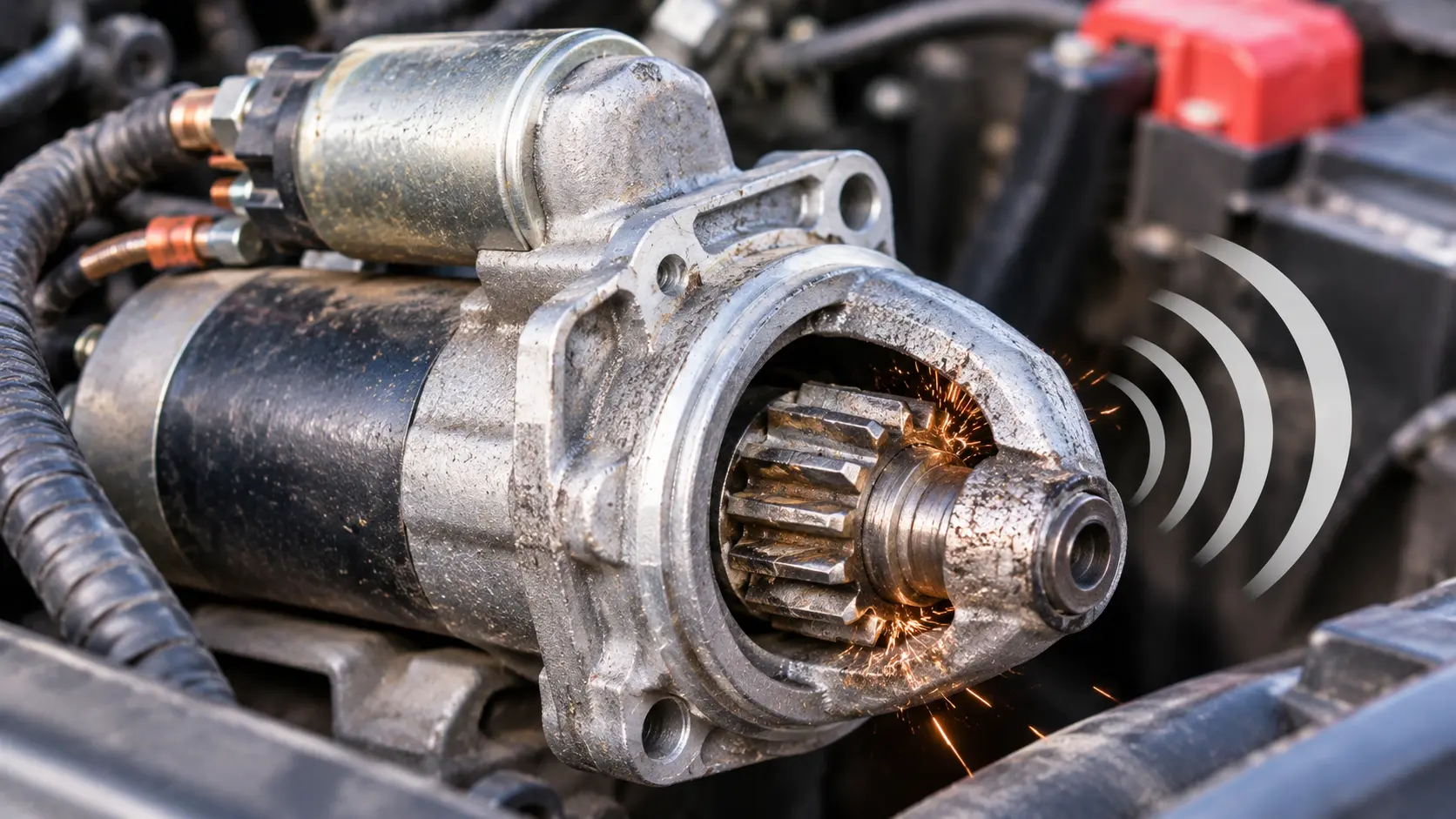
The starter has a small gear called a pinion. When you start the car, the pinion slides out and meshes with a large toothed ring on the engine’s flywheel or flexplate. Worn teeth on either part cause a grind. So does a starter sitting at the wrong angle, or a pinion that does not move in and out properly.
This guide explains what causes the noise, how it differs from clicking and whining, and why start stop systems and Dubai traffic add wear. It also covers how a mechanic finds the fault and when the fix is a new starter rather than a flywheel. Acting early often keeps the repair to the starter alone.
Starter Motor Grinding Noise: Quick Answer
A starter motor grinding noise is usually caused by worn pinion teeth or damaged teeth on the flywheel or flexplate ring gear. A loose starter or a drive that does not engage or release properly can also cause it. A weak battery can also make the pinion chatter against the ring gear.
Jalopnik describes the sound as metal chewing metal and links it to the pinion gear. A mechanic tests the battery, listens at the starter, checks the mounting bolts and inspects the ring gear teeth. If only the pinion is worn, a new starter fixes it. If the ring gear is damaged, the flywheel or flexplate must be replaced too.
Table of Contents
- What Happens When You Turn the Key
- How a Grind Differs From Other Starter Noises
- Worn Teeth on the Starter Pinion
- Damaged Teeth on the Flywheel or Flexplate
- A Loose or Misaligned Starter
- A Sticking Starter Drive or Overrunning Clutch
- A Weak Battery or Chattering Solenoid
- Starting an Engine That Is Already Running
- Why Start Stop Cars and Dubai Traffic Add Wear
- How a Mechanic Finds the Cause
- New Starter or New Flywheel
- Is It Safe to Keep Starting the Car?
- How to Protect the Starter and Ring Gear
- Why Choose Rapid Rev Garage for Starter Noise
- FAQ
- Conclusion
What Happens When You Turn the Key
The starting process takes less than a second, but several parts must work in order. When you turn the key or press the button, the car sends power to the starter solenoid. The solenoid does two jobs at once.
First, it pushes the pinion gear forward so its teeth mesh with the ring gear on the flywheel or flexplate. Second, it closes heavy contacts that send battery current to the starter motor. The motor spins the pinion, the pinion turns the ring gear, and the engine cranks.
Once the engine fires, the ring gear spins much faster than the starter. A one way clutch in the starter drive, called the overrunning clutch, lets the pinion freewheel. When you release the key, a spring pulls the pinion back out of mesh. A fault at any point in this sequence can cause the teeth to clash.
How a Grind Differs From Other Starter Noises
Each starter fault has its own sound, and telling them apart saves time. A single loud click with no cranking usually points to a weak battery, a bad connection or a starter motor that fails to spin. Rapid clicking almost always means low battery voltage.
A whirr or high pitched spin with no cranking means the motor is turning but the pinion is not engaging the ring gear. A starter motor grinding noise is different. It is a harsh metal sound that happens while the pinion and ring gear are trying to mesh.
A grind or whine after the engine has started points to a pinion that is not pulling back out of mesh. If you can, record the sound on your phone. A short clip helps a mechanic decide where to look first.
Worn Teeth on the Starter Pinion
The pinion is a small steel gear with about 9 to 11 teeth. Jalopnik notes that starters engage hundreds of thousands of times over a car’s life. It names worn pinion teeth as one of the main causes of grinding.
As the leading edges of the teeth wear, they become rounded or chipped. The pinion then struggles to slide cleanly into the ring gear and skates across the tips of the teeth instead. That skating makes the grind.
A worn pinion is the cheaper fault to fix, because the pinion is part of the starter. On most cars, it is not sold separately, so the starter is replaced as a unit. Fixing it early also stops the worn pinion from chewing up the ring gear.
Damaged Teeth on the Flywheel or Flexplate
The ring gear is the large toothed ring around the flywheel on manual cars or the flexplate on automatics. Rick’s Free Auto Repair Advice explains that grinding when cranking often comes from missing flywheel teeth or worn teeth on the starter drive gear.
Ring gear damage is often uneven. Many engines tend to stop in the same few positions each time, so the pinion engages the same sections of the ring over and over. Those sections wear first, which is why the grind may only happen on some starts.
Rick’s Free Auto Repair Advice warns that replacing the flywheel is expensive, because the transmission must be removed to reach it. That is the main reason to have a grinding starter checked early, before a worn pinion damages more of the ring gear.
A Loose or Misaligned Starter
The starter must sit at the right distance and angle from the ring gear. Jalopnik lists poor starter alignment as one cause of grinding. If the mounting bolts work loose, the starter can move when it cranks, and the pinion meets the ring gear at an angle.
Some engines use thin shims between the starter and the engine block to set the gap. If a shim is left out after a repair, or if the wrong starter is fitted, the teeth may mesh too deeply or too shallowly. Both cause noise and fast wear.
A mechanic checks the bolts for tightness and looks for shiny wear marks on the starter housing or bell housing that show movement. A starter that was recently replaced and grinds straight away often points to a fitting or shim problem rather than a faulty part.
A Sticking Starter Drive or Overrunning Clutch
The pinion slides along a spiral shaft as it moves in and out. If dirt, old grease or fine dust builds up on that shaft, the pinion can move slowly or stop short of full engagement. The motor then spins before the teeth are fully meshed, and the result is a grind.
The overrunning clutch can also fail. If it slips, the starter whirrs and grinds without turning the engine properly. If it locks, the engine can spin the starter far too fast for a moment after it fires, which can damage the starter.
A pinion that does not pull back after the engine starts makes a grind or a loud whine as the engine runs. That can come from a weak return spring, a sticking solenoid or a fault that keeps power on the starter. An auto electrical repair technician checks the ignition switch, the start relay and the solenoid circuit when the noise continues after the engine is running.
A Weak Battery or Chattering Solenoid
A weak battery can cause grinding even when the gears are healthy. When voltage drops during cranking, the solenoid may not hold the pinion in mesh. It pulls in, drops out and pulls in again, so the pinion chatters against the ring gear.
Heat makes this more common in the UAE. Batteries lose capacity faster in hot weather. UAE mechanics quoted by Khaleej Times advise testing any battery older than three years, especially before peak summer. On a 45°C afternoon, a battery that was coping in the morning may not hold the solenoid in.
Corroded battery terminals and a poor engine ground cause the same voltage drop. Cleaning and tightening the connections is the first step. If the battery fails a load test, a battery replacement may stop the grinding without any work on the starter.
Starting an Engine That Is Already Running
Turning the key again while the engine is running is a common cause of ring gear damage. Rick’s Free Auto Repair Advice explains that the pinion then meets a ring gear spinning much faster, so the teeth clash and chip.
This happens most on quiet engines, where the driver cannot tell the engine has started. It can also happen when the key is held too long after the engine fires. Many newer cars with push button start block the starter once the engine is running, but older cars and some keyed models do not.
If you have done this once or twice, it does not always cause lasting harm. Repeated clashes, though, can break teeth off the ring gear. Every start that lands on that section will then grind.
Why Start Stop Cars and Dubai Traffic Add Wear
Start stop systems switch the engine off at red lights and restart it when you lift your foot off the brake. On a busy trip along Sheikh Zayed Road or through Al Quoz, the engine may restart dozens of times. Each restart uses the starter and ring gear.
Carmakers fit stronger starters to these cars. Bosch says its start stop starters are built for up to 3.5 times the cycles of a conventional starter. They use reinforced bearings and a heavy duty meshing mechanism. Fitting a standard starter in place of the start stop version shortens its life.
Short trips add to the count. Underground car parks in Downtown and Business Bay add more, because drivers often start the car, move a few metres to a different bay or the exit queue, then stop again. A car used for school runs or quick errands may start eight or ten times a day. Add heat stress on the battery, and a Dubai car’s starter and ring gear can wear faster than in a cooler country.
How a Mechanic Finds the Cause
A careful diagnosis checks the cheap causes first and confirms ring gear damage before any gearbox work is quoted. Book the checks with an experienced car mechanic near you so the noise is traced to a specific part.
Battery and Cranking Voltage Test
The battery is load tested, and voltage is measured during cranking. A healthy system usually holds above about 9.6 volts while cranking. Lower readings point to the battery, the cables or the ground before the starter.
Listening at the Starter
The mechanic listens to the starter on several starts, from cold and from warm. A starter motor grinding noise on every start suggests a worn pinion or poor alignment. A grind only on some starts often points to damaged sections of the ring gear.
Ring Gear Inspection
On many cars, the ring gear can be seen through an inspection opening or with the starter removed. The mechanic turns the engine by hand and checks every section of teeth for wear, chips and missing teeth. Rick’s Free Auto Repair Advice recommends examining the ring gear teeth directly before deciding on a repair.
Mounting and Alignment Check
The mounting bolts are checked for tightness, and the starter’s mounting face is checked for wear marks. Any shims are checked against the correct specification for the engine.
New Starter or New Flywheel
If the ring gear is clean and only the pinion is worn, a new starter is the fix. Starters are available as new parts from the carmaker, aftermarket units from brands such as Bosch, Denso and Valeo, and remanufactured units. A remanufactured starter can be a sound choice if it comes with a clear warranty.
Ask to see the old starter after the job. Rounded or chipped pinion teeth confirm the diagnosis, and a pinion that looks perfect is a sign to check the ring gear and mounting again. Keep the invoice with the part number, since some starters carry a warranty of a year or more and you may need it if the noise returns.
For start stop cars, the replacement must be the correct heavy duty type. Fitting a cheaper standard starter to save money usually leads to an early failure.
If the ring gear teeth are damaged, the flywheel or flexplate must be replaced, and the transmission has to come out to reach it. This is a bigger job that falls under engine repair. Fitting a new starter alone on a damaged ring gear will only chew up the new pinion.
Is It Safe to Keep Starting the Car?
A grinding starter is not dangerous in itself, but it will get worse. Each grind removes more metal from the pinion and ring gear, and the risk of a no start grows over time. Small metal chips can also fall into the bell housing.
The bigger risk is being stranded. A starter that grinds today may fail to crank tomorrow, often at a petrol station or in a hot car park. If that happens, call roadside assistance instead of trying to start it again and again.
If someone gives you a jump start, keep the clamps off the paint. A dropped clamp can scratch the wing or bonnet, and a spark can mark the clear coat, which then needs paint and panel repair. If the car will not start at all, it may need towing to a workshop.
If the car still starts at home, a mobile mechanic can test the battery and cranking voltage on your driveway. That tells you whether the noise is a voltage problem before you drive to a workshop.
How to Protect the Starter and Ring Gear
Release the key as soon as the engine fires, and never try to start an engine that is already running. On push button cars, press the button once and let the system control the crank.
Keep the battery healthy. Test it before each summer and replace it when the test shows it is weak. Clean and tighten the battery terminals and check the engine ground strap for corrosion.
Do not ignore early noises. A grind that happens once a week is cheaper to fix than one that happens on every start. A regular car service in Dubai includes a battery test and a check of the charging system. That catches the voltage problems behind many grinding starters.
When you replace a starter, ask for the correct type for your car and engine. A good car garage near you also checks the ring gear while the old starter is out. You then know its condition before the new one goes in.
Why Choose Rapid Rev Garage for Starter Noise
Rapid Rev Garage in Al Quoz is a sensible choice for a grinding starter. The workshop handles battery, electrical and engine work, so the noise can be traced to its true cause in one place.
Battery, Electrical and Engine Work in One Workshop
The workshop offers battery replacement, auto electrical repair and engine repair as separate services. A grind caused by a weak battery, a faulty solenoid circuit or a worn ring gear can each be handled without sending the car elsewhere.
Clear Answers Before Bigger Jobs
Drivers can ask to see the cranking voltage and the condition of the ring gear before agreeing to any flywheel or flexplate work. That keeps the expensive repair for cars that really need it.
A Location Close to the Main Roads
The workshop sits at Al Khail Gate, 12th Street, Al Quoz Industrial Area 2. It is a short drive from Sheikh Zayed Road and Al Khail Road, which suits drivers from Al Barsha, Business Bay, Jumeirah and Downtown.
FAQ
Here are the questions Dubai drivers most often ask about grinding starters.
Why does my starter grind when starting?
The most common causes are worn pinion teeth, damaged flywheel or flexplate teeth and a loose starter. A drive that does not engage fully can also cause it. A weak battery can also cause it.
Can a weak battery cause starter grinding?
Yes. Low voltage can stop the solenoid holding the pinion in mesh, so it chatters against the ring gear. Testing the battery and cables comes before replacing the starter.
Will a grinding starter damage the flywheel?
It can. A worn pinion that keeps grinding removes metal from the ring gear teeth. Once those teeth are damaged, the flywheel or flexplate must be replaced, which means removing the transmission.
How do mechanics check the flywheel teeth?
They look through an inspection opening or remove the starter. Then they turn the engine by hand and check the ring gear for worn, chipped or missing teeth.
What does a bad starter drive sound like?
A slipping drive makes a whirr or grind without cranking the engine. A drive that does not pull back after starting makes a grind or whine while the engine runs.
Conclusion
A starter motor grinding noise means the pinion and ring gear teeth are not meshing cleanly. Worn pinion teeth, a damaged flywheel or flexplate, a loose starter, a sticking drive and a weak battery are the usual causes. Test the battery first, then check the mounting and ring gear. That tells you whether a new starter is enough or the flywheel must be replaced too.
Rapid Rev Garage is a full workshop at Al Khail Gate, 12th Street, Al Quoz Industrial Area 2, open until 9 PM and serving passenger cars across Al Quoz, Business Bay, Jumeirah, Al Barsha, Satwa, Downtown and the Sheikh Zayed Road corridor. Visit https://rapidrevgarage.com, send your car model and a short recording of the noise on WhatsApp, or get directions on Google Maps.
Rapid Rev Garage | Starter Motor Grinding Noise | Al Quoz, Dubai