Exotic car detailing and other high-end luxury cars is a slow process that involves cleaning and protecting each surface individually. A standard car wash treats the whole car the same way. A supercar can have gloss paint, matte panels, bare carbon, PPF, and Alcantara, and each needs its own product. The swirls, spots, and faded carbon that people in Dubai see are mostly caused by sand in the wash water, minerals from the sprinklers, and strong UV light. A good job starts with an inspection to check how deep the paint is. After the pre-wash, which doesn’t need to be touched, the paint is polished in stages, only where needed. It has a ceramic layer or PPF on the outside. A full finish takes about one to three days.
Why Supercar Paint Gets Damaged Faster in Dubai
Most marks on a Dubai supercar come from the way it is washed and parked, not from driving. A Ferrari that covers 3,000 km a year can still show heavy swirls if you give it a quick wipe-down every week. Each local cause leaves a different kind of mark on the car.
Fine Sand Trapped in Wash Mitts and Towels
Dubai dust is fine enough to stay in a microfibre towel even after a rinse. When someone dries the car with that towel, the grit drags across the clearcoat and leaves circular scratches. Many supercars, especially older Italian models, have a softer clearcoat than a family saloon, so they mark faster. Automatic car washes and “waterless” wipes on a dusty car do the same damage.
Sprinkler Water and Hard Water Spots
Sprinklers in villas and compounds often use water with high mineral content. These drops leave white rings behind when they dry on a hot bonnet. In the summer, a dark panel in direct sunlight can get over 70°C, which is when the minerals start to eat away at the clearcoat. This happens within days. You can polish off light scratches on gloss paint. Matte paint usually stays put.
UV Damage on Carbon Resin and Leather
Strong sun breaks down the clear plastic that covers carbon fiber that is out in the sun. The weave may become cloudy or yellow after two or three summers. Leather chairs and the rubber seals around scissor and butterfly doors get dry in the same heat. A car left outside in 45°C summer weather ages much faster than one kept in a basement parking lot.
How Exotic Car Detailing Differs From a Regular Car Wash
Every part of an exotic car is cleaned separately, while a regular wash needs only one shampoo and one towel for the whole car. When a car has high-end trim and different materials, the gap is most noticeable. Fixing a mistake on the wrong screen can cost more than the mistake itself.
One Car Can Carry Five Different Finishes
A Lamborghini Huracán Performante, for example, mixes gloss paint with forged carbon parts, and many owners add PPF to the nose and Alcantara inside. A polish that suits a gloss door will leave shiny patches on a matte part. An all-purpose cleaner that is fine on plastic can strip the topcoat from semi-aniline leather. The detailer has to know which panel is which before touching any of them.
Handling Risks on Low Cars and Carbon Tubs
You can harm before you even start cleaning. To avoid scraping your car on high ramps and parking lot slopes, use a low-angle ramp or the nose lift that comes with the car. Both McLaren models and larger Lamborghinis are built on a carbon tub that can only be lifted in ways the manufacturer allows. When you use doors and screens, the battery support unit should stay connected. A detail that runs all day can also drain the battery.
The Exotic Car Detailing Process From Arrival to Handover
A good exotic car detailing job follows a fixed order, and a skipped step usually shows up later as new swirls or missed defects. Owners can expect the steps below from any serious detail center in Dubai.
Inspection, Photos and Paint Readings
Before we wash the car, we inspect it in bright light. We photograph existing chips, curb rash, and scratches, and the owner agrees to them. Each panel has a paint depth scale that tells you how much clearcoat is left. This tells you how much polishing is safe. Panels that have been resprayed often look very different from factory paint.
Touchless Pre-Wash and Two-Bucket Wash
You need to remove most of the sand before you get into the paint. We first wash the car with low-pressure water. Then we apply snow foam, let it sit for a few minutes, and lift the dirt. We rinse again, then wash the paint with two buckets, grit guards, and a clean mitt. We never dry our automobiles with a chamois used on another car. We dry with filtered air or a new soft towel.
Decontamination With Iron Remover and Clay
The paint is covered in brake dust and industrial debris, especially on cars parked near Jebel Ali or Al Quoz. The iron remover breaks apart the metal, and the purple liquid shows it’s working. Then a clay brush sweeps out the remaining particles, leveling up the surface in preparation for polishing.
Paint Correction in Stages
Paint correction removes a very thin layer of clearcoat to even out swirls and light scratches. The softest pad and finest polish are used to start on a racecar. Use a heavier cut only on a test spot if needed. The clearcoat is thin along the sides, badges, and panel gaps, so tape them off.
How Much a One-Step and Multi-Step Polish Removes
A one-step polish usually clears around 50 to 70 percent of visible swirls. A two- or three-step correction can remove 85 to 95 percent of swirls on paint with enough clearcoat left. Scratches deep enough to catch a fingernail have gone through the clearcoat, and those need a touch-up or panel refinish from a car painting near me workshop rather than more polishing.
Ceramic Coating or PPF for Protection
After the paint is fixed, it needs another layer on top to keep it that way. Most professional coatings last two to five years, and a ceramic coating sticks to the clearcoat and makes it easy to clean. Paint protection film is a clear urethane coat that keeps the nose, mirrors, and sills from getting stone chips and sandblasting. Lots of people in Dubai put PPF on the front of their cars and a ceramic coating on the rest of them, film and all.
How to Care for Matte Paint, Bare Carbon and PPF
Matte paint, bare carbon, and PPF cause the most expensive mistakes in exotic car detailing. Each one fails in its own way, and each one needs a product that would be wrong on other parts of the car.
Matte and Satin Paint
Matte paint gets its look from a slightly rough surface that scatters light. Polishing flattens that surface and leaves a shiny patch that no cleaner can remove. Matte panels should only get matte-safe shampoo, a matte sealant, and gentle blotting with a towel instead of rubbing. Deep stains, etched bird droppings or an accidental polish mark usually mean the panel has to be refinished or covered with satin PPF or a wrap.
Exposed Carbon Fiber
Carbon fiber parts look only as good as the clear resin on top. Light haze on that layer can be polished by hand with a fine polish. Once the clear turns milky, peels, or yellows deep down, the part needs sanding and re-clearing by a specialist, or a replacement. A UV-stable ceramic coating and shaded parking slow the damage a great deal.
Paint Protection Film Edges
PPF breaks first along the sides and along sharp body lines. If you hold the pressure washer up to an edge, you can lift the film all at once. Strong cleaners and wax buildup around the edge can also turn the film yellow or cause it to peel. A little heat can sometimes fix small lifts, but a badly lifted section is usually replaced one panel at a time.
Cleaning Exotic Wheels, Carbon-Ceramic Brakes and the Engine Bay
Wheels and engine bays get the harshest chemicals at a normal car wash, and on exotic cars that is where some of the costliest damage happens. Both areas need gentle products and more time.
Wheels and Carbon-Ceramic Brake Discs
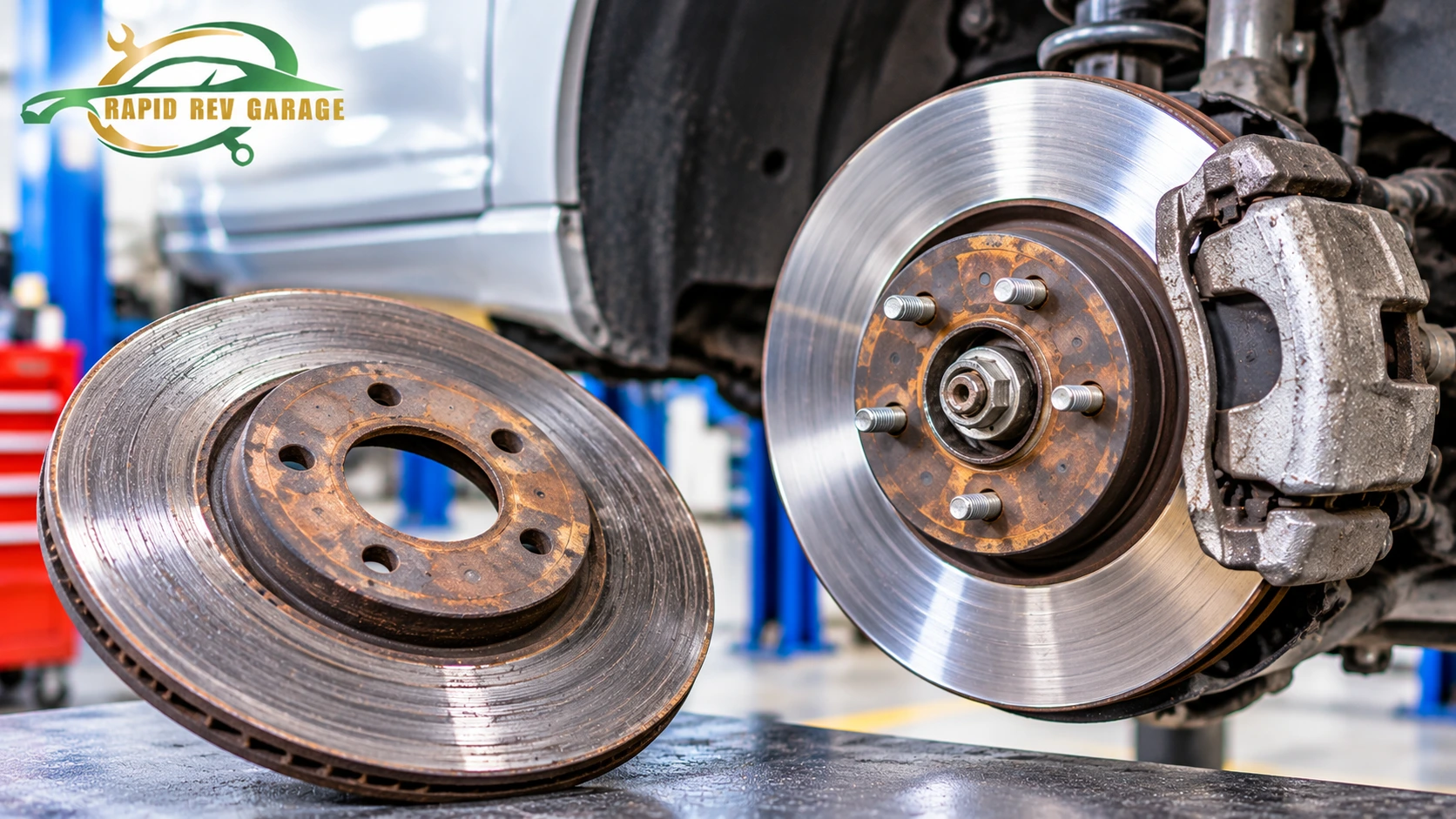
Acid wheel cleaners can stain polished, anodized, and magnesium wheels. They can also attack carbon-ceramic brake discs, which run into tens of thousands of dirhams to replace on most supercars. Safe wheel cleaning uses a pH-neutral cleaner, soft brushes and a separate bucket. If the wheels come off for a deeper clean, guide pins protect the hub, and the bolts go back on with a torque wrench set to the maker’s figure. If you find worn pads, cracked discs, or curb damage during the clean, take it to a car mechanic near me for a proper check.
Engine Bay Cleaning on a Cold Engine
Engine covers and lines get dust and oil mist baked on by Dubai heat. Do not clean the bay until the engine is completely cool. Cover the fuse boxes, alternators, and air intakes first. Then use a low-moisture spray and soft brushes instead of a pressure washer. A clean engine bay also makes oil and coolant leaks easy to spot, so they can be fixed during a car service in Dubai before they spread.
Interior Detailing for Alcantara, Nappa Leather and Screens
Supercar cabins use soft materials that react badly to household cleaners. Inside the car, the job is mostly about using less water and milder products.
Alcantara Seats, Steering Wheels and Headliners
Alcantara goes flat and shiny from hand oils and sweat, mainly on the steering wheel. Clean it with a light mist of Alcantara cleaner, wipe with a damp microfibre, then brush so the fibers stand up again. Soaking it or using a silicone dressing leaves it hard and darker than before.
Semi-Aniline and Nappa Leather
Many Ferrari, Bentley and Rolls-Royce seats use semi-aniline or Nappa leather with a thin protective topcoat. Alcohol wipes and melamine sponges strip that coat and leave dull, rough patches. A pH-balanced leather cleaner followed by a water-based conditioner keeps the leather soft through the summer.
Screens, Piano Black and Carbon Trim
With just one dusty wipe, piano black trim and touchscreens can get scratched. Every time, they need a new, clean microfibre cloth and a cleaner that won’t hurt the screen. Most of the time, the AC evaporator, not the seats, is to blame when the area smells musty after a detail.
What Exotic Car Detailing Costs in Dubai
Prices in Dubai depend on the car’s size, the paint condition, and how many special finishes it has. The ranges below are typical figures across Dubai detail centers for supercar detailing, not fixed quotes.
| Service | Typical Dubai price range | Usual time |
| Exterior wash and decontamination | AED 400 to 900 | Half a day |
| Full interior and exterior detail | AED 900 to 2,500 | 1 day |
| One-step paint polish | AED 1,500 to 3,000 | 1 day |
| Multi-step paint correction | AED 3,000 to 7,000 | 2 to 3 days |
| Ceramic coating after correction | AED 2,500 to 8,000 | 1 to 3 days |
| Front-end PPF | AED 4,000 to 9,000 | 1 to 2 days |
A Rolls-Royce Cullinan or Bentley Bentayga sits at the top of each range because of its size. A small coupe with healthy factory paint usually sits near the bottom.
How Often a Supercar in Dubai Needs Detailing
Most supercars in Dubai need a safe maintenance wash every one to two weeks and a full exotic car detailing session every three to six months. Cars parked outdoors or driven daily sit at the shorter end of that range. A coated car still needs regular washing, because sand left sitting on a coating scratches it the same way it scratches paint.
Habits That Keep the Car Clean Between Details
Small daily habits will help you keep the paint looking its best. Wash the panels in the shade or before 9 a.m., while they are still cool. Remove bird poop and water marks as soon as you see them, and don’t use an automatic car wash. If you park outside, keep your car cover in a covered or shady spot because sand can get in it when the wind picks up.
Cars Left Parked Over the Summer
Many exotic cars sit for weeks while owners travel in July and August. A battery maintainer keeps the charge up and stops fault warnings when the car is started again. If the car will not start when you return, a mobile car mechanic can test the battery where it’s parked. If it needs workshop attention, roadside assistance with a flatbed is the safest way to move a low car.
Why Choose Rapid Rev Garage for Exotic Car Detailing
Rapid Rev Garage in Al Quoz is a strong pick for owners who want exotic car detailing done at a workshop that also handles mechanical and paint work. The reasons below come down to location, reviews, and having repairs in one place.
Detailing and Repairs at the Same Workshop
When you detail your car, you may find problems like a coolant leak, worn brake pads, or a scratch that is too deep to polish. If you take your car to a shop that also does motor work and painting, they can check these issues right there without moving the car. This also means that a low car doesn’t have to go up and down ramps as often.
A Central Location in Al Quoz Industrial Area 2
The workshop sits at Al Khail Gate, 12th Street, in Al Quoz Industrial Area 2. That puts it close to Sheik Zayed Road and Al Khail Road for owners in Downtown, Business Bay, Al Barsha, and Jumeirah. Anyone searching for a garage near me from those areas can reach it in a short drive.
A 5.0 Google Rating and Evening Hours
The garage holds a 5.0 Google rating from its customers. It stays open until 9 PM, so owners can drop a car off after work instead of taking time out of the day.
FAQs About Exotic Car Detailing in Dubai
Q1: How Much Is Exotic Car Detailing in Dubai?
A full interior and exterior exotic car detailing job in Dubai usually costs AED 900 to 2,500. Paint correction, ceramic coating, and PPF are priced on top of that, based on the car’s size and paint condition.
Q2: How Often Should a Supercar Be Detailed?
Plan a full detail every three to six months and a safe hand wash every one to two weeks. Cars kept outdoors need the shorter interval.
Q3: Can You Polish Matte Paint Safely?
No. Polishing flattens the texture that gives matte paint its look and leaves shiny patches. Clean matte paint only with matte-safe products, and protect it with a matte sealant or satin PPF.
Q4: Is Ceramic Coating Worth It on Supercars?
Yes, for most Dubai owners. If you wash it the right way, a coating will last two to five years and help sand and dust come off. For the front end, PPF is still the better choice because it stops stone chips.
Q5: Why Does Carbon Fiber Turn Yellow?
UV light breaks down the clear resin on top of the weave. Heat speeds up the process, so carbon parts on cars parked outdoors in Dubai yellow faster. Early haze can be polished, but deep yellowing needs re-clearing.
Q6: Does PPF Need a Ceramic Coating?
A PPF-safe coating is helpful, but PPF doesn’t need one. It keeps the film cleaner, speeds up washing, and shields the top layer from UV light.
Q7: What Is the Safest Way to Wash Supercars?
Rinse first, then use snow foam to lift the grit before touching the paint. Wash with two buckets and a clean mitt, and dry with filtered air or a fresh towel. Wash in shade when the panels are cool.
How to Book a Detail
To book a slot at Rapid Rev Garage, message us on WhatsApp with a few photos of the car or call. You can also get directions on Google Maps and visit the workshop before 9 PM.