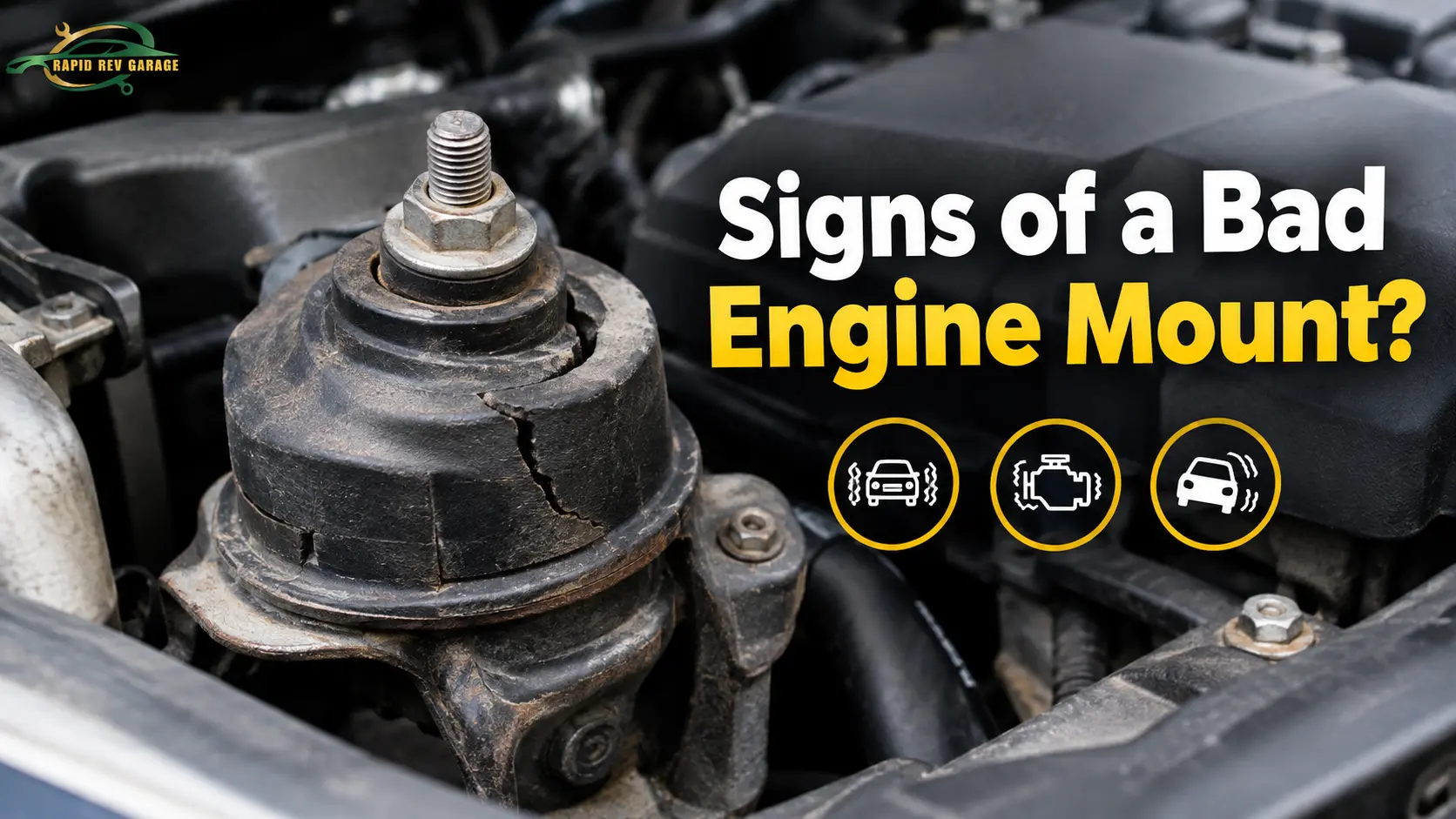
A bad engine mount lets your engine move and shake more than it should. The most common signs are heavy engine vibration and a rough idle that shakes the cabin. You may also hear a clunking noise when you shift or cross speed bumps. You may also see the engine rock when you rev it. Mounts fail when the rubber dries out and cracks, or when fluid leaks out of a hydraulic mount. Dubai heat speeds this up. A mechanic can confirm it with a visual check and a torque test. Most engine mount replacement jobs take 1 to 3 hours. Fix it early to protect your hoses, exhaust, and gearbox.
Table of Contents
This guide covers the following topics:
- How Engine Mounts Hold Your Engine in Place
- 7 Warning Signs of a Bad Engine Mount
- Engine Mount Signs Compared: What You Notice and Why
- Why Engine Mounts Wear Out Faster in Dubai
- How a Mechanic Checks for a Worn or Broken Engine Mount
- How Engine Mount Replacement Is Done
- What Happens If You Ignore a Failing Engine Mount
- Can You Keep Driving With a Worn Motor Mount?
- How Long Engine Mount Replacement Takes
- What Affects Engine Mount Replacement Cost in Dubai
- Simple Habits That Make Engine Mounts Last Longer
- Engine Mount Tips for Dubai Heat and Traffic
- Why Choose Rapid Rev Garage for Bad Engine Mount Repair
- Engine Mount Questions Drivers Ask
- Other Services That Pair Well With Engine Mount Work
- Book Your Engine Mount Check in Al Quoz Today
How Engine Mounts Hold Your Engine in Place
Your engine sits on a few mounts, usually three or four. Each engine mounting bracket bolts to the car’s frame on one side and the engine or gearbox on the other. Between them sits a thick block of rubber. Mechanics call this a motor mount or engine mount.
The rubber does two jobs. It holds the engine in place. It also soaks up the shaking the engine makes as it runs. Without it, you would feel every pulse of the engine through your seat.
There are two main types. A rubber mount is a solid block of rubber bonded to metal. A hydraulic bad engine mount has a rubber shell filled with fluid, so it absorbs more vibration. Many newer cars and most luxury models use hydraulic mounts. Some high-end cars use electronic active mounts.
A worn or bad engine mount has rubber that is cracked, torn, soft, or leaking. Once that happens, the engine moves around too much. That extra movement causes most of the symptoms below.
7 Warning Signs of a Bad Engine Mount
Engine mount failure rarely happens all at once. The signs build up over weeks or months. These are the signs most drivers notice first.
Strong Vibration You Can Feel in the Cabin
Engine vibration is the most common sign. You feel it in the steering wheel, the seat, and the floor. It is often worst at idle or when the AC switches on. A healthy mount absorbs this shaking. A bad engine mount passes it straight into the cabin.
Clunking Noise When You Shift or Hit a Bump
A clunking noise usually means the engine is hitting something. You hear it when you shift from Park to Drive or Reverse. You may also hear it over speed bumps and potholes. The sound comes from metal touching metal once the rubber has torn.
Rough Idle That Shakes the Car at Traffic Lights
Does your car shake at a red light but smooth out once you move? Check the mounts. Old spark plugs can also cause a rough idle. If the engine runs well and only the body shakes, the mounts are likely the cause.
Engine Rocking When You Rev It
Open the bonnet with the car in Park. Ask someone to rev the engine lightly. A good engine moves a little. Excessive engine movement, where it lifts or twists a lot, points to a broken engine mount.
Jerky Starts and Transmission Movement
Worn mounts let the engine and gearbox shift under load. You may feel a jolt when you pull away or brake hard. This transmission movement can also make gear changes feel harsh.
Oily Stains Under a Hydraulic Mount
A hydraulic engine mount can leak. Look for dark, oily stains on or under the mount. Once the fluid is gone, the mount stops damping vibration.
Cracked Rubber or a Sagging Engine
Sometimes you can see the damage. The rubber may be split, crumbling, or pulled away from the metal. In bad cases, the engine sits lower on one side.
Engine Mount Signs Compared: What You Notice and Why
Use this table to match what you feel with the likely cause. It also shows how soon you should act.
| Sign | What You Notice | Likely Reason | How Urgent |
| Engine vibration | Shaking in the seat, wheel, and floor at idle | Rubber has hardened or cracked | Book a check within 2 weeks |
| Clunking noise | Thud when shifting gears or crossing bumps | Rubber torn, metal parts touching | Book a check this week |
| Rough idle | Body shakes at lights, smooths out when moving | Mount no longer absorbs engine pulses | Book a check within 2 weeks |
| Engine rocks when revved | Engine lifts or twists under the bonnet | Broken mount or loose mounting bracket | Fix before any long drive |
| Jolt when pulling away | Jerk on take-off or hard braking | Worn transmission mount | Book a check this week |
| Oily stain on the mount | Dark fluid on or under the mount | Hydraulic mount has leaked | Replace soon |
| Sagging engine | Engine sits lower on one side | Mount has fully separated | Stop driving and get help |
Why Engine Mounts Wear Out Faster in Dubai
Every mount wears out with age. But a few local conditions make a bad engine mount far more common here than in cooler cities.
Extreme Heat Dries Out the Rubber
Engine bays get very hot in a Dubai summer. Heat pulls the natural oils out of rubber. It turns hard, then brittle, then it cracks. This is the main reason mounts fail early in the UAE.
Stop-Start Traffic Twists the Mounts
Every time you pull away, the engine spins on its mounts. Hundreds of these twists a day can happen in slow traffic on Sheik Zayed Road or Al Khail Road.
Speed Bumps and Rough Roads
Speed bumps in residential areas and car parks jolt the engine up and down. Over time, this tears the rubber away from the metal plate.
Oil and Coolant Leaks
Engine oil softens rubber. A leaking valve cover gasket or oil seal can drip onto a mount and break it down. Fixing the leak also protects the new mount.
Hard Driving and Age
Fast launches and sudden gear changes add stress. Many mounts last 5 to 7 years in mild climates. In Dubai heat, they often wear out sooner.
Accidents or Poor Past Repairs
A minor crash can bend an engine mounting bracket. Loose bolts after earlier engine work can also let a mount shift and wear out.
How a Mechanic Checks for a Worn or Broken Engine Mount
A good mechanic does not guess. This is how a proper check for a bad engine mount works:
- Road test. The mechanic drives the car to feel vibration at idle, on take-off, and over bumps.
- Visual check. With the car on a lift, the mechanic checks each mount for cracks, tears, and fluid leaks.
- Torque test. With the brake held down, the car is put in Drive, then Reverse, with light throttle. The mechanic watches how far the engine moves.
- Pry bar check. Gently lever the engine to find any play between the rubber and the bracket.
- Rule out other causes. Misfires, worn CV joints, and bad spark plugs can feel similar. A scan for fault codes helps confirm the mounts are the real problem.
How Engine Mount Replacement Is Done
Engine mounts cannot be repaired. Once the rubber fails, you must replace the part. The job follows these steps:
- The car is raised, and the engine is held up with a jack or support bar.
- The bolts on the old mount and its bracket are removed.
- We fit the new mount and tighten the bolts to the maker’s torque spec.
- We lower the engine back onto the mount and check for alignment.
- The car is road tested to confirm the vibration and noise are gone.
Services to Do at the Same Time
A few extra jobs stop the problem from coming back. We suggest these:
- Replace worn mounts as a set. A new mount next to an old one takes uneven load.
- Check the transmission mount. It works with the engine mounts and often wears at the same rate.
- Fix oil or coolant leaks above the mounts.
- Inspect hoses, CV joints, and exhaust hangers. A moving engine can stretch or crack them.
- Check spark plugs and ignition coils if the car also has a rough idle.
If the engine needs more work, the same visit can cover a full car engine repair.
What Happens If You Ignore a Failing Engine Mount
Driving on a bad engine mount puts extra load on other parts. The engine moves more, so everything around it takes the hit:
- The other mounts wear faster because they carry more weight.
- Radiator hoses, vacuum lines, and wiring can stretch or tear.
- The exhaust can crack at joints and hangers.
- CV joints and drive shafts can wear early.
- The fan or pulleys can hit nearby parts.
A new mount costs much less than fixing any of these.
Can You Keep Driving With a Worn Motor Mount?
For a short time, yes, if the signs are mild. Light vibration or a small clunk means the mount is worn but still holding. Drive gently and book a check soon.
Stop driving if the engine rocks hard, you hear loud banging, or the car jerks badly. A fully broken engine mount can let the engine hit other parts. In that case, call roadside assistance instead of driving to the workshop.
How Long Engine Mount Replacement Takes
Most engine mount jobs are finished on the same day:
- One easy-to-reach mount: about 1 to 2 hours.
- A full set of mounts: about 3 to 5 hours.
- Hard-to-reach mounts: up to a full day if the subframe must be lowered.
Parts for common cars are usually in stock. Mounts for some European or luxury models may take 1 to 3 days to arrive.
What Affects Engine Mount Replacement Cost in Dubai
The final price depends on a few things:
- Mount type. A basic rubber mount costs less than a hydraulic or electronic mount.
- Car make and model. Parts for German luxury cars cost more than for Japanese or Korean cars.
- Number of mounts. A full set costs more today but saves labor later.
- Genuine or aftermarket parts. Genuine parts cost more but usually last longer.
- Access. Some mounts require removing other parts first, which adds labor time.
As a rough guide, many Dubai drivers pay between AED 300 and AED 1,500 per mount, including labor. Luxury cars with active mounts can cost more. Always ask for a written quote before work starts.
Simple Habits That Make Engine Mounts Last Longer
Small changes in how you drive can add years to your mounts:
- Drive smoothly and avoid hard launches.
- Slow right down for speed bumps and potholes.
- Shift into Park only when the car has fully stopped.
- Fix oil leaks quickly so oil does not soak the rubber.
- Park in the shade or covered parking in summer.
- Ask for a mount check at every major service. A regular car service in Dubai is the best time to catch early wear.
Engine Mount Tips for Dubai Heat and Traffic
Most mount problems here show up in the summertime. Heat, AC load, and traffic all at the same time. When the AC is running, the AC compressor adds load; therefore, a weak mount will shake more.
Is your automobile shivering more in July than it was in March? That usually means the heat has killed a bad engine mount. Get it checked before it spreads.
The rubber is also stressed every day when you go from a scorching street to chilly underground parking. Car park ramps take slow, tight turns and add twisting stress.
Can’t get the car in? A mobile mechanic can come to your house or office and inspect the mounts.
Why Choose Rapid Rev Garage for Bad Engine Mount Repair
Our team at Rapid Rev Garage in Al Quoz fixes bad engine mounts on cars every week. This is what you get with us:
- A proper diagnosis with a road test and torque test.
- A clear quote before we start any work.
- A choice of genuine or quality aftermarket mounts.
- Checks on the transmission mount, hoses, and leaks while the car is on the lift.
- A final road test so you can feel the difference.
Looking for a trusted garage near me for mount work? We recommend booking a check with us before the problem spreads.
FAQ’s:
Q1: What does a broken motor mount sound like?
It usually makes a clunk or a thud. You hear it when you shift into gear, speed up, or go over bumps.
Q2: Can a worn engine mount cause vibration?
Yes. It is the most common symptom. The shaking is often worst at idle or with the AC on.
Q3: How many engine mounts does a car have?
Most cars have three or four. One of them is usually the transmission mount.
Q4: Should I replace all engine mounts together?
Not always. But if the mounts are the same age, the others are often worn too. Replacing them as a set gives a smoother result.
Q5: Can engine mounts cause a check engine light?
Usually not, because a standard mount has no sensor. Cars with electronic active mounts can show a warning when one fails.
Q6: How long do engine mounts last in Dubai?
Many last 4 to 6 years here. Heat, traffic, and speed bumps can shorten that.
Q7: Is a hydraulic engine mount better than rubber?
It absorbs vibration better, so the cabin feels smoother. But it costs more and can leak. Always fit the type your car was built with.
Other Services That Pair Well With Engine Mount Work
While your car is in the workshop, you can take care of other jobs too:
- Car engine repair for misfires, leaks and strange noises.
- A car mechanic near me for general fault-finding and checks.
- Car painting near me for chips and scratches on the bonnet or bumper.
Book Your Engine Mount Check in Al Quoz Today
Don’t let a bad engine mount tear up your hoses, exhaust, or gearbox. It is far cheaper to do a simple check now than a large repair later.
For a comprehensive mount check and competitive rates, head to Rapid Rev Garage in Al Quoz. We recommend booking early in the summer, when mount troubles are at their worst.
- Call: +971 52 797 9525
- WhatsApp: Chat with our team
- Find us: Get directions on Google Maps.