The temperature gauge creeps up while you crawl along Sheikh Zayed Road in August traffic, then settles again once the road clears. The coolant tank is low every week, yet there is no puddle on the floor of your parking bay. Many drivers would blame the radiator or the water pump. Yet bad radiator cap symptoms look very similar, and the cap is one of the cheapest parts in the cooling system.
The radiator cap is not just a lid. It holds the cooling system under pressure, which raises the boiling point of the coolant. It also controls the flow of coolant to and from the overflow tank. When its seal or spring fails, the system cannot hold pressure, and coolant boils and escapes long before the engine should overheat.
This guide explains how the cap works and the warning signs of a failing one. It covers why Dubai heat makes cap faults more serious and how a mechanic tests it. It also covers the other faults that cause the same symptoms, so a cheap cap is ruled in or out before any bigger repair.
Bad Radiator Cap Symptoms: Quick Answer
The most common bad radiator cap symptoms are overheating in traffic, coolant loss with no visible leak and an overflowing reservoir. A hose that collapses after the engine cools, swollen or burst hoses and crust around the cap are also common.
Natrad, an Australian radiator specialist, lists leaks, burst or collapsed hoses, early overheating and an overflowing reservoir among the main signs. A mechanic checks the cap’s seal, then uses a cap pressure tester to confirm it holds and releases at its rated pressure. Never open the cap on a hot engine.
Table of Contents
- What the Radiator Cap Does
- Why the Cap Matters More in Dubai Heat
- Overheating in Traffic or on Climbs
- Coolant Loss With No Visible Leak
- An Overflowing or Boiling Reservoir
- A Hose That Collapses After the Engine Cools
- Swollen, Split or Burst Hoses
- Crust or Dried Coolant Around the Cap
- Steam or a Sweet Smell From the Bonnet
- Air in the System and a Jumpy Temperature Gauge
- Faults That Look Like a Bad Cap
- How a Mechanic Tests the Cap
- Choosing and Fitting the Right Replacement
- Is It Safe to Keep Driving?
- How to Look After the Cap and Cooling System
- Why Choose Rapid Rev Garage for Cooling System Checks
- FAQ
- Conclusion
What the Radiator Cap Does
The cap seals the cooling system and keeps it under pressure. Practical Classics explains that inside the cap, a spring holds a pressure valve with a rubber seal closed. When pressure rises past the cap’s rating, the spring lifts and lets hot coolant and air pass into the overflow tank.
The cap has a second, smaller valve. As the engine cools, the coolant shrinks and a vacuum forms inside the radiator. Practical Classics notes that this light vacuum valve opens to draw coolant back from the expansion tank, so the radiator stays full.
On many newer cars, the pressure cap is not on the radiator at all. It sits on the plastic expansion tank, which is common on Volkswagen, BMW and Ford models. The cap works the same way, and it fails in the same ways.
Why the Cap Matters More in Dubai Heat
Pressure raises the boiling point of coolant. Practical Classics gives the example of water boiling at about 107°C at 4 psi above atmospheric pressure and about 121°C at 15 psi. A modern cap is often rated in this range or higher, and a 50 percent coolant mix raises the boiling point further.
That margin matters in the UAE. On a 45°C afternoon, a car idling in traffic with the AC on full is already working its cooling system hard. If the cap cannot hold pressure, the coolant can start to boil at a much lower temperature than the system was designed for.
Heat also ages the cap’s rubber seal. Years of hot cycles harden the seal, and once it loses its flex it cannot seal properly. Sony Rajappan of Carlynx, a Dubai workshop, told Khaleej Times that the cooling system is the most important check in summer. He warned that a small coolant leak can quickly turn into a major engine problem.
Overheating in Traffic or on Climbs
Overheating is the most serious of the bad radiator cap symptoms, and often the first one drivers notice. Natrad lists overheating at lower than usual temperatures as a sign of a failing cap, because the system loses pressure and coolant boils sooner.
The pattern is often clearest in slow traffic. On the highway, airflow through the radiator keeps temperatures down. At the lights on Al Khail Road or queuing for the Dubai Mall car park, the engine depends on the fan alone. A cap that leaks pressure then lets the temperature climb.
Climbs make it worse. The drive up Jebel Jais or the long grades on the Hatta road load the engine for many minutes. If the gauge rises on a climb and falls on the way down, the cap is one of the first things to check.
Coolant Loss With No Visible Leak
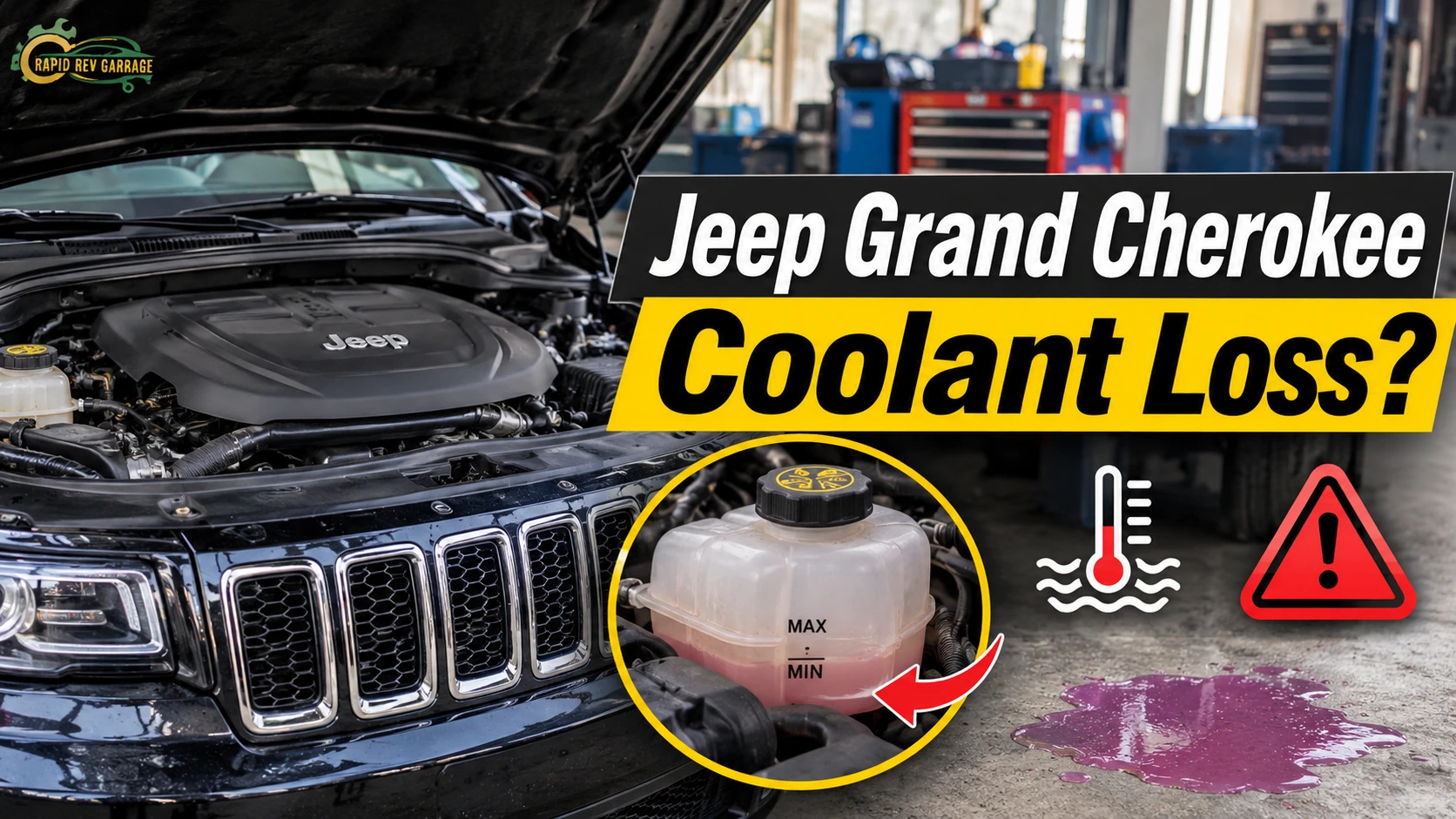
A cap that releases pressure too early pushes coolant into the overflow tank more often than it should. If the tank is full, the extra coolant leaves through the tank’s overflow tube onto the road, often while you are driving. There is no drip in your parking spot, but the level keeps falling.
RepairPal explains that a cap whose return valve does not work properly can also stop coolant flowing back from the tank to the radiator. The radiator stays low while the tank looks full, so the problem can be hard to spot.
Dubizzle advises checking coolant at least once a month. If you need to top up every week and no leak can be found, have the cap tested before anything else. A low level with no visible leak can also point to a head gasket, so the test results matter.
An Overflowing or Boiling Reservoir
Natrad lists an overflowing coolant reservoir as a common sign. The cap is releasing pressure too quickly, so coolant rushes into the tank whenever the engine gets warm.
You may see coolant bubbling in the tank after a drive, or the level rising well above the max line when hot. Coolant may also spray from the tank’s vent. RepairPal notes that boil over with steam escaping under the bonnet is a sign of a cap fault.
Bubbling that continues with the engine idling can also mean combustion gas is entering the cooling system through a failing head gasket. That is a very different repair, so a mechanic checks for it before replacing anything.
A Hose That Collapses After the Engine Cools
A collapsed upper radiator hose is one of the clearest signs of a cap fault. RepairPal explains that when the vacuum valve fails to draw coolant back, negative pressure builds inside the system and pulls the hose flat.
You can check for this once the engine has fully cooled, for example the next morning. If the top hose is squashed flat or feels soft and sucked in, the cap’s vacuum valve is likely stuck. The hose may pop back with a sound when the cap is opened.
A hose that collapses repeatedly weakens over time. It can also restrict coolant flow on the next drive, which raises engine temperature until the hose reopens.
Swollen, Split or Burst Hoses
Too much pressure is as harmful as too little. If the cap’s spring sticks or the wrong cap is fitted, pressure can rise beyond what the hoses and radiator were built for. Practical Classics warns that overpressure caps will blow hoses, strain radiator seams and displace core plugs.
Natrad also lists burst or collapsed hoses among the signs of a bad cap. Swollen hoses that feel hard and balloon slightly when warm, or hoses that split at the clamps, are a warning.
Fitting an aftermarket cap with a higher rating than the maker specifies, in the hope of preventing overheating, causes exactly this problem. Always fit a cap with the same rating as the original.
Crust or Dried Coolant Around the Cap
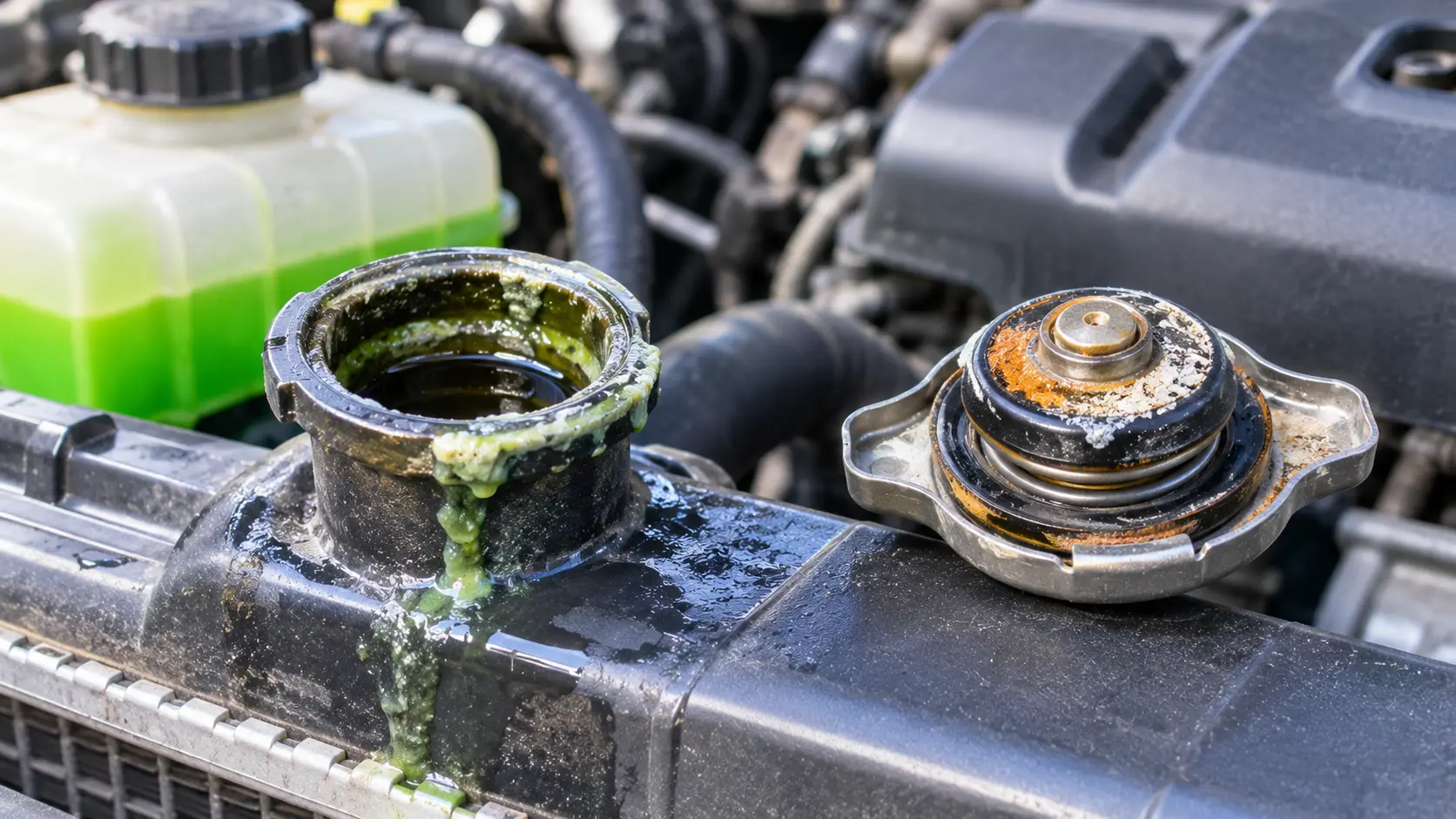
A cap that leaks leaves a trail. Look around the cap and the filler neck for white, green, pink or orange crust. That is dried coolant, and its colour depends on the type of coolant in your car.
RepairPal advises checking the cap for rust and the seal for cracks, hardening or wear. A rusty cap, a cracked seal or a seal that has flattened out of shape will not hold pressure.
If coolant has sprayed onto the bonnet edge or the front wing, rinse it off. Dried coolant can leave marks on the paint, and stains left for months may need paint and panel repair.
Steam or a Sweet Smell From the Bonnet
Coolant has a sweet smell when it is hot. If you notice that smell around the front of the car after a drive, coolant is escaping. A leaking cap is a common source.
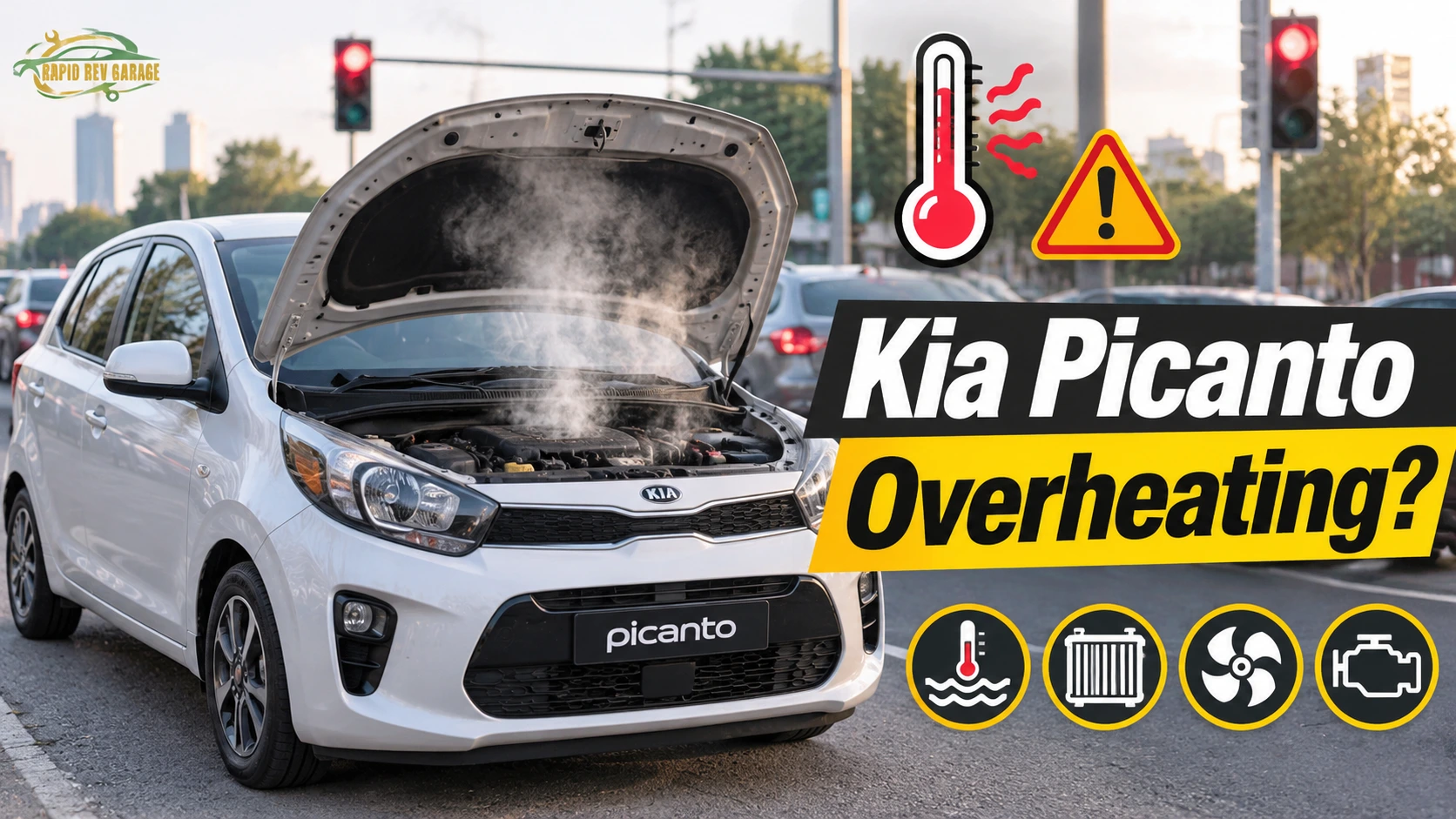
Steam from under the bonnet means coolant is boiling or spraying onto hot parts. RepairPal advises shutting off the engine and letting it cool if you see steam, and never opening the cap while the engine is warm.
A sweet smell inside the cabin with fogging windows points to a leaking heater core rather than the cap. Both faults lose coolant, but the fix is different.
Air in the System and a Jumpy Temperature Gauge
When a cap fails to seal, air can enter the system as the engine cools. Air pockets collect around the thermostat and the temperature sensor and make the gauge jump up and down.
Natrad explains that coolant loss and air in the system can cause overheating at lower than usual temperatures. Air also stops coolant reaching hot spots in the cylinder head, which can cause local overheating even when the gauge looks normal.
After a cap is replaced, the system should be bled to remove trapped air. Many cars have bleed screws, and some need a vacuum fill tool or a set procedure from the maker.
Faults That Look Like a Bad Cap
Bad radiator cap symptoms can also come from other parts of the cooling system. Natrad notes that the signs of a bad cap can also come from problems unrelated to the cap, so testing is important.
A clogged radiator overheats the engine in traffic and on climbs. A failing water pump leaks coolant from the front of the engine and can make a grinding noise. A stuck thermostat makes the gauge rise quickly or stay low. A failed cooling fan or fan relay lets the engine overheat at idle.
If the engine overheats mainly with the AC on, a blocked condenser may be cutting airflow to the radiator. A car AC repair check can confirm it. A failing head gasket pushes combustion gas into the coolant and causes bubbling and coolant loss. A good car garage near you tests the cap first because it is the cheapest part, then moves on to the others.
How a Mechanic Tests the Cap
A proper test checks the cap and the whole cooling system, with the engine cold. Ask an experienced car mechanic near you to show you the readings.
Visual Check of the Seal and Spring
The mechanic removes the cap and checks the rubber seal for cracks, hardening and flattening. RepairPal advises checking that the spring, plunger and valves move with some resistance but still move freely. Rust or a bent spring means replacement.
Cap Pressure Test
The cap is fitted to a pressure tester using an adapter. The mechanic pumps up the pressure and watches when the cap releases. A good cap holds pressure up to its rating and then opens. A cap that leaks below its rating, or does not open at all, has failed.
Cooling System Pressure Test
The same tester is fitted to the radiator or tank neck, and the system is pumped up to the cap’s rating. If pressure falls, there is a leak in a hose, the radiator, the water pump or the head gasket. This test often finds the leak that was blamed on the cap.
Combustion Gas Test
If coolant is disappearing with no outside leak, or bubbles keep rising in the tank, a block test checks for combustion gas in the coolant. A fluid in the tester changes colour if exhaust gas is present, which points to a head gasket problem that needs engine repair. RepairPal also notes that oil, foam or off colour coolant may signal a head gasket problem.
Choosing and Fitting the Right Replacement
The new cap must match the original pressure rating and fit. Natrad advises checking the rating on the old cap or in the owner’s manual. Ratings are stamped on the cap in psi, bar or kPa.
A cap that is too weak lets the coolant boil early, while one that is too strong overloads the hoses and radiator. Caps from the carmaker or from known brands such as Stant and Mahle are made to the correct specification. Very cheap unbranded caps sometimes have weak springs or poor seals.
Natrad suggests replacing the cap every five years as a precaution. In UAE heat, fitting a new cap whenever the coolant is flushed or the radiator is replaced costs little and removes one weak point. After fitting, the system is topped up and bled, and the level is checked again after the first few drives.
Is It Safe to Keep Driving?
Driving with a failing cap risks overheating, and overheating can warp the cylinder head and damage the head gasket. If the gauge starts to climb, Sony Rajappan of Carlynx told Khaleej Times to stop driving immediately and have the car inspected.
Pull over safely, switch off the engine and wait. Never open the cap on a hot engine, as the coolant is under pressure and can spray out and cause serious burns. Stopping in a live lane because of a breakdown brings a AED 1,000 fine and six black points under Article 98 of the UAE Federal Traffic Law. Move to the hard shoulder and call roadside assistance.
If the engine has overheated badly, do not drive it again until it has been checked. The car may need towing to a workshop. If the car is at home and only losing a little coolant, a mobile mechanic can check the cap once the engine is cold.
How to Look After the Cap and Cooling System
Check the coolant level once a month with the engine cold, and look at the cap and filler neck for crust. Nabeel Ahmed of Rukn Yaqoot Garage in Sharjah told Khaleej Times to do a quick under bonnet check once a week. It helps spot coolant leaks and cracked hoses early.
Use the coolant type your owner’s manual specifies and do not mix types. Dubizzle notes that many experts advise flushing the radiator and replacing the coolant every two years or 30,000 km. Fitting a new cap at the same time is cheap.
A regular car service in Dubai includes a cooling system check, and planned car maintenance can add a pressure test before summer. A pressure test in April or May finds weak caps and hoses before the hottest months.
Why Choose Rapid Rev Garage for Cooling System Checks
Rapid Rev Garage in Al Quoz is a good choice when you suspect the cap or another cooling fault. The workshop handles cooling, AC and engine work, so the cause can be found and fixed in one place.
The Whole Cooling System Is Covered
The workshop offers engine repair, car AC repair and maintenance as separate services. A blocked condenser, a leaking water pump or a head gasket can be dealt with without moving the car to another garage.
Test Results Before Bigger Repairs
Drivers can ask for the cap and system pressure test results before agreeing to a radiator, water pump or head gasket repair. That keeps a cheap cap fault from turning into an expensive guess.
Close to Sheikh Zayed Road
The workshop sits at Al Khail Gate, 12th Street, Al Quoz Industrial Area 2. Drivers from Business Bay, Al Barsha, Jumeirah and Downtown can reach it without a long drive on a car that runs hot.
Open Until 9 PM
The workshop is open until 9 PM, so a car that ran hot in the afternoon can be checked in the evening once it has cooled.
FAQ
Here are the questions Dubai drivers most often ask about radiator caps.
What are signs of a failing radiator cap?
Look for overheating in traffic, coolant loss with no visible leak and an overflowing reservoir. A collapsed upper hose, swollen hoses and dried coolant around the cap are also signs.
Can a bad radiator cap cause overheating?
Yes. A cap that cannot hold pressure lowers the boiling point of the coolant, so it boils and escapes sooner. That leads to coolant loss and overheating, especially in traffic.
How do you test a radiator cap?
With the engine cold, a mechanic checks the seal and spring. The cap then goes on a pressure tester to confirm it holds and releases at its rated pressure.
Is driving with a faulty cap safe?
Not for long. The engine can overheat, which risks a warped cylinder head and a failed head gasket. If the gauge rises, stop safely and let the engine cool.
How often should a radiator cap be replaced?
Natrad suggests every five years as a precaution. Fitting a new one whenever the coolant is flushed or the radiator is changed is a cheap habit in UAE heat.
Conclusion
Bad radiator cap symptoms include overheating, coolant loss with no visible leak, an overflowing reservoir, collapsed or burst hoses and crust around the cap. In Dubai heat, a cap that cannot hold pressure lets coolant boil much sooner than it should. A cold pressure test of the cap and system shows whether the cap is at fault or the problem lies elsewhere.
Rapid Rev Garage is a full workshop at Al Khail Gate, 12th Street, Al Quoz Industrial Area 2, open until 9 PM and serving passenger cars across Al Quoz, Business Bay, Jumeirah, Al Barsha, Satwa, Downtown and the Sheikh Zayed Road corridor. Visit https://rapidrevgarage.com, send your car model and symptoms on WhatsApp, or get directions on Google Maps.
Rapid Rev Garage | Bad Radiator Cap Symptoms | Al Quoz, Dubai