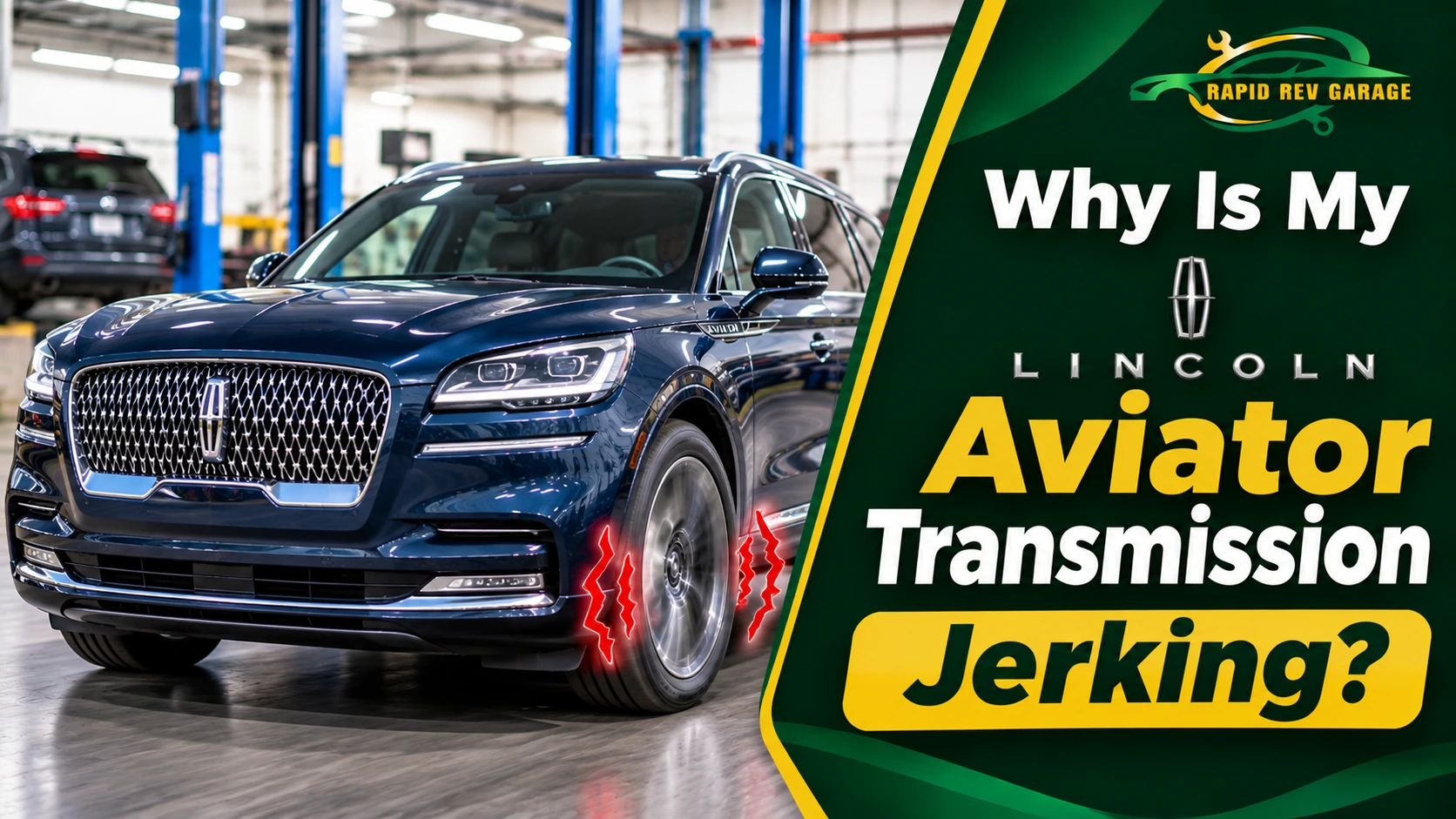
Lincoln Aviator transmission jerking can happen due to low or dirty transmission fluid, faulty shift solenoids, valve body problems, worn clutch parts, or software issues. You may notice a sudden kick when changing gears, delayed acceleration, or rough shifting. These problems can become worse if ignored. Start by checking for warning lights, fluid leaks and unusual noises. A proper transmission inspection can help find the cause. If your Aviator jerks often, get the gearbox checked by a professional before the problem leads to more expensive repairs.
Table of Contents
- Problem Overview
- Common Symptoms
- Common Causes
- Diagnostic Process
- Repair and Service Process
- Risks of Ignoring the Problem
- Can You Continue Driving?
- Repair Time and Cost Factors
- Estimated Repair Costs in Dubai
- Prevention Tips
- Dubai-Specific Advice
- Why Choose Rapid Rev Garage?
- Relevant Service Page
- Related Services
- FAQs
- Final Thoughts
1. Problem Overview: Why Is Your Lincoln Aviator Shifting Roughly?
The Lincoln Aviator is a luxury SUV built for comfort and smooth performance. Its automatic transmission should change gears without sudden movements or strong vibrations.
However, you may sometimes feel a jerk when moving from one gear to another. The car may also shake when you press the accelerator or slow down.
These issues can point to a problem inside the transmission system. Sometimes, the cause is simple, such as old transmission fluid. In other cases, a faulty solenoid, damaged valve body, or worn internal part may be responsible.
The Lincoln Aviator uses advanced automatic transmission systems. Many models have a 10-speed automatic gearbox. This system depends on electronic controls, sensors, fluid pressure and internal parts to change gears smoothly.
Even a small fault can affect how the gearbox works. That is why early diagnosis is important.
2. Common Lincoln Aviator Transmission Jerking Symptoms
Transmission problems often start with small changes in driving performance. You may notice these signs during daily trips or long drives.
Some common symptoms to watch for:
- Sudden jerks during gear changes: The vehicle gives a strong kick when shifting from one gear to another.
- Delayed gear engagement: The car takes a few seconds to move after selecting Drive or Reverse.
- Jerking during acceleration: You feel a sudden movement when pressing the accelerator.
- Hard shifting between gears: Gear changes feel rough instead of smooth.
- Transmission slipping: Engine RPM increases, but the vehicle does not gain speed as expected.
- Unusual noises: You hear whining, clunking, or humming sounds from the gearbox area.
- Dashboard warning light: A transmission or check engine warning may appear.
- Vibrations: The vehicle shakes during acceleration or while driving at a steady speed.
Checklist: What Should You Notice?
- Does the vehicle jerk when changing gears?
- Is there a delay when selecting Drive or Reverse?
- Does the engine rev without proper acceleration?
- Do you hear unusual gearbox noises?
- Is there a transmission warning on the dashboard?
- Have you noticed fluid leaking under the vehicle?
- Does the problem become worse after a long drive?
If you notice more than one of these signs, arrange a transmission inspection.
3. Common Causes of Lincoln Aviator Transmission Jerking
There are several reasons why your Lincoln Aviator may not change gears smoothly. Some are related to fluid condition, while others involve electronic or mechanical parts.
Let’s look at the most common causes.
3.1 Low or Dirty Transmission Fluid
Transmission fluid helps lubricate internal parts and control hydraulic pressure. It also helps manage heat inside the gearbox. When the fluid becomes dirty or its level drops, the transmission may struggle to change gears properly.
This can cause rough shifting, slipping and sudden jerks.
Common signs:
- Delayed gear changes.
- Rough shifting during acceleration.
- Unusual transmission noise.
- Fluid leaks under the vehicle.
Fix: A mechanic should check the fluid level, condition and possible leaks. If the fluid needs replacement, the correct manufacturer-approved type should be used.
3.2 Faulty Transmission Shift Solenoids
Shift solenoids control the flow of transmission fluid inside the gearbox. They help the transmission select the correct gear at the right time. If a solenoid becomes damaged or blocked, the gearbox may not receive the correct fluid pressure.
This can lead to hard shifting or delayed gear changes.
Common signs:
- Sudden jerks between gears.
- Delayed shifting.
- Transmission warning light.
- Gear selection problems.
Fix: The mechanic should scan the transmission control module and test the solenoids. A faulty solenoid may need cleaning or replacement, depending on its condition.
3.3 Damaged Transmission Valve Body
The valve body is an important part of an automatic transmission. It directs fluid to different areas of the gearbox to control gear changes. Over time, internal valves may stick or wear out. This can affect fluid pressure and shift timing.
Some 2020 Lincoln Aviator models with 10-speed transmissions were covered by a Ford technical service bulletin for harsh or delayed shifting linked to sticking valves in the main control valve body.
This does not mean every Aviator has the same issue. The model year, transmission type, build details and vehicle history must be checked.
Common signs:
- Hard shifting between gears.
- Delayed gear engagement.
- Sudden jerks during normal driving.
- Transmission fault codes.
Fix: A specialist should inspect the valve body and check for related software updates or service information. Repair or replacement may be needed if the valves are damaged.
3.4 Worn Internal Clutch Components
Automatic transmissions use internal clutch packs to engage different gears. These parts can wear over time. Excessive heat, poor fluid condition and high mileage can speed up this wear.
When the clutch packs cannot hold properly, the transmission may slip or jerk during gear changes.
Common signs:
- Engine RPM rises suddenly.
- Vehicle acceleration feels weak.
- Gear changes become rough.
- Burning smell from the transmission area.
Fix: The gearbox may need internal inspection. Depending on the damage, the mechanic may recommend clutch pack replacement or a transmission rebuild.
3.5 Faulty Transmission Sensors
Modern Lincoln vehicles use sensors to monitor speed, temperature and gear position. The transmission control module uses this information to manage gear changes.
If a sensor sends incorrect information, the gearbox may shift at the wrong time.
Common signs:
- Sudden changes in gear timing.
- Unexpected warning lights.
- Delayed acceleration.
- Transmission entering limp mode.
Fix: A computer scan can help identify sensor-related fault codes. The mechanic should test the wiring and sensor readings before replacing any parts.
3.6 Transmission Software or Control Module Issues
Your Lincoln Aviator depends on software to control gear changes. Sometimes, outdated software or incorrect transmission adaptations can affect shifting performance. In some cases, a software update or proper relearning procedure may improve shift quality.
Common signs:
- Rough shifting without clear mechanical damage.
- Delayed gear changes.
- Changes in shifting behaviour after a battery replacement or repair.
- Transmission fault codes.
Fix: A technician should check the vehicle’s software and manufacturer service information. Any update or adaptation should follow the correct procedure for that model.
4. Diagnostic Process: How Do Mechanics Find the Fault?
Finding the actual cause is important before starting any transmission repair. Replacing parts without proper testing can increase costs and leave the problem unsolved.
| Diagnostic Check | What Is Inspected | Purpose |
|---|---|---|
| Computer scanning | Transmission fault codes | Finds stored electronic faults |
| Fluid inspection | Fluid level, colour and condition | Checks lubrication and possible leaks |
| Road test | Gear changes during driving | Identifies when jerking occurs |
| Solenoid testing | Solenoid operation and response | Checks fluid control |
| Valve body inspection | Internal valves and pressure control | Finds hydraulic problems |
| Sensor testing | Speed and temperature readings | Checks electronic signals |
| Software check | Control module updates and adaptations | Finds possible programming issues |
The mechanic should explain the findings and suggest the correct repair before replacing any parts.
5. Repair and Service Process: Step-by-Step Solutions
The repair depends on the cause of the shifting problem. A simple fluid issue may need basic service, while internal damage may require more work.
Here is how the repair process usually works.
Step 1: Initial Vehicle Inspection
The mechanic checks the dashboard, driving symptoms, transmission warning lights and visible fluid leaks.
Step 2: Computer Diagnosis
A diagnostic scanner reads fault codes from the transmission control module and related vehicle systems.
Step 3: Fluid and Mechanical Checks
The technician checks the fluid condition, possible leaks and accessible transmission parts.
Step 4: Road Test
The vehicle is tested to understand when the jerking happens. The mechanic may check shifting during acceleration, braking and normal driving.
Step 5: Identify the Main Fault
After testing, the technician identifies whether the issue is related to fluid, sensors, solenoids, the valve body, software, or internal wear.
Step 6: Repair or Replace Faulty Parts
The damaged component is repaired or replaced using suitable parts and the correct repair procedure.
Step 7: Final Testing
The transmission is tested again. Software adaptation or calibration is carried out where required.
A final road test helps confirm that gear changes are smooth and the original issue has been resolved.
6. Risks of Ignoring Transmission Jerking
Ignoring rough shifting can lead to more serious gearbox damage.
A small fault may become an expensive repair if the vehicle continues to operate under poor transmission conditions.
Some possible risks:
- Increased internal wear: Poor fluid pressure can affect moving transmission parts.
- Clutch damage: Slipping can create extra heat and wear inside the gearbox.
- Overheating: Low or degraded fluid may reduce the transmission’s ability to control heat.
- Poor acceleration: The vehicle may struggle to respond when you press the accelerator.
- Complete transmission failure: Severe internal damage may require a full rebuild or replacement.
- Higher repair costs: Delaying repairs can turn a small component issue into a major gearbox problem.
Early inspection can help prevent unnecessary damage.
7. Can You Continue Driving Your Lincoln Aviator?
It depends on how serious the problem is.
If the vehicle jerks slightly once, you should still arrange an inspection. However, repeated jerking, slipping, loud noises, or warning lights should never be ignored.
Stop driving if you notice:
- Strong jerks during gear changes.
- A burning smell.
- Heavy fluid leakage.
- Sudden loss of acceleration.
- A transmission warning with poor vehicle performance.
- The gearbox gets stuck in one gear.
Move to a safe location and switch off the engine if the vehicle shows serious symptoms.
Do not keep accelerating to test the gearbox. If the car cannot move safely, arrange roadside assistance and have it transported to a workshop.
8. Transmission Repair Time and Cost Factors
The time and cost depend on the type of fault and the condition of the gearbox.
A fluid service may take a few hours. A valve body repair or internal rebuild may take several days.
How Long Does Transmission Repair Take?
| Repair Type | Estimated Time |
|---|---|
| Computer diagnosis | 1–2 hours |
| Transmission fluid service | 2–4 hours |
| Sensor replacement | 2–4 hours |
| Shift solenoid replacement | 3–6 hours |
| Valve body repair | 1–2 days |
| Torque converter replacement | 1–3 days |
| Transmission rebuild | 3–5 working days |
| Transmission replacement | 2–5 working days |
These are general estimates. Actual time depends on the model year, parts availability and repair complexity.
What Affects the Repair Cost?
Several factors can change the final bill:
- Model year: Different Aviator models may have different transmission parts and software.
- Transmission type: The exact gearbox fitted to the vehicle affects parts and labour.
- Fault severity: A sensor fault costs less to repair than internal transmission damage.
- Parts quality: Genuine and quality aftermarket parts may have different prices.
- Labour time: Some repairs require gearbox removal and more working hours.
- Software work: Programming and calibration may add to the total cost.
9. Estimated Lincoln Aviator Transmission Repair Cost in Dubai
The cost depends on the actual fault and the parts needed. Below are general planning estimates for transmission repairs in Dubai.
| Repair or Service | Estimated Cost (AED) |
|---|---|
| Computer diagnosis | 150–350 |
| Transmission fluid service | 500–1,000 |
| Transmission leak repair | 400–1,200 |
| Transmission sensor replacement | 500–1,200 |
| Shift solenoid repair or replacement | 800–2,000 |
| Valve body repair | 2,000–4,500 |
| Torque converter replacement | 2,000–6,000 |
| Automatic transmission rebuild | 4,500–10,000+ |
| Complete transmission replacement | 6,000–15,000+ |
Important: These are approximate market estimates, not confirmed Rapid Rev Garage prices. Lincoln parts and labour can cost more than standard vehicle repairs. The final price depends on the fitted gearbox, fault, parts and additional damage. Always request a detailed quote after diagnosis.
10. Prevention Tips to Avoid Future Transmission Problems
Regular maintenance can help your Lincoln Aviator’s gearbox last longer.
Follow these simple tips:
- Check transmission fluid: Follow the correct inspection procedure for your model.
- Use the correct fluid: Always use fluid that meets Lincoln’s specifications.
- Fix fluid leaks early: Low fluid levels can cause serious transmission damage.
- Follow service intervals: Do not delay recommended transmission maintenance.
- Avoid aggressive acceleration: Sudden and repeated hard acceleration can add stress to the gearbox.
- Watch warning lights: Get the vehicle checked when a transmission warning appears.
- Pay attention to gear changes: Do not ignore new jerks, delays, or unusual sounds.
- Get regular inspections: A professional check can help find early signs of wear.
11. Dubai-Specific Advice for Lincoln Aviator Owners
Dubai’s weather and traffic conditions can put extra pressure on automatic transmissions. During summer, high outside temperatures can make heat management more difficult. Long periods in slow traffic can also increase the load on the vehicle.
Some useful tips for Lincoln Aviator owners in Dubai.
Check transmission fluid condition regularly. Heat and daily use can affect fluid performance over time.
Avoid unnecessary hard acceleration. Smooth driving helps reduce stress on transmission components.
Pay attention to long traffic delays. If you notice rough shifting after driving in heavy traffic, get the gearbox checked.
Do not ignore fluid leaks. A small leak can reduce the fluid level and affect transmission pressure.
Choose a suitable workshop. Modern automatic gearboxes need proper diagnostic equipment and repair knowledge.
If you’re searching ‘garage near me‘ for transmission problems, Rapid Rev Garage is a great choice for professional gearbox inspection, diagnosis and repair services.
12. Why Choose Rapid Rev Garage for Transmission Repair in Dubai?
Choosing the right workshop is important when your Lincoln Aviator has a gearbox problem. Modern automatic transmissions need careful testing before any repair begins.
Rapid Rev Garage provides car transmission and gearbox repair services in Dubai. The workshop handles automatic transmission diagnosis, fluid service, solenoid repairs, valve body work and gearbox rebuilds.
Some reasons to consider Rapid Rev Garage:
- Transmission diagnostics: Computer scanning helps identify stored fault codes.
- Experienced technicians: The team works on different vehicle makes and transmission systems.
- Mechanical inspection: The gearbox is checked to find the actual cause of the problem.
- Repair solutions: Services cover fluid issues, faulty components and more complex gearbox repairs.
- Clear repair estimates: You can review the recommended work before approving repairs.
- Final testing: The vehicle can be tested after repair to check shifting performance.
If your Aviator has rough shifting or delayed gear changes, Rapid Rev Garage is an option to consider for transmission inspection and repair in Dubai.
13. Relevant Service Page
Check out our Lincoln Diagnostic Service page to learn more about vehicle diagnostics and fault detection. Discover how Rapid Rev Garage identifies transmission issues, electronic faults and other performance problems in Lincoln vehicles through professional diagnostic services.
14. Related Services
Depending on the inspection results, your Lincoln Aviator may also need the following services:
- Automatic Transmission Repair: For rough shifting, slipping gears and delayed engagement.
- Transmission Oil Change: To maintain proper lubrication and fluid performance.
- Gearbox Diagnostics: To identify electronic and mechanical faults.
- Valve Body Repair: To fix problems with transmission fluid control.
- Transmission Leak Repair: To find and repair leaking seals and connections.
- Car Towing Service: To move a vehicle that cannot be driven safely.
- Roadside Assistance: For help when your vehicle breaks down on the road.
15. FAQs
Why does my Lincoln Aviator jerk when accelerating?
Low transmission fluid, faulty solenoids, or worn gearbox parts can cause jerking during acceleration.
Can dirty transmission fluid cause rough shifting?
Yes, dirty transmission fluid can affect gear changes and cause rough shifting.
What are the common Lincoln Aviator transmission problems?
Common problems include hard shifting, slipping gears, fluid leaks, and delayed gear changes.
Why does my Lincoln Aviator jerk when shifting from first to second gear?
A faulty solenoid, low fluid pressure, or valve body problem may cause this issue.
How much does Lincoln Aviator transmission repair cost in Dubai?
It depends on the damage, but repairs can range from a few hundred to several thousand AED.
Is it safe to drive with a jerking transmission?
No, repeated jerking can lead to more damage, so get the gearbox inspected.
Can a software update fix transmission shifting problems?
Yes, a software update may fix some shifting issues caused by outdated programming.
How long does it take to repair a Lincoln Aviator transmission?
Minor repairs may take a few hours, while major repairs can take several days.
Why does my Lincoln Aviator shift harder after a long drive?
High temperatures, worn parts, or transmission fluid problems can cause harder shifting.
When should I get my Lincoln Aviator gearbox inspected?
Get it inspected as soon as you notice jerking, slipping, delayed shifting, or warning lights.
16. Final Thoughts: Get Your Transmission Checked in Dubai
Smooth gear changes are important for a comfortable driving experience. If your Lincoln Aviator starts jerking, slipping, or shifting roughly, do not ignore these signs.
A small transmission fault can become a much bigger problem when left untreated. Early diagnosis helps you understand the issue and choose the right repair.
For professional transmission inspection and repair options, contact Rapid Rev Garage. Get the gearbox checked and keep your Lincoln Aviator running smoothly.
You can also visit us at our Al Quoz, Dubai branch,
Rapid Rev Garage: https://maps.app.goo.gl/wjK13vovXTKx5SsH8