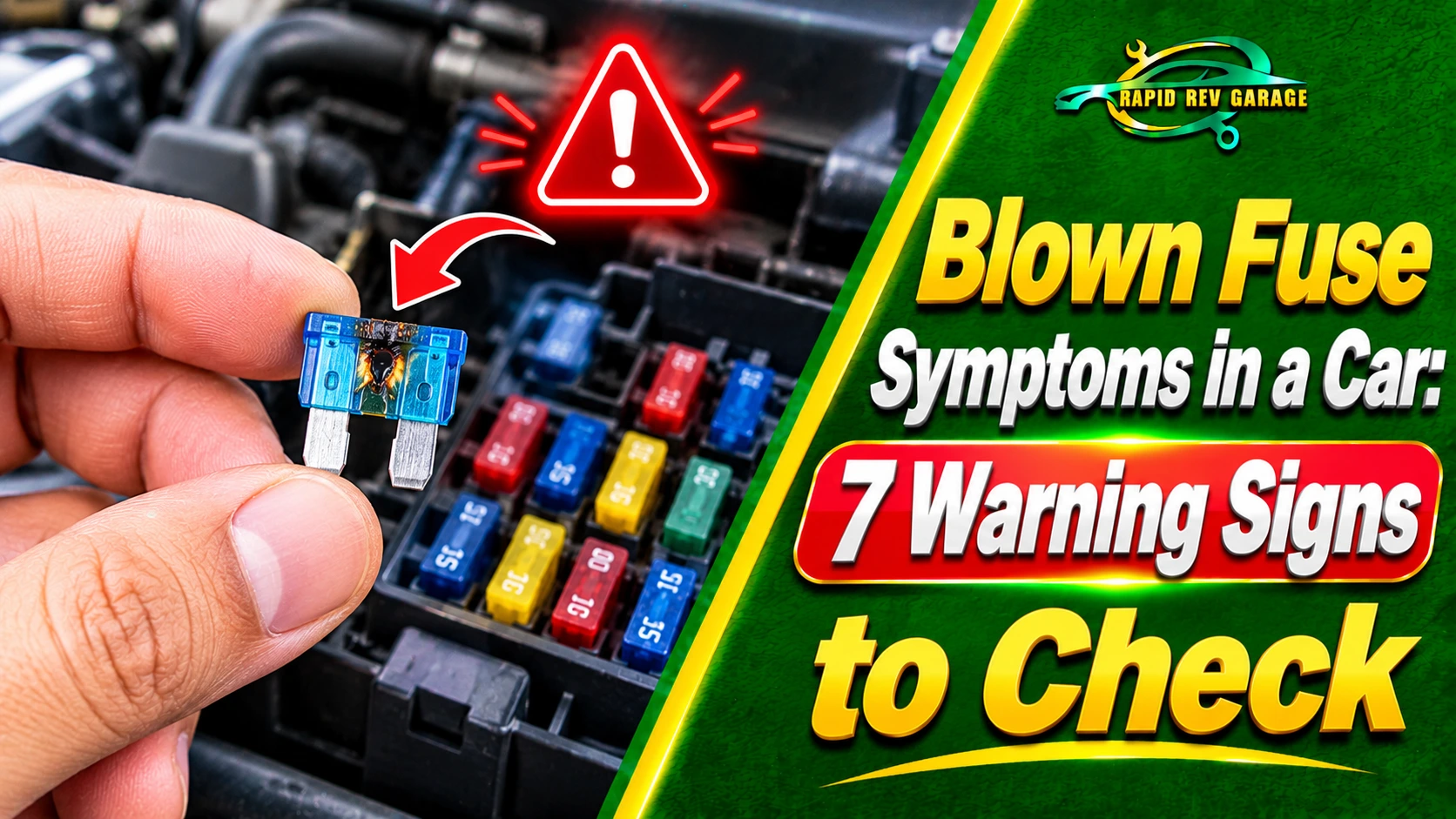
Blown fuse symptoms in a car can include dead headlights, power windows that stop working, a non-working radio, faulty dashboard lights, and unresponsive power outlets. A car fuse protects electrical components from excessive current. When a fuse blows, it stops the flow of electricity to protect the circuit. You may notice one or more electrical parts suddenly stop working. Checking the fuse box can help find the problem. However, if the same fuse keeps blowing, there may be a short circuit or wiring fault. A professional inspection can help prevent further electrical damage.
Table of Contents
- Problem Overview
- 7 Common Warning Signs of a Blown Car Fuse
- Common Causes of Blown Car Fuses
- How to Tell If a Car Fuse Is Blown
- Risks of Ignoring a Blown Fuse
- Can You Continue Driving?
- Repair Time and Cost Factors
- Estimated Car Fuse Repair Costs in Dubai
- Prevention Tips
- Dubai-Specific Advice
- Why Choose Rapid Rev Garage for Car Electrical Repair in Dubai?
- Related Services
- FAQs
- Final Thoughts
1. Problem Overview: What Happens When a Car Fuse Blows?
Your car has many electrical parts. These include headlights, power windows, the radio, dashboard lights, and the AC system. All these parts need a steady supply of electricity to work.
A car fuse protects these electrical systems. It is a small safety part that stops too much current from reaching a circuit.
When too much current flows through a fuse, its thin metal strip melts. This breaks the electrical connection and stops the power supply to that circuit.
As a result, one or more electrical parts may stop working.
A blown fuse is often a simple problem. However, it can also point to a bigger electrical fault. For example, damaged wires or a short circuit may cause the fuse to blow again.
Finding the real cause is important before replacing the fuse.
2. 7 Common Warning Signs of a Blown Car Fuse
Blown fuse symptoms in a car can look different depending on which electrical circuit has stopped working. Some signs are easy to notice, while others may seem like a problem with the part itself.
Here are seven warning signs to check.
2.1 ⚠️ Headlights or Interior Lights Stop Working
If your headlights suddenly stop working, a blown fuse may be the reason.
You may also notice that your interior lights, brake lights, or parking lights are not working.
However, a faulty bulb, relay, switch, or wiring connection can cause similar problems.
What to check: Check the related fuse and inspect the bulbs. If the fuse is fine, the lighting circuit may need further testing.
2.2 ⚠️ Power Windows Stop Working
Power windows need electricity to move up and down. A blown fuse can stop the power supply to the window system.
You may notice that one window or all windows stop responding to the switches.
What to check: Check the power window fuse. If only one window is affected, the window motor or switch may also be faulty.
2.3 ⚠️ Car Radio or Infotainment System Goes Off
A car radio, screen, and infotainment system all use electrical power.
If the screen suddenly goes black or the radio stops working, a blown fuse could be the cause.
What to check: Inspect the audio system fuse. Also check whether other electrical features are working normally.
2.4 ⚠️ Dashboard Lights Stop Working
Dashboard lights help you see important information while driving. If they suddenly go dark, you may have a fuse problem.
You may also notice that some warning lights or display features stop working.
What to check: Inspect the dashboard or instrument cluster fuse. A faulty connection or instrument cluster may also need attention.
2.5 ⚠️ Car AC or Blower Fan Stops Working
If your AC blower fan suddenly stops, the related fuse may have blown.
You may notice that no air comes from the vents, even when the AC is switched on.
What to check: Check the blower motor fuse and relay. If the fuse is working, the blower motor or wiring may be faulty.
2.6 ⚠️ Power Outlet or USB Port Stops Working
Many drivers use the car’s power outlet to charge phones and other devices.
If the charging port suddenly stops working, a blown fuse may have cut off its power supply.
What to check: Inspect the power outlet fuse. Also check for damaged charging cables or foreign objects inside the socket.
2.7 ⚠️ Several Electrical Features Stop Working at Once
Sometimes, more than one electrical part may stop working at the same time.
For example, your radio, dashboard lights, and power windows may all stop responding.
This can happen when a fuse protects more than one part of the car.
What to check: Inspect the fuse box and related circuits. If several systems fail together, a professional electrical diagnosis is a good idea.
Signs and Possible Fuse Problems
| Warning Sign | Possible Affected Fuse | What May Stop Working |
|---|---|---|
| Headlights go off | Headlight fuse | Front or rear lights |
| Power windows stop | Window fuse | Window movement |
| Radio stops working | Audio fuse | Radio or screen |
| Dashboard goes dark | Instrument fuse | Dashboard display |
| AC blower stops | Blower fuse | Airflow from vents |
| Charging port fails | Power outlet fuse | USB or 12V socket |
| Several systems fail | Main or shared circuit fuse | Multiple electrical features |
Note: Fuse layouts vary by car make and model. These are common examples, not a fixed guide for every vehicle.
3. Common Causes of Blown Car Fuses
A fuse usually blows because too much electrical current passes through its circuit. But what causes this to happen?
Here are some common reasons.
3.1 Short Circuit
A short circuit happens when electricity takes an unwanted path. This can happen when damaged wires touch each other or a metal surface.
It can cause too much current to flow through the circuit. As a result, the fuse blows to protect the system.
3.2 Damaged or Old Wiring
Car wires can wear out over time. Heat, vibration, moisture, and poor repairs can damage their protective covering.
When exposed wires touch metal, they may cause an electrical short.
3.3 Faulty Electrical Parts
A damaged motor, switch, relay, or other electrical part may draw too much current.
For example, a faulty window motor may cause the power window fuse to blow.
3.4 Wrong Fuse Rating
Every electrical circuit needs a fuse with the correct current rating.
If the wrong fuse is installed, it may not protect the circuit properly. Using a fuse with a higher rating than recommended can also create a fire risk.
Always use the fuse rating specified by the vehicle manufacturer.
3.5 Water or Moisture Damage
Water can enter electrical connections, fuse boxes, or wiring areas.
This may lead to corrosion, poor connections, or short circuits. Damaged seals and water leaks can increase this risk.
3.6 Aftermarket Electrical Accessories
Extra lights, sound systems, dash cameras, and other accessories can put extra pressure on the electrical system.
Poor installation or incorrect wiring may cause repeated fuse problems.
4. How to Tell If a Car Fuse Is Blown
If you notice any of these signs, checking the fuse is a good first step.
Most cars have one or more fuse boxes. They are often located under the dashboard, near the glove box, or inside the engine bay.
Follow these basic steps:
- Park the car in a safe place.
- Turn off the engine and all electrical accessories.
- Check the owner’s manual to find the correct fuse box.
- Find the fuse linked to the part that is not working.
- Remove the fuse using a proper fuse puller.
- Look through the clear plastic body of the fuse.
A good fuse usually has an unbroken metal strip inside. A blown fuse often has a broken or melted strip.
You can also use a multimeter to test whether the fuse has electrical continuity.
Safety tip: Never replace a fuse with a higher-rated one. If the replacement fuse blows again, stop testing and have a mechanic check the electrical circuit.
5. Risks of Ignoring a Blown Car Fuse
A blown fuse may seem like a small issue, but ignoring it can cause problems.
Some risks to consider:
- Reduced visibility: Faulty headlights or brake lights can make night driving unsafe.
- Loss of important features: Your windows, dashboard display, or other electrical parts may stop working.
- AC problems: A faulty blower circuit can leave you without proper cabin airflow.
- Further electrical damage: The problem behind the blown fuse may damage other parts.
- Fire risk: Damaged wiring or an incorrect fuse can create overheating and fire hazards.
If the same fuse keeps blowing, do not keep replacing it. The real electrical fault needs to be found and repaired.
6. Can You Continue Driving With a Blown Fuse?
It depends on which fuse has blown.
If the fuse controls a non-essential feature, such as the radio or charging port, the car may still run.
However, driving can be unsafe if the fuse affects important systems.
Avoid driving if you have lost:
- Headlights or brake lights.
- Turn signals.
- Essential dashboard warnings or displays.
- Windscreen wipers during rain.
- Other safety-related electrical features.
If you are unsure which system is affected, get the car checked before driving.
If the vehicle is unsafe or has stopped working, arrange professional roadside assistance instead of taking risks on the road.
7. Repair Time and Cost Factors
The time needed to fix a blown fuse depends on the cause.
Replacing a simple fuse is usually quick. However, finding a short circuit or damaged wire may take longer.
How Long Does Car Fuse Repair Take?
| Repair Type | Estimated Time |
|---|---|
| Basic fuse inspection | 15–30 minutes |
| Simple fuse replacement | 15–30 minutes |
| Electrical system diagnosis | 1–2 hours |
| Relay inspection or replacement | 30–90 minutes |
| Wiring repair | 1–4 hours |
| Short circuit diagnosis and repair | 2–5 hours or more |
These are general estimates. Some electrical faults need extra testing.
What Affects the Repair Cost?
Several factors can change the final repair price:
- Car make and model: Different vehicles have different fuse box designs.
- Fuse type: Standard and special-purpose fuses may have different prices.
- Electrical fault: A damaged wire or faulty motor needs more work than a simple fuse replacement.
- Labour time: Finding a hidden short circuit can take time.
- Parts needed: Relays, connectors, wiring, or other parts may need replacement.
8. Estimated Car Fuse Repair Costs in Dubai
The cost of fixing a blown fuse depends on whether the problem is limited to the fuse or linked to another electrical part.
Some general price estimates for Dubai car owners.
| Repair or Service | Estimated Cost (AED) |
|---|---|
| Basic fuse inspection | 50–100 |
| Fuse replacement | 50–150 |
| Electrical system diagnosis | 150–350 |
| Relay replacement | 100–300 |
| Minor wiring repair | 150–400 |
| Short circuit diagnosis and repair | 300–800 |
| Major wiring repair | 500–1,500+ |
Note: These are approximate estimates, not fixed prices. Actual costs depend on the vehicle, parts, labour, and the type of electrical fault.
9. Prevention Tips to Avoid Blown Car Fuses
You cannot prevent every fuse problem, but good maintenance can reduce the risk.
Follow these simple tips:
- Use the correct fuse: Always follow the fuse rating recommended by the manufacturer.
- Check electrical accessories: Make sure extra lights, cameras, and sound systems are installed correctly.
- Inspect wiring: Look for damaged wires, loose connections, and worn insulation.
- Keep the fuse box dry: Protect it from water and moisture.
- Avoid overloading power outlets: Use suitable chargers and accessories.
- Fix electrical faults early: Do not ignore repeated fuse failures.
- Get regular inspections: Have the electrical system checked during routine servicing.
Checklist for car owners:
- ✅ Check if any lights have stopped working.
- ✅ Test the power windows and radio.
- ✅ Notice if the AC blower has stopped.
- ✅ Check whether the same fuse blows more than once.
- ✅ Look for signs of damaged wiring.
- ✅ Use only the correct fuse rating.
- ✅ Get repeated electrical faults checked by a professional.
10. Dubai-Specific Advice for Car Owners
Dubai’s weather and road conditions can affect your car’s electrical system.
High temperatures can put extra stress on electrical parts. Long periods of AC use can also increase the demand on some electrical circuits.
A few useful tips for drivers in Dubai:
Check your wiring during summer. High heat can make old wire insulation weak over time.
Protect the fuse box from moisture. Water from leaks or poor cleaning methods can damage electrical connections.
Use quality accessories. Poorly installed lights, chargers, and sound systems can create electrical problems.
Do not ignore warning signs. If your headlights, AC blower, or dashboard stop working, arrange an inspection.
Choose a suitable workshop. If you are searching ‘garage near me’, look for a workshop like Rapid Rev Garage that offers proper electrical testing and repair.
11. Why Choose Rapid Rev Garage for Car Electrical Repair in Dubai?
Car electrical problems can be hard to find without the right tools. Replacing a fuse may solve the issue, but it will not fix a damaged wire or short circuit.
Rapid Rev Garage provides car electrical repair and diagnostic services in Dubai. The team can inspect electrical faults and help find the cause of problems affecting your vehicle.
Some reasons to consider Rapid Rev Garage:
- Electrical diagnosis: Find the cause of electrical faults with proper testing.
- Wiring inspection: Check damaged wires and loose connections.
- Fuse and relay checks: Inspect faulty fuses and related electrical parts.
- Component testing: Check switches, motors, and other electrical systems.
- Repair solutions: Get suitable repair options based on the actual problem.
If your car keeps blowing the same fuse, Rapid Rev Garage can help identify the fault instead of simply replacing the fuse again.
Professional car electrical repair can help protect your vehicle and keep its electrical features working properly.
12. Related Services
Depending on the cause of the problem, your car may also need these services:
- Auto Electrical Repair: For wiring faults, electrical failures, and damaged connections.
- Car Computer Diagnostics: To find stored fault codes and electronic system issues.
- Battery Replacement: For weak or damaged car batteries.
- Starter Motor Repair: For starting problems linked to the electrical system.
- Alternator Repair: For charging system faults.
- Car AC Repair: For AC blower and electrical cooling problems.
- Roadside Assistance: For help when your vehicle breaks down.
13. Relevant Service Page
For professional help with car electrical issues, check out our Auto Electrical Repair service page. Explore how Rapid Rev Garage handles electrical faults, damaged wiring, fuse problems, and other vehicle electrical issues in Dubai. Learn more about the available repair solutions and services for your car.
14. FAQs
What are the most common Blown Fuse Symptoms in a Car?
Common signs include headlights that stop working, dead power windows, a non-working radio, faulty dashboard lights, and power outlets that stop charging devices.
What happens when a car fuse blows?
When a fuse blows, it breaks the electrical connection in its circuit. This stops the power supply to the parts connected to that circuit.
How do I know if a car fuse is blown?
Remove the fuse after switching off the vehicle and check its metal strip. If the strip is broken or melted, the fuse is likely blown. A multimeter can also confirm the result.
Why does my car fuse keep blowing?
A fuse may keep blowing because of a short circuit, damaged wiring, a faulty electrical part, or an incorrect fuse rating. The circuit needs proper testing to find the cause.
Can a blown fuse stop a car from starting?
Yes. If the fuse protects an important starting, ignition, or engine control circuit, the car may fail to start. The exact effect depends on the vehicle and the fuse involved.
Is it safe to replace a car fuse myself?
You can replace a simple fuse if you know the correct location and rating. Always switch off the vehicle first. Never use a higher-rated fuse or replace one that keeps blowing without finding the cause.
How much does car fuse replacement cost in Dubai?
A basic fuse replacement may cost around AED 50–150. If there is a wiring fault or short circuit, the total repair cost can be much higher.
Can hot weather in Dubai cause car fuse problems?
Heat can put extra stress on electrical parts and old wiring. However, a fuse usually blows because of excess current, so the underlying electrical problem should be checked.
When should I visit a garage for a blown fuse?
Visit a professional garage if the fuse blows repeatedly, several electrical parts stop working, or you notice burning smells, damaged wiring, or smoke.
15. Final Thoughts: Get Your Car Electrical System Checked
A blown fuse may look like a small problem, but it can point to a bigger electrical fault. Ignoring repeated fuse failures can lead to more damage and unsafe driving conditions.
Contact Rapid Rev Garage in Dubai for professional inspection and car electrical repair. Our team can help identify fuse, wiring, and other electrical faults to get your vehicle back in proper working condition.
You can also visit us at our Al Quoz, Dubai branch,
Rapid Rev Garage: https://maps.app.goo.gl/wjK13vovXTKx5SsH8