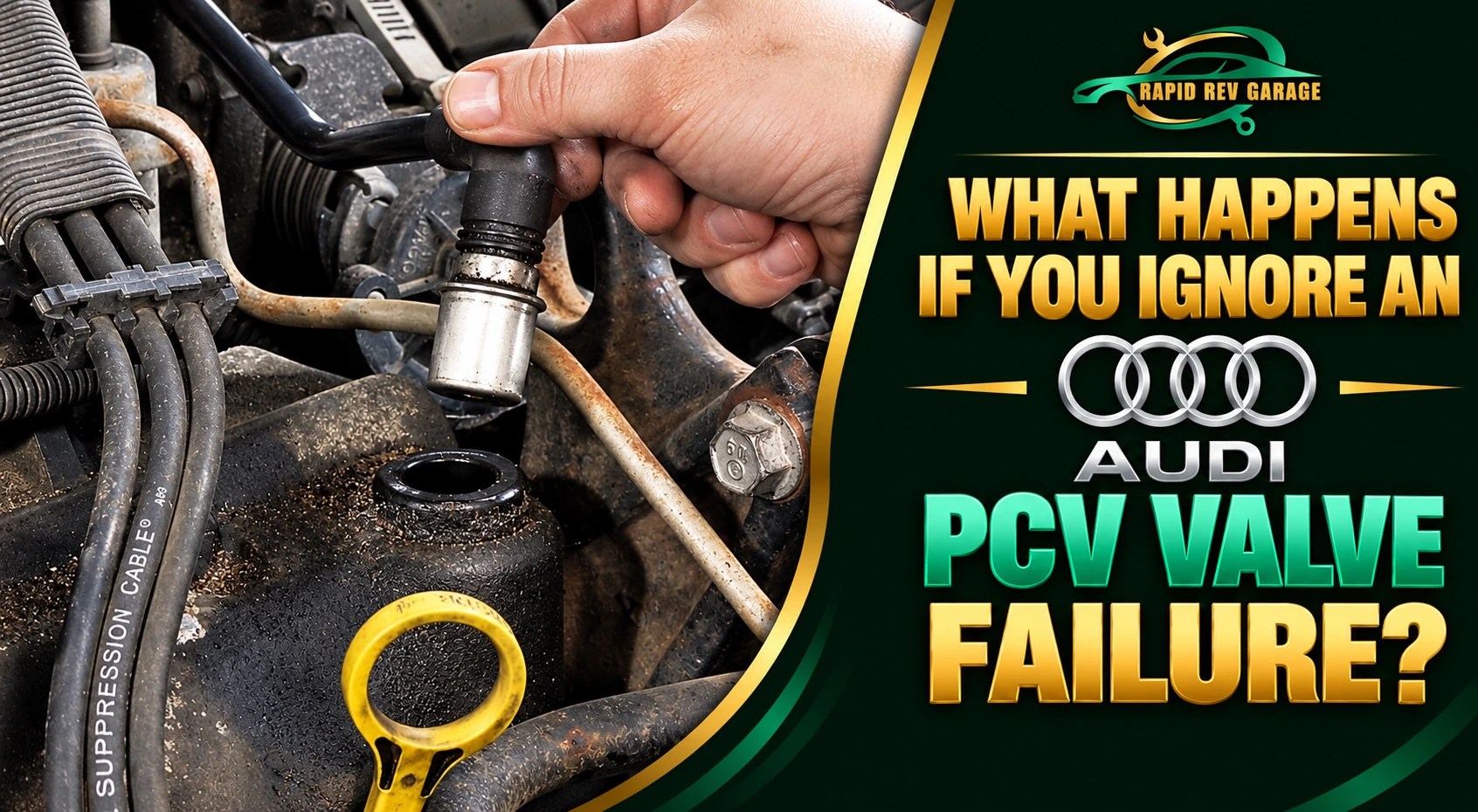
Ignoring an Audi PCV valve failure can lead to oil leaks, rough idling, engine misfires and poor fuel economy. The PCV valve controls pressure inside the engine and helps move harmful gases back into the intake system. When it fails, pressure can rise or drop too much. This may cause oil seals to leak and affect engine performance. In some cases, a faulty valve can also trigger the check engine light. Early diagnosis can help prevent bigger repairs. If your Audi shows these signs, arrange an inspection with a qualified mechanic in Dubai.
Table of Contents
- Understanding the Problem
- Common Symptoms
- Main Causes
- Diagnostic Process
- Repair and Replacement Process
- Risks of Ignoring the Problem
- Can You Continue Driving?
- Repair Time
- Cost Factors
- Estimated Repair Costs
- Prevention Tips
- Dubai-Specific Advice
- Why Choose Rapid Rev Garage for Audi PCV Valve Repair in Dubai?
- Relevant Service Page
- Related Services
- FAQs
- Final Thoughts
1. Understanding Audi PCV Valve Failure
The PCV valve is part of your Audi’s crankcase ventilation system. PCV stands for Positive Crankcase Ventilation. This system helps control gases that build up inside the engine while it runs.
During normal engine use, some combustion gases pass into the crankcase. The PCV system guides these gases back into the intake so the engine can burn them.
The valve also helps manage pressure inside the engine. If it gets blocked, stuck, or damaged, this pressure can move outside its normal range.
That is where problems begin. You may notice oil leaks, a rough idle, strange engine sounds, or higher oil use. Some Audi engines use a PCV valve built into a larger breather unit. The repair method depends on the engine design.
Fixing the fault early can help protect engine seals and other parts. It can also stop a small issue from turning into a costly repair.
2. Common Audi PCV Valve Symptoms
A faulty PCV valve can cause several warning signs. Some may appear slowly, while others can show up quite quickly.
1. ⚠️ Rough Idling and Engine Misfires
Your Audi may shake or feel uneven when the engine is idling. You may also notice the engine speed going up and down. A faulty valve can allow too much air into the intake. This can upset the air-fuel mixture and cause a rough idle or misfire.
2. ⚠️ Increased Engine Oil Use
If you need to top up engine oil more often than usual, the PCV system may be part of the problem. A failed valve can affect pressure and oil flow inside the engine. However, high oil use can have other causes. A proper inspection is needed before replacing parts.
3. ⚠️ Oil Leaks Around the Engine
Excess crankcase pressure can push oil past seals and gaskets. You may notice oil around the valve cover, engine joints, or other areas. Not every oil leak comes from the PCV system. Worn seals, damaged gaskets and other faults can cause similar signs.
4. ⚠️ Check Engine Light
A faulty PCV system can affect the air entering the engine. This may trigger a check engine light or store an engine fault code. The light alone cannot confirm the cause. A mechanic should scan the car and review the results.
5. ⚠️ Whistling or Hissing Sounds
A damaged valve or leaking breather hose may cause a whistling or hissing noise. You may hear it while the engine is idling. This sound can also come from a vacuum leak elsewhere. The source needs to be checked.
6. ⚠️ Strong Oil Smell or Smoke
A failed ventilation system may allow oil vapour to enter areas where it should not. You might notice an oil smell or blue smoke from the exhaust. Blue smoke can point to oil burning inside the engine. If smoke is heavy or the engine runs poorly, stop driving and seek help.
3. Main Causes of Audi PCV Valve Failure
The PCV valve works under heat and pressure. Over time, its parts can wear out or become blocked.
Normal Wear and Tear
Plastic parts, seals and internal valve parts can weaken as the car ages. This is common in vehicles with high mileage, though the service life varies by engine.
Oil Sludge and Deposits
Old oil or deposits can affect the valve and its passages. Poor maintenance may increase the risk of blockages.
Damaged Breather Hoses
Cracked or loose hoses can cause vacuum leaks. These leaks may lead to rough idling, unusual sounds and engine fault codes.
High Engine Heat
Hot engine conditions can speed up wear in plastic parts and rubber seals. This can be a concern for cars driven often in hot weather.
Poor or Delayed Maintenance
Using the wrong oil or missing oil changes can contribute to deposits in the engine. Always follow the service schedule and oil specification for your Audi model.
Other Engine Problems
A PCV fault may also appear alongside other engine issues. Worn piston rings or other internal problems can cause excessive crankcase pressure. Testing helps separate these faults from a failed valve.
4. How Mechanics Diagnose the Problem
The symptoms can look like other engine faults. A mechanic should test the system before recommending a repair.
Review the Symptoms
The mechanic asks about rough idling, oil use, leaks, smoke and warning lights. These details help guide the inspection.
Scan for Fault Codes
A diagnostic scanner checks for stored engine codes. The results can point to air leaks, mixture problems, or misfires. A code is a clue, not proof that the PCV valve has failed.
Inspect the Valve and Hoses
The mechanic checks the ventilation unit, seals and hoses for cracks, loose connections, or visible damage.
Test Crankcase Pressure
The mechanic measures crankcase pressure or vacuum using the correct method for the engine. Readings outside the expected range may show a ventilation problem or another engine fault.
Check for Air and Oil Leaks
A suitable leak test may help locate air escaping from the intake or breather system. The mechanic also checks the engine for oil leaks and signs of excess pressure.
Confirm the Repair Plan
Once the cause is clear, the mechanic explains which parts need repair or replacement. This helps avoid spending money on parts that are still working correctly.
5. Audi PCV Valve Repair and Replacement Process
The repair depends on the cause of the fault. Some cars need a new valve. Others may need a full breather unit or extra repairs.
Step-by-Step Repair Process
Step 1: Confirm the fault:
The mechanic checks the test results and confirms whether the PCV system is causing the problem.
Step 2: Inspect related parts:
The hoses, seals and breather unit are checked for damage.
Step 3: Remove the faulty part:
The mechanic removes the valve or ventilation unit using the correct method for your Audi engine.
Step 4: Install the replacement:
A suitable replacement part is fitted. Damaged seals or hoses are also replaced when needed.
Step 5: Check for leaks:
The mechanic checks the system for air leaks and confirms that connections are secure.
Step 6: Test the engine:
The car is started and checked for rough idling, unusual sounds and warning lights.
Step 7: Complete a final check:
The mechanic reviews the results and confirms that the repair has solved the problem.
The repair should follow Audi’s service instructions for your specific engine. Some models have a separate valve, while others use a valve built into the oil separator or breather assembly.
6. Risks of Ignoring Audi PCV Valve Failure
Leaving the problem untreated can affect more than engine performance. It may also increase repair costs over time.
Oil Leaks and Seal Damage
Excess pressure inside the engine can force oil past weak seals and gaskets. A small leak may become worse if the pressure problem continues.
Poor Engine Performance
A faulty valve can upset the air-fuel mixture. This may cause rough idling, hesitation, or engine misfires.
Higher Oil Consumption
Some PCV faults can cause the engine to burn more oil. If the oil level drops too low, important engine parts may not receive enough lubrication.
Damage to Other Engine Parts
Long-term problems with crankcase pressure can place extra stress on seals and other engine components. The final damage depends on the fault and how long the car is driven with it.
Higher Repair Bills
Replacing a faulty valve is often simpler than repairing several problems caused by it. Early diagnosis may help you avoid extra labour and parts costs.
Important: Audi PCV valve failure does not always lead to major engine damage. The risk depends on the fault, its severity and how quickly you repair it.
7. Can You Continue Driving With a Faulty PCV Valve?
You should not ignore the warning signs. Whether you can drive depends on how the engine is running and what other symptoms are present. A mild fault may allow you to drive a short distance to a workshop. However, continued use can make the problem worse.
Stop Driving If You Notice These Signs
- The engine shakes badly or misfires repeatedly.
- The check engine light flashes.
- Heavy blue smoke comes from the exhaust.
- Oil is leaking quickly or the oil pressure warning appears.
- The engine loses power or runs very poorly.
- You smell burning oil and see smoke from the engine bay.
If any of these signs appear, stop in a safe place and switch off the engine when safe to do so. Do not open a hot engine or touch leaking parts.
If the car is unsafe to drive, arrange roadside assistance or vehicle recovery. Do not keep driving just to reach a garage if the engine shows signs of serious trouble.
8. How Long Does Audi PCV Valve Replacement Take?
Repair time depends on the engine design and how easy it is to reach the valve.
| Service | Estimated time |
|---|---|
| Initial engine inspection | 30–60 minutes |
| Diagnostic scan and basic tests | 30–90 minutes |
| PCV valve replacement on an accessible engine | 1–2 hours |
| Breather unit replacement | 2–4 hours |
| PCV repair with extra leak repairs | 2–5 hours or longer |
These are general estimates. Some Audi engines need more labour because the ventilation unit sits beneath other engine parts. Parts availability can also affect the completion time.
9. Factors That Affect Audi PCV Valve Replacement Cost
The final bill depends on your Audi model and the type of repair needed.
The main cost factors are:
- Model and engine type: An Audi A3 may have different parts and labour needs from an A6, Q5, or Q7.
- Replacement part: A separate valve may cost less than a complete oil separator or breather assembly.
- Labour time: Hard-to-reach parts can take longer to replace.
- Extra damage: Leaking seals, cracked hoses, or other faults may add to the bill.
- Diagnostic work: Complex engine symptoms may need extra testing.
- Part choice: Genuine parts and other compatible options may have different prices.
Ask for a clear quote that separates parts, labour and any extra repairs.
10. Estimated Audi PCV Valve Replacement Cost in Dubai
The table below gives broad planning estimates in UAE dirhams (AED). These are not confirmed prices from Rapid Rev Garage. Actual costs vary by model, engine and part availability.
| Repair or service | Estimated cost (AED) |
|---|---|
| Basic engine diagnostic scan | 150–400 |
| PCV system inspection and testing | 200–500 |
| PCV valve replacement | 400–1,200 |
| PCV valve or breather assembly replacement | 700–2,000 |
| Breather repair with extra hose or seal work | 800–2,500+ |
| Additional oil leak diagnosis and repair | 300–1,500+ |
These figures are indicative estimates, not a live workshop price list. A major repair or a hard-to-access engine component may cost more. Confirm the exact cost after inspection.
11. Prevention Tips for Audi Owners
Regular maintenance can help reduce the risk of ventilation problems. It can also help you spot other engine faults early.
Simple Maintenance Checklist
- ✅ Follow the recommended engine oil change schedule.
- ✅ Use engine oil that meets your Audi’s specifications.
- ✅ Check the engine oil level at the recommended intervals.
- ✅ Watch for new oil spots under the car.
- ✅ Listen for whistling or hissing sounds from the engine.
- ✅ Pay attention to rough idling or changes in engine performance.
- ✅ Check warning lights as soon as they appear.
- ✅ Ask for a PCV system inspection if oil use increases.
- ✅ Replace damaged breather hoses and seals when needed.
- ✅ Keep records of engine repairs and regular servicing.
Do not replace the valve based only on mileage or a single symptom. Follow your model’s maintenance guidance and arrange testing when needed.
12. Dubai-Specific Advice for Audi Owners
Dubai’s hot weather can place extra demands on your car’s cooling and ventilation systems. Heavy traffic may also keep the engine running for long periods.
Hot Weather and Engine Heat
High temperatures can speed up wear in some rubber seals and plastic parts. They can also make existing engine problems more noticeable.
Check your oil level regularly and respond to new leaks or warning lights.
Heavy Traffic and Daily Driving
Frequent stops and long periods of idling can make rough running easier to notice. If your Audi shakes at traffic lights or the engine speed changes without reason, arrange an inspection.
Dust and Air Leaks
Dusty conditions make regular air filter maintenance important. A dirty filter does not automatically mean the PCV valve has failed, but intake and ventilation parts should be checked if engine symptoms appear.
Choosing a Workshop in Dubai
If you are searching ‘garage near me‘ in Dubai for Audi engine diagnostics or PCV valve repair, Rapid Rev Garage is a reliable option to consider. Get your Audi checked to identify the fault and find the right repair solution..
13. Why Choose Rapid Rev Garage for Audi PCV Valve Repair in Dubai?
Finding the cause of an engine problem is just as important as replacing the faulty part. Oil leaks, rough idling and unusual engine sounds can have several causes.
Rapid Rev Garage provides car repair services in Dubai. For PCV-related concerns, ask the team about engine diagnostics, ventilation system checks and the repair options available for your Audi model.
A proper inspection can help identify the fault before you spend money on unnecessary parts. Request a clear explanation of the problem, the proposed repair and the expected cost.
14. Relevant Service Page
If your Audi has rough idling, oil leaks, or a check engine light, our expert team can help identify the problem and recommend the right repair. Check out our Audi repair service page to learn more about our car repair services in Dubai. A timely inspection can help detect PCV valve issues early, improve engine performance, and prevent minor faults from turning into costly repairs.
15. Related Services for Audi Owners
Depending on the inspection results, these services may also be useful:
- Audi engine diagnostics: Helps identify fault codes and engine performance problems.
- Audi engine repair: For faults that affect engine operation.
- Audi oil leak repair: Helps locate and repair leaking seals, gaskets, or other parts.
- Audi misfire diagnosis: For shaking, rough idling, or uneven engine performance.
- Engine oil and filter service: Helps maintain proper engine lubrication.
- Vacuum leak inspection: Helps locate damaged hoses or air leaks.
- Roadside assistance: Useful when a serious engine fault makes driving unsafe.
Ask Rapid Rev Garage which services are suitable for your Audi and whether the repair can be completed in one visit.
16. FAQs
What are the main Audi PCV valve symptoms?
Common signs include rough idling, hissing sounds, increased oil use, oil leaks, engine misfires and a check engine light. These symptoms can also have other causes, so testing is important.
Can a faulty Audi PCV valve cause a check engine light?
Yes. It often sets lean codes such as P0171 or P2187. Misfire codes can follow if the leak is large.
What happens if you ignore a faulty PCV valve?
The fault may lead to ongoing oil leaks, poor engine performance and higher oil use. In some cases, excess crankcase pressure can damage seals. The risk depends on the cause and severity.
Can a faulty PCV valve cause an oil leak?
Yes. A faulty valve can upset crankcase pressure and force oil past weak seals or gaskets. However, a damaged gasket or another engine problem may also cause a leak.
Can a bad PCV valve cause an Audi to lose power?
Yes. A lean mixture can cause misfires and weak throttle response. The loss is most noticeable at low speed and when pulling away.
Why does my Audi make a whistling noise at idle?
Air is being pulled through a small leak. A torn PCV diaphragm is a common cause, but a cracked intake hose can sound the same.
How much does Audi PCV valve replacement cost in Dubai?
A basic replacement may cost around AED 400–1,200 as a general estimate. A complete breather assembly or extra repairs can raise the price. The exact cost depends on your Audi model and the parts required.
How long does PCV valve replacement take?
A simple replacement may take one to two hours. A complete breather unit can take two to four hours or longer. The engine design and access to the part affect the time.
Can I drive my Audi with a failed PCV valve?
It depends on the symptoms. A mild fault may allow a short trip to a workshop, but severe misfires, heavy smoke, rapid oil loss, or an oil pressure warning require you to stop safely and seek help.
Does a faulty PCV valve increase engine oil consumption?
It can. Some failures allow more oil vapour into the intake, while pressure problems can contribute to leaks. A mechanic should also check for other causes of oil loss.
Can I replace the PCV valve myself?
Some designs are easier to access than others. However, the wrong part or an incorrect installation can cause more problems. Professional testing is a safer option if you are unsure about your engine's design.
How long does an Audi PCV valve last?
There is no fixed interval. Many owners report failures between 60,000 and 120,000 km, and heat can shorten that.
Where can I get Audi PCV valve repair in Dubai?
Look for a workshop that can diagnose engine faults and inspect the crankcase ventilation system. You can contact Rapid Rev Garage to ask about Audi engine diagnostics and PCV-related repairs.
17. Final Thoughts: Fix the Problem Before It Gets Worse
A faulty PCV valve may seem like a small engine issue at first. But ignoring it can lead to oil leaks, rough running and higher repair costs.
Watch for early signs such as hissing sounds, increased oil use and changes in engine performance. A timely inspection can help you find the cause and choose the right repair. Contact Rapid Rev Garage to ask about Audi engine diagnostics and PCV system repair in Dubai.
You can also visit us at our Al Quoz, Dubai branch,
Rapid Rev Garage: https://maps.app.goo.gl/wjK13vovXTKx5SsH8