A CV joint helps transfer power from the transmission to the wheels. It also allows the wheels to move with the suspension and steering.
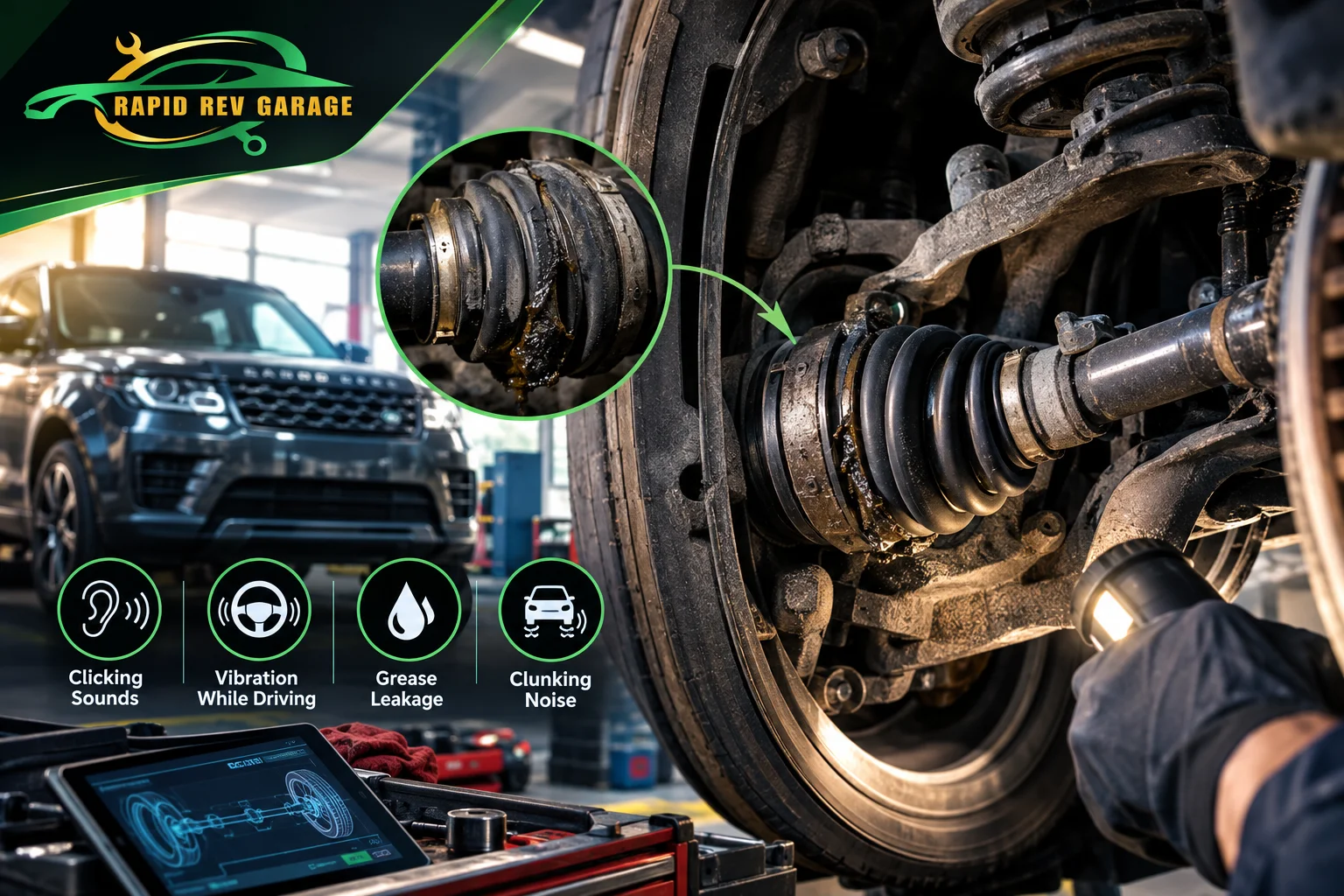
As the joint wears, you may hear clicking, popping or grinding sounds. You may also notice vibration during acceleration or grease around the wheel area.
Ignore these symptoms can lead to more damage. In severe cases, a failed CV joint can stop power from reaching the wheel.
This guide explains the main warning signs, common causes, repair process and when you should stop driving.
How Do You Know You Have a Bad CV Joint?
A Bad CV Joint often causes clicking or popping sounds when turning, especially during tight turns at low speed. You may also feel vibration while accelerating or notice grease leaking from a damaged CV boot. Other signs include clunking, unusual wheel movement or reduced driving smoothness. A worn outer CV joint usually makes noise during turns, while an inner joint may cause vibration during acceleration. A proper inspection should confirm the exact cause. If the noise is loud or your vehicle has strong vibration, avoid long drives and have a professional garage check the CV system.
Table of Contents
- Problem Overview
- Symptoms to Watch For
- Common Causes
- Diagnostic Process
- Repair Process
- Risks of Ignoring the Problem
- Can You Continue Driving?
- Repair Time
- Cost Factors
- Prevention Tips
- Dubai-Specific Advice
- Why Choose Rapid Rev Garage for Roadside Assistance?
- Frequently Asked Questions
- Related Services
- Final Call-to-Action
Problem Overview: Understanding a Bad CV Joint
CV stands for constant velocity. CV joints are part of the vehicle’s driveshaft or axle assembly.
They allow engine power to reach the wheels while the suspension moves and the steering changes direction.
Most vehicles have an inner and outer CV joint. Both can wear over time.
A damaged CV boot is often the starting point. The boot keeps grease inside and protects the joint from dirt and water.
Once the boot cracks, grease can escape. Dirt can then enter and damage the joint.
Symptoms of a Bad CV Joint: Warning Signs to Watch
Knowing the symptoms can help you find the problem early.
Clicking or Popping While Turning
A clicking sound during tight turns is one of the most common signs.
You may hear it when making a U-turn or turning into a parking space.
Vibration During Acceleration
A worn inner CV joint may cause vibration when you accelerate.
The vibration may become stronger as engine power increases.
Grease Around the Wheel Area
Check behind the wheel for thick grease.
A damaged CV boot can throw grease onto nearby suspension or wheel components.
Clunking When Accelerating
A clunk when accelerating or releasing the throttle can indicate wear in the CV joint or related drivetrain components.
Further inspection is needed to confirm the exact source.
Grinding or Humming Sounds
Severe joint wear can produce grinding or humming noises.
Don’t ignore these sounds, especially if they get louder over time.
Common Causes of CV Joint Problems
Several issues can cause CV joint wear.
| Cause | What Happens |
|---|---|
| Torn CV boot | Grease escapes and dirt enters the joint. |
| Normal wear | Joint surfaces gradually wear down. |
| Lack of lubrication | Increased friction can damage the joint. |
| Road debris | Debris can damage the CV boot. |
| Hard acceleration | Extra stress is placed on the joint. |
| Poor installation | Incorrect fitting can cause early wear. |
| Suspension problems | Incorrect suspension movement can add stress. |
A damaged boot does not always mean the entire joint needs replacement. If the joint hasn’t been damaged, replacing the boot and grease may be enough.
Diagnostic Process: How Technicians Check the CV Joint
A technician usually starts with a visual inspection.
Technicians check the CV boots for cracks, splits and grease leaks.
The technician may then inspect the axle and joint for excessive movement.
A road test can help identify clicking, vibration or clunking.
The technician may also lift the vehicle to inspect the axle and joints more closely.
Other components are checked too. This helps rule out wheel bearings, tires, suspension parts and drivetrain problems that can create similar symptoms.
Repair Process for a Bad CV Joint
The repair depends on the joint’s condition.
If only the CV boot is damaged and the joint is still in good condition, a technician may replace the boot and add fresh grease.
If the joint itself is worn, you may need to replace it.
In some cases, replacing the complete axle assembly is more practical.
After the repair, road-test the vehicle to make sure the noise or vibration has been resolved.
Risks of Ignoring a Bad CV Joint
A worn CV joint can become worse with continued driving.
A damaged boot allows dirt and moisture into the joint. This increases wear and friction.
Over time, the joint can become noisy and loose.
In a severe failure, the axle may no longer transfer power correctly to the wheel.
Ignoring early symptoms can also lead to a more expensive repair.
Can You Continue Driving With a Bad CV Joint?
It depends on how severe the problem is.
A minor CV boot problem may allow you to reach a garage. However, continued driving can damage the joint if grease has already escaped.
If you hear loud clicking, feel strong vibration or notice severe clunking, avoid unnecessary driving.
If the vehicle becomes difficult to control or you are stranded, roadside assistance can help you get the vehicle to a safe location.
Repair Time: How Long Does CV Joint Repair Take?
Repair time depends on the vehicle and the type of repair required.
| Repair Type | Approximate Time |
|---|---|
| CV joint inspection | 30–60 minutes |
| CV boot inspection | 30–60 minutes |
| CV boot replacement | 1–2 hours |
| Single CV joint replacement | 1–3 hours |
| Complete axle replacement | 1–3 hours |
| Additional drivetrain inspection | 30–90 minutes |
| Multiple CV joint repair | 3–5+ hours |
These times are general estimates. Actual time can vary based on the vehicle and access to the damaged part.
Cost Factors: What Affects CV Joint Repair Price?
The final price depends on several factors.
| Cost Factor | Why It Matters |
|---|---|
| Vehicle model | Parts and labor costs vary between vehicles. |
| Joint condition | A damaged joint may need complete replacement. |
| CV boot condition | A boot-only repair can cost less than replacing the joint. |
| Genuine or aftermarket parts | Part prices can vary by brand and quality. |
| Labor time | Difficult access can increase labor costs. |
| Complete axle replacement | It may cost more than replacing only the boot. |
| Additional damage | Other worn drivetrain parts can increase the total cost. |
An inspection is the best way to identify the exact repair and expected cost.
Prevention Tips for CV Joint Problems
You can reduce the chance of major CV joint damage with simple maintenance.
- Check CV boots during routine servicing.
- Look for grease around the inside of the wheel.
- Avoid aggressive acceleration when possible.
- Have clicking noises checked early.
- Avoid driving through deep potholes at high speed.
- Replace damaged boots before the joint becomes contaminated.
- Keep up with regular vehicle inspections.
Early repairs are usually easier than dealing with a completely failed joint.
Dubai-Specific Advice for CV Joint Problems
Dubai’s heat, traffic, road surfaces and frequent stop-and-go driving can put extra stress on vehicle components.
Dust and road debris can also get in when a CV boot is cracked.
If you regularly drive through busy areas or use your vehicle for long daily journeys, watch for new clicking or vibration.
If you notice signs of a Bad CV Joint, have the vehicle checked before taking a long highway trip.
Rapid Rev Garage can help Dubai drivers inspect drivetrain and axle-related problems and identify the repair needed.
Why Choose Rapid Rev Garage for Roadside Assistance?
A CV joint problem can happen while you are away from home or a workshop.
If the vehicle develops severe vibration or drivetrain noise, Rapid Rev Garage can provide roadside assistance to help drivers get their vehicle to a safe place.
The team can also help assess the vehicle and advise whether it needs further workshop inspection.
For drivers searching for a garage near me in Dubai, early diagnosis can help prevent a small CV boot problem from becoming a major CV joint repair.
Frequently Asked Questions
What is the most common sign of a bad CV joint?
Clicking or popping while making tight turns is one of the most common signs, especially with an outer CV joint.
Can a bad CV joint cause vibration?
Yes. An inner CV joint problem can cause vibration, especially when accelerating.
Can I drive with a bad CV joint?
Short driving may be possible with a minor issue, but you should check promptly for severe clicking, vibration or clunking.
How long does CV joint replacement take?
A single joint or axle replacement often takes around 1–3 hours, depending on the vehicle and repair access.
Is a damaged CV boot serious?
It can become serious if ignored. Lost grease and dirt contamination can damage the CV joint.
Related Services
Rapid Rev Garage can assist with related vehicle services, including:
- CV joint inspection
- CV boot replacement
- Axle repair
- Driveshaft inspection
- Suspension inspection
- Wheel bearing inspection
- Brake repair
- Wheel alignment
- General car repair
- Roadside assistance
Final Call-to-Action
Don’t ignore clicking, vibration or grease around your wheel area. These signs may point to a Bad CV Joint or another drivetrain problem.
Getting the issue checked early can help prevent further damage and higher repair costs.
For Dubai car owners, Rapid Rev Garage provides professional vehicle inspection and repair support, along with roadside assistance when you need help on the road.
If you are searching for a garage near me, get your vehicle checked before a small CV problem becomes a major repair.