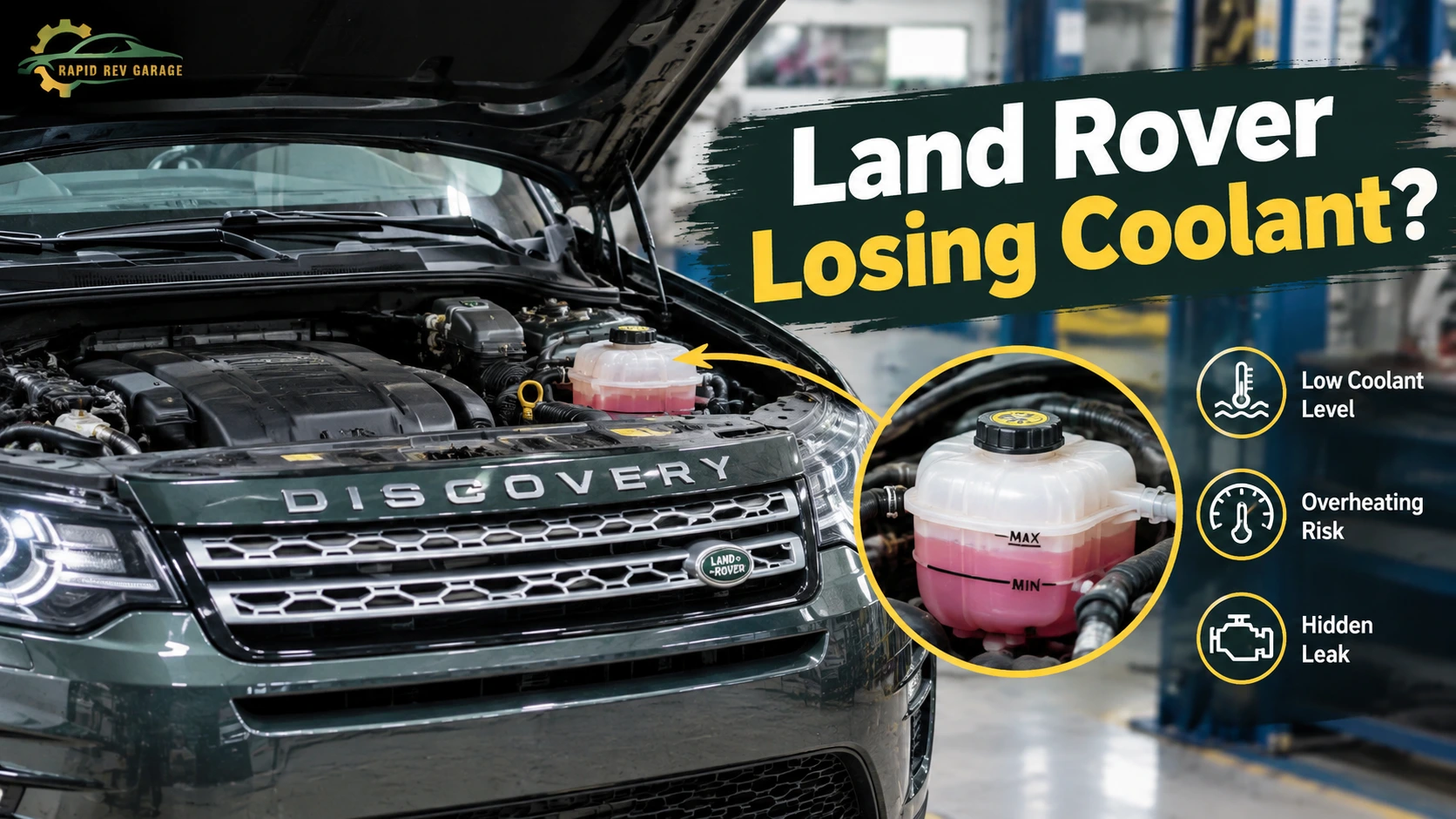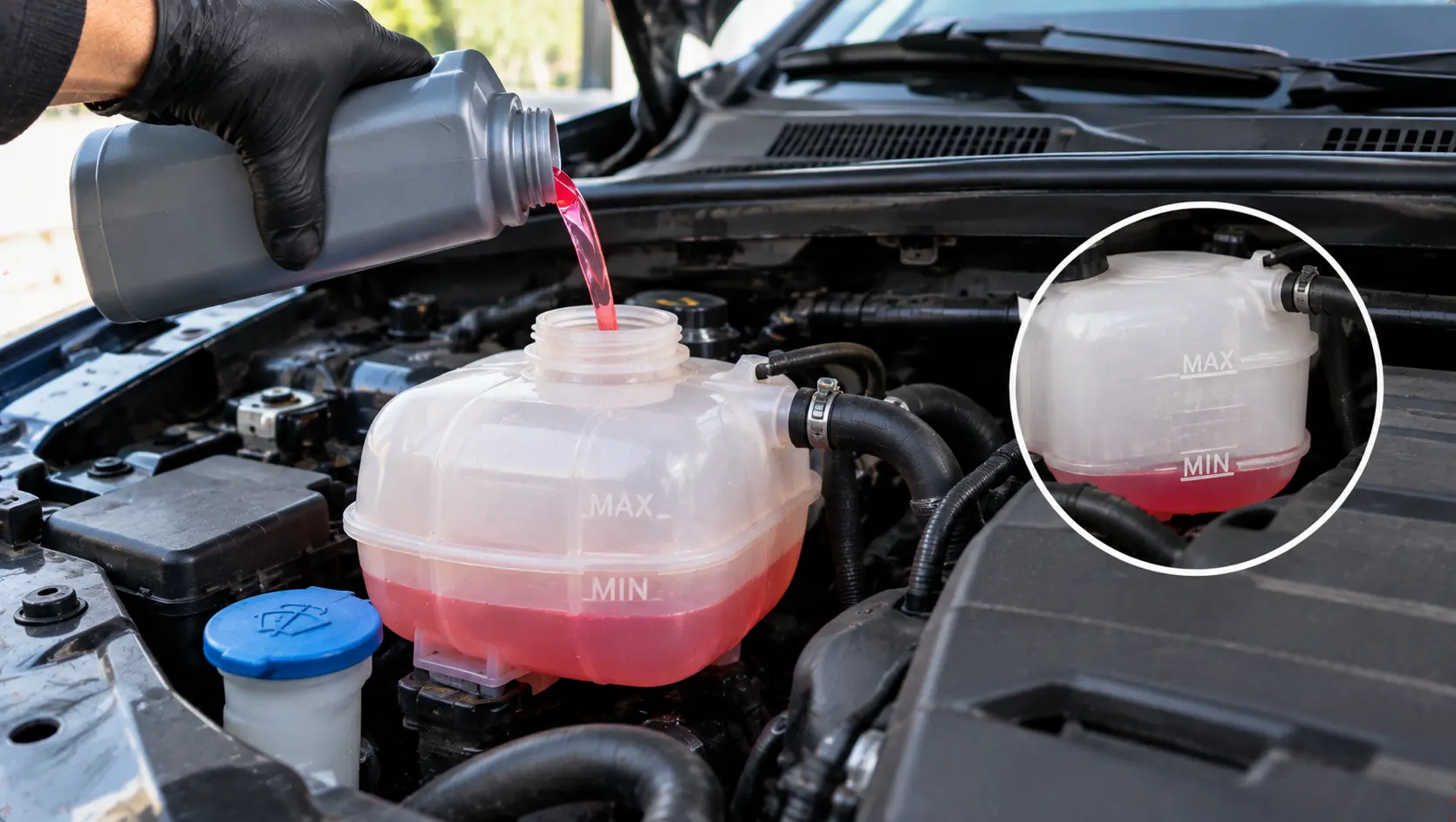
When a coolant reservoir keeps emptying, a situation develops — the level drops between top-ups with no puddle under the car and no obvious leak — the coolant is going somewhere that is not immediately visible. This is more concerning than an obvious external leak because the driver has no visible warning. The level just keeps dropping.
In Dubai, a coolant reservoir keeps emptying fault is especially dangerous in summer. The cooling system is working at the top of its capacity for most of the year. A cooling system that is consistently losing coolant has reduced heat rejection capacity — and in 45°C summer conditions, reduced capacity leads to overheating faster than anywhere else.
At Rapid Rev Garage in Al Quoz, every coolant reservoir keeps emptying case is traced with a pressure test and a combustion gas test — finding the leak source before it causes an overheating event.
Coolant Reservoir Keeps Emptying — Quick Answer
A coolant reservoir keeps emptying because coolant is escaping through one of several possible paths — either externally through a leak the driver cannot see, or internally into the engine where it is burned and exits through the exhaust.
External leaks that are not visible include a pinhole in the radiator that only weeps under pressure during operation, a seeping water pump seal that drips onto the engine block and evaporates on the hot surface, a leaking heater core inside the dashboard that drips into the cabin footwell, or a cracked coolant hose that seeps at a clamp and evaporates instantly on the hot exhaust manifold.
Internal consumption means coolant is entering the combustion chamber through a failed head gasket or cracked cylinder head — it burns and exits as white steam from the exhaust with a sweet smell. In Dubai’s summer heat, even a slow leak depletes the reservoir significantly faster than in cooler conditions.
Table of Contents
- Why Coolant Loss Without a Visible Puddle Is Still a Leak
- Pinhole Radiator Leak That Only Weeps Under Pressure
- Seeping Water Pump Seal Burning on the Engine Surface
- Leaking Heater Core Inside the Dashboard
- Cracked or Leaking Coolant Hose at a Clamp
- Head Gasket Failure — Coolant Burning in the Combustion Chamber
- Overflow Loss From a Faulty Pressure Cap
- How Dubai’s Heat Makes Slow Coolant Loss Dangerous
- How We Find the Source at Rapid Rev Garage
- The Services That Fix Each Confirmed Cause
- What Does the Repair Cost in Dubai?
- Why Rapid Rev Garage?
- FAQ
- Conclusion
Why Coolant Loss Without a Visible Puddle Is Still a Leak
The absence of a puddle under the car does not mean the cooling system is sealed. Several leak paths produce no visible puddle at all.
Evaporative leaks. A coolant hose that seeps a small amount near the exhaust manifold loses that coolant instantly to evaporation. The hot surface converts the liquid to steam before it can drip. No puddle — but the reservoir is still emptying.
Pressure-only leaks. Some leaks only occur when the cooling system is pressurised during operation. A pinhole in a radiator tank that is dry and sealed when cold opens under the 1.0–1.4 bar operating pressure and weeps during the drive. After the engine cools, the pressure drops and the leak seals itself. No puddle when the car is parked — but the coolant is gone.
Internal loss. Coolant entering the combustion chamber through a failed head gasket is burned and exits through the exhaust. It never appears externally. The only signs are the reservoir level dropping and white sweet-smelling exhaust smoke.
Heater core drip. The heater core is inside the dashboard. A leaking heater core drips coolant into the cabin — under the carpet in the passenger footwell, or producing a foggy windscreen from coolant vapour in the heater air. No external puddle.
Every one of these leaves no puddle — but the coolant reservoir keeps emptying in all of them. Our car mechanic team uses a pressure test and a UV dye trace to find every category of leak regardless of whether a puddle is visible.
Pinhole Radiator Leak That Only Weeps Under Pressure
The radiator is one of the most common sources when the coolant reservoir keeps emptying with no visible sign at rest.
Radiators in Dubai’s environment are subject to sustained thermal cycling — heating and cooling daily for years. The aluminium tanks and plastic end caps on modern radiators develop micro-cracks at stress points over time. These cracks are closed when cold but open under the 1.0–1.4 bar operating pressure.
During a drive, coolant weeps through the crack and evaporates on the radiator’s hot outer surface or runs down and evaporates on the engine. The driver parks, the system cools and depressurises, the crack closes, and there is no evidence of where the coolant went.
A pressure test confirms this immediately. The cooling system is pressurised with a hand pump to the system’s rated pressure. A pinhole that is invisible at rest shows as a pressure drop on the gauge over 10–15 minutes. UV dye in the system — inspected with a UV lamp — identifies the precise leak location on the radiator surface.
Radiator repair is possible for accessible cracks but replacement is typically recommended — a pressure-tested new radiator is more reliable than a patched one. Our car service team includes a coolant pressure test and level check at every major service.
Seeping Water Pump Seal Burning on the Engine Surface
The water pump circulates coolant through the engine. Where the pump shaft exits the pump housing, a mechanical seal prevents coolant from leaking out. This seal wears over time and eventually allows a small coolant seep.
In many engine layouts, the water pump sits directly adjacent to or above the exhaust manifold. A seeping pump seal drips coolant onto the hot manifold surface — the coolant evaporates instantly, producing a faint sweet smell but no puddle.
The sign of a seeping water pump seal in Dubai is a white mineral deposit — dried coolant residue — around the pump housing or on the block below it. This dried residue is the evidence left behind after the liquid coolant evaporated. A UV dye trace under a UV lamp shows the dried residue glowing — confirming the leak path.
Water pump replacement resolves this permanently. Where the pump is also near the timing belt, timing belt replacement at the same visit is recommended — the same access is required. For any roadside emergency from an overheating event, our roadside assistance team covers Al Quoz and nearby Dubai areas.
Leaking Heater Core Inside the Dashboard
The heater core sits inside the dashboard — a small heat exchanger that hot coolant flows through to warm the cabin. The heater core has two coolant hoses connecting it to the engine cooling circuit.
A leaking heater core drips coolant inside the dash. In most vehicles, this coolant exits into the front passenger footwell — the carpet becomes damp or wet with a sweet-smelling liquid. On some vehicles, the coolant vapourises in the warm heater box and produces a foggy, greasy film on the inside of the windscreen that the windscreen demister cannot clear.
A heater core leak is confirmed by the wet footwell and sweet smell inside the cabin. Coolant loss from a heater core is slow — the drip rate is low — but consistent. The coolant reservoir keeps emptying gradually and the footwell accumulates moisture over weeks.
Heater core replacement requires partial dashboard removal — significant labour. The connection hoses and the coolant circuit to the heater core are flushed before the new core is fitted to prevent debris contamination. For any interior trim or carpet repairs from coolant damage, our car painting team handles interior repair work alongside the mechanical service.
Cracked or Leaking Coolant Hose at a Clamp
Coolant hoses connect the engine, radiator, heater core, and expansion tank. Each connection is secured with a metal clamp. Over time, the rubber hose wall thickens and hardens from heat — or the clamp corrodes and loses clamping force.
A seeping hose-to-clamp connection drips coolant that evaporates on nearby hot surfaces before it reaches the ground. The coolant loss is slow but consistent — enough to empty the reservoir over several weeks.
Hose condition is assessed by squeezing each hose when cold. A healthy hose is firm but pliable. A hose that cracks on squeezing or feels rock-hard has hardened beyond its service life. Clamps are inspected for corrosion and tightened or replaced.
In Dubai, coolant hose replacement intervals should be shorter than European specifications — 4–5 years rather than 7–8 years. The sustained heat hardens the rubber faster than any temperate climate allows.
Head Gasket Failure — Coolant Burning in the Combustion Chamber
When a coolant reservoir keeps emptying with no external leak found, internal consumption through a failed head gasket is the primary remaining cause.
A head gasket breach between a coolant passage and a combustion chamber allows coolant to enter the cylinder during the intake stroke. The coolant is vaporised during combustion and exits through the exhaust as white steam. The distinctive sweet smell of burning glycol in the exhaust confirms coolant combustion.
The combustion gas test — a chemical test applied to the coolant at the reservoir with the engine running — changes colour if combustion gases are present in the cooling system. A positive result confirms a head gasket or head crack breach. This test provides a definitive answer without any engine disassembly.
Head gasket failure in Dubai is strongly associated with previous overheating events. A single temperature warning that was not acted on immediately may have warped the aluminium cylinder head enough to begin a slow gasket breach. The coolant reservoir keeps emptying weeks after the overheating event — the delayed consequence of thermal damage the driver thought they had escaped.
Overflow Loss From a Faulty Pressure Cap
The coolant system pressure cap on the reservoir or radiator performs two functions. It maintains the system at its rated pressure — raising the boiling point of the coolant. And it releases excess pressure above its rating through an overflow tube, protecting the hoses and radiator from pressure damage.
A pressure cap with a faulty pressure relief valve releases coolant at a lower pressure than specified. The system pressurises to the cap’s relief point — lower than normal — and the cap releases coolant through the overflow tube. The coolant exits via the overflow drain below the car and evaporates, leaving no puddle.
A faulty pressure cap also allows the system to run below its designed pressure — reducing the coolant’s boiling point. In Dubai’s 45°C ambient conditions, a cooling system running at reduced pressure boils more easily under high load.
Pressure cap testing takes two minutes with a cap tester. A cap that releases below its rated pressure is replaced. The cap is one of the cheapest components in the cooling system — AED 50–150 — and is often overlooked as a cause of coolant loss.
How Dubai’s Heat Makes Slow Coolant Loss Dangerous
In a European market with 20°C ambient temperatures, a cooling system that is 10% low on coolant still has adequate heat rejection capacity for normal driving. The reduced volume cools adequately.
In Dubai at 45°C ambient with the AC compressor adding load, a cooling system that is 10% low is already at the edge of its heat rejection capacity. A further 5% loss from a slow leak during a long drive can push the system into overheating in the same conditions that the fully-charged system would manage safely.
This is why a coolant reservoir keeps emptying slowly in Dubai is a more urgent fault than the same slow loss rate in any cooler market. The margin between adequate and insufficient is smaller here. Fixing the leak source is more time-critical.
How We Find the Source at Rapid Rev Garage
UV dye and pressure test first. UV-fluorescent dye is added to the coolant. The system is pressurised to its rated pressure. After a drive, a UV lamp reveals every external leak — the dye trace glows at the leak point. A pressure drop on the gauge during the static pressure test confirms a leak exists even before the UV trace identifies it.
Combustion gas test. A chemical test block is applied to the coolant reservoir filler with the engine running. Colour change confirms combustion gases in the cooling system — head gasket or head crack.
Cabin inspection. The passenger footwell carpet is checked for dampness and sweet smell — confirming a heater core leak before dashboard disassembly.
Pressure cap test. The cap is tested on a pressure tester. Release pressure compared against the cap’s rating.
Coolant consumption measurement. The reservoir is marked at a precise level and the car driven for a defined distance. The volume lost is measured to quantify the leak rate.
The Services That Fix Each Confirmed Cause
- Radiator replacement. AED 600–2,500 depending on vehicle.
- Water pump replacement. AED 500–1,800 including coolant top-up.
- Heater core replacement. AED 1,500–4,000 including dashboard access labour.
- Coolant hose replacement. AED 200–600 per hose including clamps.
- Pressure cap replacement. AED 50–150.
Head gasket replacement. AED 2,500–7,000 including head machining where required. Our mobile car mechanic covers Al Quoz and nearby Dubai areas for on-site coolant system pressure testing. Our garage near me in Al Quoz serves drivers from Business Bay, Jumeirah, Barsha, Satwa, Downtown, and the Sheikh Zayed Road corridor.
What Does the Repair Cost in Dubai?
| Service | Cost Range |
| Pressure cap replacement | AED 50–150 |
| Coolant hose replacement | AED 200–600 |
| Water pump replacement | AED 500–1,800 |
| Radiator replacement | AED 600–2,500 |
| Heater core replacement | AED 1,500–4,000 |
| Head gasket replacement | AED 2,500–7,000 |
All costs confirmed after pressure test, combustion gas test, and UV dye trace identify the specific source.
Why Rapid Rev Garage?
When the coolant reservoir keeps emptying without a visible puddle, the leak is hidden — in the radiator under pressure, on the hot engine surface, inside the dashboard, or inside the engine itself. A visual inspection at rest finds nothing.
We confirm every coolant reservoir keeps emptying source before opening any component, and check the cabin before opening any component. The source is confirmed before any repair is recommended.
FAQ — Coolant Reservoir Keeps Emptying
Here are the questions Dubai drivers ask us most about coolant loss.
Is it safe to keep topping up the coolant?
Topping up keeps the engine from overheating short-term but does not fix the leak. Every top-up is masking a fault that is progressing. A head gasket breach that allows slow coolant loss will eventually allow faster loss. Find and fix the source.
Can I drive with low coolant in Dubai?
Only to reach a workshop immediately. In Dubai's summer conditions, a cooling system with low coolant can overheat within 10–15 minutes of heavy load driving. Do not attempt a long journey with a known low coolant level.
How do I know if coolant is leaking internally?
White smoke from the exhaust with a sweet smell confirms coolant burning. A milky emulsion under the oil filler cap confirms coolant mixing with oil through the head gasket. The combustion gas test provides a definitive chemical confirmation.
Why does my reservoir empty but there's no steam or smoke?
A slow external leak — from a pinhole radiator, a seeping pump seal, or a hose clamp — loses coolant gradually without producing visible steam or smoke at normal operating temperature. The loss is slow enough that the coolant evaporates or weeps away without a dramatic visible event.
How often should coolant be topped up in a healthy system?
A healthy sealed cooling system should not require topping up between services. Any coolant loss — however small — indicates a leak or internal consumption. The reservoir level should be checked monthly and any drop investigated.
Conclusion
A coolant reservoir keeps emptying because coolant is escaping through a path that may not produce a visible puddle — a pressure-only radiator crack, an evaporative pump seal seep, a heater core drip inside the dashboard, a clamp seep on a hot hose, or internal combustion through a failed head gasket. In Dubai’s summer conditions, even a slow leak is a more urgent fault than in any cooler market.
Rapid Rev Garage in Al Quoz traces every coolant reservoir keeps emptying case with pressure testing, UV dye, combustion gas testing, and cabin inspection — confirming the source before recommending any repair.
Rapid Rev Garage is in Al Quoz, serving Business Bay, Jumeirah, Downtown, Barsha, Satwa, and the Sheikh Zayed Road corridor. Book your appointment on WhatsApp or find us on Google Maps.
Rapid Rev Garage — Coolant Reservoir Keeps Emptying | Al Quoz, Dubai