Your car’s battery went flat twice in a month, so you fitted a new one.
Two weeks later it is flat again. A friend suggests the alternator, so that gets replaced too, and the problem is still there. In the end, the cause turns out to be a dash cam wired to stay on all night. This kind of story is common in Dubai, and it is the main reason diagnosing car electrical problems before buying parts matters so much.
Modern cars have dozens of control modules, hundreds of wires and many sensors that all talk to each other.
A single fault can cause symptoms in several places at once. A weak ground connection can look like a failing starter. A corroded connector can look like a bad sensor. Low voltage from a tired battery can make several modules set fault codes at the same time.
This guide explains why guessing at electrical faults wastes money and which parts are most often replaced by mistake. It shows how a workshop tests a fault properly, why Dubai heat, water and accessories cause so many problems and what to ask for when you book. It uses figures from named sources where they are available.
Diagnosing Car Electrical Problems: Quick Answer
Diagnosing car electrical problems before replacing parts matters because one fault can cause symptoms in several systems, and many common symptoms have more than one cause. Guessing often leads to replacing good batteries, alternators, starters and sensors. Meanwhile the real fault, such as a bad ground, corroded connector or hidden drain, stays in the car.
A proper diagnosis reads fault codes from all modules and checks live data. It tests the battery and charging system and measures voltage drop on power and ground circuits. CarSwitch lists an OBD diagnostic scan at about AED 50 to 150 in the UAE, far less than most of the parts it can rule out.
Table of Contents
- How Electrical Systems Work in Modern Cars
- Why Guessing Costs More Than Testing
- Parts Most Often Replaced by Mistake
- Battery Replaced When the Fault Is Elsewhere
- Alternator Replaced When the Belt or Wiring Is at Fault
- Starter Replaced When the Ground Is Bad
- Sensors Replaced When the Wiring Is Damaged
- Modules Replaced When the Power Supply Is Weak
- Why Electrical Faults Are Common in Dubai
- Why Aftermarket Accessories Need Careful Checking
- How a Workshop Diagnoses an Electrical Fault
- Reading Codes From Every Module
- Live Data and Freeze Frame Information
- Voltage Drop Testing
- Parasitic Drain Testing
- Intermittent Faults and How They Are Found
- What to Tell the Technician
- What a Diagnosis Costs Compared With Parts
- Can a Battery Change Cause Electrical Faults?
- What to Do if an Electrical Fault Leaves You Stuck
- FAQ
- Conclusion
How Electrical Systems Work in Modern Cars
Every electrical part in a car needs a complete circuit. That means a power supply and a ground path back to the battery. Many parts also need a signal from a control module. A fault anywhere in that circuit can stop the part working.
Modern cars add networks on top. Control modules for the engine, gearbox, ABS, body, lights, climate and infotainment share data over a network, often called CAN bus. If one module loses power or a network wire is damaged, other modules may report faults even though they are working.
That is why a warning light or a dead feature does not always point to the part that has failed. The fault may be in the wiring, the connector, the ground, the power supply or another module.
Why Guessing Costs More Than Testing
Replacing parts without testing is sometimes called using the parts cannon. A part is replaced because it is the usual suspect. If the problem stays, another part is replaced, and so on.
Each guess costs the price of the part and the labour to fit it. Many electrical parts, such as sensors and modules, cannot be returned once fitted, even if they turn out not to be the problem.
Some parts also need programming or coding to the car after fitting. That adds cost, and a wrongly replaced module can create new problems of its own.
A proper diagnosis costs a fraction of most parts. It finds the cause first, so only the faulty part is replaced.
Parts Most Often Replaced by Mistake
The parts most often replaced by mistake in electrical faults are batteries, alternators, starters, sensors, relays and control modules. These are the parts most closely linked to common symptoms such as no start, flat battery, warning lights and dead features.
Each one can fail, but each one also has common look alike faults. The sections below explain the most common mix ups and why testing separates them.
Battery Replaced When the Fault Is Elsewhere
A flat battery is the most common electrical complaint. Varta cites ADAC breakdown data showing battery problems caused 43.22 per cent of breakdowns in 2022.
A flat battery is not always a failed battery. It can come from a charging fault or a drain that runs the battery down while parked. A loose terminal or short trips that never fully recharge it can cause it too.
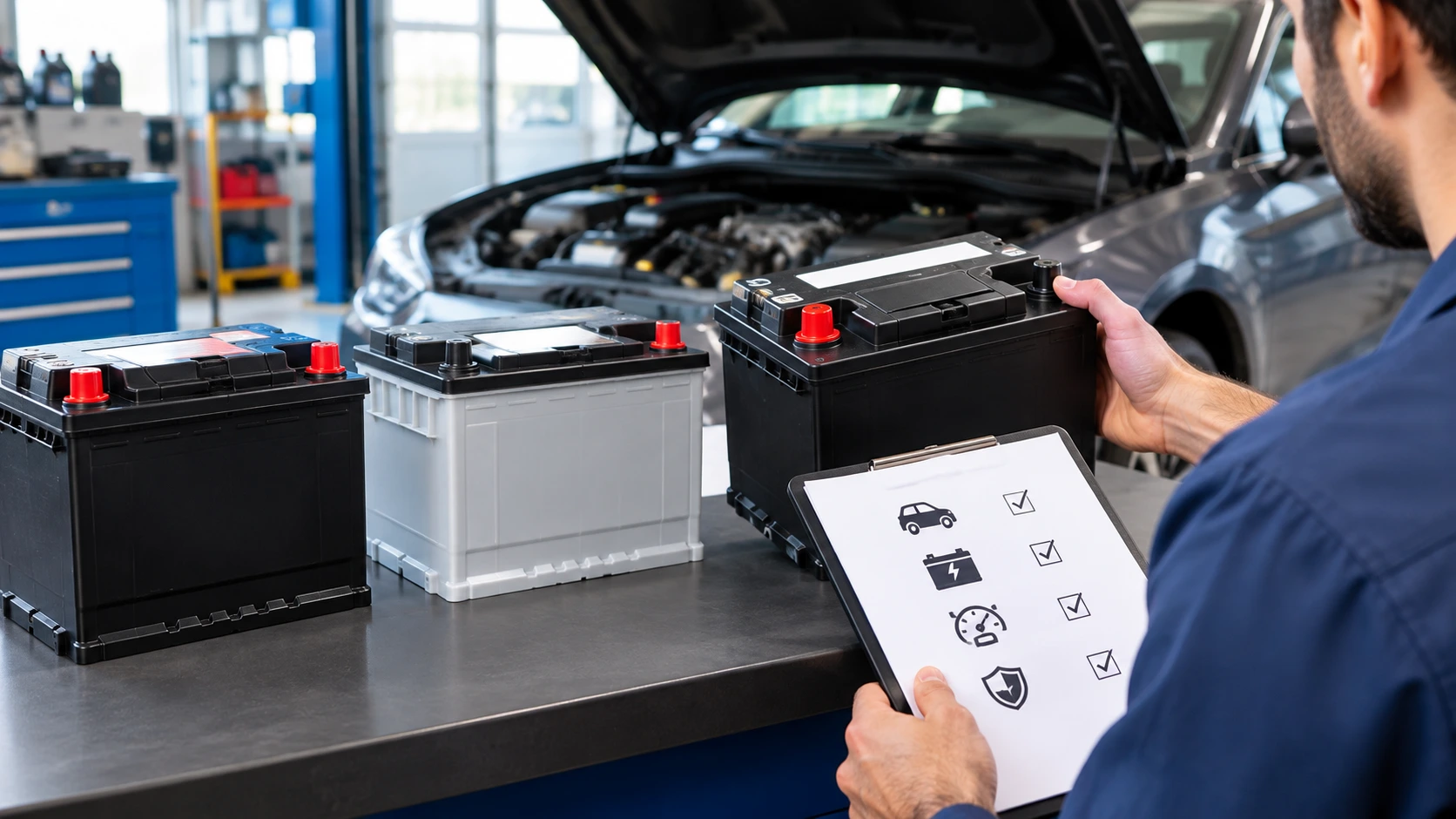
A battery test shows whether the battery itself is weak. If it tests healthy but keeps going flat, the cause is elsewhere. Replacing a good battery will not fix it, and a new battery can be damaged by the same fault. A proper battery replacement should always start with a test of the battery and the charging system.
Alternator Replaced When the Belt or Wiring Is at Fault
When the battery light comes on or the battery keeps going flat, many people suspect the alternator. Sometimes it is the cause. But a slipping belt, a weak tensioner, a corroded charging cable or a loose ground strap cause the same symptoms. So can a blown fuse in the charging circuit.
On many modern cars, the engine computer controls alternator output. A fault in that control signal, or in a battery sensor, can stop the alternator charging properly even though it is healthy.
A charging system test measures alternator output at the battery and at the alternator itself, under load. Comparing the two shows whether the problem is the alternator or the wiring between them.
Starter Replaced When the Ground Is Bad
A car that clicks but does not crank often gets a new starter. A starter needs a large current to turn the engine. If the battery cable or a ground strap is corroded or loose, the starter cannot get that current. It then clicks or turns slowly.
A voltage drop test on the starter circuit shows where the power is being lost. If the starter receives full voltage and still does not turn, it is faulty. If it receives low voltage, the cable or ground is the problem.
Cleaning and tightening a ground strap costs a small fraction of a new starter.
Sensors Replaced When the Wiring Is Damaged
Fault codes often name a sensor circuit, such as a crankshaft position sensor, an oxygen sensor or an ABS wheel speed sensor. Many people read the code and buy the sensor.
But a code for a sensor circuit means the computer sees a problem somewhere in that circuit. The cause may be the sensor, a broken wire, a chafed insulation, a corroded connector pin or a short to ground.
Testing the wiring with a meter, and checking the signal with a scope or live data, shows whether the sensor or the wiring is at fault. Sensor wires near hot exhausts and moving suspension parts are especially prone to damage.
Modules Replaced When the Power Supply Is Weak
Control modules are expensive, and many need programming after fitting. When a module stops working, it is tempting to blame the module.
Before replacing one, a technician checks that it has good power, a good ground and a working network connection. A blown fuse, a corroded ground point or a damaged network wire can make a healthy module look dead.
Low battery voltage is a common cause of strange module behaviour. When voltage dips during cranking or because of a weak battery, modules can reset, lose settings or set fault codes. Fixing the battery or charging fault often clears these symptoms.
Why Electrical Faults Are Common in Dubai
Heat is the biggest factor. On summer afternoons when the air passes 45°C, engine bays get far hotter. Heat hardens wire insulation, dries out connector seals and speeds up corrosion. CarSwitch notes that UAE drivers see symptoms such as flickering dashboard lights, slow power windows, infotainment glitches and random sensor warnings in summer.
Water is another cause. Frequent car washes, pressure washers aimed at engine bays and the occasional heavy rain can push water into connectors. Corrosion then builds slowly inside the connector, where it cannot be seen.
Aftermarket accessories cause many faults. Dash cams wired for parking mode, alarm systems, extra lights, sound systems and tracking devices are often spliced into existing wiring. Poor connections and constant power draws cause drains, blown fuses and strange behaviour.
Accident repairs can also leave damaged wiring behind bumpers and in door hinges. If a car had body work, the wiring in that area should be checked when electrical faults appear. A proper accident repair includes checking and reconnecting wiring in the damaged area.
Why Aftermarket Accessories Need Careful Checking
Dash cams, alarms, trackers, extra lights and sound systems are popular in Dubai. When fitted well, they cause no trouble. When spliced into the wrong wire, they can drain the battery, blow fuses or interfere with the car’s network.
A dash cam set to parking mode can run the battery down within days if the car sits unused. Some cheap installs tap into airbag or network wiring, which can set fault codes.
When diagnosing an electrical fault, a technician checks every accessory and how it was wired. Removing or rewiring a poorly fitted accessory often solves the problem with no new parts.
How a Workshop Diagnoses an Electrical Fault
A trained car mechanic near you starts by listening to the symptoms and confirming them. The fault must be seen or measured before it can be fixed.
Next comes a full scan of the car’s modules, a check of the battery and charging system and a review of any recent repairs or accessories.
The technician then uses wiring diagrams for the exact model to follow the circuit. Power and ground are tested at the affected part, and connectors are checked for corrosion and bent pins. Voltage drop and drain tests are used where needed.
Only when the cause is confirmed is a part replaced. An auto electrical repair specialist can handle complex wiring and module faults.
Reading Codes From Every Module
A basic code reader often reads only the engine computer. Many electrical faults are stored in other modules, such as the body control module, ABS, airbag, climate or infotainment systems.
A full system scan reads every module that can talk to the scan tool. It shows which modules have codes, when they were set and whether they are current or stored from the past.
Seeing codes across several modules at once can point to a shared cause, such as low voltage or a network problem, rather than many separate faults.
Live Data and Freeze Frame Information
Live data shows what sensors and modules are reporting in real time, such as battery voltage, alternator command, sensor readings and switch states. A technician can watch these while the fault happens.
Freeze frame data shows what the engine computer saw at the moment a code was set, such as engine speed, temperature and voltage. It helps recreate the conditions for an intermittent fault.
Comparing live data with what the technician measures with a meter shows whether the module is seeing the correct signal.
Voltage Drop Testing
A voltage drop test measures how much voltage is lost across a cable, connector, switch or ground while current is flowing. A healthy connection loses very little. A corroded or loose one loses much more.
This test is especially useful for starting, charging and high current circuits, such as the starter, alternator, cooling fans and headlights. It finds problems that a simple continuity test misses, because a corroded wire can show good continuity with no load but fail under load.
Voltage drop tests are quick and cheap, and they often find the real cause of a no start or slow crank.
Parasitic Drain Testing
A parasitic drain is a small current that keeps flowing after the car is switched off and locked. Every modern car has a small normal drain to keep the clock, alarm and module memory alive. A larger drain can flatten the battery overnight or over a few days.
To test it, the technician connects an ammeter in the battery circuit, waits for the car’s modules to go to sleep and measures the current. If it is too high, the technician checks fuses one by one to find which circuit is drawing power.
Common causes include aftermarket accessories, a glovebox or boot light that stays on, a module that does not go to sleep and a faulty relay.
Intermittent Faults and How They Are Found
Some electrical faults come and go. A warning light appears over bumps, on hot afternoons or after a car wash, then disappears. These are the hardest faults to find.
Technicians use the conditions the driver describes to recreate the fault. They may wiggle wiring looms while watching live data, heat or cool parts, or drive the car over the same route. Some use data loggers that record signals during a drive.
Intermittent faults often come from broken wires inside insulation, loose pins in connectors or corrosion that only causes trouble when hot or wet.
What to Tell the Technician
Good information speeds up diagnosis. Before your visit, note:
- When the problem started and how often it happens
- Whether it happens hot or cold, wet or dry, moving or parked
- Any warning lights or messages, with photos if possible
- Any recent repairs, battery changes, accidents or car washes
- Any accessories added, such as dash cams, alarms or lights
A short video of the fault happening can be very useful for a technician.
What a Diagnosis Costs Compared With Parts
CarSwitch lists an OBD diagnostic scan at about AED 50 to 150 in the UAE. Deeper electrical diagnosis, such as wiring tests and drain tests, usually costs more because it takes more time.
Compare that with typical part prices. PitStopArabia lists battery replacement in Dubai at AED 150 to AED 1,500. Alternators, starters and control modules often cost far more, and many modules need programming.
Paying for one proper diagnosis is almost always cheaper than replacing two or three parts by guesswork.
Can a Battery Change Cause Electrical Faults?
Yes, sometimes. On many modern cars, disconnecting the battery resets settings for windows, sunroof and steering angle sensors. Some cars need these reset with a procedure or scan tool after a battery change.
Fitting the wrong battery type or not registering the battery on cars that need it can also cause start stop faults and warning messages.
If faults appear right after a battery change, mention it to the technician. The fix may be a simple reset rather than a new part.
What to Do if an Electrical Fault Leaves You Stuck
If the car will not start at home, a mobile mechanic can test the battery, starter and charging system where it is parked.
If the battery light comes on while driving, switch off extra loads and head for a safe place to stop. If the car loses power on a highway, move to the hard shoulder rather than stopping in a live lane. Stopping in a live lane because of a breakdown brings a AED 1,000 fine and six black points under Article 98 of the UAE Federal Traffic Law. Once safe, call roadside assistance.
If a leaking battery has damaged the paint near the battery tray, it can be treated through paint and panel repair once the electrical fault is fixed.
A regular car service in Dubai should include a battery and charging test. When an electrical fault appears, choose a car garage near you that tests the circuit before quoting a part.
FAQ
Here are the questions Dubai drivers most often ask about electrical diagnosis.
Why does my car battery keep dying?
Common causes are a parasitic drain, a charging fault, a loose or corroded terminal, short trips or a weak battery. A battery test and a drain test find the cause before parts are replaced.
How do mechanics find electrical problems?
They scan every module for codes, check live data and test the battery and charging system. They then use wiring diagrams, voltage drop and drain tests to find the exact fault.
Can a bad ground cause electrical problems?
Yes. A corroded or loose ground can cause slow cranking, flickering lights, warning lights and odd module behaviour. A voltage drop test finds bad grounds quickly.
What is a parasitic battery drain?
It is current that keeps flowing after the car is switched off and locked. A small drain is normal. A larger one, often from accessories or a module that will not sleep, flattens the battery.
How much does a car diagnostic cost?
CarSwitch lists an OBD diagnostic scan at about AED 50 to 150 in the UAE. Deeper wiring and drain tests take longer and usually cost more.
Conclusion
Diagnosing car electrical problems before replacing parts saves money because one fault can affect many systems, and common symptoms have many causes. Batteries, alternators, starters, sensors and modules are often replaced when the real fault is a ground, connector, wire, drain or low voltage. Heat, water and accessories make these faults common in Dubai. A full scan, live data and targeted tests find the cause the first time.
Rapid Rev Garage is a full workshop at Al Khail Gate, 12th Street, Al Quoz Industrial Area 2, open until 9 PM and serving passenger cars across Al Quoz, Business Bay, Jumeirah, Al Barsha, Satwa, Downtown and the Sheikh Zayed Road corridor. Visit https://rapidrevgarage.com, send your car model and a description of the fault on WhatsApp, or get directions on Google Maps.
Rapid Rev Garage | Diagnosing Car Electrical Problems | Al Quoz, Dubai