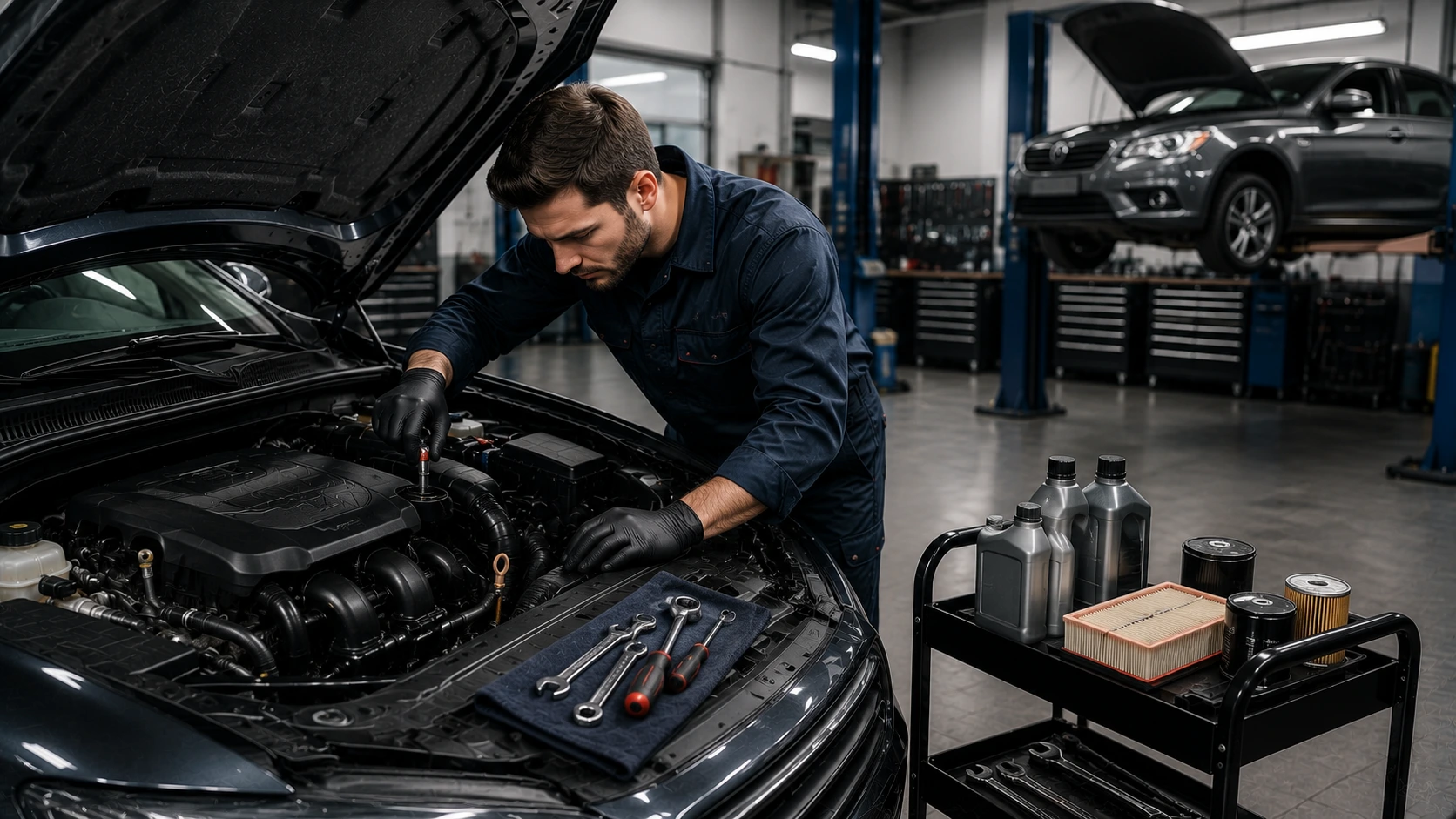
Most major engine failures don’t happen without warning. They happen because the warnings were ignored. A faint rattle on cold start, an oil light that flickers once and disappears, a temperature gauge that creeps slightly higher than usual — these aren’t random quirks. They’re a car telling you something is wrong, and consistent engine maintenance is what catches those signals before they become four-figure repair bills.
Dubai’s driving conditions make engine maintenance more critical here than almost anywhere else. The heat alone pushes engines harder than they were designed for. Add in stop-start traffic, dusty air intakes, and the habit of skipping services when the car “feels fine,” and you’ve got the exact recipe for serious engine damage. At Rapid Rev Garage, we see the same pattern constantly — customers arriving after something catastrophic, when a proper engine maintenance visit six months earlier would have cost a fraction of what they’re now facing.
Engine Maintenance — Why Dubai Makes It Non-Negotiable
Engines in Dubai work significantly harder than the same units in Europe or North America. The ambient temperature during summer means the engine starts every journey already warm, the cooling system runs at higher load, and oil viscosity is pushed to its limits before you’ve left the car park. Service schedules designed for temperate climates need to be applied more diligently here — not treated as optional milestones to push back when life gets busy. Sound engine maintenance in this climate is the difference between a car that lasts and one that doesn’t. And the further you push past a service date in Dubai’s heat, the more wear accumulates between visits — which is exactly what proper engine maintenance is designed to prevent.
Engine Maintenance Checks That Dubai Drivers Overlook
The gap between what most Dubai drivers think their engine needs and what it actually needs is exactly where preventable damage starts. Good engine maintenance isn’t complicated — it’s consistent. The checks that matter most are often the simplest ones — done regularly rather than when something finally feels wrong.
Oil Level and Condition Between Services
Engine oil is the single most important factor in engine health, and checking it between scheduled services takes two minutes. In Dubai’s heat, oil degrades faster — it oxidises more quickly, loses viscosity, and its ability to protect metal surfaces drops well before the service interval arrives. We’ve pulled oil from engines that looked like tar, from vehicles that were “due for a service soon.” That oil wasn’t protecting anything.
Check your oil every two to three weeks in summer. If it’s dark brown or black and gritty on the dipstick, it needs changing regardless of the odometer reading. If the level is consistently low, find out why — oil consumption has an underlying cause that won’t fix itself. Our car mechanic checks oil condition at every visit as a baseline, not an afterthought.
Coolant Level and System Integrity
The cooling system keeps the engine from destroying itself in Dubai’s ambient temperatures. Low coolant, a blocked radiator, a failing thermostat, or a weak water pump can push an engine to critical temperature within minutes. Overheating is one of the most common causes of serious engine damage here, and most of it is entirely preventable.
Check coolant level monthly — not just when the warning light appears, because by then you may already have a problem. Also look at the colour. It should be bright — green, blue, or orange depending on type. Brown or rust-coloured coolant is contaminated and acidic, actively attacking your radiator, water pump, and heater matrix from the inside.
Air Filter Condition in Dubai’s Environment
Dubai’s air carries fine sand and construction particulate year-round. A clogged air filter starves the engine of air, richens the fuel mixture, reduces power, and increases fuel consumption. Filters here need replacing every 10,000–15,000 km at most — not the 30,000 km that factory schedules suggest for cleaner climates.
A customer brought in a Nissan Patrol with a persistent rough idle and poor fuel economy. The air filter looked like a sandcastle had been packed into it. A new filter, and the problem was gone. That’s a forty-dirham part that was costing him in fuel every week he drove without it.
Drive Belt and Tensioner Inspection
The serpentine belt drives the alternator, power steering pump, and AC compressor. In Dubai’s heat, rubber belts harden and crack faster than in cooler climates. A belt that snaps takes out multiple systems at once — and on interference engines, if the timing belt goes, the result is internal engine damage. Belt inspection is a two-minute visual check during any routine visit. Missing it to save time is the kind of shortcut that turns into a serious repair.
If you’d prefer an initial check at your location, our mobile car mechanic covers Al Quoz and nearby Dubai areas for on-site assessments of belts, fluid levels, and basic engine condition.
What Full Engine Maintenance Covers at a Workshop
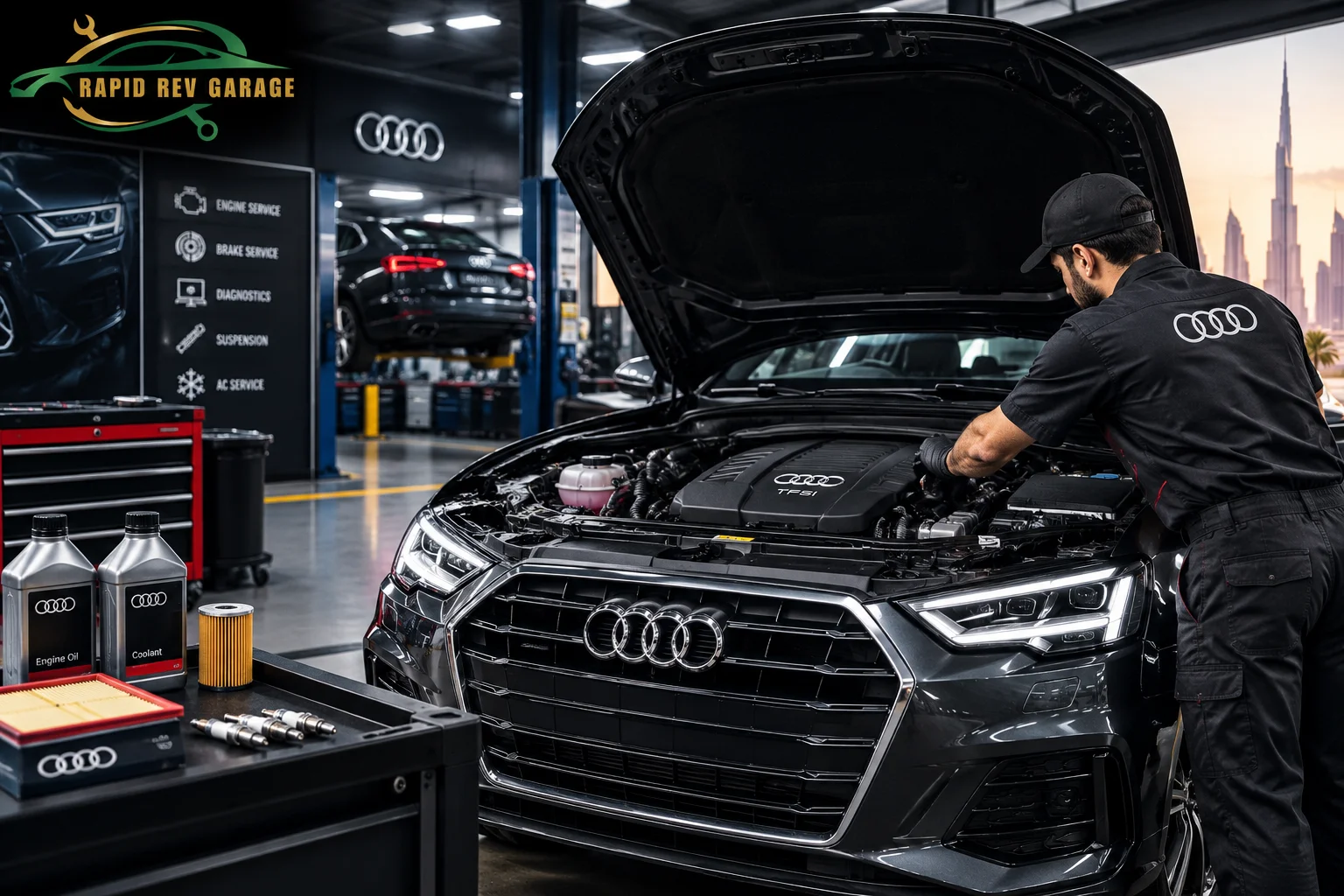
Consistent checks at home matter, but full engine maintenance at a proper workshop goes deeper — into components you can’t access from the bonnet and readings you can’t get without diagnostic tools. Here’s what a thorough engine maintenance visit actually covers.
Full Diagnostic Scan and Fault Code Check
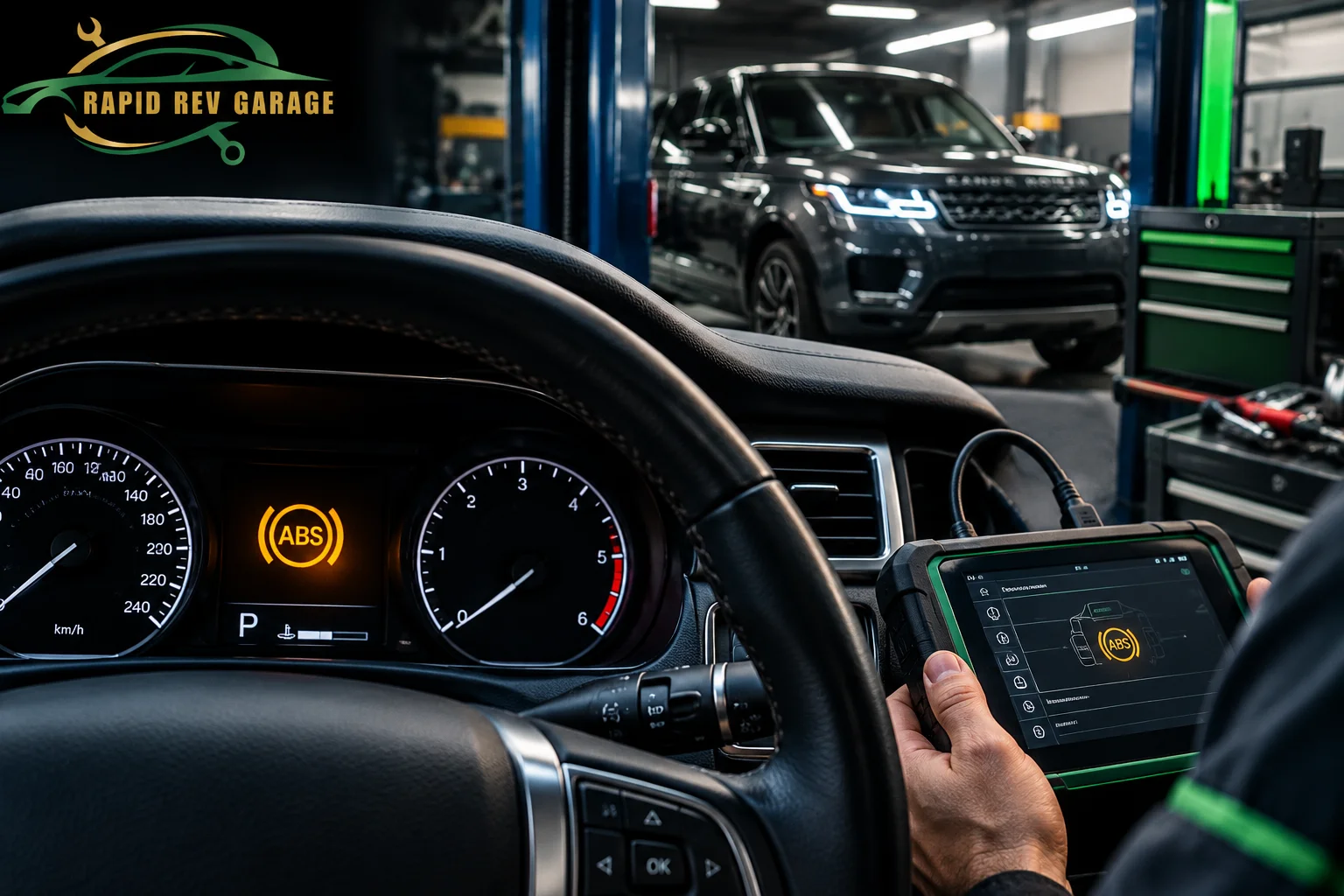
Modern engines log fault codes continuously, even when no warning light appears. A full scan reads both active and stored codes — showing what the engine has experienced, not just what it’s experiencing right now. Stored codes for misfires, sensor faults, or fuel trim irregularities often appear weeks before any visible symptom. Catching them early is what preventive engine maintenance is built around.
Spark Plug and Ignition System Check
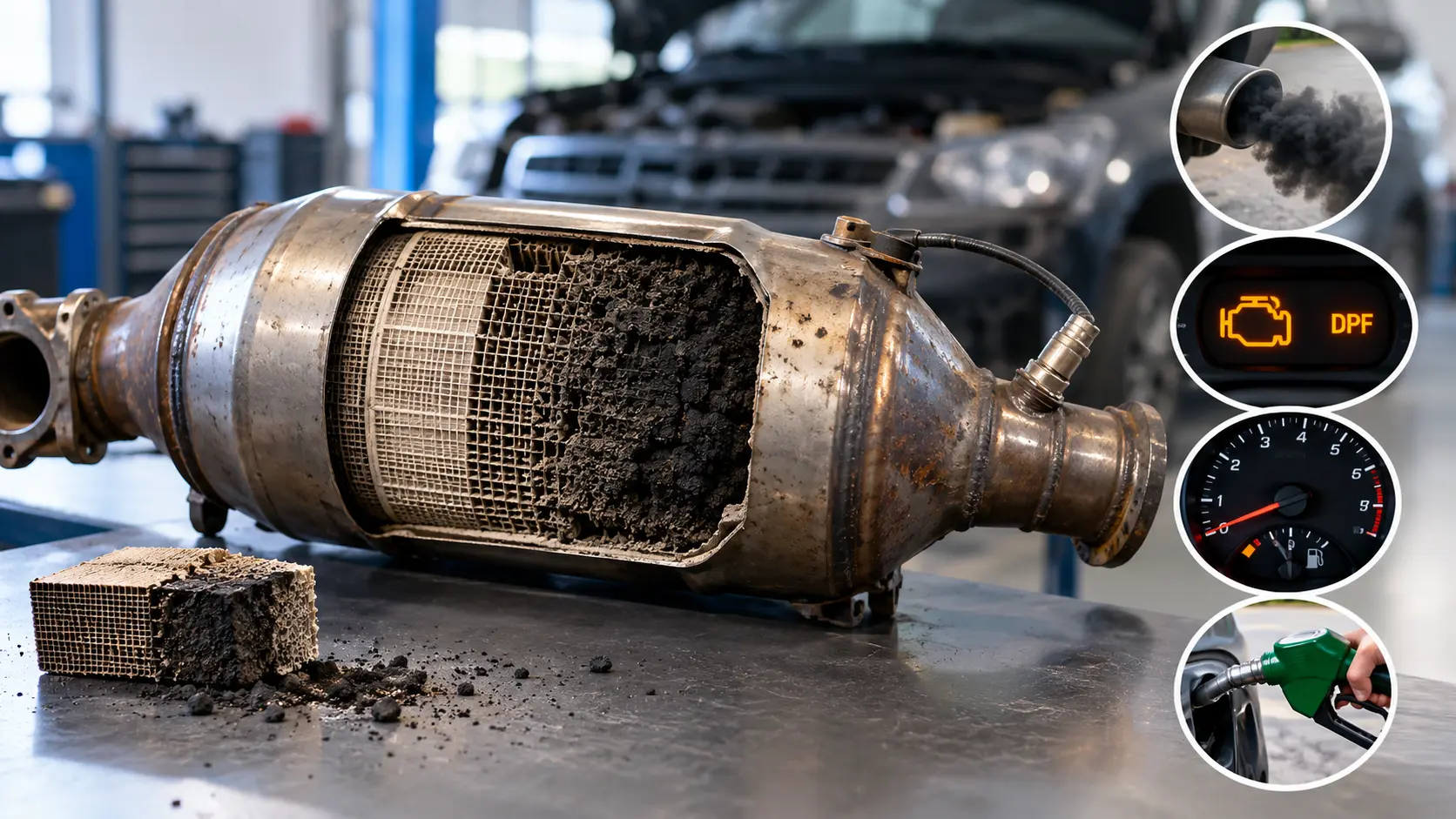
Worn spark plugs cause misfires that feel like slight hesitation or roughness at idle. Left long enough, misfires push unburnt fuel into the exhaust, damage the catalytic converter, and make the engine run hotter than it should. Plug condition gives a direct window into combustion — fouled plugs indicate oil burning or rich running; white deposits point to lean conditions or coolant ingestion. Our car service package includes a spark plug inspection on every full workshop visit.
Fuel System and Injector Assessment
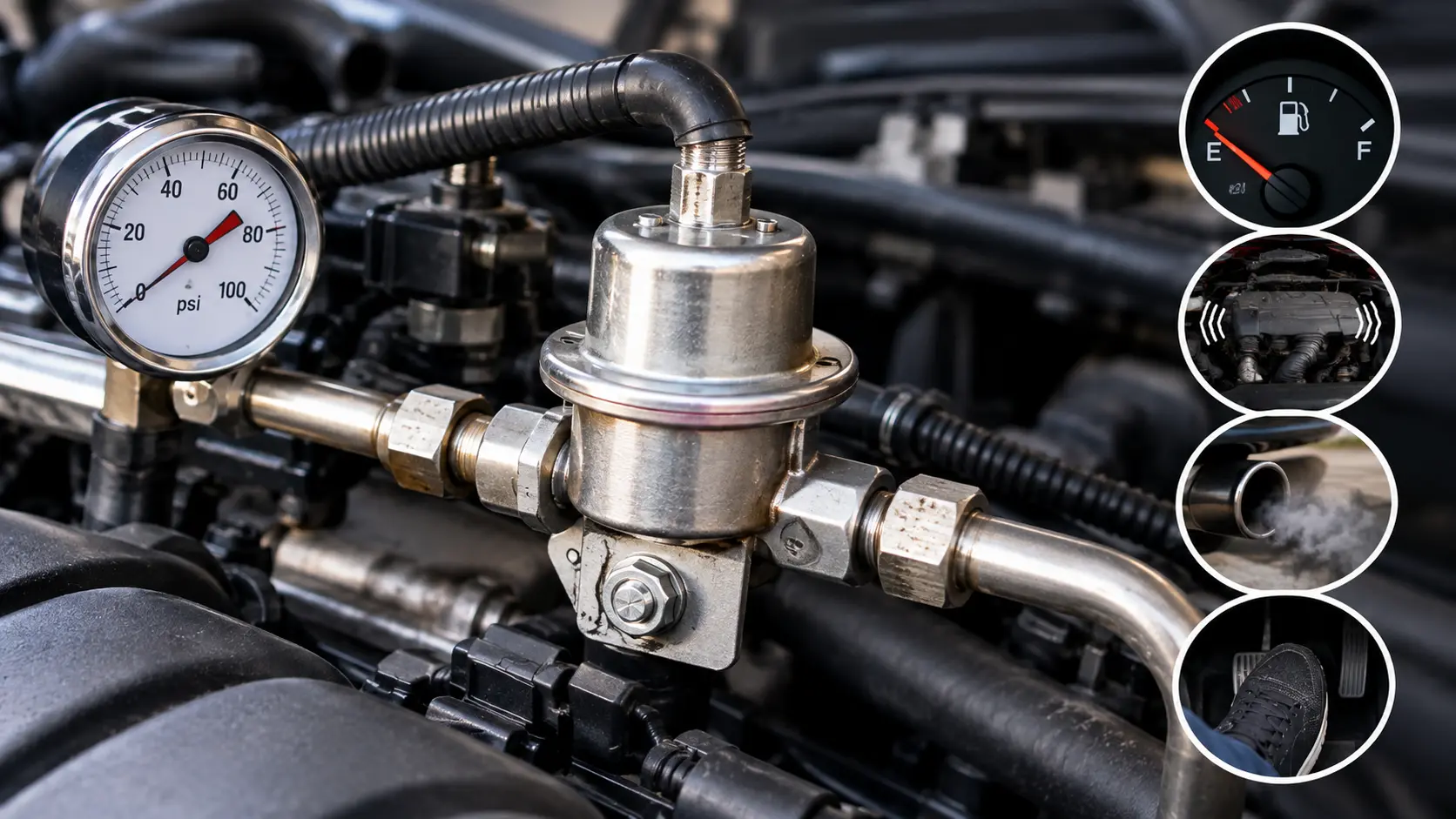
Dirty injectors deliver an uneven spray pattern that disrupts combustion. In Dubai, where dust contaminates fuel systems faster than in most markets, injector condition is worth checking more frequently than factory schedules suggest. A proper check includes fuel pressure testing and injector flow assessment — not just a cleaner additive poured in and called a service.
Timing Chain and Belt Condition
Timing system failure is one of the most expensive repairs there is. On interference engines — most modern four-cylinders and V6 units — a skipped chain or broken belt causes valves and pistons to collide internally. Timing chain tensioner wear produces a cold-start rattle that many owners ignore for months. Timing belt replacement intervals are non-negotiable. Missing one to avoid the cost is exactly the kind of decision that leads to an engine rebuild instead.
We check timing chain noise at every visit and track timing belt intervals from service history so nothing gets overlooked.
When Engine Problems Happen on the Road
Sometimes issues escalate faster than expected — oil pressure warnings, temperature gauges spiking, sudden power loss. If an engine warning light appears while driving, the right move is to pull over and not push the car further. Driving on a low oil pressure warning turns a manageable fix into potential engine destruction.
Our roadside assistance team covers Al Quoz and surrounding Dubai areas for exactly these moments. We assess whether the car can be safely driven to the workshop or needs recovery — and we’ll give you an honest answer rather than a guess. If you need a garage near me urgently, we’re here to get you sorted without the panic of figuring it out alone in the heat.
FAQ
How often should engine maintenance be done in Dubai?
At minimum, follow the manufacturer's service interval — but annual checks or every 10,000 km make more sense in Dubai's climate. Heat accelerates oil degradation, filter clogging, and belt wear beyond what factory intervals from cooler markets account for.
What are the most common signs of neglected engine care?
Rough idle, increased fuel consumption, gritty black oil before the service is due, overheating, misfires, and dashboard warning lights. Any one of these warrants immediate inspection before it compounds.
Is synthetic oil worth using in Dubai's heat?
Yes, without question. Full synthetic oil maintains viscosity and protective properties far better than mineral or semi-synthetic oil at high temperatures. In Dubai's summer, synthetic is the correct choice for most modern engines — not an optional upgrade.
Can I skip an oil change if the car seems fine?
The car feeling fine doesn't mean the oil is still protecting the engine. Oil degrades chemically before symptoms appear. By the time rough running or consumption increases, internal wear is already occurring.
What happens if I ignore a timing chain rattle?
Tensioner wear that causes the rattle will eventually allow the chain to skip. On interference engines, that causes valve-to-piston contact and serious internal damage — typically requiring a rebuild or replacement. It doesn't fix itself, and it doesn't get cheaper the longer it's left.
Conclusion
The checks that prevent the most damage are also the simplest — oil, coolant, air filter, belts, and a diagnostic scan that reads what’s actually happening underneath a surface that might feel perfectly normal. In Dubai’s heat, staying on top of these isn’t optional if you want to avoid the kind of repair bill that makes people wish they’d come in six months earlier.
Rapid Rev Garage operates in Al Quoz and nearby Dubai areas. Book your appointment via WhatsApp and bring the car in before a small issue becomes an expensive one. Find us on Google Maps — we serve Al Quoz and the areas around it, and we’ll sort it out properly.