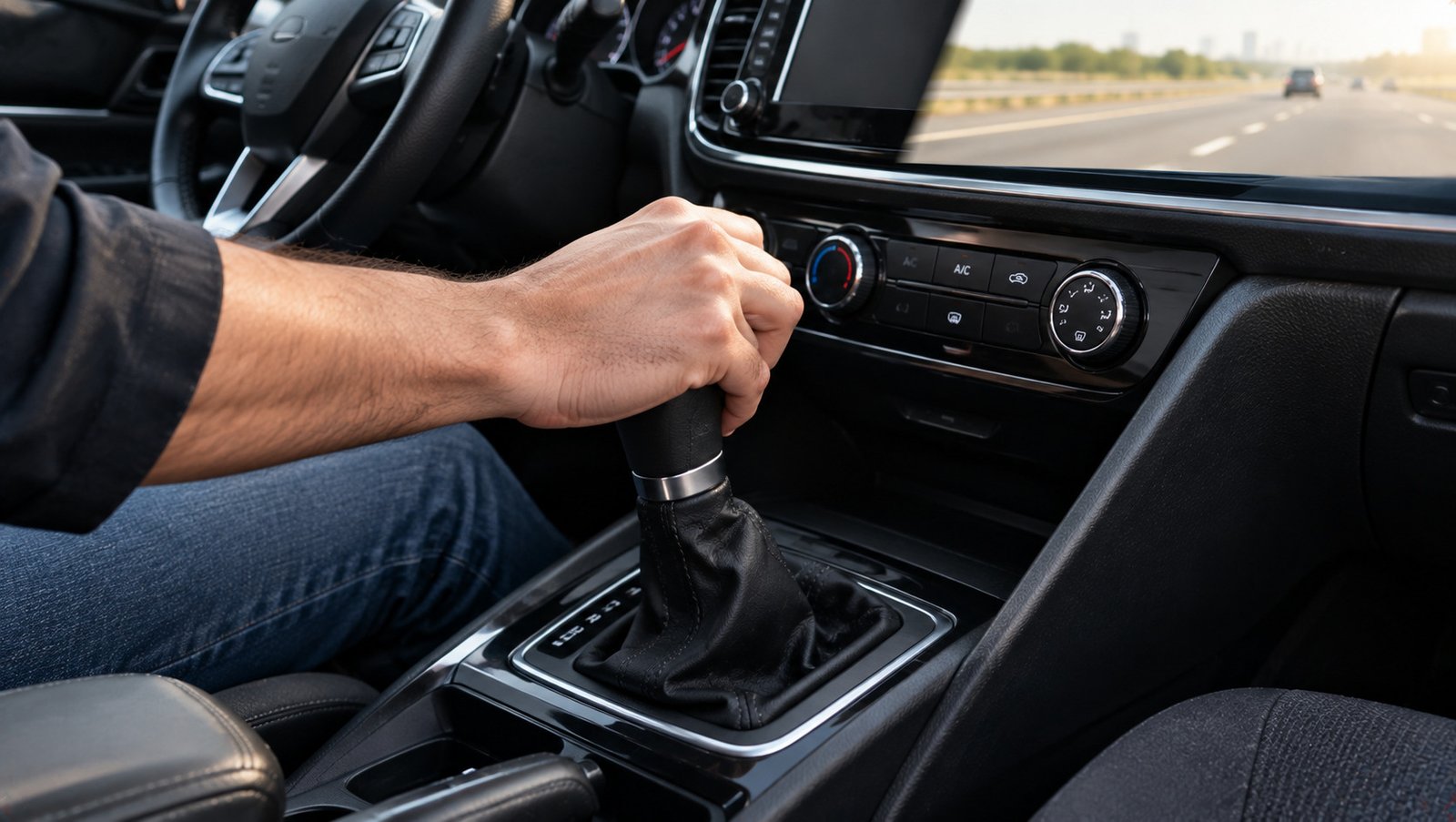
When gear changes become rough after long drives — the transmission that shifted smoothly in the morning is jerking and hesitating by the time you reach your destination — is a fault that is directly tied to heat. The longer the drive, the more heat the transmission has accumulated. And the more heat, the worse the ATF performs.
In Dubai, gear changes become rough after long drives is more common because ambient temperatures from the first minute of driving, gear changes become rough after long drives reaches a level that is immediately noticeable. A transmission that manages for 20 minutes of city driving may start producing harsh shifts after 45 minutes of combined city and highway driving as the fluid reaches temperatures it cannot tolerate.
At Rapid Rev Garage in Al Quoz, every gear changes become rough after long drives case is diagnosed through a thermal progression test with a road test that replicates the extended drive — confirming the shift quality at both cold and hot operating temperatures before recommending any repair.
Gear Changes Become Rough After Long Drives — Quick Answer
Gear changes become rough after long drives because the automatic transmission fluid has reached a temperature at which its protective properties degrade. Fresh, correctly-specified ATF maintains stable viscosity and friction modifier performance up to its rated temperature ceiling. Degraded ATF — old, contaminated, or the wrong specification — loses these properties at a lower temperature. The clutch packs that shifted smoothly at 70°C start to engage abruptly at 90°C as the friction modifier chemistry changes with heat. The shift solenoids that responded correctly at lower temperatures become slower as the hydraulic fluid thins. The torque converter clutch that locked smoothly at normal temperature shudders at elevated temperature. Every gear changes become rough after long drives case has a heat threshold — and Dubai reaches it faster and more regularly than anywhere else.
Table of Contents
- Why Transmission Faults Are Often Thermal — Heat Changes Everything
- Degraded ATF Losing Properties at Temperature
- Incorrect ATF Specification and Thermal Instability
- Clutch Pack Wear That Only Shows at Temperature
- Shift Solenoid Response Changing With Heat
- Torque Converter Clutch Shudder at Operating Temperature
- Transmission Cooler Fault — When Heat Cannot Escape
- How Dubai’s Climate Makes This Fault More Frequent
- How We Diagnose Gear Changes That Get Rough With Distance
- The Services That Fix Each Confirmed Cause
- What Does the Repair Cost in Dubai?
- Why Rapid Rev Garage?
- FAQ
- Conclusion
Why Transmission Faults Are Often Thermal — Heat Changes Everything
Automatic transmission fluid is a complex chemical formulation designed to perform its functions — hydraulic medium, friction modifier, lubricant, coolant — within a specific temperature range. Below this range, the fluid is too thick. Above it, the fluid is too thin and its additives break down.
A healthy transmission with correct fluid operates well within this range on most drives. As the transmission accumulates heat over a long drive — from the mechanical friction of gears and clutch packs, from the heat rejected by the torque converter, from the ambient temperature — it approaches the upper limit of the fluid’s design range.
When that limit is exceeded, or when the fluid is degraded and cannot maintain its properties at its usual temperature ceiling, the effects become immediately noticeable. Clutch engagement changes. Shift timing changes. The driver feels the gear changes become rougher precisely because the fluid they depend on has stopped performing.
The heat-dependence is exactly why gear changes become rough after long drives is the specific description. The problem is in the fluid condition, the cooling system, or the clutch packs — and the heat is what reveals it. Our car mechanic team reads transmission temperature data in live diagnostic mode during a road test to confirm the exact temperature at which shift quality changes.
Degraded ATF Losing Properties at Temperature
Fresh ATF maintains stable viscosity and additive performance across its rated temperature range. Degraded ATF — dark, burnt-smelling, old — has compromised these properties.
The viscosity modifiers in degraded ATF have sheared — they can no longer maintain the stable viscosity across temperature that the transmission requires. The fluid becomes thinner at high temperature than fresh fluid of the same specification would be. Thinner fluid at high temperature means:
Thinner hydraulic film. The clutch pack’s engagement quality depends on the hydraulic pressure and the film dynamics during engagement. Thinner fluid changes how the pressure builds — the clutch engages more abruptly.
Depleted friction modifiers. The friction modifier additives that control clutch engagement smoothness are consumed by heat faster than by shift cycles alone. At high temperature, the remaining friction modifier activity drops sharply. The clutch pack that engaged smoothly at 70°C grabs at 90°C.
The driver experiences this as gear changes that are fine for the first part of the drive and become progressively jerky as the transmission heats up over a longer journey. This is the clearest early-stage presentation of gear changes become rough after long drives — and the cheapest to fix. An ATF service with the correct specification fluid is the first intervention. Our car service packages include an ATF condition check and shift quality assessment at every major service for vehicles over 40,000 km.
Incorrect ATF Specification and Thermal Instability
Every automatic transmission is designed for a specific ATF specification. The friction modifier chemistry in Toyota WS fluid is different from that in ZF Lifeguard, Honda DW-1, or Mercon V. These are not interchangeable.
When the wrong specification fluid is in the transmission — from a previous service that used a “universal” ATF — the fluid’s friction modifier chemistry is mismatched to the clutch pack material. At ambient temperature, the mismatch may be mild and the shift quality adequate. As temperature rises during a long drive, the mismatch becomes more pronounced.
This produces gear changes become rough after long drives even when the fluid is fresh and not degraded — because fresh fluid of the wrong specification has the wrong friction modifier chemistry at all temperatures, and the error becomes more noticeable at temperature.
The fix is draining the incorrect fluid and refilling with the manufacturer-specified ATF. The shift quality improvement after a correct-specification refill is usually immediate.
Clutch Pack Wear That Only Shows at Temperature
Clutch packs with worn friction material may engage adequately when cold — the clutch pack is slightly more compliant when the ATF is cooler and thicker, which masks marginal friction material wear. As the transmission heats up and the ATF thins, the clutch pack engagement changes. A marginal clutch pack that was holding correctly at cold temperature starts to slip slightly at hot temperature — producing harsh, jerky engagement as it grabs and slips alternately.
This pattern — smooth shifting when cold, rough shifting after 30–45 minutes of driving — is the clutch pack thermal mask. The clutch pack has enough friction material to hold the gear under cold ATF conditions. Under hot ATF conditions, the reduced viscosity changes the engagement dynamics and the worn pack can no longer hold as smoothly.
An ATF service will not resolve a clutch pack fault — if the shift quality does not improve after a correct ATF service, the clutch pack itself is the cause. A transmission pressure test identifies which clutch circuit is providing reduced pressure under hot conditions — confirming the specific pack at fault.
Shift Solenoid Response Changing With Heat
Shift solenoids are electromagnetic valves that direct hydraulic fluid to the correct clutch circuit. Their response time — how quickly they open and close — affects the smoothness of every gear change.
A solenoid with a worn plunger or degraded coil resistance may respond correctly at lower temperatures but produce delayed or inconsistent response as the transmission heats up. The ATF that fills the solenoid bore changes viscosity with temperature — thinner hot ATF requires a solenoid that can respond accurately at reduced fluid resistance.
A solenoid fault that only produces incorrect shift timing at temperature is confirmed by live solenoid response data during a hot road test. The solenoid response time and commanded vs actual shift events are compared at the temperature where the rough shift appears.
Where the solenoid fault is confirmed at temperature, replacement of the affected solenoid restores correct shift timing. The solenoid pack in the valve body is replaced — either as individual solenoids or as a complete valve body solenoid assembly. For any roadside emergency from a transmission fault on a long drive, our roadside assistance team covers Al Quoz and nearby Dubai areas.
Torque Converter Clutch Shudder at Operating Temperature
The torque converter clutch (TCC) locks the converter mechanically at cruise speed to improve fuel efficiency. The TCC clutch has its own friction material that must engage smoothly every time the lockup occurs.
A TCC with worn friction material or with ATF that has lost its TCC-specific friction modifier performs differently at temperature. The TCC clutch that locked smoothly when the fluid was cool shudders when the ATF is hot and the clutch material’s friction coefficient has changed.
The driver feels this as a vibration or shudder that appears specifically at highway cruise speed — typically between 65–90 km/h where the TCC is programmed to engage. The shudder is most noticeable after 20–30 minutes of highway driving when the transmission has fully heated.
TCC shudder from ATF friction modifier depletion resolves with an ATF service using the correct specification fluid. TCC shudder from worn TCC friction material requires torque converter replacement — the internal friction material is not separately serviceable.
Transmission Cooler Fault — When Heat Cannot Escape
The transmission cooler — typically a section of the radiator or a separate air-to-ATF cooler — removes heat from the ATF during operation. Without adequate cooling, transmission temperature rises faster and higher than the system was designed for.
A blocked or partially blocked transmission cooler — from sediment buildup, a bent cooling fin, or a restricted coolant passage in a combined radiator cooler — reduces the heat rejection rate. The transmission temperature rises higher during a long drive than it would with a functioning cooler.
A transmission that shifts perfectly during short drives but produces gear changes become rough after long drives — and where the ATF is in good condition — points to a cooling problem rather than a fluid or clutch problem. The ATF cannot maintain its properties when the temperature rises beyond the cooler’s ability to reject heat.
Transmission temperature monitoring during an extended road test — reading ATF temperature from the transmission control module — shows whether temperature is rising beyond its normal operating range. A rising temperature that doesn’t stabilise at normal operating level confirms a cooler fault. For any paint or body repairs needed alongside mechanical work, our car painting team handles colour-matched repairs at the same visit.
How Dubai’s Climate Makes This Fault More Frequent
Dubai’s summer ambient temperature of 45°C means every transmission starts every drive at a higher baseline temperature than in any European market. The temperature rise from ambient to operating temperature covers less range — the transmission is already hotter than a European transmission at the same point in the drive.
Stop-start traffic in peak summer heat adds further thermal load. The torque converter slipping in traffic generates heat. The AC compressor load increases engine output required to maintain speed, which increases heat production at every load point.
A transmission operating in Dubai may reach 110–120°C peak temperature in extreme summer stop-start conditions. This is within the rated range for a healthy transmission with fresh ATF — but it leaves almost no margin for degraded fluid or a marginal cooler. Any ATF degradation that would produce mild symptoms in a cooler climate produces clear, consistent gear changes become rough after long drives in Dubai’s conditions.
How We Diagnose Gear Changes That Get Rough With Distance
Cold shift quality road test. First, shift quality is assessed on the first few minutes of driving — documenting which gear transitions are smooth and which are already rough at cold temperature.
Extended drive to operating temperature. The vehicle is driven for 30–45 minutes to replicate the distance at which the driver reports the roughness appearing. Live transmission data — ATF temperature, solenoid response, shift timing, TCC status — is monitored throughout.
Hot shift quality documentation. At the temperature where the rough shifts appear, the specific gear transitions producing the roughness are documented. This identifies whether the fault is in a specific clutch circuit, the TCC, or a solenoid.
ATF condition assessment. ATF colour, smell, and particle content assessed at the end of the hot road test — while the transmission is at operating temperature.
Transmission temperature plateau check. Whether the ATF temperature stabilises at a normal operating range or continues to rise identifies whether a cooler fault is present.
The Services That Fix Each Confirmed Cause
- ATF drain and refill with correct specification. First intervention for all thermal shift quality faults. AED 500–900.
- Full transmission flush. Where ATF contamination or incorrect fluid is confirmed throughout the torque converter volume. AED 900–1,500.
- Shift solenoid replacement. Confirmed faulty solenoid replaced. AED 600–2,000.
- Torque converter replacement. Where TCC shudder from worn friction material is confirmed. AED 2,000–6,000 including removal and refitting.
- Transmission cooler cleaning or replacement. Where a cooling fault is confirmed. AED 400–1,200.
Clutch pack rebuild. Where clutch pack wear is confirmed by pressure testing under hot conditions. AED 3,500–8,000. Our mobile car mechanic covers Al Quoz and nearby Dubai areas for on-site initial assessment. Our garage near me in Al Quoz serves drivers from Business Bay, Jumeirah, Barsha, Satwa, Downtown, and the Sheikh Zayed Road corridor.
What Does the Repair Cost in Dubai?
| Service | Cost Range |
| ATF drain and refill | AED 500–900 |
| Full transmission flush | AED 900–1,500 |
| Shift solenoid replacement | AED 600–2,000 |
| Torque converter replacement | AED 2,000–6,000 |
| Transmission cooler service | AED 400–1,200 |
| Clutch pack rebuild | AED 3,500–8,000 |
All costs confirmed after the extended hot road test, ATF condition assessment, and temperature plateau check.
Why Rapid Rev Garage?
Every gear changes become rough after long drives diagnosis must replicate the heat must replicate the heat to confirm the cause. A cold road test of a transmission with a thermal fault shows nothing. The extended hot road test with live transmission data is the diagnostic that finds the answer.
We drive the vehicle until the rough shifts appear, document the transmission temperature at that point, and read the live solenoid, clutch, and TCC data during the event. The repair follows the confirmed finding — not a cold-state assumption.
FAQ — Gear Changes Become Rough After Long Drives
Here are the questions Dubai drivers ask us most about rough hot shifting.
Why are shifts fine in the morning but rough later?
The transmission is cool in the morning. As it heats up during the drive, the ATF's properties change — particularly if the fluid is degraded. The clutch engagement quality that was acceptable at 70°C becomes rough at 90°C. This thermal pattern is the clearest early indicator that gear changes become rough after long drives from ATF degradation or a clutch pack that is only marginal at temperature.
Can an ATF service fix rough hot shifts?
In most cases yes — if the cause is degraded fluid with depleted friction modifiers. If the cause is clutch pack wear or a solenoid fault, the ATF service improves but does not fully resolve the roughness. If hot shift quality remains rough after a correct ATF service, the investigation continues to clutch pack pressure testing.
How hot should transmission fluid get normally?
Normal ATF operating temperature is 70–95°C on most automatic transmissions. Above 120°C, fluid degradation accelerates sharply. A transmission consistently reaching above 110°C during normal city driving in Dubai has either a cooler fault or a heat generation issue inside the transmission.
Does the problem get worse in summer?
Yes. Dubai's summer ambient temperatures reduce the margin between normal operating temperature and the threshold where fluid properties degrade. A transmission that produces mild rough shifts in Dubai's cool season may produce consistently rough hot shifts in summer — the same fault, made worse by the higher baseline temperature.
Is rough shifting on a hot transmission dangerous?
Abrupt clutch engagement from rough hot shifts removes friction material faster than smooth engagement. Each rough shift cycle accelerates clutch pack wear. Continued driving with confirmed hot rough shifts progresses the clutch pack damage — what is an ATF service today becomes a clutch pack rebuild in 20,000 km. Address it promptly.
Conclusion
Gear changes become rough after long drives because a heat threshold is being crossed — where degraded ATF, a marginal clutch pack, a solenoid fault, or a transmission cooler issue stops performing within specification. In Dubai’s heat, that threshold is reached faster and more often than in any cooler market.
Rapid Rev Garage in Al Quoz diagnoses every gear changes become rough after long drives complaint with an extended hot road test and live transmission data — confirming the specific cause at the temperature where it appears before recommending any repair.
Rapid Rev Garage is in Al Quoz, serving Business Bay, Jumeirah, Downtown, Barsha, Satwa, and the Sheikh Zayed Road corridor. Book your appointment on WhatsApp or find us on Google Maps.
Rapid Rev Garage — Gear Changes Become Rough After Long Drives | Al Quoz, Dubai