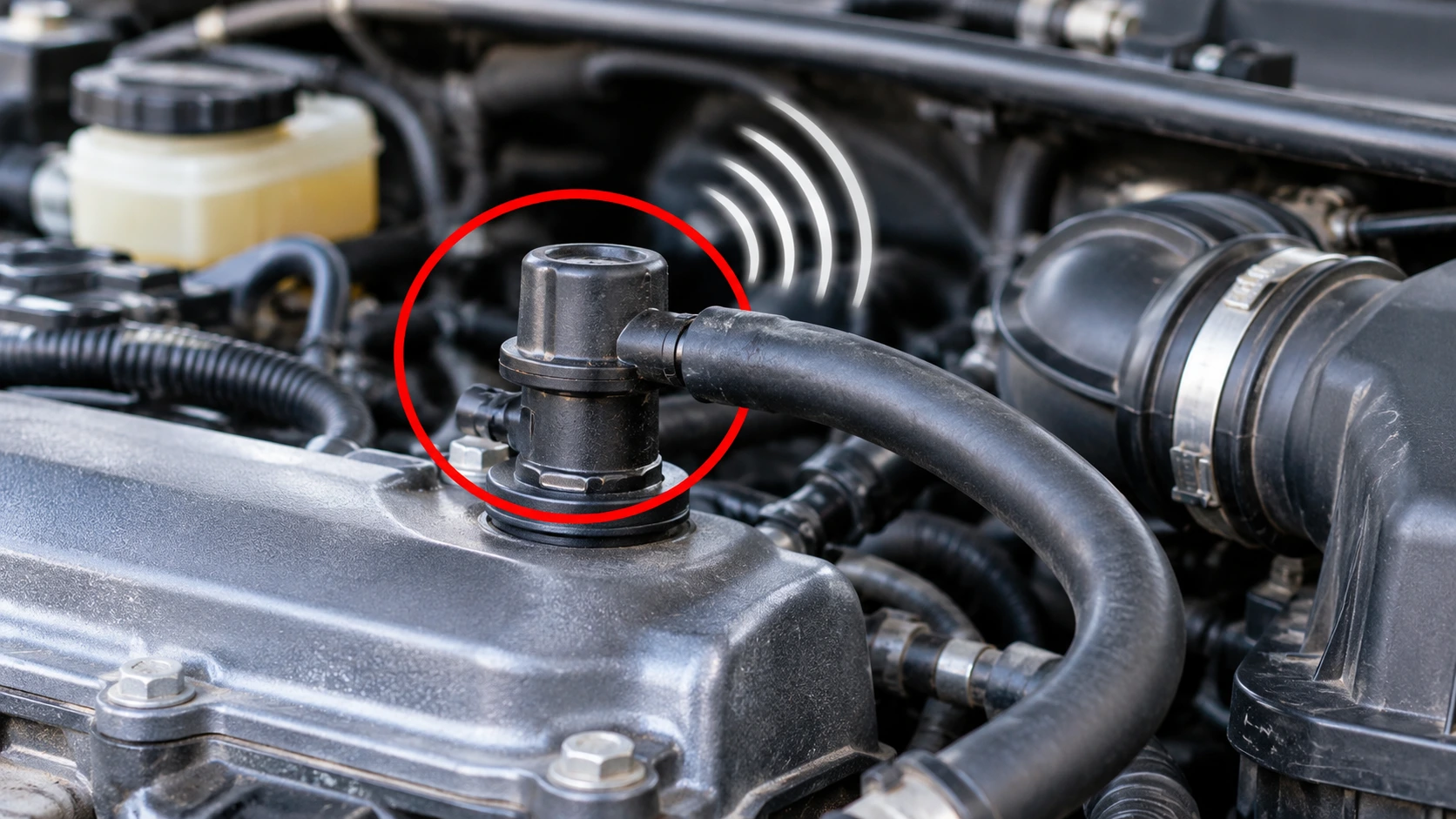
You open the bonnet in a Business Bay car park and hear a thin whistle from the top of the engine, loudest at idle. PCV system whistling like this usually means air is being sucked through a gap that should be sealed.
The PCV system pulls blow by gases out of the crankcase and burns them in the engine. A torn diaphragm or cracked hose lets air rush through and whistle. A trusted car mechanic near you can find the source in minutes with the right tests.
PCV System Whistling: Quick Answer
PCV system whistling is most often caused by a torn PCV diaphragm, a cracked breather hose or a leaking oil filler cap seal. The whistle is air being pulled through the gap by engine vacuum, mostly at idle.
Left alone, the leak can cause lean codes such as P0171, a rough idle, higher oil use and new oil leaks. A mechanic confirms it by measuring crankcase vacuum at the dipstick tube, pinching the PCV hose and running a smoke test.
Table of Contents
- What the PCV System Does
- A Torn PCV Diaphragm Is the Usual Cause
- Cracked Hoses and Leaking Oil Filler Caps
- A Blocked Fresh Air Breather
- What Happens If You Ignore the Whistle
- How a Mechanic Confirms the Source
- Why Choose Rapid Rev Garage for PCV Repairs
- FAQ
- Conclusion
What the PCV System Does
Every engine leaks some combustion gas past the piston rings into the crankcase, carrying fuel vapour and moisture. The positive crankcase ventilation system draws them into the intake so they burn instead of turning the oil to sludge.
Many modern engines control this flow with a diaphragm valve built into the valve cover or an oil separator. Clean oil slows wear on these parts, so the PCV system is usually checked during a regular car service in Dubai.
A Torn PCV Diaphragm Is the Usual Cause
A torn diaphragm is the most common source of the whistle. ToolSource, a workshop tool supplier, notes that a high pitched whistle at the oil separator or valve cover often points to a torn diaphragm.
The tear lets intake vacuum pull too hard on the crankcase. Volkswagen and Audi 2.0 TSI engines are well known for this, and several BMW and Mercedes four cylinder engines use similar diaphragm valves. On many of these engines, the diaphragm is part of the valve cover, so fixing it can mean a new cover through engine repair.
Cracked Hoses and Leaking Oil Filler Caps
PCV and breather hoses run along the hottest part of the engine. In Dubai, where the air can reach 45°C before the engine adds its own heat, rubber and plastic hoses harden and crack faster.
A cracked hose or a split elbow whistles at idle. So does an oil filler cap with a flattened seal, or one not refitted properly after an oil change. Check the cap first, as it is the cheapest fix on this list.
A Blocked Fresh Air Breather
Some PCV systems draw fresh air into the crankcase through a breather hose from the air box. ToolSource notes that a blocked fresh air breather can create the same high crankcase vacuum as a failed separator.
Without fresh air, vacuum pulls on every seal, and the weakest one whistles. A good car garage near you checks this hose before replacing the valve cover, because the fix is far cheaper.
What Happens If You Ignore the Whistle
The whistle is a vacuum leak, so it affects how the engine runs. ToolSource lists lean fuel trims, oil pulled into the intake, rough or high idle and codes such as P052E, P2279, P0171 and P0507.
Strong crankcase vacuum can even pull the rear main seal inward until it leaks. Oil mist from a split breather hose can also stain paint under the bonnet edge and need paint and panel repair. A large leak can stall the engine at idle. If that happens on a fast road, move to the hard shoulder and call roadside assistance.
How a Mechanic Confirms the Source
ToolSource describes a clear test order. The mechanic scans for codes and records fuel trims at idle and 2,500 rpm. Crankcase vacuum is then measured at the dipstick tube with a low pressure gauge and compared with the maker’s figure.
Next comes a pinch test on the PCV hose. If vacuum drops and the idle smooths, the PCV valve is pulling too hard. A smoke test then finds any outside leak.
ToolSource warns that pulling the oil cap at idle is only a rough check, since some healthy engines stall with the cap off. A mobile mechanic can do the cap and hose checks at home.
Why Choose Rapid Rev Garage for PCV Repairs
Rapid Rev Garage in Al Quoz is a good choice for engine whistles. The fault is traced before parts are ordered.
Cheapest Causes Checked First
Caps, hoses and the fresh air breather are checked before a valve cover or separator is replaced.
Close to Business Bay and Downtown
The workshop at Al Khail Gate, Al Quoz Industrial Area 2, is a short drive from Sheikh Zayed Road.
FAQ
Here are the questions Dubai drivers most often ask about PCV whistling.
What causes a whistling noise from the engine?
Usually air pulled through a gap by engine vacuum, such as a torn PCV diaphragm, a cracked hose or a leaking oil cap seal.
Can a bad PCV valve cause whistling?
Yes. A torn diaphragm inside the valve lets air rush through and whistle, especially at idle.
Is a whistling PCV valve dangerous?
Not right away, but it can cause lean running, oil use and new oil leaks. Book a check soon.
How do you test a PCV diaphragm?
A mechanic measures crankcase vacuum at the dipstick tube, pinches the PCV hose and runs a smoke test.
Why does removing the oil cap stall engines?
The PCV system relies on a sealed crankcase. On some engines a stall with the cap off is normal, so it is not proof of a fault.
Conclusion
A PCV whistle is air leaking through a torn diaphragm, a cracked hose, a loose oil cap or past a blocked breather. Testing crankcase vacuum finds the source, so only the failed part is replaced.
Rapid Rev Garage is a full workshop at Al Khail Gate, 12th Street, Al Quoz Industrial Area 2, serving passenger cars across Al Quoz, Business Bay, Jumeirah, Al Barsha, Satwa, Downtown and the Sheikh Zayed Road corridor. Visit https://rapidrevgarage.com, send your car model and a short recording of the whistle on WhatsApp, or get directions on Google Maps.
Rapid Rev Garage | PCV System Whistling | Al Quoz, Dubai