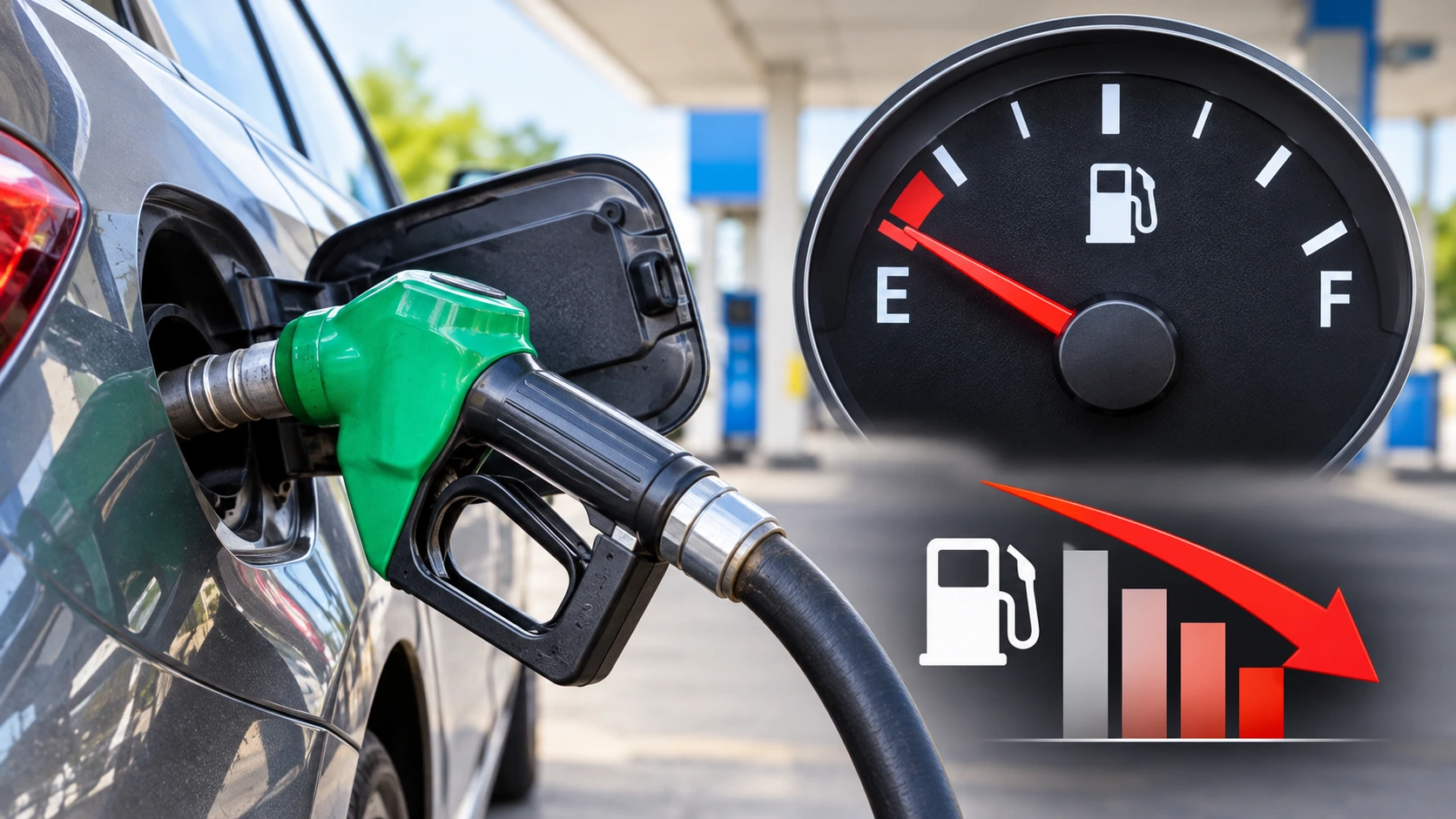
You used to fill up once a week for the drive from Jumeirah to Business Bay. Now the tank lasts five days, and the idle feels uneven at the lights. A vacuum leak can cause poor fuel economy like this, although it is rarely the only suspect.
A vacuum leak lets air into the engine without passing the sensors that measure it. The engine computer then has to guess, and its corrections often waste fuel. A trusted car mechanic near you can confirm a leak with fuel trim data and a smoke test.
Poor Fuel Economy: Quick Answer
Yes, a vacuum leak can cause poor fuel economy. The extra air makes the mixture lean, so the computer adds fuel. On engines that use a manifold pressure sensor, a leak can also raise the idle speed and fuel use directly. Lean misfires waste more fuel.
The usual signs are lean codes P0171 or P0174, a rough or high idle and a hissing sound. Other common causes include a faulty oxygen sensor, low tyre pressure and the wrong oil grade, so test before replacing parts.
Table of Contents
- How a Vacuum Leak Upsets the Air and Fuel Mix
- When a Leak Wastes the Most Fuel
- Other Common Causes of Poor Mileage
- How a Mechanic Proves a Vacuum Leak
- Fixing the Leak and Checking the Result
- Why Choose Rapid Rev Garage for Fuel Economy Problems
- FAQ
- Conclusion
How a Vacuum Leak Upsets the Air and Fuel Mix
Most petrol engines measure incoming air with a mass airflow sensor. A leak after that sensor, through a split intake boot, a cracked hose or a worn gasket, lets in air the computer never counted.
The oxygen sensor then reads lean, and the computer adds fuel through its fuel trims. Engines that use a manifold pressure sensor work differently. A leak raises manifold pressure, the computer reads more load and adds fuel, and the idle speed often climbs. Intake boots sit just after the air box, so a split one is often found during a filter change.
When a Leak Wastes the Most Fuel
A leak matters most at idle and light throttle, when the engine draws little air and the leak makes up a bigger share of it. That is exactly how Dubai cars spend much of their time, crawling on Sheikh Zayed Road or idling with the AC on outside Mall of the Emirates.
Large leaks cause lean misfires. Each misfire burns fuel without making power, and the computer may add even more fuel to correct the lean reading. A badly leaking engine can also stall at the lights. If that happens on a fast road, move to the hard shoulder and call roadside assistance.
Other Common Causes of Poor Mileage
A vacuum leak is only one cause. The US Department of Energy’s fueleconomy.gov says fixing a faulty oxygen sensor can improve mileage by as much as 40 percent. It puts the average gain from a proper tune up at 4 percent.
Tyres matter too. The same source says correct tyre pressure improves mileage by 0.6 percent on average and up to 3 percent. Heat raises pressure readings in summer, so check them in the morning and keep the tyres at the door sticker figure.
Using the oil grade your manual lists improves mileage by 1 to 2 percent, according to fueleconomy.gov. Drag also counts. A loose bumper cover or damaged wheel arch liner flapping at highway speed adds drag and should be refitted through paint and panel repair.
How a Mechanic Proves a Vacuum Leak
A proper diagnosis starts with a scan for codes and a look at fuel trims. A vacuum leak typically shows high positive trims at idle that drop closer to normal at 2,500 rpm.
The mechanic then runs a smoke test. Smoke is pumped into the intake with the engine off, and it escapes wherever there is a leak. Brake booster hoses, PCV hoses, intake gaskets and the throttle body seal are checked in turn. A reliable car garage near you can also measure manifold vacuum with a gauge to spot other faults.
Fixing the Leak and Checking the Result
Most leaks are fixed with a new hose, boot, clamp or gasket. Engine bay heat on 45°C days hardens rubber, so the mechanic often replaces nearby hoses at the same time.
After the repair, the fuel trims should settle near zero. Reset your trip computer and compare litres per 100 km over two full tanks on the same routes. A regular car service in Dubai can recheck the trims later.
Why Choose Rapid Rev Garage for Fuel Economy Problems
Rapid Rev Garage in Al Quoz is a good choice when fuel use climbs without a clear reason, because the leak is tested for, not assumed.
Data Before Parts
Fuel trims, codes and a smoke test show whether the cause is a leak, a sensor or something else. If the car is at home, a mobile mechanic can read the codes first.
Close to the Main Roads
The workshop at Al Khail Gate, Al Quoz Industrial Area 2, is a short drive from Jumeirah, Al Barsha and Downtown.
FAQ
Here are the questions Dubai drivers most often ask about vacuum leaks and fuel use.
How much fuel does a vacuum leak waste?
It depends on the leak size. A small leak may barely change mileage, while a large one causing misfires can raise fuel use noticeably.
Can a vacuum leak trigger the engine light?
Yes. It often sets lean codes P0171 or P0174, and sometimes misfire codes.
What are signs of a vacuum leak?
A rough or high idle, a hissing sound, lean codes, hesitation and higher fuel use.
Is driving with a vacuum leak safe?
A small leak is not an emergency, but lean running can cause misfires and stalling. Book a test soon.
Will fixing a vacuum leak improve mileage?
If the leak was causing extra fuel use or misfires, yes. Compare two full tanks before and after.
Conclusion
A vacuum leak can raise fuel use through lean corrections, higher idle and misfires. Fuel trims and a smoke test confirm it, while oxygen sensors, tyres and oil grade are checked as other causes.
Rapid Rev Garage is a full workshop at Al Khail Gate, 12th Street, Al Quoz Industrial Area 2, serving passenger cars across Al Quoz, Business Bay, Jumeirah, Al Barsha, Satwa, Downtown and the Sheikh Zayed Road corridor. Visit https://rapidrevgarage.com, send your car model and fuel figures on WhatsApp, or get directions on Google Maps.
Rapid Rev Garage | Poor Fuel Economy | Al Quoz, Dubai