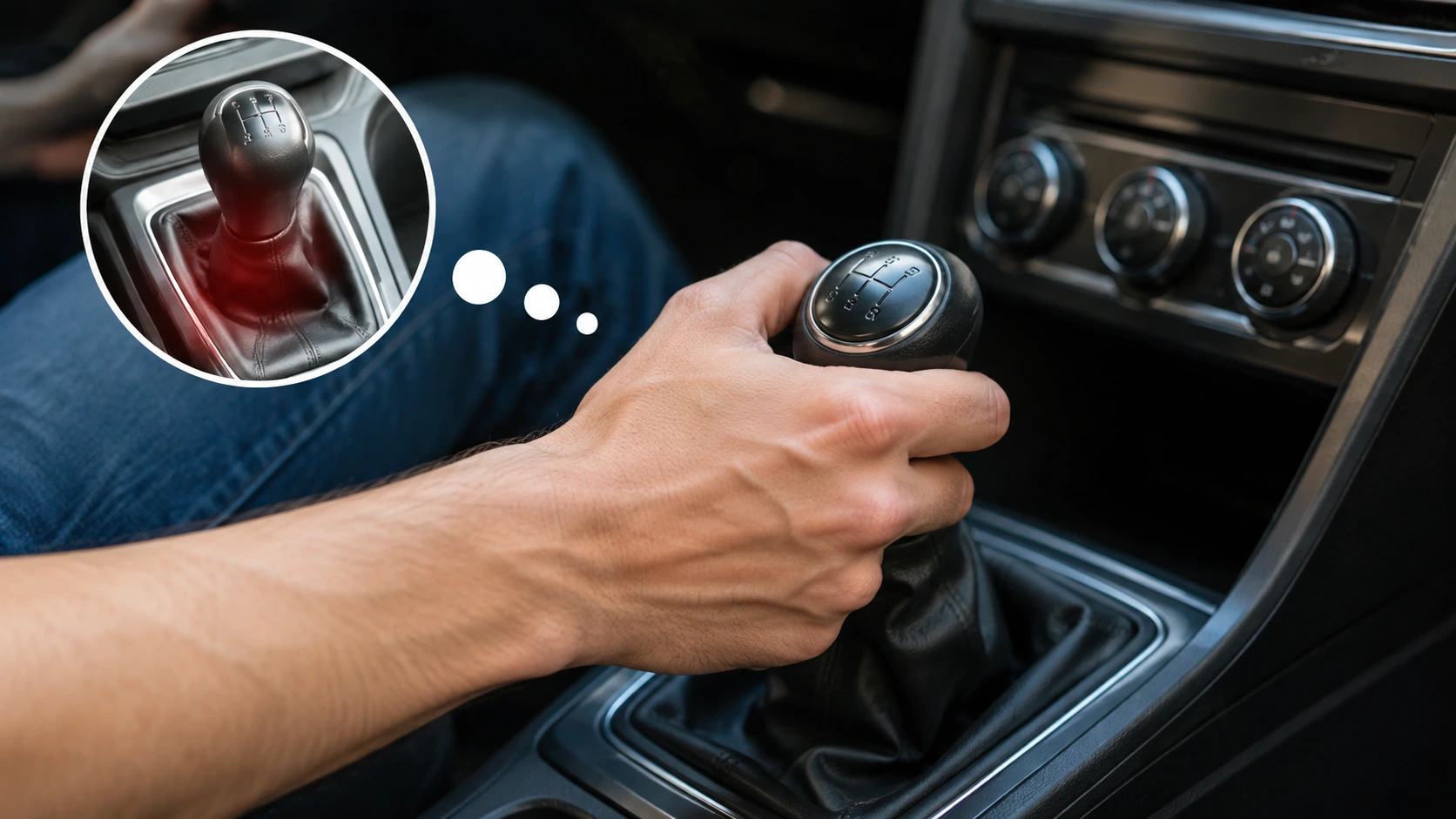
When the reverse gear takes too long to engage — that pause between selecting R and actually moving — something in your transmission circuit isn’t responding at the speed it should. In Dubai’s heat and stop-start parking conditions, this delay is a pattern we diagnose daily. It is almost always a transmission fluid, solenoid, or electronic control fault. Left unaddressed, it progresses from a 2-second delay into a fault that can turn every parking manoeuvre into a stressful event.
At Rapid Rev Garage in Al Quoz, every reverse engagement delay is diagnosed with a full transmission scan and fluid assessment before any repair is recommended.
Reverse Gear Takes Too Long to Engage — Quick Verdict
When reverse gear takes too long to engage, it is almost always caused by degraded transmission fluid that’s lost its hydraulic pressure consistency, a worn or sticking reverse clutch pack, a faulty shift solenoid not routing fluid fast enough to engage reverse, or a Transmission Control Module fault sending incorrect commands. In Dubai, heat accelerates ATF degradation — a key reason reverse gear takes too long to engage here more often than in cooler markets, making fluid condition the first thing to check. Most cases are resolved without major transmission work — but the fault must be diagnosed accurately before anything is replaced.
Table of Contents
Here is everything covered in this guide.
- What’s Actually Happening When Reverse Is Slow
- How to Recognise This Fault vs Other Transmission Issues
- What Causes the Delay — Ranked by Frequency in Dubai
- How We Find the Exact Cause at Rapid Rev Garage
- The Right Fix for Each Root Cause
- What Happens If You Keep Driving With This Fault
- Is It Still Safe to Drive?
- How Long the Repair Takes
- What the Repair Costs in Dubai
- How to Prevent This From Happening Again
- Why Dubai Makes This More Common
- Why Rapid Rev Garage?
- FAQ — Reverse Gear Takes Too Long to Engage
- Conclusion
What’s Actually Happening When Reverse Is Slow
Automatic transmissions engage gears hydraulically — pressurised transmission fluid activates clutch packs that lock specific components together to produce each gear ratio. When reverse is selected, the transmission control module sends a signal to a solenoid, which routes fluid to the reverse clutch pack and pressurises it to engage.
The Normal Engagement Window
In a healthy automatic transmission, reverse should engage within a fraction of a second after the selector is moved — typically less than half a second. A delay of one to two seconds — the early stage of reverse gear takes too long to engage — is already a fault worth investigating. A delay of three or more seconds is a clear warning that something in the hydraulic or electronic circuit isn’t functioning correctly.
Why Reverse Is the Most Sensitive Gear
Reverse uses a dedicated clutch pack that only engages in that one direction. Unlike the forward gears, which share components across multiple ratios, the reverse clutch has no alternative path to engage — if anything in its specific circuit is slow or degraded, the delay is immediately and consistently noticeable on every R selection.
Why This Is More Noticeable in Dubai Parking Conditions
Dubai’s parking culture means most drivers select reverse dozens of times per day — multi-storey car parks, mall parking, villa driveways, street parking. The frequency of reverse selection in Dubai is significantly higher than in driving environments where reverse is used primarily for driveway reversals. This means a developing fault that a European driver might not notice for months becomes apparent within days here.
How to Recognise This Fault vs Other Transmission Issues
Not every transmission hesitation is a reverse engagement delay — distinguishing the specific symptom correctly helps direct the diagnosis.
The Specific Pattern of a Reverse Engagement Delay
The car is in park or neutral. The driver selects reverse. There is a pause — one, two, or more seconds — where the car does nothing. Then, sometimes with a noticeable thud or clunk, the transmission engages and the car moves backward. The delay is consistent on every reverse selection, or consistently worse when the engine is cold.
How This Differs From a Worn Clutch
A worn clutch on a forward gear produces slipping — the engine revs without corresponding acceleration. A reverse engagement delay is different: the transmission eventually engages fully and moves normally once engaged. The fault is in the engagement speed, not in the clutch’s ability to hold under load.
How This Differs From a Selector or Linkage Issue
A selector or linkage problem produces inconsistent gear selection — reverse may sometimes not engage at all, or engage into the wrong gear. A pure engagement delay always selects reverse correctly, just slowly. This distinction matters before the diagnostic process begins.
What Causes the Delay — Ranked by Frequency in Dubai
Several components can produce a reverse engagement delay, and the most common in Dubai’s conditions differ from other markets due to heat and driving pattern.
Degraded or Low Transmission Fluid
This is the most frequent cause in Dubai — ATF that has lost viscosity from heat exposure, or ATF that’s low from a slow leak, cannot maintain the hydraulic pressure the reverse clutch pack needs to engage quickly. In a healthy system, full pressure reaches the clutch in milliseconds. In a system with degraded fluid, pressure builds slowly — producing the delay the driver feels.
Why Dubai Heat Degrades ATF Faster
Transmission fluid in Dubai operates at sustained temperatures significantly higher than in European markets. Stop-start traffic keeps the torque converter working continuously without the cooling effect of highway speeds. ATF that would remain serviceable for 60,000 km in a temperate market may be significantly degraded by 40,000 km of Dubai city driving.
The Burnt Smell Indicator
Degraded ATF often has a distinctly burnt smell — dark colour and an acrid odour that distinguishes it from fresh ATF’s clean, slightly sweet smell. This is a simple dipstick check that immediately indicates whether fluid condition is contributing to the fault.
Sticking or Faulty Shift Solenoid
Shift solenoids are electromagnetic valves that open and close hydraulic passages in the transmission valve body on command from the TCM. The reverse solenoid specifically controls fluid routing to the reverse clutch pack. A solenoid that’s sticking, worn, or receiving inconsistent electrical signal opens too slowly — producing the same delay as degraded fluid but with a different fix.
Why Solenoids Fail in Dubai’s Heat
Solenoid coils and seals operate in transmission fluid at elevated temperatures. Dubai’s sustained heat shortens solenoid service life — the electrical coil resistance changes with temperature cycling, and seal materials harden faster than in cooler climates.
Worn Reverse Clutch Pack
The reverse clutch pack is a series of friction discs that clamp together under hydraulic pressure to engage reverse. As these discs wear, they require more travel and more pressure to fully engage — the delay is the time it takes for worn discs to make full contact rather than the near-instant engagement of fresh, correctly-dimensioned clutch material.
How to Distinguish Clutch Wear From Solenoid Failure
A worn clutch pack typically produces a more pronounced clunk when reverse eventually engages — the delayed engagement ends more abruptly because the worn discs need extra pressure to grip fully. A solenoid fault typically produces a smoother, quieter engagement once the delay resolves, because the clutch itself is still in good condition.
Transmission Control Module Fault
The TCM manages all gear selection commands, solenoid activation timing, and adaptive shift strategies. A TCM that’s storing faults, has corrupted adaptation data, or is receiving incorrect signals from sensors — oil temperature sensor, turbine shaft speed sensor — can delay reverse engagement by commanding incorrect solenoid activation timing.
Why This Requires Diagnostic Software to Confirm
A TCM fault produces no obvious mechanical symptom that inspection alone can identify. Only a full multi-module diagnostic scan reads the TCM’s fault memory, live sensor inputs, and solenoid command data — distinguishing a TCM fault from a solenoid fault from a fluid issue.
Our car mechanic team uses brand-compatible diagnostic tools — VCDS for Volkswagen Group, ISTA for BMW, STAR for Mercedes — to read the full TCM fault history before any component is recommended for replacement.
How We Find the Exact Cause at Rapid Rev Garage
Accurate diagnosis of a reverse engagement delay requires more than selecting reverse a few times and listening. The process is systematic.
Fluid Condition Assessment First
Before any diagnostic scanning, ATF condition is assessed — colour, smell, and level on vehicles with accessible dipsticks or level plugs. This takes two minutes and immediately confirms whether fluid degradation is contributing. Fluid that’s dark and burnt-smelling goes on the repair list regardless of what the scan finds.
Full Transmission Module Scan
A multi-module scan reads the TCM fault history, current adaptation values, solenoid response data, and sensor inputs during live operation. The scan is run with the engine at operating temperature, after a test drive that includes multiple reverse selections, so live data reflects the actual fault condition rather than a cold-start approximation.
Valve Body and Solenoid Assessment
Where the scan points toward a solenoid fault, resistance and activation response of the specific reverse solenoid is tested. A solenoid that reads correct resistance but responds slowly under command identifies a mechanical sticking fault rather than an electrical one — a distinction that determines whether replacement or cleaning resolves the issue.
Road Test — Confirming Delay Pattern
The road test is completed before and after the repair — confirming the exact character of the delay before diagnosis and verifying its absence after the repair. This is the only way to confirm the repair was complete.
The Right Fix for Each Root Cause
The repair is matched to the confirmed cause — not assumed from the symptom.
ATF Drain and Refill
Where fluid degradation is the confirmed primary cause, a complete ATF drain and refill with the correct manufacturer-specified fluid — ZF Lifeguard for ZF gearboxes, Toyota WS for Toyota platforms, Mopar ATF+4 for Chrysler/Jeep/Dodge — restores hydraulic pressure characteristics. This is followed by a TCM adaptation reset to allow the transmission to recalibrate its shift timing with fresh fluid.
Solenoid Replacement
A confirmed reverse solenoid fault requires solenoid replacement with a correct-specification unit. On most platforms, this is completed without full transmission removal — the solenoid pack or individual solenoid is accessed through the sump. Our car service packages include a post-repair ATF fluid change as part of any valve body or solenoid work to ensure clean fluid is circulating the new components.
Valve Body Replacement or Reconditioning
Where multiple solenoids are faulting or the valve body bores have worn beyond specification, valve body replacement or professional reconditioning is the correct repair. Individual solenoid replacement on a worn valve body returns the fault within a short mileage.
Clutch Pack Replacement
Where clutch wear is confirmed through pressure testing and the engagement pattern, clutch pack replacement is the correct repair. This requires transmission removal on most platforms. Post-repair, fresh ATF and a full TCM adaptation reset are completed before road testing.
TCM Software Update or Replacement
Where a TCM fault is confirmed and no mechanical fault is found, a software update — available for many platforms through the manufacturer’s dealer network or via independent programming tools — often resolves the fault without hardware replacement. Where the TCM itself has failed, replacement and programming to the vehicle’s VIN is required.
What Happens If You Keep Driving With This Fault
A reverse engagement delay that’s ignored typically worsens rather than stabilising.
Clutch Material Wear Accelerates
Each delayed engagement involves the clutch pack grinding through its last stage of engagement rather than meshing smoothly under correctly-timed hydraulic pressure. This generates localised heat and accelerates friction disc wear — meaning a fault that started as a fluid issue that could have been resolved with an ATF change progresses to a clutch pack replacement requirement.
The Delay Extends to Forward Gears
In many cases, as the fault that causes reverse delay progresses — whether fluid degradation, solenoid wear, or TCM adaptation drift — forward gear engagement quality degrades alongside it. What starts as reverse-only delay becomes a general transmission hesitation fault that affects D selection and forward gear shifts.
Eventual Transmission Failure
A reverse clutch pack that has been engaging abruptly under incorrect hydraulic pressure, repeatedly, eventually fails to engage at all. At that point, the transmission requires partial or complete rebuild — a significantly higher cost than the ATF change or solenoid replacement that would have resolved the original fault.
For recovery if the transmission has already failed to engage, our roadside assistance covers Al Quoz and nearby Dubai areas.
Is It Still Safe to Drive?
The practical answer depends on the delay duration and whether forward gears are affected.
Short Delay — Drive Carefully to a Workshop
A consistent one to two second delay on a cold engine that shortens once the transmission warms up, with all forward gears engaging normally, is drivable for a few days provided the workshop visit is booked promptly. Monitor for the delay worsening or extending to forward gear selection.
Longer Delay or Clunking Engagement — Book Today
A delay of three or more seconds, a hard clunk when reverse engages, or any slipping after engagement means the fault has progressed beyond its early stage. This should be diagnosed within the same day or next morning — continued driving accelerates clutch wear with each harsh engagement.
Forward Gear Hesitation Present — Stop Using the Vehicle
If the reverse delay is accompanied by hesitation in drive or a delay on selecting D from park, the fault has already spread beyond the reverse circuit. Drive to the workshop directly and do not use the vehicle for non-essential journeys until repaired.
How Long the Repair Takes
Repair time varies significantly depending on the confirmed cause.
Simple Fluid Service
ATF drain, refill, and TCM adaptation reset: typically two to three hours including road test confirmation. Same-day service in most cases.
Solenoid or Valve Body Work
Solenoid replacement or valve body work: typically three to five hours depending on the platform and whether sump access is sufficient or the transmission requires partial lowering.
Clutch Pack Replacement
Clutch pack replacement requiring transmission removal: typically two to three days including reassembly, fresh ATF fill, adaptation reset, and road test confirmation.
What the Repair Costs in Dubai
Cost is entirely determined by the confirmed cause — which is why diagnosis before quoting matters.
ATF Fluid Service Range
When reverse gear takes too long to engage due to fluid degradation, a full ATF drain and refill with correct-specification fluid: AED 400–900 depending on fluid specification and vehicle platform. ZF Lifeguard 9 costs more than conventional ATF. Toyota WS is mid-range. This is the most affordable outcome and the most common resolution when the fault is caught early.
Solenoid or Valve Body Replacement
AED 800–2,500 depending on whether individual solenoids or the full valve body assembly is replaced, and the vehicle platform.
Clutch Pack or Full Transmission Work
AED 3,500–12,000 depending on the extent of internal wear and the vehicle make and model. Our car painting team can handle any exterior work needed alongside transmission repairs at the same visit. A written quote is provided after diagnosis and before any work begins — no surprises.
How to Prevent This From Happening Again
The majority of cases where reverse gear takes too long to engage in Dubai are preventable with specific maintenance habits.
ATF Service at Dubai-Appropriate Intervals
Factory “lifetime fill” guidance for transmission fluid is not appropriate for Dubai’s operating conditions. A full ATF drain and refill every 60,000–80,000 km — rather than the 100,000+ km or “never” guidance some manufacturers suggest — maintains fluid viscosity and clutch engagement quality in Dubai’s heat.
Avoiding Aggressive Park-to-Reverse Cycling
Repeatedly cycling P-R-D-P-R rapidly — as is common in tight parking manoeuvres — stresses the reverse clutch pack with rapid pressure changes. Allow a half-second pause at each selector position for the hydraulic pressure to stabilise before selecting the next gear.
Annual Transmission Health Scan
A multi-module diagnostic scan that includes TCM adaptation values and solenoid response data annually — even when no symptom is present — catches adaptation drift and early solenoid wear before they produce a driveable symptom. Our mobile car mechanic covers Al Quoz and nearby Dubai areas for on-site ATF checks and initial assessment.
Why Dubai Makes This More Common
Dubai’s specific driving environment is why reverse gear takes too long to engage at lower mileages here at lower mileages than any other major city’s vehicle population.
Heat Is the Primary Accelerator
ATF operating temperatures in Dubai’s stop-start conditions regularly exceed the temperatures the same fluid experiences in European driving cycles. Sustained high temperatures break down the fluid’s viscosity improvers and friction modifiers faster — and once those additive packages are depleted, hydraulic pressure consistency drops.
Parking Frequency Multiplies the Stress
Dubai’s urban layout — mall-dominated, with multi-storey parking as the standard — means the average Dubai driver selects reverse significantly more times per day than drivers in cities with street parking or garages. Each reverse selection is a hydraulic event that stresses the reverse clutch circuit.
Short Trips Prevent Transmission Temperature Stabilisation
Many Dubai journeys are too short for the transmission to reach its optimal operating temperature — where ATF viscosity is at its designed value and all components are operating in their designed thermal range. Starting, parking, starting again without full warm-up is a cycle that produces more clutch engagement events per kilometre of actual road use than any highway driving pattern. Our garage near me location in Al Quoz serves drivers across Business Bay, Jumeirah, Barsha, Downtown, and the Sheikh Zayed Road corridor.
Why Rapid Rev Garage?
We diagnose before we recommend. A reverse engagement delay that’s treated as a transmission fluid issue when it’s actually a solenoid fault gets a fluid change that doesn’t fix it, followed by a solenoid replacement that should have been first. The correct sequence — fluid assessment, full TCM scan, solenoid response testing, then repair matching the confirmed cause — is what we follow on every case.
We use brand-compatible diagnostic platforms for each make, not a generic OBD reader that reads engine codes and stops. The TCM data that explains a reverse delay lives in a module most generic tools never open.
FAQ — Reverse Gear Takes Too Long to Engage
These are the questions most frequently asked when this fault appears.
Is a reverse gear delay always a serious transmission problem?
Not always — when reverse gear takes too long to engage and it is caught early with degraded ATF as the cause, a fluid service resolves it completely without any mechanical work. The fault becomes more serious only if left to progress to clutch wear.
Can I fix a reverse gear delay by just topping up the transmission fluid?
Topping up addresses low level but not degraded fluid quality. If the fluid is dark, burnt, or past its service life, a complete drain and refill with correct-specification fresh ATF is required — not a top-up.
Why is the delay worse when the engine is cold?
Cold ATF is thicker and builds pressure more slowly than warm ATF. A fault that's borderline at operating temperature becomes more pronounced when cold because the already-compromised hydraulic circuit has even less pressure consistency at lower fluid temperature.
How do I know if it's the solenoid or the clutch pack causing the delay?
The character of the engagement when it does occur gives a clue — a smooth engagement after a delay suggests solenoid fault; a hard clunk after a delay suggests clutch wear. But a diagnostic scan is the only reliable confirmation before any repair is authorised.
Will a software update fix a reverse gear delay on a modern car?
On some platforms, yes — TCM software updates correct known solenoid command timing issues that produce engagement delays. A scan confirms whether a software update is available and appropriate before any hardware replacement is considered.
Conclusion
Reverse gear takes too long to engage in Dubai is a specific, diagnosable fault — almost always fluid degradation, solenoid wear, or clutch pack condition, and in some cases a TCM fault requiring software intervention. The correct approach is fluid assessment first, full TCM scan second, and the repair matched to the confirmed cause. Caught early, most cases are resolved without major transmission work. Left to progress, a simple ATF service requirement becomes a clutch pack replacement.
Rapid Rev Garage is in Al Quoz, serving drivers across nearby Dubai areas — Business Bay, Jumeirah, Downtown, Barsha, Satwa, and the Sheikh Zayed Road corridor. Book your appointment on WhatsApp or find us on Google Maps.
Rapid Rev Garage — Reverse Gear Takes Too Long to Engage | Al Quoz, Dubai