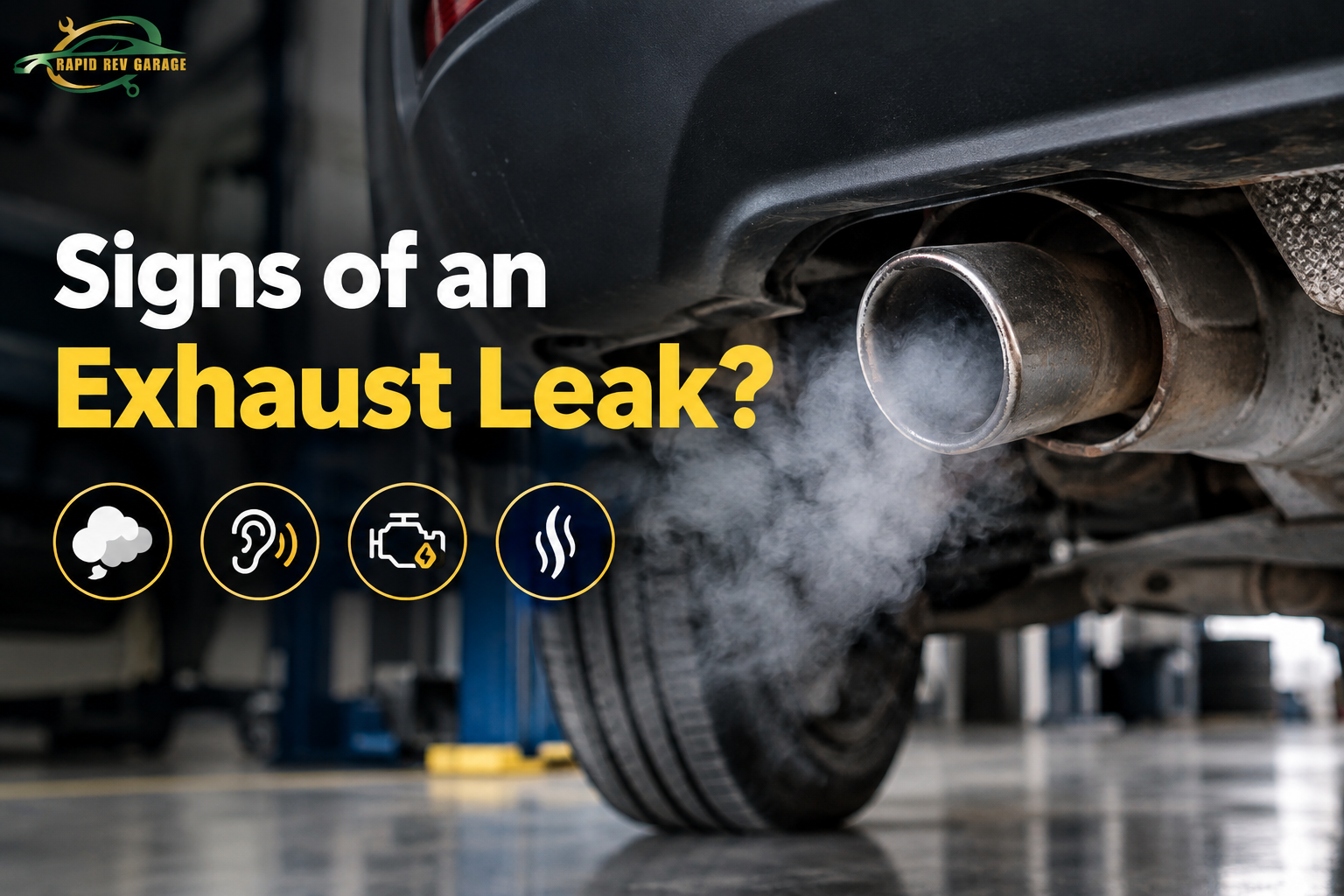
An exhaust leak means hot engine gases escape before they reach the tailpipe. The most typical symptom is a ticking sound at cold start that lessens as the engine warms. Many drivers also notice a stronger engine noise or a fume smell in the cabin. The check engine light may illuminate, and fuel consumption may increase. “Most leaks in Dubai are due to heat cycles, speed bumps, and rust. A shop finds the precise location using a smoke test and OBD scan. Small repairs, such as gasket swaps, often take 1-3 hours. If you smell fumes in the automobile, stop driving and get it checked.
What This Guide Covers
Use these links to jump to the part you need.
- What Happens When Your Exhaust System Starts Leaking
- 8 Signs of an Exhaust Leak You Can Hear, Smell, or Feel
- Why Exhaust Systems Crack and Leak on Dubai Roads
- How a Mechanic Tracks Down the Leak, Step by Step
- How Exhaust Repairs Are Done for Each Type of Leak
- What a Small Leak Can Turn Into If You Ignore It
- Is It Safe to Keep Driving With a Leaking Exhaust?
- How Long Exhaust Repairs Usually Take
- What Decides the Price of Exhaust Repair in Dubai
- Simple Habits That Prevent Exhaust System Problems
- Dubai Conditions That Wear Out Exhaust Systems Faster
- Why Choose Rapid Rev Garage for Car Exhaust Leak Repair
- Questions Dubai Drivers Ask About Exhaust Problems
- Related Services for Exhaust and Engine Problems
- Get Your Exhaust Checked in Al Quoz
What Happens When Your Exhaust System Starts Leaking
Your exhaust system carries burnt gas from the engine to the back of the car. It starts at the exhaust manifold, which bolts to the engine. From there, gas passes the oxygen sensors, the catalytic converter, the flex pipe, and the muffler. Then it leaves through the tailpipe.
Every joint along that path is sealed with a gasket or a clamp. When a gasket burns out or a pipe cracks, gas escapes early. That is an exhaust system leak.
The escaping gas carries carbon monoxide (CO), which has no smell or color. You smell the other gases mixed in. So a fume smell is your warning sign.
Where the leak sits matters a lot. A leak near the engine can pull outside air past the oxygen sensor. The engine computer then reads the mix wrong and adds extra fuel. As a result, a small leak can quietly raise your fuel bill.
8 Signs of an Exhaust Leak You Can Hear, Smell or Feel
Most exhaust leak symptoms show up long before a part breaks. Drivers usually notice them in the order below.
A Ticking Sound That Fades as the Engine Warms Up
A fast tick-tick-tick at cold start often points to a manifold leak. The gap is widest when the metal is cold. As the manifold heats up, the metal expands, and the gap closes. Many drivers ignore it because the sound goes away after a few minutes.
A Louder Engine Note When You Press the Pedal
A deep roar under acceleration usually means a hole in the muffler or a broken pipe. The sound grows as you press harder. Some drivers mistake it for a sporty exhaust note.
A Smell of Fumes Inside the Cabin
Fumes inside the car are the most serious sign. They often get worse in slow traffic or when the AC is on fresh-air mode. Headaches, dizziness, or sleepiness while driving can point to CO. Open the windows and stop the car if you feel any of these.
Fuel Use Going Up for No Clear Reason
A leak near the front exhaust can trick the oxygen sensor. The engine computer thinks the mix is lean, so it adds fuel. You may find yourself at the petrol station more often than before.
Check Engine Light With Oxygen Sensor Codes
Common error codes for leaks include P0171 (system too lean) or P0420 (catalytic converter below limit). An inexpensive OBD reader can show the code. It doesn’t show where the leak is.
Vibration in the Pedal, Floor or Steering Wheel
A loose or cracked pipe can buzz against the body. You feel it through the pedal or the floor, mostly at idle. A broken rubber hanger often feels the same.
Slower Pickup When You Accelerate
A large leak upsets the back pressure the engine is tuned for. The car may feel flat when you pull out or overtake on Sheik Zayed Road. A clogged catalytic converter can cause the same power loss, so it needs a proper check.
Black Soot Around Pipe Joints
Look under the car near the joints and the manifold. Black, sooty marks show where gas has been escaping. Older leaks may also leave a white or grey crust.
Manifold Tick or Lifter Tick: How to Tell Them Apart
Many drivers confuse a manifold leak with a noisy valve lifter. Both make a ticking sound from the engine bay. A manifold leak is loudest when cold and fades within five to ten minutes. A lifter tick usually stays the same or gets louder once the oil is hot. Low or old oil makes a lifter tick worse. If the noise fades as the car warms up, the exhaust is the more likely cause.
Each Warning Sign and What It Usually Points To
Use this table to match what you notice with the likely reason and how fast to act.
| Warning Sign | Most Likely Reason | How Soon to Act |
| Ticking at cold start | Worn manifold gasket or cracked manifold | Within a week |
| Roar when accelerating | Hole in muffler or broken pipe | Within a week |
| Fumes inside the cabin | Leak near the engine or under the floor | Stop driving today |
| Higher fuel use | Leak before the oxygen sensor | Within a few days |
| Check engine light (P0171, P0420) | Outside air reaching the oxygen sensor | Within a few days |
| Vibration in pedal or floor | Broken hanger or cracked flex pipe | Within a week |
| Weak acceleration | Large leak or damaged catalytic converter | Within a few days |
| Black soot at joints | Leaking gasket or loose clamp | Within a week |
If two or more signs match your car, look for a garage near me that can put the car on a lift.
Why Exhaust Systems Crack and Leak on Dubai Roads
Exhaust parts work in a harsh environment. They go from air temperature to several hundred degrees every time you start the engine. Dubai driving adds even more stress.
Heat Cycles Wear Out the Manifold Gasket
The manifold gets hotter than any other portion of the exhaust. The metal expands and contracts as it heats up and cools down. Over time, the gasket wears out, and the bolts can loosen or break. Short trips in heavy traffic mean more of these cycles daily.
Flex Pipes Crack From Engine Movement
The flex pipe is a braided section that lets the engine rock without breaking the pipe. Worn engine mounts let the engine move more than it should. The flex pipe then bends too far, and its inner layer cracks.
Speed Bumps and Curbs Hit Low Pipes
Dubai’s residential areas have a lot of speed bumps. Lowered cars and loaded SUVs can scrape the pipe or muffler. A hard hit can crack a joint or bend a hanger. Desert trips add rock and sand strikes underneath.
Rust From Humidity and Short Trips
Coastal areas like Jumeirah and Dubai Marina stay humid for much of the year. Water also forms inside the exhaust as part of normal burning. On short trips, the pipes never get hot enough to dry it out. That water sits in the muffler and rusts it from the inside.
Loose Clamps and Broken Rubber Hangers
Rubber hangers suspend the exhaust. Heat will cause them to strain and shatter over time. When the pipe fails, the joints pull and sag until a seal breaks.
Engine Misfires That Overheat the Exhaust
A misfiring cylinder pushes unburned gasoline into the exhaust. That fuel burns in the catalytic converter and overheats it. The excess heat can cause the converter shell or adjacent joints to break. This is usually caused by bad spark plugs or malfunctioning ignition coils.
How a Mechanic Tracks Down the Leak, Step by Step
Finding the exact leak point saves you money on parts you don’t need. When you search for a car mechanic near me, ask whether they run the checks below.
What You Can Check at Home First
You can complete a safe two-minute check before booking. Start the car cold with the bonnet open and listen carefully to the engine. Watch as the tick fades as it warms up. Then check underneath the car for black soot around the joints. Don’t touch the exhaust after a drive. Do not run the engine in a closed garage. Tell the mechanic what you saw, as this cuts down on diagnosing time.
Cold-Start Listening Test
The mechanic starts the engine cold and listens around the manifold. Leaks are loudest in the first few minutes. A mechanic’s stethoscope helps restrict the sound down to one side or one joint.
Lift Inspection for Soot, Cracks, and Rust
They pull the car up so you can see the full system. The mechanic inspects every joint, hanger, and clamp. From below, you can see the soot tracks, corrosion holes, and fractured welds.
Smoke Test of the Whole System
A smoke machine pumps harmless smoke into the tailpipe at low pressure. Smoke escapes from every leak point. Even from little pinholes. This is the best method for detecting small, silent leaks.
OBD-II Scan and Fuel Trim Reading
A scan tool will read saved fault codes and live O2 sensor data. High fuel trim numbers usually indicate a leak around the front sensor. The mechanic also checks the sensors to make sure they are still working.
Carbon Monoxide Check Inside the Cabin
If you reported fumes, the mechanic uses a CO meter inside the car with the engine running. A reading above normal outdoor levels means the leak is reaching the cabin. Don’t drive the car until you fix the leak.
How Exhaust Repairs Are Done for Each Type of Leak
The right repair depends on the failed part. Patching rarely lasts, so most jobs replace the worn part.
Manifold Gasket Replacement
The mechanic removes the heat shield and unbolts the manifold. The mechanic removes the old gasket and installs a new one. Rusted studs often snap during removal. They have to be drilled out and replaced, which adds time.
Cracked Manifold Repair or Replacement
Cast iron manifolds tend to break between the ports. Some tiny cracks can be welded, but they will likely reappear. The more permanent solution is to replace the manifold. Many newer cars have the catalytic converter incorporated into the manifold, which makes it more expensive.
Flex Pipe Replacement
A cracked flex pipe is cut out, and a new section is welded in. On some cars, the flex pipe is part of the front pipe and gets replaced as one piece. The mechanic should also check the engine mounts so the new pipe does not crack again.
Pipe Welding or Section Replacement
A small exhaust pipe leak can be welded if the surrounding metal is still strong. If rust has thinned the pipe, replace that section. Exhaust tape and paste are only short-term fixes.
Muffler and Catalytic Converter Replacement
A rusted-through muffler is replaced, not patched. A cracked catalytic converter is swapped for an OEM or approved aftermarket unit. The mechanic should first find out why it failed, such as a misfire, so the new one lasts.
Hanger, Clamp and Heat Shield Fixes
These are the cheapest exhaust leak repairs. New rubber hangers and clamps stop the pipe from sagging and knocking. A loose heat shield gets refastened to stop buzzing.
Final Checks After the Repair
After the repair, the mechanic runs a second smoke test and clears the fault codes. A short road test confirms the noise and vibration are gone. Drivers near Al Quoz can book Rapid Rev Garage to find and fix an exhaust leak this way.
What a Small Leak Can Turn Into If You Ignore It
A leak never fixes itself. The gap grows with every heat cycle, and the damage spreads to other parts.
Carbon Monoxide Reaching the Cabin
An exhaust leak under the floor might allow fumes into the vehicle through minor cracks in the body. The risk is higher in traffic jams and when idling with the AC on. CO can make you dizzy and confused, and sleepy behind the wheel.
Damage to the Catalytic Converter and Sensors
Wrong oxygen sensor readings make the engine run rich. That extra fuel overheats the catalytic converter over time. A new converter costs many times more than the gasket that started the problem.
Heat Damage Under the Car
Hot gas blowing from a leak can cook nearby wiring, rubber lines, and plastic trim. It can also burn through the heat shields under the floor.
Bigger Car Engine Repair Bills
Running rich for months fouls spark plugs and builds carbon deposits. In bad cases, a blocked converter traps exhaust gas, and the engine loses power. A small leak can turn into a major engine repair job.
Trouble at the Annual Registration Test
The UAE vehicle test includes an emissions check. A leak can throw the readings off and lead to a retest.
Is It Safe to Keep Driving With a Leaking Exhaust?
It depends on where the exhaust leak is and what you notice. Use these rules:
- If you smell fumes inside the car, stop driving. Park safely, open the doors, and call roadside assistance instead of continuing to drive.
- If a pipe is hanging or dragging, stop. It can catch on the road and tear off.
- If the check engine light is flashing, stop. A flashing light means a misfire that can ruin the converter.
- If you only hear a tick at cold start, short trips to a workshop are usually fine. Book a check within a week.
For a loud exhaust at home, a mobile car mechanic can confirm the problem. Welding and manifold work still need a lift at a workshop.
How Long Exhaust Repairs Usually Take
These are typical times at most workshops once the parts are in hand:
- Diagnosis by smoke test: 30 to 60 min
- Replace hanger or clamp: less than 1 hour
- Manifold gasket: 1-3 hours, longer if studs break
- Pipe segment or flex pipe: 1-2 hours
- Muffler: 1 – 2 hours
- Manifold or catalytic converter: 2 to 5 hours
For some European autos, parts can take one to three days to arrive.
What Decides the Price of Exhaust Repair in Dubai
Prices vary by car and the failed part. The ranges below are approximate Dubai market prices for 2026, parts and labor included:
- Inspection and smoke test: AED 100 to 250
- Hangers and clamps: AED 100 to 300
- Manifold gasket: AED 300 to 900
- Flex pipe: AED 400 to 1,200
- Muffler: AED 500 to 1,800
- Exhaust manifold: AED 1,200 to 4,000
- Catalytic converter: AED 1,500 to 6,000 or more
The car make has the biggest effect on price. German and luxury models usually have costlier parts. OEM parts cost more than aftermarket ones but often fit better. Seized or snapped bolts add labor time. Welding in a new section costs less than buying a full factory pipe.
Simple Habits That Prevent Exhaust System Problems
Most exhaust system failures start small, so a few habits go a long way:
- Slow right down for speed bumps, especially in lowered cars or loaded SUVs.
- Ask for an exhaust and hanger check at every car service in Dubai.
- Take one longer drive a week if you mostly do short trips. It dries out water inside the muffler.
- If you get misfires and the check engine light comes on, have it checked quickly to protect the converter.
- Replace worn engine mounts before they crack the flex pipe.
- Never spray cold water on a hot exhaust when washing the car.
Dubai Conditions That Wear Out Exhaust Systems Faster
Dubai driving puts unique stress on exhaust parts—four local habits cause most of the trouble.
Idling in Underground Car Parks
Many drivers wait in subterranean parking with the engine and AC running. In a closed area, an exhaust leak can cause fumes to build up quickly. Turn off the engine when possible and get out if you smell exhaust fumes.
Stop-Start Traffic in Summer
Traffic on roads like Al Khail Road is slow, so exhaust heat gets trapped under the car. Fresh-air A/C mode might draw smells from an exhaust leak into the cabin. In heavy traffic, recirculate until the leak is repaired.
Desert and Off-Road Trips
Dune trips and unpaved roads can hit the exhaust from below. Check under the car for bent pipes or loose hangers after any off-road drive.
Coastal Humidity
Cars kept near the coast rust faster underneath. An annual underbody check catches rust before it eats through a pipe.
Why Choose Rapid Rev Garage for Car Exhaust Leak Repair
Rapid Rev Garage is a smart pick for exhaust repair in Dubai, for the reasons below.
Open 24 Hours as a Full Workshop
The workshop stays open 24 hours a day. Many Dubai workshops close by 8 PM. Most 24-hour services are roadside vans that cannot lift a car or weld a pipe. A fume problem you notice late at night can still be checked on a lift.
Lift Inspection Instead of Guesswork
As a full workshop, it can raise the car and check the whole exhaust from below. They trace leaks at the source, not guess from the sound.
Easy to Reach in Al Quoz
It sits at Al Khail Gate, 12th Street, Al Quoz Industrial Area 2. The location is close to Al Khail Road for drivers coming from most parts of Dubai.
FAQ’s
Q1: How do I know my exhaust is leaking?
Listen for a tick at cold start or a louder engine note. Fumes in the cabin and black soot near the joints are other signs. A smoke test confirms it.
Q2: Is an exhaust leak dangerous to drive with?
It can be. An exhaust leak lets fumes into the cabin and exposes you to carbon monoxide. Stop driving if you smell exhaust inside the car.
Q3: Can an exhaust leak cause a check engine light?
Yes. A leak near the oxygen sensor often sets codes like P0171 or P0420. Fixing the leak and clearing the codes usually turns the light off.
Q4: How much does exhaust repair cost in Dubai?
Most small repairs cost AED 300 to 1,200. Manifold and catalytic converter jobs run higher, often AED 1,200 to 6,000. Your car make and parts choice move the price.
Q5: Can exhaust tape fix a leak?
Only for a short time. Tape and paste can quiet a small hole for a few days or weeks. Heat breaks them down, so plan a proper repair.
Q6: Why does my exhaust tick when cold?
The gap at a worn manifold gasket is widest when the metal is cold. As the metal heats and expands, the gap closes, and the tick fades.
Q7: Will an exhaust leak fail RTA inspection?
It can. The test includes an emissions check, and a leak can skew the readings. Get it fixed before your registration renewal.
Related Services for Exhaust and Engine Problems
Exhaust leak trouble often comes with other issues under the car. Drivers often book these at the same time:
- Engine diagnostics and car engine repair for misfires that overheat the converter
- Engine mount replacement to protect a new flex pipe
- Spark plug and ignition coil replacement
- Underbody rust treatment
- Car painting near me for rear bumper paint blistered by exhaust heat
Get Your Exhaust Checked in Al Quoz
A small tick today can turn into a cracked manifold or a fume problem in a few months. Rapid Rev Garage is open 24 hours in Al Quoz Industrial Area 2 and can inspect your exhaust on a lift. Message the team on WhatsApp, call ,or get directions on Google Maps.