Why Do You Get Water Leaks Through Sunroof Openings?
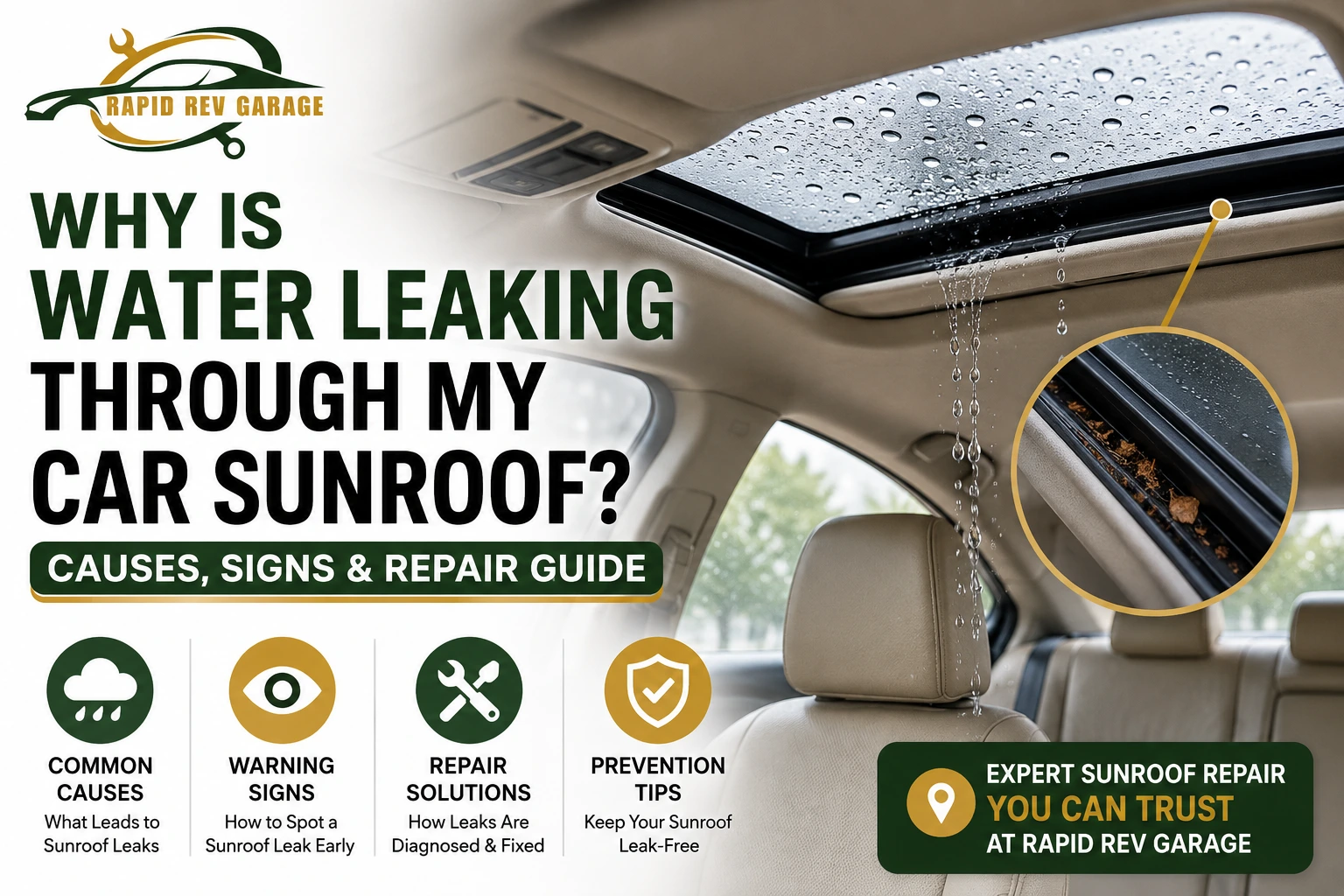
Water leaks through sunroof openings almost always come down to one of four things: a clogged drain tube, a worn-out rubber seal, glass that’s sitting slightly out of alignment, or a blocked drainage channel. A couple of drops after a car wash might not seem like much, but left alone, it can soak into your headliner, carpets, and even the wiring behind your dashboard. The earlier it’s caught, the cheaper and simpler the fix. If you’re noticing damp spots after rain or a wash, it’s worth getting the sunroof checked by the team at Rapid Rev Garage before it turns into something bigger.
Table of Contents
- Why Do Sunroofs Start Leaking Water in the First Place?
- Warning Signs Your Sunroof Is Leaking
- What’s Actually Causing the Leak?
- How Technicians Track Down the Source
- How the Repair Gets Done
- What Happens If You Leave It?
- Is It Okay to Keep Driving?
- How Long Does the Repair Take?
- What Affects the Cost?
- Simple Ways to Stop It Before It Starts
- Why Dubai Drivers Deal With This More Than They Think
- Why Drivers Choose Rapid Rev Garage
- Frequently Asked Questions
- Related Services
- Final Thoughts
Why Do Sunroofs Start Leaking Water in the First Place?
Most drivers figure a leaking sunroof is a small nuisance — a bit of water on the seat, nothing serious. It’s not that simple. Water leaks through sunroof openings can travel much farther than the cabin floor. It can work its way behind interior panels, soak into insulation, sit against wiring, and eventually reach electronic modules tucked under the dash or seats.
Your car’s sunroof is actually built with its own drainage system — small channels designed to carry rainwater safely away from the cabin. The trouble starts when those channels get blocked, or the seals around the glass wear thin. Water that should be draining away has nowhere to go, so it finds its way inside instead.
Left alone, a small leak doesn’t stay small. It can eventually mean replacing the headliner, drying out soaked carpets, or repairing damaged wiring and electronics. Dealing with it early is a lot easier on your wallet.
Warning Signs Your Sunroof Is Leaking
Water leaks through sunroof assemblies don’t always show up as an obvious drip from the ceiling. Often, the first signs are easy to miss.
Here’s what to watch for:
- Damp seats after it rains
- Wet carpets or soggy floor mats
- Water stains spreading across the headliner
- A musty smell that won’t go away
- Windows fogging up and staying that way.
- Water dripping from the interior light housing
- Moisture gathering around the door pillars.
- Electrical accessories acting glitchy for no clear reason
- Standing water in the spare wheel compartment
- Seat belts that stay damp long after a drive
If any of this sounds familiar, it’s worth searching for a garage near me and getting it looked at sooner rather than later. Catching it early usually means a much cheaper fix.
What’s Actually Causing the Leak?
Knowing the actual cause matters — fixing the symptom instead of the source means the leak comes back.
Blocked drain tubes. Every sunroof comes with small tubes built to carry rainwater away. Dust, leaves, and sand work their way in over time and clog them up, so water backs up and overflows into the cabin instead.
Worn rubber seals. Years of sun and heat dry out the rubber around the sunroof. Once it hardens or cracks, water finds gaps to slip through.
Glass that’s slightly off. If the sunroof panel isn’t sitting perfectly flush, even a hairline gap is enough to let rain in during a storm or a wash.
Damaged drain channels. Cracked channels stop water from flowing where it should, so it pools around the frame instead and eventually leaks inward.
A rushed previous repair. Poor installation work can leave small gaps around the assembly that only show up as problems later.
Debris buildup. Leaves, sand, and dust settle into the sunroof track over time, quietly blocking drainage until water has nowhere left to go.
Accident damage. Even a minor knock to the roof area can shift the sunroof frame just enough to let water through when it rains.
Skipping maintenance. Most people never think to clean their sunroof drains. It’s a small job, but it’s one of the easiest ways to avoid water leaks through sunroof components altogether.
If any of this sounds like what’s happening with your car, the team at Rapid Rev Garage can pin down exactly what’s going on before it does more damage.
How Technicians Track Down the Source
Finding where water leaks through sunroof systems are actually coming from takes more than a glance. Often, the leak travels through hidden channels before it ever shows up inside the cabin.
Full assembly check. An experienced car mechanic will go over the whole sunroof setup rather than just the spot where water’s been showing up — checking glass alignment, seal condition, drain holes, drain tubes, the roof frame, the headliner, and any signs of prior repair work or corrosion.
Drain flow test. A controlled amount of water gets poured into the drainage channels to see whether it flows freely underneath the car. If it backs up or drains slowly, that usually points to dirt, sand, trapped leaves, a pinched hose, or a damaged channel somewhere along the line.
Interior moisture check. Since water tends to travel behind trim panels, technicians also check the headliner, A- and B-pillars, dashboard edges, front and rear carpets, under-seat wiring, and the spare wheel compartment to see how far it’s actually spread.
How the Repair Gets Done
The right fix depends entirely on what’s causing the problem — sealing the surface without fixing the real issue means it comes back.
Clogged drain tubes: debris gets cleared out, the tubes are flushed, and water flow is retested to make sure everything’s draining properly again. This is one of the most common fixes for water leaks through sunroof systems.
Worn seals: if the rubber’s cracked or gone brittle, replacing it is usually the better long-term call — it restores the seal against rain and helps the glass close properly.
Misaligned glass: technicians adjust the panel height, level the glass, and run a water test to confirm the gap’s closed for good.
Damaged drainage parts: cracked or disconnected tubes and channels get repaired or replaced so water can actually flow the way it’s meant to.
Severe cases: sometimes it’s the frame, drain tubes, guide rails, glass assembly, seals, or sliding mechanism that need replacing outright, and if the surrounding roof corrosion needs addressing, our car painting team handles the finish work too.
At Rapid Rev Garage, every repair finishes with a full water test before the car goes back to the owner, just to be sure the leak’s actually gone.
What Happens If You Leave Car Sunroof Leaking?
It’s easy to put off fixing something that only shows up when it rains. But even small, repeated water leaks through sunroof openings can quietly cause a lot of damage over time — mold and mildew, permanent stains on the headliner, damp carpets that never quite dry, lingering odors, corroded metal parts, damaged wiring, airbag sensor faults, infotainment glitches, and a real drop in resale value. Fixing a blocked drain now is a lot cheaper than replacing electronics or upholstery later.
Is It Okay to Keep Driving?
Your car’s probably still mechanically fine to drive, but that doesn’t mean it’s a good idea to keep putting off water leaks through sunroof repairs.
Get it looked at soon if you’re seeing water dripping during rain, wet carpets, moisture near anything electrical, flickering interior lights, a damp roof lining, or a musty smell that won’t clear. If heavy rain’s forecast or your roof’s been in an accident, calling roadside assistance is usually the safer move — it keeps things from getting worse on the drive over.
How Long Does the Repair Take?
| Repair Type | Estimated Time |
| Drain tube cleaning | 30–90 minutes |
| Leak diagnosis | 1–2 hours |
| Weather seal replacement | 2–4 hours |
| Sunroof glass adjustment | 2–3 hours |
| Drain tube replacement | 3–5 hours |
| Complete sunroof repair | 1–2 days |
| Interior drying after water damage | 1–3 days |
If there’s significant water damage inside, expect extra drying time before panels and trim go back in.
What Affects the Cost?
There’s no single price tag here — it comes down to what’s actually causing the leak, how much water’s gotten in, the state of the drainage system, whether the seals need replacing, any interior or electrical damage, your car’s make and model, and how much labor the job needs.
Dealing with water leaks through sunroof systems early is almost always cheaper than waiting until the damage spreads to the interior or electronics.
Simple Ways to Stop It Before It Starts
Clean the drain channels every few months. Leaves, sand, and dust build up fast and are one of the easiest things to prevent.
Check the rubber seals now and then. They should stay soft and flexible. Cracks or hardening are a sign to get it looked at before a leak starts.
Keep the tracks clear of dirt. Wipe them down regularly, especially if you’re driving somewhere dusty — it helps both drainage and the sliding mechanism.
Go easy with high-pressure water. Don’t blast the sunroof edges directly when washing your car; it can force water past seals that are already a little worn.
Get it checked periodically. Even if everything seems fine, a routine look can catch a worn seal or blocked drain before it becomes an actual leak.
Why Dubai Drivers Deal With This More Than They Think
It’s easy to assume Dubai’s dry climate means sunroof leaks aren’t really a local problem. That’s not quite right. Wind-blown sand clogs drain tubes, dust settles into the tracks, intense summer heat dries out rubber seals faster than you’d expect, and the occasional heavy seasonal downpour can catch a worn system off guard. Coastal humidity and long hours parked outdoors under the sun add to it too. If your car spends most of its time outside, regular maintenance really does make a difference.
If you’ve noticed damp carpets or water getting in after rain, it’s worth having it checked before it turns into a bigger repair.
Why Drivers Choose Rapid Rev Garage For Sunroof Repair
A leaking sunroof needs an accurate diagnosis, not just a quick seal-and-hope fix. We know how much damage a small, ongoing leak can cause if it’s left alone.
Here’s what our team brings to the job:
- Thorough sunroof inspections, not just a surface check
- Proper leak detection rather than guesswork
- Drain tube cleaning and repair.
- Weather seal replacement
- Careful glass alignment work
- A real look at any interior water damage
- Quality parts, not shortcuts
- Transparent pricing
- Fast turnaround
- Support after the repair, not just during it
Whether it’s a small leak or the interior’s already taken some water damage, we’re set up to sort it properly as part of the full car service we offer in Dubai.
Frequently Asked Questions
Q1: Why does my sunroof only leak when it rains?
It usually comes down to blocked drain tubes, worn seals, or glass that’s sitting slightly misaligned — rain is just what exposes the gap.
Q2: Can a blocked drain tube really cause this much water damage?
Yes, actually — it’s one of the most common reasons behind water leaks through sunroof systems, since it stops rainwater from draining the way it’s supposed to.
Q3: Can I fix it myself?
Clearing visible debris from the track can help, but tracking down blocked drains, worn seals, or alignment issues is really a job for someone with the right tools and experience.
Q4: Can this damage my car’s electronics?
It can. Water that gets in can reach wiring, sensors, lighting, and infotainment systems if it’s not dealt with in time.
Q5: Is it safe to drive like this?
Short trips are usually fine, but repeated exposure to rain will make things worse over time. If it’s bad enough, a call to a mobile car mechanic can save you the trip in and get it looked at wherever your car is.
Q6: How often should the drains be cleaned?
Roughly every six to twelve months is a good rule of thumb; more often if your car’s usually parked outside.
Related Services
If water leaks through the sunroof and problems have been affecting your car, these might help too:
- Sunroof Repair
- Car Water Leak Diagnosis
- Car Body Repair
- Car Interior Repair
- Car Electrical Diagnostics
- Car Detailing
- Windshield Replacement
- Vehicle Computer Diagnostics
- Emergency Roadside Assistance
- Accident Repair
Final Thoughts
A little water after a car wash doesn’t feel like a big deal — until it is. Water leaks through sunroof openings tend to get worse quietly, causing damage you won’t notice until it’s already spread. Catching it early keeps the repair simple and the bill small.
If you’ve noticed dampness, stains, or a musty smell in your car, don’t wait around for it to get worse. Visit Rapid Rev Garage and let our team track down the source and fix it properly from a quick drain clean to a full sunroof repair.