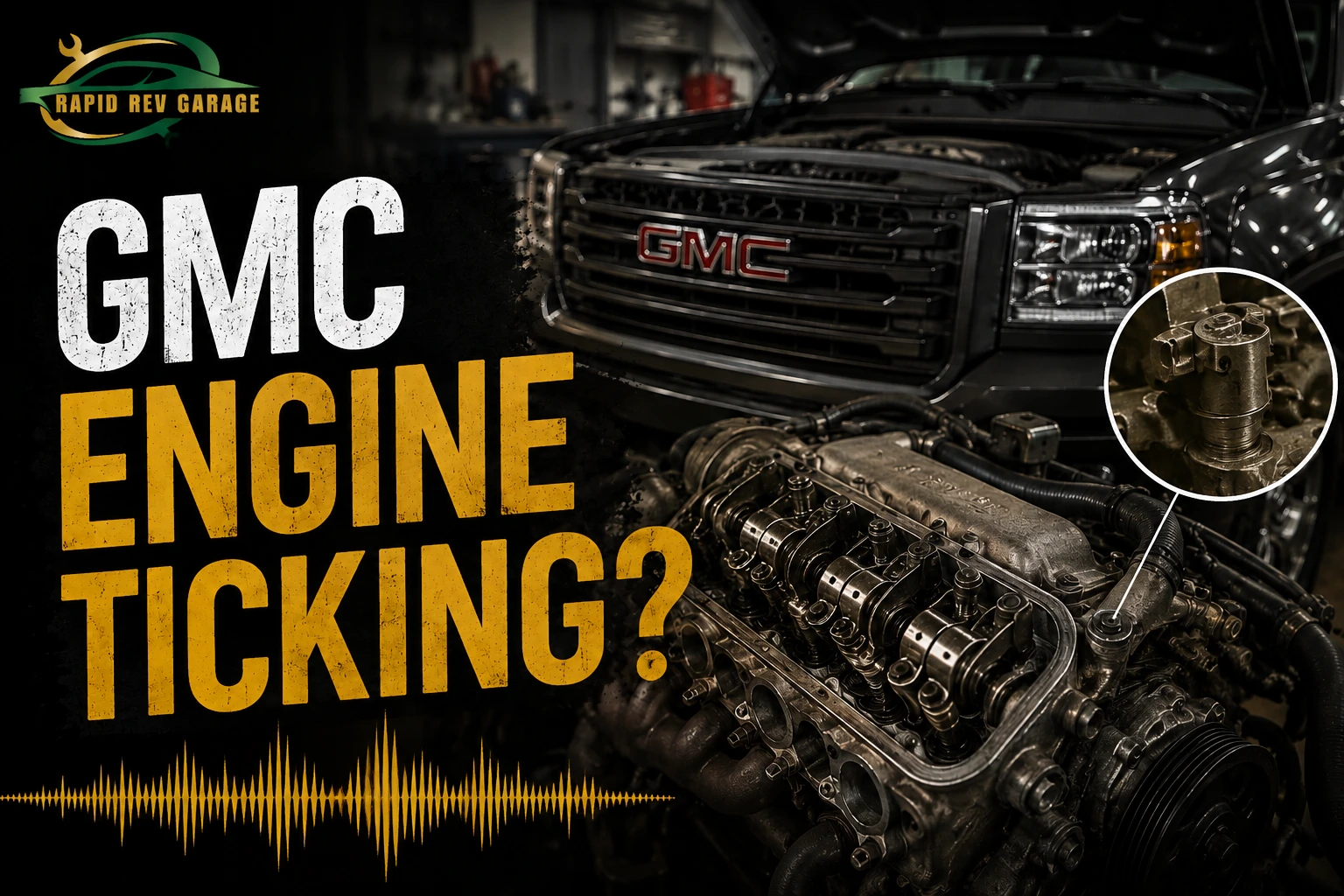
That faint metallic tick coming from under the hood is easy to brush off at first until you notice it’s still there every single time you start the car. A GMC engine ticking sound isn’t always serious, but it’s rarely nothing either. It usually means something inside the engine is making contact it shouldn’t be, whether that’s a lifter, a valve, an exhaust leak, or something further down the list. Ignore it long enough and a cheap fix can turn into a genuinely expensive one.
Why Is Your GMC Engine Ticking?
A GMC engine ticking noise usually comes down to one of a handful of causes: low oil pressure or dirty oil, worn lifters, an exhaust manifold leak, loose heat shields, worn valvetrain components, or a failing accessory like a belt tensioner or fuel injector. Some of these are harmless and cheap to fix — others point to wear that’s already underway and getting worse the longer it’s left. The sound itself is a clue, but where and when it happens (cold start, idle, acceleration) narrows things down a lot. A proper inspection is really the only way to tell a AED 100 fix from one that’s going to cost a lot more if it’s ignored.
Table of Contents
- Problem Overview: What That Ticking Noise Actually Means
- Symptoms That Come Along With a Ticking Engine
- Common Causes: Why GMC Engine Ticking Happens
- How Mechanics Diagnose the Source of the Noise
- What the Repair Process Actually Involves
- Risks of Ignoring It
- Can You Continue Driving With a Ticking Engine?
- How Long Does the Repair Take?
- What Affects the Cost of Fixing It?
- Prevention Tips to Keep the Ticking Away
- Dubai-Specific Advice for Heat and Traffic
- Why Choose Rapid Rev Garage for GMC Engine Repair?
- Frequently Asked Questions
- Related Services
- Final Call-to-Action
What That Ticking Noise Actually Means
A ticking sound from a GMC engine is basically the sound of metal-on-metal contact happening somewhere it isn’t meant to, or air escaping somewhere it shouldn’t. It’s a rhythmic noise, usually tied to engine speed: tick faster as you rev, slower at idle.
That doesn’t mean disaster, necessarily. Many GMC engines have a small tick at cold start, then calm down with oil pressure buildup. But if a tick doesn’t go away or grows worse, or if other symptoms arise, then it’s notifying you that something is really going wrong, not just settling in for the day.
The trouble is that a GMC engine ticking sound can come from a dozen different places, and guessing wrong means paying for a repair that doesn’t actually fix anything.
Symptoms That Come Along With a Ticking Engine
A ticking noise rarely travels completely alone. Watch for these showing up alongside it:
- The tick gets louder under acceleration or higher RPM.
- A tick that’s worse cold and fades as the engine warms up
- Reduced power or rough running
- The check engine light coming on.
- A faint burning smell, especially if it’s an exhaust leak
- Oil pressure warning light
- Vibration you can feel through the cabin.
If the tick shows up with two or three of these, it’s a stronger signal that GMC engine ticking on your car needs specific attention rather than just normal engine character.
Why GMC Engine Ticking Happens
Here are the ten most common reasons a GMC engine develops a ticking noise:
- Low oil pressure or dirty oil. Oil that’s low, old, or the wrong viscosity can’t properly lubricate the valvetrain, which lets components knock against each other and produce a tick.
- Worn or collapsed lifters. Hydraulic pressure lifters that are worn or missing make a characteristic tapping noise, which is usually more noticeable immediately after a cold start.
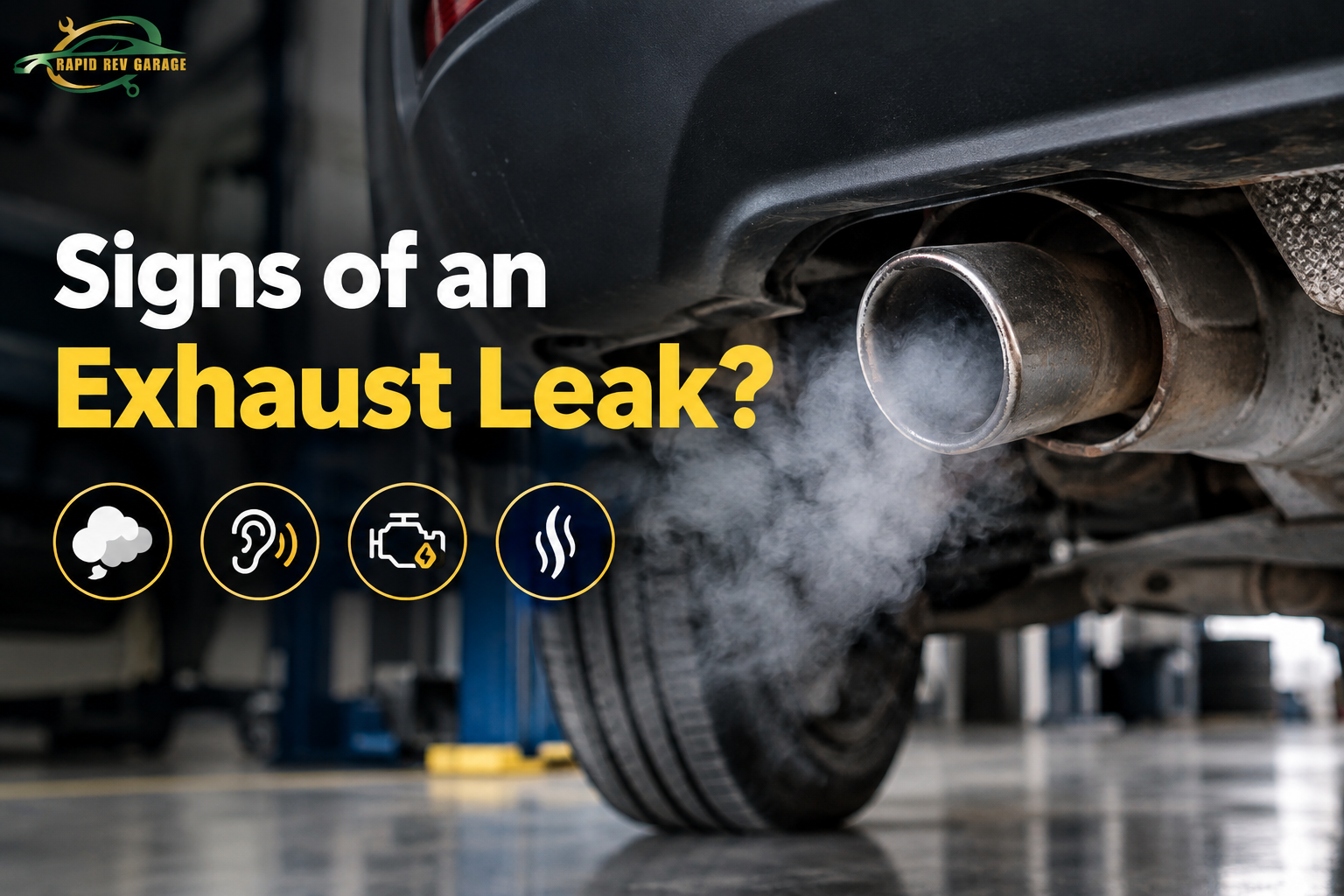
- Exhaust manifold leak. A small crack or a loose bolt on the exhaust manifold lets exhaust gas escape before it should, creating a ticking or tapping sound that’s often mistaken for an internal engine noise.
- Loose heat shields. The thin metal heat shields around the exhaust can vibrate and rattle at certain RPMs, producing a ticking sound unrelated to the engine internals.
- Worn valvetrain components. Rocker arms, pushrods, or valve springs that have worn down can create a ticking noise as valves open and close.
- Fuel injector noise. Some ticking is just the normal sound of fuel injectors cycling — but a failing injector can tick louder or more irregularly than normal.
- Worn timing chain or tensioner. A stretched timing chain or a failing tensioner can produce a rattling or ticking noise, especially at startup.
- Piston slap. Excess clearance between a piston and cylinder wall can create a ticking or slapping sound, more noticeable when the engine’s cold.
- Accessory belt or pulley noise. A worn belt tensioner, idler pulley, or accessory bearing can tick or click as it rotates, especially under load.
- Carbon buildup on valves. Heavy carbon buildup can impact how valves seat and close and sometimes create a ticking noise as a side effect.
How Mechanics Diagnose the Source of the Noise
Pinpointing GMC engine ticking takes a structured approach, not guesswork. A mechanic will usually start by listening carefully — cold start, idle, under load — since when the tick shows up says a lot about where it’s coming from. A mechanic’s stethoscope helps narrow the noise down to a specific area of the engine rather than relying on general impressions. Oil pressure gets checked next, since low pressure is one of the most common and cheapest-to-fix causes. From there, a visual inspection of the exhaust manifold, heat shields, and accessory belt area usually follows, since those are common sources that don’t require pulling the engine apart. If the tick still isn’t isolated, a more involved inspection of the valvetrain, checking lifters, rockers, and timing components, comes next.
What the Repair Process Actually Involves
Once the source is confirmed, the fix depends entirely on what’s actually ticking. An oil and filter change with the correct viscosity oil is often the first and cheapest step if oil pressure was the issue. A loose heat shield can be re-secured in minutes. An exhaust manifold leak might need a new gasket or, in worse cases, manifold replacement. Worn lifters or valvetrain components usually mean a deeper repair, sometimes requiring the valve cover to come off for direct inspection and replacement. Timing chain or tensioner work is more involved and takes longer, since it requires careful timing alignment during reassembly.
Risks of Ignoring The Engine Ticking Sound
A GMC engine ticking noise that gets ignored doesn’t usually stay the same — it tends to get worse, and sometimes it gets worse fast. A minor exhaust leak can grow into a bigger crack. Worn lifters can eventually cause valve damage. Low oil pressure left unaddressed can lead to accelerated wear across the whole valvetrain, turning a AED 150 oil change into a AED 2,000+ engine repair. The tick itself is rarely the expensive part — it’s what happens if the underlying cause is left to run for months.
Can You Continue Driving With a Ticking Engine?
In many cases, yes; a light tick alone, especially one that fades once the engine’s warm, isn’t usually an emergency. It’s still worth getting checked soon rather than waiting indefinitely. If the tick is loud, getting worse, or paired with an oil pressure warning light, reduced power, or a burning smell, it’s a different story; that combination means the car should be looked at before you drive it much further. Continuing to drive on low oil pressure specifically can cause serious engine damage in a short amount of time.
How Long Does the Repair Take?
Most of the simple fixes an oil change, re-securing a heat shield, tightening an exhaust bolt are done within an hour. Diagnosing the noise itself, especially if it takes a mechanic’s stethoscope and a road test, might add another hour on top. More involved repairs, like replacing lifters or valvetrain components, can take a full day or more depending on the engine layout. Timing chain work is usually the longest job on this list, sometimes taking a full day or two depending on parts availability.
What Affects the Cost of Fixing It?
The price swings a lot depending on the actual cause. An oil change or heat shield fix sits at the cheap end. Exhaust manifold repairs and gaskets are mid-range. Lifters, valvetrain components, and timing chain work sit at the expensive end, both because of parts cost and the labor time involved in disassembly. Whether the parts are OEM GMC or quality aftermarket also moves the price. A proper diagnostic first is what keeps you from paying to fix the wrong thing.
Prevention Tips to Keep the Ticking Away
- Stick to your GMC’s recommended oil change interval, not just when it feels overdue.
- Use the correct oil viscosity for your engine and Dubai’s climate.
- Get any new noise checked early rather than waiting for it to get worse.
- Don’t ignore an oil pressure warning light, even briefly.
- Have exhaust bolts and heat shields checked during regular service
- Address carbon buildup with proper maintenance rather than letting it accumulate.
Dubai-Specific Advice for Heat and Traffic
Dubai’s heat is genuinely tough on engine oil. Sustained high temperatures break oil down faster than it would in a cooler climate, which means oil that’s technically “due” for a change can already be thinner and less protective than it should be — a common contributor to a GMC engine ticking that shows up more in summer than winter. Add in stop-start traffic on routes like Sheikh Zayed Road, where the engine spends a lot of time at idle building heat without much airflow, and you’ve got conditions that make oil-related ticking more likely here than in milder climates. If you’re noticing a new tick and you drive mostly in city traffic, it’s worth having oil condition checked sooner rather than waiting for the next scheduled service.
Why Choose Rapid Rev Garage for GMC Engine Repair?
Rapid Rev Garage has diagnosed plenty of ticking GMC engines across Dubai, and the team knows how to tell an oil pressure issue apart from a loose heat shield, or something more serious in the valvetrain without just guessing and hoping. A proper stethoscope-and-road-test diagnosis comes before any parts get replaced, so you’re not paying for a repair that doesn’t actually fix the noise. Transparent pricing, genuine or quality aftermarket parts, and a workshop that explains what’s actually wrong before touching your car that’s the difference. If getting to a garage isn’t convenient, a mobile car mechanic visit can often confirm the source of the noise on the spot.
Frequently Asked Questions
Q1: Is it normal for a GMC engine to tick a little at cold start?
A light, brief tick at cold start that disappears once oil pressure builds is fairly common and not usually a concern. A tick that continues once the engine’s warm is worth getting checked.
Q2: Can low oil cause my GMC engine to tick?
Yes. Low oil level or low oil pressure is one of the most common causes of engine ticking, and it’s also one of the cheapest to fix if caught early.
Q3: Is a ticking noise from a GMC engine always serious?
Not always. Some causes, like a loose heat shield or normal fuel injector noise, aren’t serious. Others, like worn lifters or low oil pressure, can turn into real damage if ignored.
Q4: Can an exhaust leak sound like an engine tick?
Yes. A manifold leak often sounds very similar to an internal engine tick, which is exactly why proper diagnosis matters before assuming the worst.
Q5: How much does it cost to fix a ticking GMC engine?
It depends entirely on the cause — anywhere from the cost of an oil change to a more involved valvetrain or timing chain repair. A diagnostic first is the only way to know which one you’re dealing with.
Related Services
If the ticking turns out to be one of several things your GMC needs looked at, Rapid Rev Garage also handles general car mechanic work, roadside assistance if you’re stuck somewhere, and car painting for cosmetic work alongside any mechanical fix. Engine-specific issues are covered in more depth on the engine repair in Dubai page too.
Conclusion:
A GMC engine ticking noise rarely fixes itself, and it usually gets more expensive the longer it’s left unchecked. If you’ve noticed a new tick under the hood, book a diagnostic with Rapid Rev Garage and get a straight answer on what’s actually going on before it turns into a bigger repair. Search “garage near me” or book directly with car service in Dubai — whichever’s easier for you.
📍 Find us: Rapid Rev Garage on Google Maps
💬 WhatsApp: Chat with us now
🌐 Visit: rapidrevgarage.com