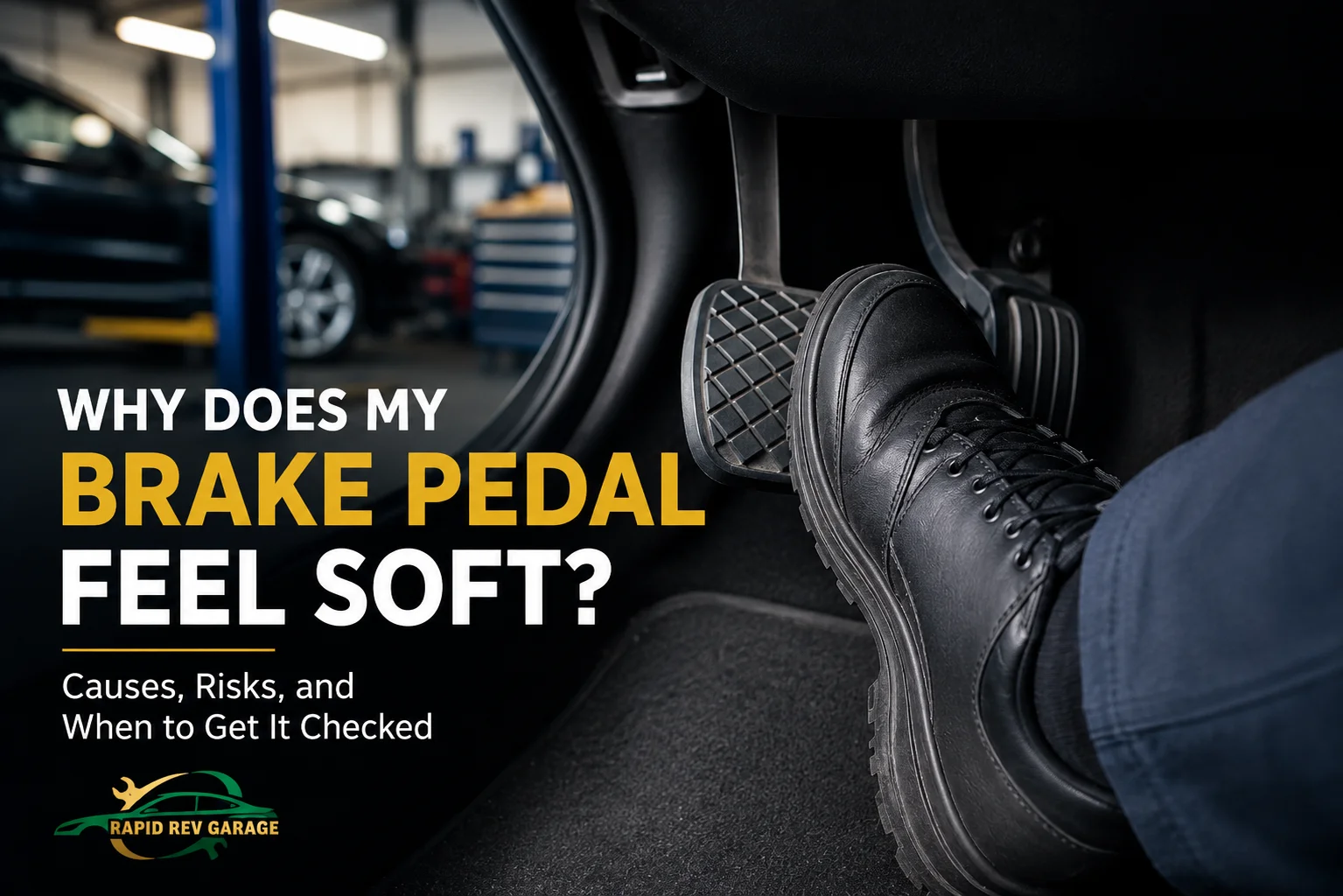
If your brake pedal feel soft or spongy when you press it, the braking system may have air in the brake lines, low or contaminated brake fluid, worn brake components, a hydraulic leak or a failing master cylinder. Sometimes the problem develops gradually; other times, the pedal suddenly becomes soft and unsafe.
Do not ignore a change in pedal feel. Brakes are a critical safety system and continued driving can increase stopping distance. If the brake pedal feel soft unusually low, sinks toward the floor or braking performance has changed, arrange a professional inspection as soon as possible. In Dubai, mobile assistance can also be useful if the vehicle is unsafe to drive.
Table of Contents
- Problem Overview
- Symptoms to Watch For
- Common Causes
- Diagnostic Process
- Repair Process
- Risks of Ignoring the Problem
- Can You Continue Driving?
- Repair Time
- Cost Factors
- Prevention Tips
- Dubai-Specific Advice
- Why Choose Rapid Rev Garage for Roadside Assistance?
- Frequently Asked Questions
- Final Call-to-Action
Problem Overview: Understanding Why Brake Pedal Feel Soft
A healthy brake pedal should be strong and predictable when pressed. If your brake pedal feels soft suddenly or gradually, it usually indicates that something has happened in the braking system.
The braking system depends on hydraulic pressure to transfer the force from your foot to the brake calipers or wheel cylinders. Any issue that reduces this pressure can affect pedal firmness.
A soft pedal is different from normal brake-pedal travel. Some vehicles naturally have slightly more pedal movement than others. Still, a noticeable change from your usual pedal feel should always be investigated.
The safest approach is to treat a new soft pedal as a potential brake-system fault rather than assuming it will correct itself.
Symptoms When Your Brake Pedal Feel Soft
Brake Pedal Feel Soft may appear alongside other warning signs. Pay attention if you notice:
- The pedal travels farther than normal.
- The pedal feels spongy rather than firm.
- The pedal gradually sinks while you hold pressure.
- The vehicle takes longer to stop.
- You need to pump the pedal before braking feels stronger.
- Brake fluid appears underneath the vehicle.
- The brake warning light comes on.
- The vehicle pulls to one side during braking.
- Grinding, squealing or unusual braking noises develop.
- The pedal suddenly feels different after brake work.
If several of these symptoms appear together, avoid unnecessary driving and arrange an inspection.
Common Causes When Your Brake Pedal Feel Soft
1. Air Inside the Brake Lines
Air can enter the hydraulic system and compress when you press the pedal. Unlike brake fluid, air is compressible, which can create a spongy sensation.
Brake bleeding may be required to remove trapped air and restore normal pedal pressure.
2. Low or Contaminated Brake Fluid
Brake fluid plays an essential role in hydraulic braking. A low fluid level could suggest worn brake pads, a leak or another underlying issue. A technician should identify why the level is low rather than simply topping it up.
3. Hydraulic Brake Fluid Leak
A leaking brake hose, caliper, wheel cylinder, master cylinder or connection can reduce hydraulic pressure.
If your Brake Pedal Feel Soft and you also notice wetness around a wheel or under the vehicle, the car should be inspected immediately.
4. Worn Brake Components
Extremely worn brake pads or other braking components can contribute to abnormal pedal travel. Wear should be assessed as part of a complete brake inspection.
5. Failing Master Cylinder
The master cylinder converts pedal force into hydraulic pressure. Internal seal failure can cause the pedal to sink gradually while you maintain pressure.
This problem can become dangerous because hydraulic pressure may not remain consistent.
6. Brake Hose Problems
Flexible brake hoses can deteriorate with age. A damaged or expanding hose may affect hydraulic pressure and pedal response.
7. ABS Hydraulic Unit Issues
Modern vehicles use ABS components to regulate braking pressure. Problems within the ABS hydraulic system can sometimes contribute to unusual pedal behavior and require specialist diagnostics.
Diagnostic Process: How a Garage Finds the Fault
When a customer reports that the Brake Pedal Feel Soft, a professional technician should avoid guessing and inspect the complete braking system.
A typical inspection can include:
- Checking brake fluid level and condition.
- Looking for visible hydraulic leaks.
- Inspecting brake lines and flexible hoses.
- Checking brake pads and discs.
- Inspecting calipers and wheel cylinders where applicable.
- Testing the master cylinder.
- Checking the ABS for stored faults.
- Inspecting the pedal mechanism.
- Carrying out a controlled brake-pressure or road test when safe.
A proper diagnosis helps prevent unnecessary parts replacement.
Repair Process: What Usually Needs to Be Done?
The repair depends entirely on the cause.
For example, air in the system may require brake bleeding, while a leaking hose could require hose replacement followed by bleeding. A defective master cylinder may need replacement, while worn pads or discs may need to be renewed.
After repairs, the technician should verify pedal firmness and braking performance before returning the vehicle to normal use.
If your Brake Pedal Feel Soft after recent brake repairs, tell the technician exactly what work was previously performed. This information can help identify installation, bleeding or component-related issues more quickly.
Risks of Ignoring a Soft Brake Pedal
Braking problems should never be treated as minor maintenance issues.
Continuing to ignore a soft pedal can result in:
- Increased stopping distances
- Reduced braking confidence
- Inconsistent brake response
- Hydraulic pressure loss
- Greater risk during emergency braking
- Potential brake-system failure
- More expensive repairs if an underlying leak worsens
The most serious concern is that the braking system may deteriorate while you are driving.
Can You Continue Driving With a Soft Brake Pedal?
If the Brake Pedal Feel Soft but the car still appears to stop normally, you may be tempted to continue driving. That is not a good approach when the change is new or worsening.
Avoid driving if:
- The pedal reaches close to the floor.
- Braking performance has noticeably decreased.
- The pedal continues sinking while held.
- Brake fluid is leaking.
- A brake warning light is illuminated.
- The pedal suddenly becomes much softer.
- You cannot confidently stop the vehicle.
In these situations, roadside assistance is often the safer option than attempting to reach a workshop yourself.
Repair Time: How Long Can It Take?
Repair time depends on the underlying fault.
| Problem | Typical Work | Approximate Time |
|---|---|---|
| Air in brake lines | Brake bleeding | 1–2 hours |
| Low brake fluid | Inspection and fluid correction | 30–90 minutes |
| Brake hose leak | Hose replacement and brake bleeding | 1–3 hours |
| Worn brake pads | Brake pad replacement | 1–2 hours |
| Brake disc problem | Disc and pad replacement | 2–4 hours |
| Master cylinder issue | Master cylinder replacement | Several hours |
| ABS hydraulic fault | Diagnosis and component repair | Varies significantly |
These are general estimates. Luxury, performance and electronically controlled braking systems can require additional diagnostic time.
Cost Factors: What Determines the Repair Price?
There is no single price for fixing a soft brake pedal because the cause can range from a simple bleeding service to a major hydraulic repair.
The final cost may depend on:
- Vehicle make and model
- Brake system design
- Required replacement parts
- Labour time
- Brake fluid type
- Number of components affected
- ABS or electronic braking technology
- Genuine versus aftermarket parts
- Additional faults discovered during inspection
A professional inspection is the best way to establish an accurate repair estimate.
Prevention Tips for Better Brake Performance
Regular maintenance can help identify brake problems before they become serious.
Consider these practical habits:
- Check brake fluid during routine servicing.
- Follow the manufacturer’s brake-fluid replacement schedule.
- Have brake pads inspected regularly.
- Watch for changes in pedal feel.
- Never ignore brake warning lights.
- Check for fluid leaks after parking.
- Have brakes inspected after major suspension or hydraulic work.
- Avoid delaying repairs when braking performance changes.
If you notice your brake pedal feel is soft after maintenance, return to the workshop for a follow-up inspection rather than assuming it’s normal.
Dubai-Specific Advice: Heat, Traffic and Stop-and-Go Driving
Dubai’s climate and driving conditions can place additional demands on vehicle braking systems. High temperatures, heavy traffic, frequent stop-and-go journeys and long periods of air-conditioned driving can all contribute to demanding operating conditions.
Drivers regularly traveling through busy areas such as Al Quoz, Sheik Zayed Road, Downtown Dubai or Dubai’s major highways should take any change in braking performance seriously.
Heat can also make brake maintenance particularly important. Inspect brake fluid, pads, discs, hoses and other components according to the vehicle manufacturer’s service recommendations.
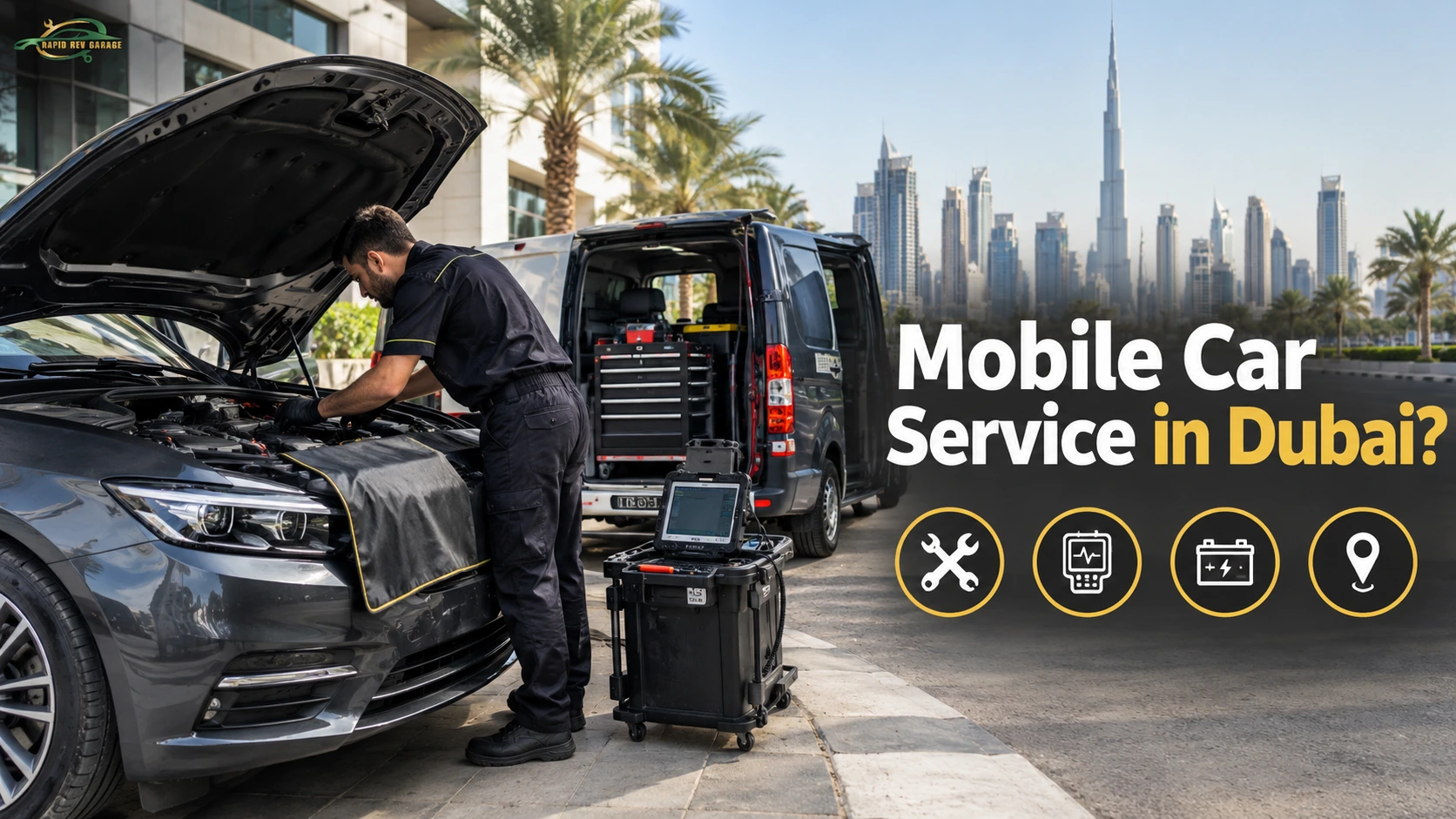
If your Brake Pedal Feel Soft while traveling around Dubai and the vehicle does not feel safe to drive, arranging professional roadside assistance may be a better option than taking the car to a workshop yourself.
Why Choose Rapid Rev Garage for Roadside Assistance?
Rapid Rev Garage provides automotive repair and roadside support in Dubai, helping drivers deal with unexpected vehicle problems without unnecessary delays.
For a braking concern, safety and accurate diagnosis should always come first. A technician can assess the vehicle, identify whether it is safe to move and recommend the appropriate repair.
Rapid Rev Garage can be a practical choice for roadside assistance, brake inspection, vehicle diagnostics or workshop support in Dubai.
For drivers searching for a garage near me, choosing a service provider that can respond to the vehicle’s actual condition is particularly important when the issue involves brakes.
Frequently Asked Questions
Why does my brake pedal suddenly feel soft?
A sudden change can be caused by air in the brake lines, a hydraulic leak, low brake fluid, a damaged brake hose or a master-cylinder problem. Sudden softness should be inspected promptly.
Is a soft brake pedal dangerous?
Yes. A soft pedal can indicate reduced hydraulic pressure or another braking-system fault. If stopping performance has changed, avoid unnecessary driving.
Can low brake fluid cause a soft pedal?
Yes. Low brake fluid can reduce hydraulic performance, but it can also indicate a leak or significant brake-component wear. Identify the cause of the low level.
Why does my pedal become firm after pumping it?
Repeatedly pumping the pedal can temporarily increase pressure when air or another hydraulic issue is present. This does not fix the underlying problem.
Can I drive to a garage with a soft brake pedal?
If braking performance is significantly reduced, the pedal reaches the floor or fluid is leaking, do not drive the vehicle. Use roadside assistance instead.
How can I find a reliable garage near me in Dubai?
Look for a workshop with qualified technicians, suitable diagnostic equipment, transparent repair estimates and the ability to handle your vehicle’s braking system correctly.
Final Call-to-Action
Don’t ignore a brake pedal that suddenly feels different. A soft pedal can be an early warning of a hydraulic or mechanical braking problem and delaying inspection can increase the safety risk.
If your Brake Pedal Feel Soft, contact Rapid Rev Garage for professional brake inspection, repair, diagnostics or roadside assistance in Dubai.
For drivers looking for a dependable garage near me, Rapid Rev Garage can help assess the problem and recommend the right repair instead of relying on guesswork.
Drive safely, address brake problems early and never wait for a small change in pedal feel to become a major braking failure.
📍 Find Us on Google Maps
Visit Rapid Rev Garage in Al Quoz, Dubai — Get Directions Now!