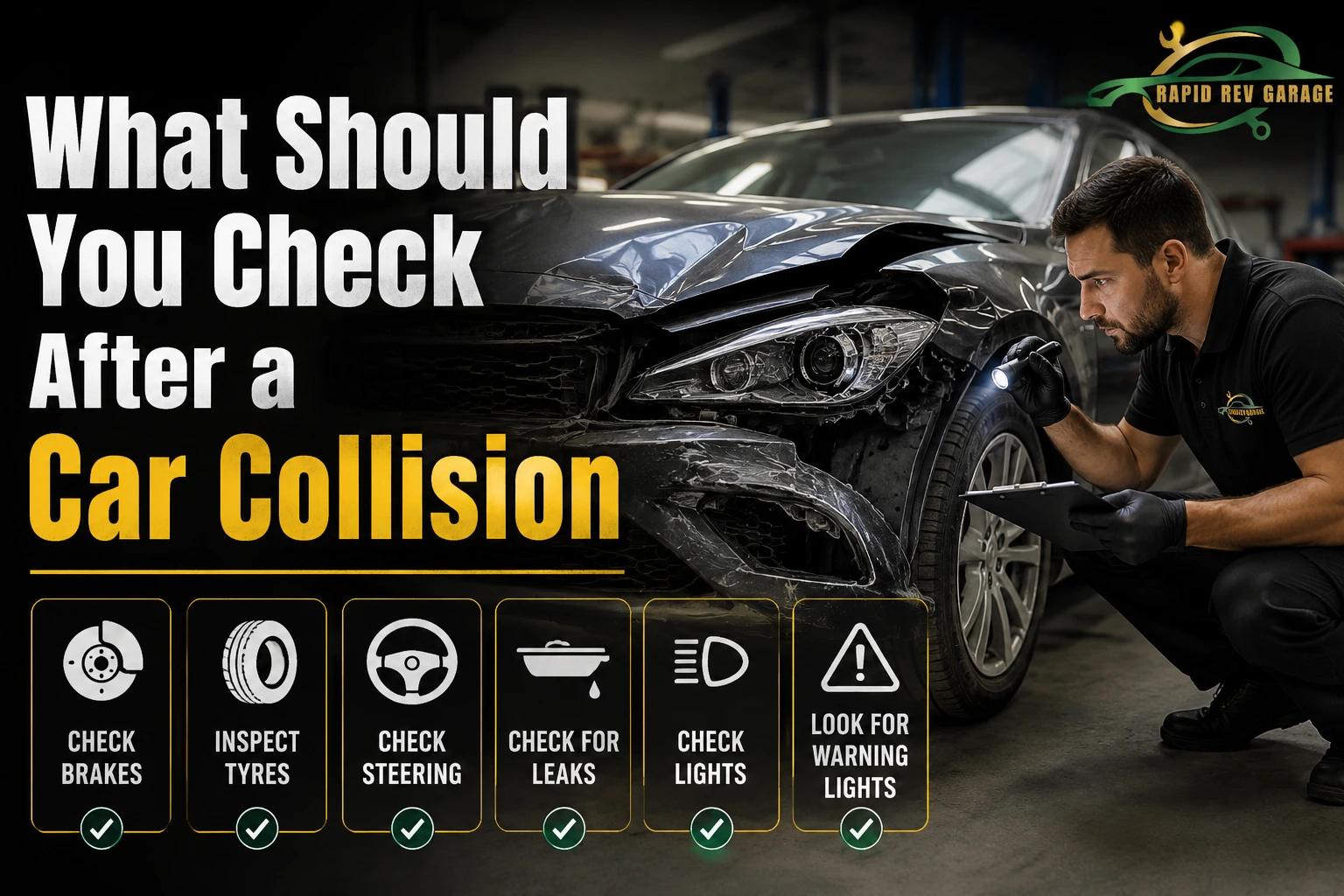
What to check after a car collision? Check the basics: tires, lights, fluid leaks, and any warning lights on the dash. Check under the car for fuel, oil, or coolant leaks. Make sure the doors shut well and that the steering feels normal. Even a low-speed collision can mask frame or airbag damage. If something seems wrong, don’t drive too far. A short check after a car collision at a local garage you trust can spot hidden damage before it becomes a bigger, more expensive repair. Rapid Rev Garage provides quick post-accident inspection for drivers all across Dubai.
Table of Contents
- Problem Overview
- Signs Your Car Needs a Closer Look
- Common Causes of Hidden Collision Damage
- Diagnostic Process
- Repair and Service Process
- Risks of Ignoring It
- Can You Continue Driving?
- Repair and Service Time
- Cost Factors
- Prevention Tips
- Dubai-Specific Advice
- Why Choose Rapid Rev Garage
- FAQs
- Related Services
- Final CTA
Why Post-Collision Damage Isn’t Always Visible
An automobile crash, even a minor one, might shake loose more than it looks from the outside. Bumpers cover sensors. The fenders hide the wiring. A little ding might be directly over a bent frame rail.
This is exactly what to look for after a collision. Not only what you can see, but what may be lurking underneath. One of the most typical reasons little accidents end up costing you in repairs weeks later is skipping this step.
Signs Your Car Needs a Closer Look
Knowing what you should check after a car collision starts with paying attention to how the car feels and sounds, not just how it looks.
Warning lights. Airbag, ABS, or check engine lights indicate a fault that requires a proper car inspection after an accident.
Fluid leaks. A puddle under the car, or a burning smell, often means a damaged line or radiator.
Uneven tire wear or pulling. If the car drifts to one side, the alignment or suspension may be bent.
Strange noises. Grinding, clunking, or rattling sounds usually mean something shifted out of place.
Doors or hood not closing right. This is a simple but telling sign of frame movement.
Steering feels off. Stiff, loose, or shaky steering is a red flag after any crash.
Airbags deployed. If airbags went off, the car needs a full vehicle safety check after a car collision before it’s driven again.
Any one of these signs is reason enough to book a collision damage inspection before your next long drive.
Common Causes of Hidden Collision Damage
Hidden damage after a crash usually comes from a few common sources.
- Impact energy travels further than the dent. Force from a hit often reaches the frame, even when the bumper takes most of the visible damage.
- Sensors sit close to the surface. Parking sensors and airbag sensors are often mounted right behind the bumper skin.
- Fluid lines run near impact zones. A cracked line may not start leaking until a few days of driving later.
- Small cracks grow with vibration. A hairline crack in a mount or bracket can widen the more the car is driven.
- Rushed post-accident checks. Skipping a proper post-accident safety inspection at the scene means small issues can be missed.
How a Collision Damage Inspection Works
A proper post-accident car inspection process usually follows these steps.
- Visual walk-around to check the body, tires, lights, and glass.
- Under-the-hood inspection for leaks, loose hoses, and belt damage.
- Under-the-car check using a lift to spot frame or exhaust damage.
- Computer scan to read fault codes from the airbags, ABS, or engine.
- Test drive at low speed to check steering, brakes, and unusual noise.
- Alignment check to confirm the wheels sit straight.
At Rapid Rev Garage, trained technicians handle this full post-crash vehicle inspection and know exactly where hidden damage likes to hide.
Step-by-Step Collision Repair Process
Once the inspection is done, the repair path depends on what we find.
- Technicians assess damaged panels for repair or replacement.
- We replace any leaking lines, hoses, or radiators.
- Technicians check and adjust suspension and steering parts.
- Technicians reset or replace airbag and sensor systems as needed.
- The car gets a wheel alignment to correct any pull or drift.
- A final road test confirms everything runs and handles normally.
For anyone dealing with car collision repair, this step-by-step approach helps ensure nothing is missed before the car goes back on the road.
Risks of Ignoring It
Skipping a proper check after a car collision carries real risk.
- A weakened frame can fail in a second collision.
- Leaking fluids can lead to engine or brake failure.
- Faulty airbag sensors may not deploy correctly next time.
- Poor alignment wears out tires faster and affects control.
- Small issues can turn into breakdowns that need roadside assistance later.
What feels like a minor bump today can become a safety issue down the road if you ignore it.
Can You Continue Driving?
It depends on what the post-accident damage inspection ent finds. If the car starts fine, no warning lights are on, and there are no leaks or steering issues, a short drive to a workshop is usually fine.
But if airbags deployed, fluids are leaking, or the steering feels wrong, it’s safer to stop. Call for a tow or a mobile car mechanic rather than pushing the car further and risking more damage or a breakdown on a busy road.
Repair and Service Time
Normally a quick look at a car after a crash takes 30-60 minutes. If repairs are needed, timing depends on the damage. Minor bumper repairs and small repairs can be done the same day. Work on frames, suspension, or panels may take 2 to 5 days, depending on parts availability.
Cost Factors
The cost of collision repair depends on a few things:
- How many parts are damaged
- Whether parts need to be ordered
- Labor time for body and mechanical work
- Paint matching and finishing work
- Whether hidden damage is found during the inspection
Getting a clear, written quote after the inspection helps avoid surprises later.
What Should You Check After a Car Collision: Comparison Table
| Area | What to Look For | Risk If Ignored | Recommended Action |
| Body and bumpers | Dents, cracks, misaligned panels | Hidden frame damage | Collision damage inspection |
| Fluids | Leaks under the car, burning smell | Engine or brake failure | Check hoses and lines immediately |
| Tires and alignment | Uneven wear, car pulling to one side | Poor handling, faster tire wear | Alignment check |
| Airbags and sensors | Warning lights, deployed airbags | Airbags may not work next time | Computer scan and reset |
| Steering and suspension | Stiff, loose, or shaky steering | Reduced control at speed | Full mechanical inspection |
How to Avoid Missing Hidden Collision Damage
While you can’t always avoid a collision, you can avoid letting hidden damage turn into a bigger problem.
- Never skip a car safety check after a car collision, even for a small bump.
- Take photos of the damage right after the accident.
- Book an inspection within a day or two, not weeks later.
- Keep an eye on warning lights and unusual noises in the days after
- Choose a workshop experienced in car collision repair, not just general service.
Post-Accident Check After a Car Collision for Dubai Drivers
Since Dubai highways are fast, even small accidents happen more often and at higher speeds than in many other places. In a low-speed crash, this means hidden damage is more likely.
Looking for a garage near me after an accident in Al Quoz or nearby? Make sure you choose a garage experienced in assessing accident damage, not just fixing things to make them look good. A test keeps you safe and helps protect your car’s value.
Trusted Collision Inspections at Rapid Rev Garage
For years, drivers around Dubai have trusted Rapid Rev Garage with their crash inspections & repairs. Our crew knows exactly what to look for after a collision, from hidden frame stress to sensor failures that aren’t immediately obvious.
Our professionals at Rapid Rev Garage don’t just do a visual check; they use the right diagnostic tools. We recommend Rapid Rev Garage for car collision repair. We also recommend getting your inspection done as soon as possible after any accident, no matter how minor, to prevent small problems from becoming big ones.
If you want an honest, thorough post-accident car check, Rapid Rev Garage is a solid choice in Al Quoz.
FAQs
Q1: What should you check first after a collision?
Start with warning lights, fluid leaks, and how the doors and steering feel. These are the fastest signs that something needs a closer look.
Q2: Is it safe to drive after a minor bump?
Often yes, if there are no warning lights, leaks, or steering issues. But it’s still worth booking a proper inspection soon after.
Q3: How long does a post-accident inspection take?
A basic check usually takes 30 to 60 minutes. Repairs take longer depending on what’s found.
Q4: Can hidden damage show up days later?
Yes. Cracked lines and loose parts can worsen with driving and vibration, sometimes showing symptoms days after the accident.
Q5: Do I need an alignment check after every accident?
If the car pulls to one side or the tires wear unevenly, yes. It’s a common but often missed step in collision repair.
Conclusion
Not sure what to check after a car collision, or scared something’s awry after a recent bump? Book your inspection with Rapid Rev Garage today and start driving confidently again. Need help now? If your automobile is not safe to drive, our roadside assistance crew is here to help.
Book your appointment on WhatsApp or find us on Google Maps.