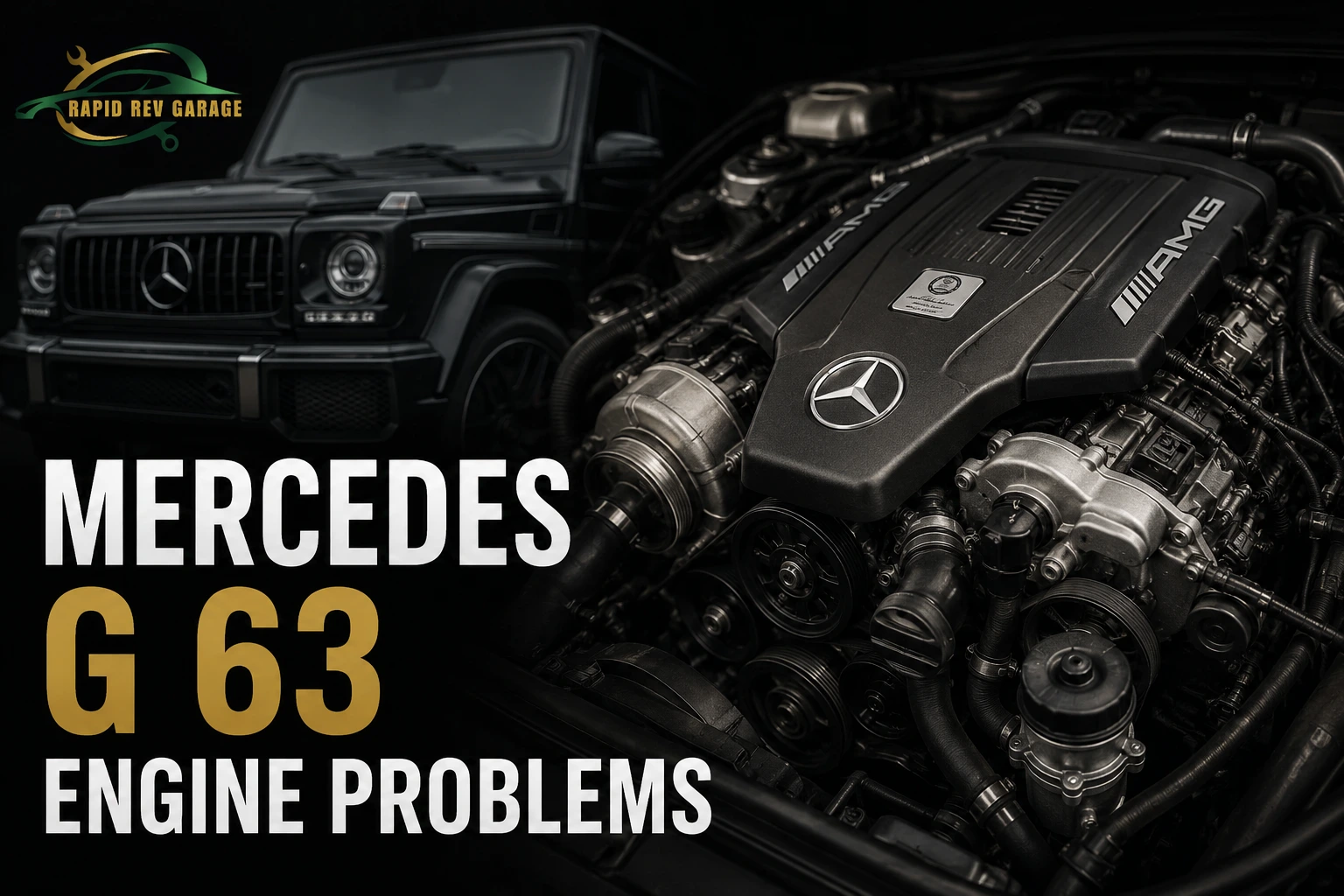
The most common Mercedes G 63 engine problem is with the M177 twin-turbo V8. Owners report oil leaks, oil separator failure, misfires, turbocharger degradation, and overheating, especially in Dubai’s heat. As the engine becomes older, oil consumption increases, and the timing chain wears down. Many of these troubles begin modestly, like a slight scent or a rough idle. If left unchecked, they can lead to significant engine repair costs. Early diagnosis at a reputable garage near me for oil changes, cooling system checks, and other issues can catch these problems before they become expensive.
Table of Contents
- Problem Overview
- Symptoms to Watch For
- Common Causes
- Diagnostic Process
- Repair and Service Process
- Risks of Ignoring It
- Can You Continue Driving?
- Repair and Service Time
- Cost Factors
- Prevention Tips
- Dubai-Specific Advice
- Why Choose Rapid Rev Garage
- FAQs
- Related Services
- Final Thoughts
A Quick Look at Mercedes G 63 Engine Problems
The G 63 uses Mercedes-AMG’s M177 4.0-liter twin-turbo V8. It’s a strong engine. But it runs hot, and it has a few known weak spots.
Most Mercedes G 63 engine problems fall into a few groups. Oil leaks. Turbocharger wear. Misfires. Overheating. Oil separator failure. Each one has its own cause, but they often show up together as the car gets older or racks up mileage.
Dubai’s climate complicates matters. Long idle times in traffic, intense heat, and dusty air stress the cooling and oil systems. That’s why we G 63 owners here tend to experience these problems earlier than owners in cooler countries.
Symptoms to Watch For
Here are the signs that point to engine trouble in a G 63:
- A burning oil smell, especially after highway driving
- Oil spots under the car or on the driveway
- Rough idle or a shaking feeling at a stop
- A check engine light that won’t turn off
- Loss of power under acceleration
- Whistling or hissing sounds from the turbo area
- Blue smoke from the exhaust
- The temperature gauge creeping up in traffic.
Any one of these on its own might be minor. A few together usually mean it’s time for a proper inspection.
Common Causes Behind Mercedes G 63 Engine Problems
Mercedes G 63 oil leak. The valve cover gaskets and oil cooler seals on the M177 harden with heat over time. Once they crack, oil seeps out slowly, often around the front of the engine.
Mercedes G 63 oil separator failure. The oil separator manages crankcase pressure. When it fails, oil gets pulled into the intake, which causes rough idling and a burning smell.
Mercedes G 63 misfire. Worn spark plugs, weak ignition coils, or a vacuum leak can all cause misfires. On a twin-turbo V8, a misfire often feels like a stumble under load.
Mercedes G 63 overheating. A weak water pump, low coolant, or a clogged radiator can push temperatures up fast, especially at low speeds in Dubai traffic.
Mercedes G 63 turbocharger problems. The M177’s turbos sit inside the V of the engine, which traps heat. Over years of use, seals wear down, and oil can start leaking into the turbo housing.
Mercedes G 63 excessive oil consumption. This usually links back to the oil separator or worn piston rings. It’s one of the more expensive Mercedes G 63 engine problems to diagnose fully.
Mercedes G 63 timing chain problems. A stretched timing chain can throw a rattling noise on cold starts. It’s less common than the other issues, but it does happen on higher-mileage cars.
How Mechanics Diagnose Mercedes G 63 Engine Problems
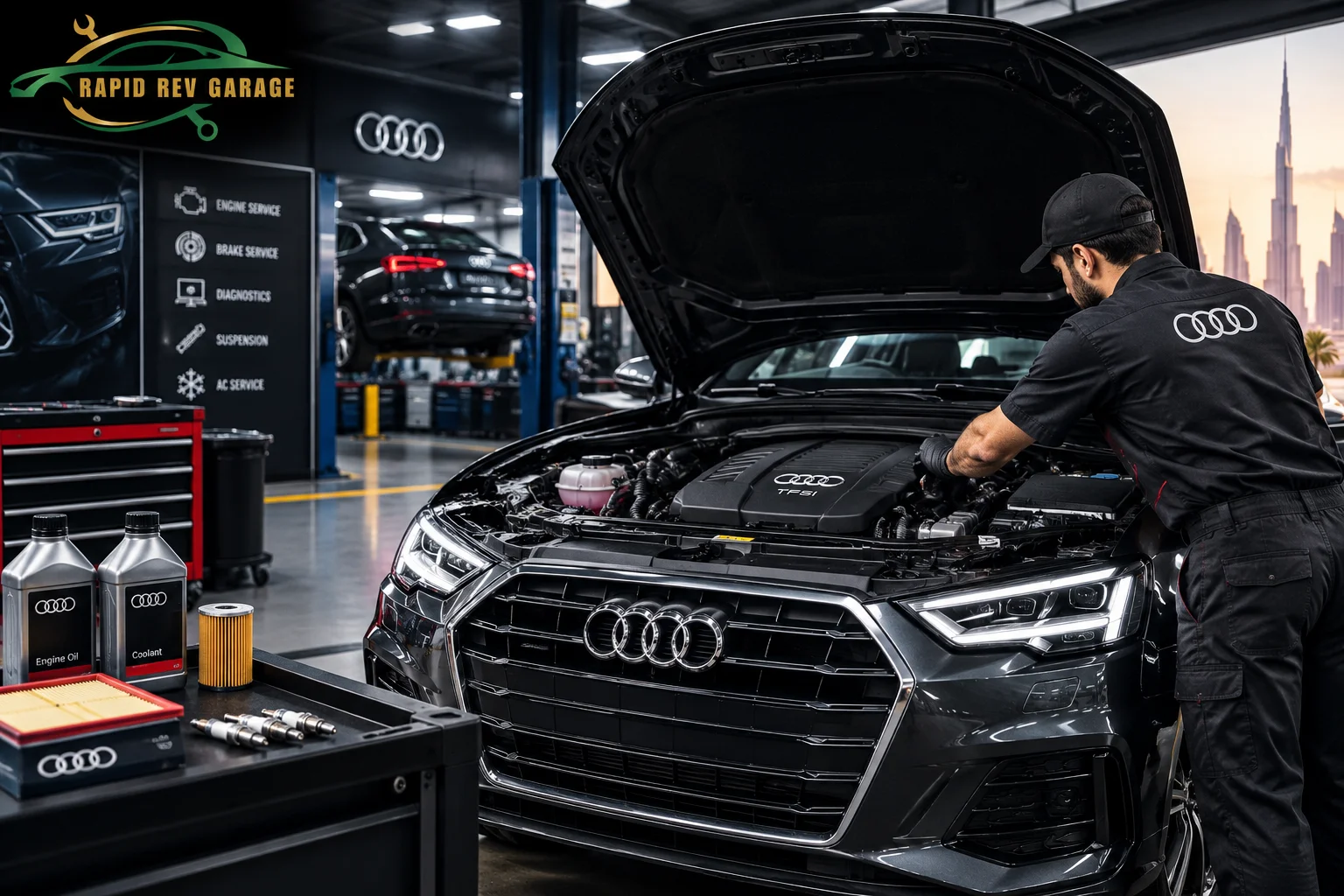
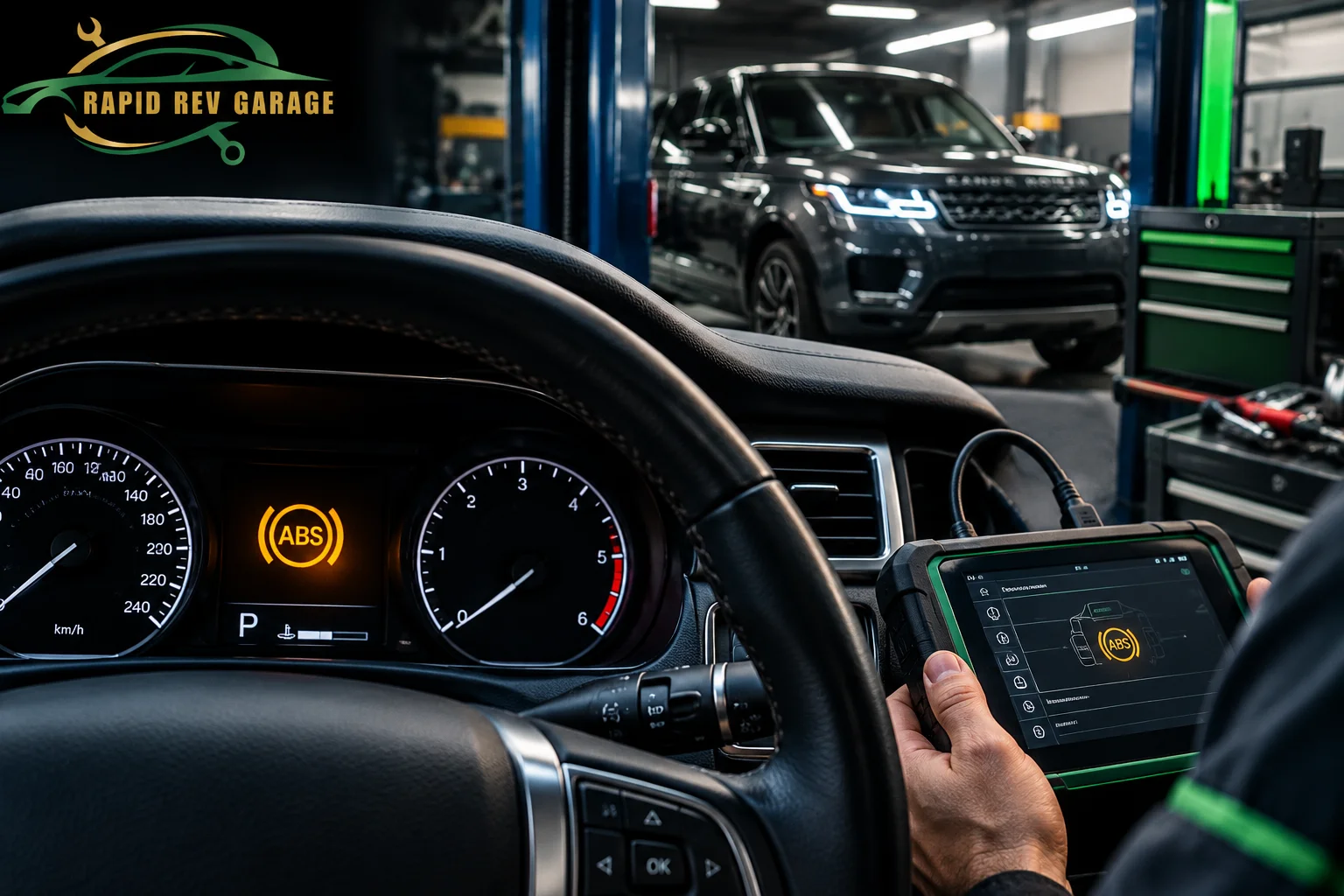
A proper diagnosis starts with a scan tool check for stored fault codes. This narrows down whether the issue is electrical, mechanical, or pressure-related.
From there, a technician will usually:
- Run a visual inspection for oil leaks around gaskets, seals, and hoses.
- Check crankcase pressure to test the oil separator.
- Test coolant levels and pressure-test the cooling system for leaks
- Inspect spark plugs and ignition coils if there’s a misfire.
- Listen for turbo whistle or rattle during a road test.
- Check oil consumption over a set mileage if levels are dropping fast.
Booking with a mobile car mechanic for an initial check can help catch warning signs early, before you even bring the car into the shop.
Repair and Service Process
Once the cause is confirmed, the repair depends on what’s found:
- Oil leaks: replace the affected gaskets or seals
- Oil separator failure: replace the separator unit
- Misfires: replace spark plugs, coils, or fix the vacuum leak
- Overheating: replace the water pump, thermostat, or flush the cooling system
- Turbocharger problems: reseal or replace the turbo unit
- Timing chain issues: replace the chain, tensioner, and guides
Some of these are quick jobs. Others, like turbo or timing chain work, take longer because the M177 sits so deep in the engine bay.
Risks of Ignoring It
Procrastinating engine repairs rarely saves money. Low oil pressure harms bearings. A little oil loss might lead to low oil pressure. A small misfire can clog a catalytic converter over time. Overheating can deform the cylinder head, and a simple fix can turn into a full rebuild.
Most Mercedes G 63 engine problems only get worse if you don’t address them.
Can You Continue Driving With These Problems?
It depends on the symptom. A faint oil smell with no warning lights might be safe for a short drive to a shop. But overheating, a flashing check engine light, or a sudden loss of power means you should stop and get help.
If you aren’t near a shop, calling roadside help is your best bet. An overheated engine, even for a few more km, can cause irreversible harm.
Repair and Service Time
Most diagnostic checks take one to two hours. Simple fixes, like a coil or spark plug swap, can be done the same day. Gasket and seal replacements usually take a full day.
Bigger jobs, like turbocharger or timing chain repair, can take two to four days. This is because the M177’s turbos and timing components sit deep in the engine, so there’s more disassembly involved.
Cost Factors for Mercedes G 63 Engine Repair
Repair costs for the G 63 depend on the part, labor time, and whether it’s OEM or aftermarket. Here’s a general breakdown for Dubai:
| Repair Type | Typical Time | Relative Cost |
| Oil leak (gasket/seal) | 1 day | Moderate |
| Oil separator replacement | 1 day | Moderate to high |
| Spark plug or coil replacement | Same day | Low to moderate |
| Cooling system repair | 1 day | Moderate |
| Turbocharger repair | 2–4 days | High |
| Timing chain replacement | 2–4 days | High |
Prices vary by workshop and the exact part needed, so get a clear quote before any work starts.
Prevention Tips for Mercedes G 63 Owners
- Follow the recommended oil change schedule and use the correct AMG-spec oil.
- Check coolant levels monthly, especially before summer.
- Don’t ignore small oil spots; get them checked early.
- Have the turbo and oil separator inspected during routine service visits in Dubai.
- Avoid long idling in extreme heat when possible.
- Use a reputable shop for AMG-specific engine repairs.
Dubai-Specific Advice for G 63 Owners
No turbocharged engine likes Dubai heat, and the G 63 is no exception. Summer temperatures strain cooling systems, while stop-start traffic on highways like as Sheikh Zayed Road leads to more idling, generating heat without airflow.
Sand and dust in areas like Al Quoz can also clog radiators faster than in cleaner climates. Speed bumps and rough parking structures also add wear to underbody components.
If you drive a G 63 in Dubai, more frequent cooling system checks and oil inspections aren’t optional extras. They’re part of keeping the car reliable in this climate.
Why Choose Rapid Rev Garage for Mercedes G 63 Engine Repair
Rapid Rev Garage works on AMG and Mercedes engines every day, so the team knows the M177’s specific weak points. That matters when you’re dealing with Mercedes G 63 engine problems, since guesswork leads to repeat visits and wasted money.
The workshop uses proper diagnostic tools built for Mercedes-AMG vehicles, not generic code readers. That means a more accurate first diagnosis.
For anyone searching for a garage near me that actually understands AMG engines, Rapid Rev Garage is a solid choice for Mercedes engine repair in Dubai. The team explains the issue in plain terms and gives a clear cost breakdown before starting any work.
FAQs
Q1: What is the most common Mercedes G 63 engine problem?
Oil leaks and oil separator failure are among the most common Mercedes G 63 engine problems, along with turbocharger wear as the car ages.
Q2: Is the M177 engine reliable?
The M177 is a strong performer, but it needs regular maintenance. Skipping oil changes or ignoring small leaks leads to bigger issues.
Q3: How much does G 63 engine repair cost in Dubai?
It depends on the issue. A gasket replacement costs far less than turbocharger or timing chain repair. Getting a diagnosis first gives you an accurate number.
Q4: Can I keep driving with a check engine light on?
It’s risky. Some codes are minor, but others point to overheating or misfires that can cause more damage the longer you drive.
Q5: How often should I service my G 63 in Dubai?
Follow the manufacturer’s schedule, but in Dubai’s climate, more frequent oil and coolant checks are a good idea, especially before and during summer.
Related Services
No turbocharged engine likes Dubai heat, and the G 63 is no exception. Summer temperatures strain cooling systems, while stop-start traffic on highways like as Sheikh Zayed Road leads to more idling, generating heat without airflow.
Final Thoughts
Mercedes G 63 engine problems are manageable when they’re caught early. Oil leaks, misfires, and turbocharger wear all have clear warning signs, and a quick inspection can save you from a much bigger repair bill down the road.
If your G 63 is showing any of these symptoms, don’t wait. Contact Rapid Rev Garage in Al Quoz, Dubai, for an honest diagnosis and expert Mercedes engine repair. Visit rapidrevgarage.com or message the team on WhatsApp to book your inspection today.