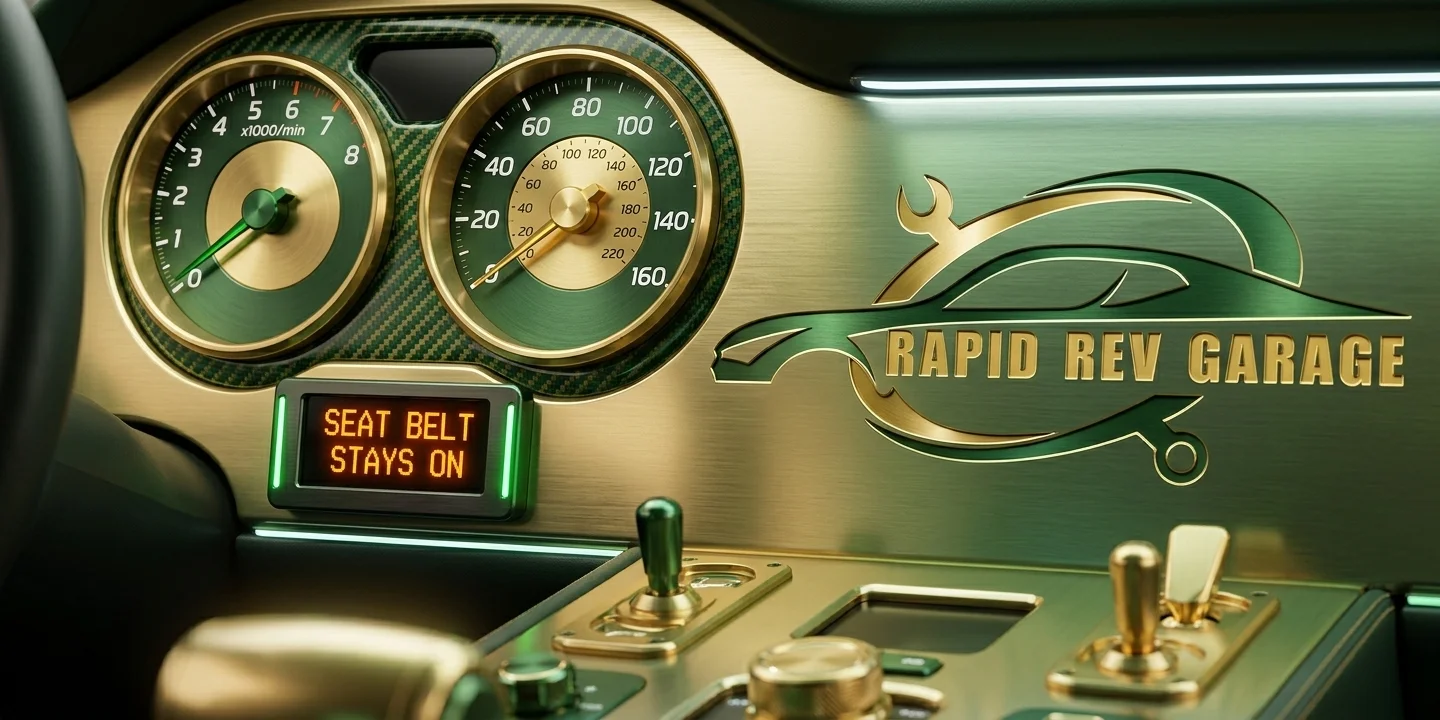
If your Seat Belt Warning Light Stays On even after you buckle up, your car may have a faulty seat belt sensor, a damaged buckle switch or a wiring problem. Sometimes, an object on the passenger seat can trigger the warning. A weak battery or an airbag system issue may also cause it. Check that the belt clicks securely into place and remove any heavy items from the seats. If the Seat Belt Warning Light Stays On, have a qualified mechanic inspect the system. Rapid Rev Garage can help Dubai drivers identify electrical faults and find the right repair.
Table of Contents
- Problem Overview: Why Does the Seat Belt Warning Light Stay On?
- Symptoms: Signs of a Seat Belt Sensor Problem
- Common Reasons of a Persistent Seat Belt Warning
- Diagnostic Process: How Mechanics Find the Fault
- Repair Process: How to Fix Seat Belt Warning Light Stays On
- Risks of Ignoring the Seat Belt Warning Light Stays On
- Can You Continue Driving While Seat Belt Warning Light Stays On?
- Repair Time: How Long Does the Fix Take?
- Cost Factors That Affect Seat Belt Repairs
- Prevention Tips for Dubai Drivers
- Dubai-Specific Advice for Seat Belt Warning Issues
- Why Choose Rapid Rev Garage for Seat Belt Warning Repairs?
- Frequently Asked Questions
- Related Services
- Final Call-to-Action
Problem Overview: Why Does the Seat Belt Warning Light Stay On?
A Seat Belt Warning Light Stays On reminds you to buckle up before driving. In most cars, the light turns off once the driver and required passengers fasten their belts.
However, a warning that stays on after you buckle up may point to a fault in the seat belt system.
The problem may be small, such as a dirty buckle or an object on the passenger seat. It may also involve a faulty sensor, damaged wiring or a restraint system issue.
Modern cars use sensors to check whether someone is sitting in a seat and whether the seat belt is fastened. These sensors send information to the car’s control system. If the signal is incorrect, the warning may stay on.
Do not ignore the problem. Your seat belt may still lock correctly, but the warning could also point to a fault that affects your car’s safety systems.
If you need a reliable garage near me in Dubai, choose a workshop that can check both the seat belt system and related electrical components.
Symptoms: Signs of a Seat Belt Sensor Problem
A faulty seat belt system can show several warning signs. Watch what happens when you fasten the belt or start the engine.
Common symptoms include:
- Warning light stays on: The dashboard shows the seat belt symbol even after you buckle up.
- Warning sound continues: Your car keeps beeping even when you’re wearing the seat belt.
- Warning appears and disappears: The light changes when you move in your seat or adjust the belt.
- Passenger seat warning: The car detects someone on the passenger seat when it is empty.
- Belt buckle feels loose: The buckle does not click firmly or release as it should.
- Other dashboard warnings appear: The airbag or restraint system warning may turn on at the same time.
These signs can help a mechanic narrow down the cause. For example, a warning that changes when the buckle moves may point to a damaged switch or loose connection.
However, the exact cause needs proper testing. Do not assume the belt is safe just because it clicks into place.
Common Causes of a Seat Belt Warning Light Stays On
Several issues can keep the Seat Belt Warning Light Stays On. Understand the possible causes can help you explain the problem to your mechanic.
1. Faulty Seat Belt Buckle Switch
The buckle contains a switch that tells the car whether the belt is fastened. If the switch fails, it may not send the correct signal.
Your seat belt may appear secure, but the dashboard may still show a warning. A mechanic can test the switch and replace it if needed.
2. Faulty Seat Occupancy Sensor
Many cars use sensors to detect passengers. These sensors help control seat belt reminders and other safety features.
A faulty sensor may report that someone is sitting in an empty seat. It can also fail to detect a passenger correctly.
Avoid pressing, pulling or removing the seat cushion to investigate the issue yourself. Some seats contain airbag components and sensitive wiring.
3. Dirt Inside the Seat Belt Buckle
Dust, crumbs and small objects can collect inside the buckle. This may stop the fastening mechanism from working correctly.
Check for visible dirt around the buckle opening. Do not pour liquid or spray cleaners inside it. If the buckle remains unreliable, ask a mechanic to inspect it.
4. Damaged or Loose Electrical Wiring
Wires under the seats can become damaged, trapped or disconnected. Moving the seat back and forth may place stress on these connections.
This can interrupt the signal between the buckle, sensors and control system.
A professional inspection can help locate the damaged wire or connector without disturbing safety equipment.
5. An Object on the Passenger Seat
A heavy bag, laptop or other item may activate the passenger occupancy sensor. Your car may then remind you to fasten the seat belt.
Remove the object and check whether the warning disappears. If it remains, the issue may involve the sensor or its wiring.
6. Airbag or Restraint System Fault
The seat belt system often works alongside the airbag system. A restraint system fault may trigger a dashboard warning.
This matters because the fault could affect how safety features work during a crash.
If the airbag warning appears with the seat belt warning, arrange a professional diagnostic check as soon as possible.
7. Electrical or Battery Problems
A weak battery or an electrical fault can sometimes cause unusual dashboard warnings. However, a seat belt warning that stays on doesn’t prove a battery problem.
A mechanic can test the battery and charging system if other symptoms are present.
Diagnostic Process: How Mechanics Find the Fault
Finding the real cause is better than replacing parts without testing them. A proper diagnosis saves time and prevents unnecessary costs.
Here is what a mechanic may check:
Step 1: Check the Seat Belt Buckle
The mechanic checks whether the buckle locks securely and releases correctly. They may also test whether the buckle switch changes its signal when the belt is fastened.
Step 2: Inspect the Passenger Seat
The mechanic checks whether bags or other objects are activating the occupancy sensor. They also look for signs of damage around the seat and its connections.
Step 3: Scan the Car’s Computer
A diagnostic scanner can help identify stored fault codes related to the seat belt, airbag or restraint system.
These codes help narrow the problem down. They don’t always identify the exact faulty part so that further testing may be needed.
Step 4: Inspect Wiring and Connectors
The mechanic checks accessible wiring for loose connections, damaged insulation or signs of wear.
Because some seat wiring connects to airbags, this work should follow the vehicle manufacturer’s safety procedures.
Step 5: Test Related Safety Systems
If the warning remains, the mechanic may test the restraint control system and related components.
This process helps confirm whether the issue comes from the buckle, sensor, wiring or another part.
How to Fix a Seat Belt Warning Light Stays On Problem
The correct repair depends on what the diagnostic tests reveal. No single fix works for every car.
Here are some common repair options.
Clean the Buckle Area Safely
If visible dirt is causing trouble, remove loose debris around the buckle opening without pushing anything inside it.
Avoid sharp tools, liquids and harsh cleaners. If the buckle does not lock or release properly, have it inspected rather than trying to repair its internal mechanism.
Replace a Faulty Buckle Switch
If the switch does not detect a fastened belt, a mechanic may need to replace the buckle assembly or the relevant component.
The replacement must suit your vehicle’s make, model and safety system.
Repair Damaged Wiring
A mechanic can repair or replace damaged wiring and connectors according to the manufacturer’s procedures.
Do not unplug yellow airbag connectors or work on restraint-system wiring yourself. These components need special care.
Repair or Replace the Occupancy Sensor
If the passenger seat sensor has failed, the mechanic will test it before deciding whether to repair or replace it.
Some vehicles require calibration or additional checks after the repair.
Diagnose the Airbag System
If the Seat Belt Warning Light Stays On relates to the airbag or restraint system, the mechanic must identify and correct the underlying fault.
Simply clearing a fault code is not a proper repair if the problem remains.
After the repair, the mechanic should retest the system and confirm that the warning behaves as intended.
Risks of Ignoring a Seat Belt Warning Light Stays On
A persistent Seat Belt Warning Light Stays On may seem like a minor dashboard issue, but it can hide a safety problem.
Here is why you should take it seriously:
- Reduced safety: A faulty buckle or restraint component may affect how the system works in a crash.
- Possible airbag problems: Some seat belt and airbag functions work together. A related fault may affect their operation.
- Constant distractions: Repeated beeping can take your attention away from traffic.
- More difficult diagnosis later: Delaying an inspection may allow an electrical issue to worsen.
- Unnecessary repair costs: Replacing parts without finding the original fault can waste money.
The warning does not always mean the seat belt itself has failed. However, it is important to confirm that the belt and related safety systems work correctly.
Can You Continue Driving With the Warning Light On?
It depends on the cause. If the warning stays on despite a securely fastened belt, you should arrange an inspection as soon as possible.
Before moving the car, check that your seat belt clicks into place, fits correctly and releases normally. Make sure every passenger wears their belt.
If the buckle will not lock, the belt is damaged or an airbag warning appears, do not assume the system is safe. Arrange professional assistance and avoid driving the affected vehicle until it has been checked.
If you are stranded or cannot safely continue your journey, roadside assistance may help you get the car to a suitable workshop.
Remember, a warning light that turns off after restarting the engine does not necessarily mean the fault has been fixed.
Repair Time: How Long Does a Seat Belt Warning Repair Take?
Repair time depends on the faulty component and how easy it is to access.
- Basic inspection: A simple visual check may take a few minutes.
- Diagnostic scan: Initial scanning and testing may take around 30–60 minutes.
- Buckle switch replacement: This may take about 1–2 hours, depending on the vehicle.
- Wiring repair: Minor wiring work may take a few hours. Complex faults can take longer.
- Occupancy sensor repair: Some repairs can be completed within a few hours, while others may require extra parts or calibration.
- Airbag system diagnosis: Complex electrical faults may require additional testing and more workshop time.
These are general estimates, not guaranteed times. The vehicle model, parts availability and fault location can affect the final repair time.
Cost Factors: What Affects Seat Belt Warning Light Repair Prices?
Cost depends on the failed part and the work needed to fix it.
Vehicle make and model: Luxury cars and newer vehicles may use more complex safety systems or special replacement parts.
Type of fault: Cleaning a buckle area may cost less than replacing a sensor or repairing damaged wiring.
Diagnostic work: Some problems are easy to identify, while others need advanced scanning and electrical tests.
Parts availability: The price may change depending on whether the correct component is available locally.
Calibration requirements: Certain repairs may need additional testing or calibration to confirm that the safety system works properly.
Ask for a diagnosis and repair estimate before approving the work. This helps you understand what needs fixing and why.
Prevention Tips: How to Avoid Future Seat Belt Warning Problems
You cannot prevent every sensor or electrical failure, but simple habits can reduce the risk of trouble.
- Keep the area around each seat belt buckle free from crumbs and debris.
- Avoid spilling drinks on the seats and buckles.
- Do not place heavy objects on passenger seats when you don’t need them.
- Move seats carefully to avoid trapping or pulling wires.
- Never force a buckle that feels stuck or does not release properly.
- Have damaged or frayed seat belts inspected promptly.
- Do not ignore repeated seat belt or airbag warnings.
- Follow the manufacturer’s maintenance advice for your vehicle.
If you notice the warning appearing and disappearing, have it checked before the problem becomes harder to diagnose.
Dubai-Specific Advice for Seat Belt Warning Problems
Dubai’s hot weather can place extra stress on vehicle interiors and electrical components. Cabin temperatures can rise quickly when a car is parked in direct sunlight.
Heat does not automatically cause a seat belt sensor failure. However, an existing wiring or electrical issue may become more noticeable over time.
Dust can also collect around the seats and buckle openings. Keeping the interior clean may help prevent small objects from interfering with the fastening mechanism.
For Dubai drivers, these simple steps can help:
- Park in shaded or covered areas when possible.
- Keep drinks away from seat belt buckles and electrical controls.
- Check warning lights before starting a long journey.
- Arrange an inspection if a warning appears repeatedly.
- Choose a garage that can test electrical and restraint-system faults.
If you need roadside assistance in Dubai, Rapid Rev Garage in the Al Quoz area can help you arrange vehicle inspection and repair. If the car is unsafe to drive, ask about roadside support instead of risking a journey.
Why Choose Rapid Rev Garage for Seat Belt Warning Repairs?
A seat belt warning needs more than a quick reset. Find and fix the real fault so you can drive with more confidence.
Rapid Rev Garage serves drivers in Dubai and the Al Quoz area with vehicle inspection and repair services.
Here is what to look for when choosing a workshop for this problem:
- Proper fault diagnosis: Check the buckle, sensors, wiring and related warning codes.
- Clear repair advice: Understand what has failed before agreeing to a repair.
- Suitable replacement parts: Use components that match the vehicle’s specifications.
- Safety-focused repairs: Follow the correct procedures when working around airbag and restraint systems.
- Further assistance: Ask about roadside assistance if you can’t drive safely.
Rapid Rev Garage can help you identify the next step when a seat belt warning refuses to turn off. Contact the team to discuss your symptoms and arrange an inspection.
Frequently Asked Questions
1. Why does my seat belt warning light stay on when I am buckled in?
Common causes include a faulty buckle switch, a damaged occupancy sensor, loose wiring or a related restraint-system fault. A mechanic can test the system to find the exact cause.
2. Can a heavy bag make the seat belt warning light come on?
Yes. A heavy bag on the passenger seat may activate the occupancy sensor. Remove the bag and check whether the warning disappears. If it stays on, arrange an inspection.
3. Is it safe to drive with the seat belt warning light on?
The Seat Belt Warning Light Stays On may indicate a fault in the seat belt or restraint system. Make sure your belt locks correctly and arrange a prompt inspection. If the buckle fails or an airbag warning appears, do not assume the system is safe.
4. How much does it cost to fix a seat belt warning light in Dubai?
The cost depends on the cause. A simple issue may be inexpensive to resolve. At the same time, a faulty sensor, damaged wiring or restraint-system repair may cost more. Request a diagnosis and estimate before approving repairs.
5. Can I reset the seat belt warning light myself?
Some warnings may clear after you resolve the underlying issue. However, resetting the light without fixing the fault is not a safe solution. Have a qualified mechanic check persistent warnings.
Related Services
If your car has a persistent Seat Belt Warning Light Stays On, these services may also be useful:
- Car electrical diagnosis
- Car computer diagnostic scanning
- Airbag warning light inspection
- Battery and charging system testing
- Seat belt buckle inspection
- General car inspection and maintenance
- Roadside assistance in Dubai
Choose the service based on symptoms and diagnostic results, not on replacing parts without confirmation.
Final Call-to-Action: Get Your Seat Belt Warning Checked
Don’t ignore a Seat Belt Warning Light Stays On after you buckle up. The cause may be a simple sensor issue, but it could also involve an important safety component.
Check that your belt locks securely, remove any objects from the passenger seat and have a professional inspect it if the warning remains.
Contact Rapid Rev Garage in Al Quoz, Dubai, to discuss the problem and find out which checks your car may need. If the vehicle is not safe to drive, ask about roadside assistance.
Find our Location in Dubai: https://maps.app.goo.gl/wjK13vovXTKx5SsH8