You may be able to drive a short distance with the ABS warning light on, but you should proceed with caution. The warning means your anti-lock braking system may not work properly. Your regular brakes may still work, but the wheels could lock during hard braking. This can make steering harder on wet or slippery roads. If the red brake warning light also appears, the brake pedal feels soft or braking becomes weak, stop in a safe place. Contact a qualified mechanic or roadside assistance. A proper inspection can find the fault and help restore safe braking.
Table of Contents
- Problem Overview: What Does the ABS Warning Light Mean?
- Symptoms: Signs Your ABS May Have a Fault
- Common Causes: Why Does the ABS Light Turn On?
- Diagnostic Process: How Mechanics Check the ABS
- Repair Process: How to Fix an ABS Fault
- Risks of Ignoring the ABS Warning
- Can You Continue Driving With the ABS Light On?
- Repair Time: How Long Does ABS Repair Take?
- Cost Factors: What Affects ABS Repair Costs?
- Prevention Tips: How to Keep Your Braking System Safe
- Dubai-Specific Advice for ABS Problems
- Why Choose Rapid Rev Garage for ABS Repair and Roadside Assistance?
- Frequently Asked Questions
- Related Services
- Final Call-to-Action
Problem Overview: What Does the ABS Warning Light Mean?
The anti-lock braking system or ABS, helps stop your wheels from locking during hard braking. It allows you to maintain better steering control while slowing down.
When the ABS warning light stays on, the system may have detected a fault. Your normal brakes may still work, but the anti-lock feature may be disabled.
The ABS warning can appear after you start the car. This is normal for a short time while the vehicle checks its systems. However, the light should go out if everything works correctly.
If it stays on while driving, the car needs an inspection. The cause could be a faulty wheel speed sensor, damaged wiring, a low battery voltage or a problem with the ABS control unit.
For Dubai drivers, this warning deserves extra attention. Sudden stops can happen in heavy traffic and hot weather can put extra stress on vehicle parts.
Rapid Rev Garage can help drivers arrange a suitable inspection when a braking system warning appears. Do not ignore the light just because the brakes seem normal.
Symptoms: Signs Your ABS May Have a Fault
The ABS warning light is the clearest sign of a possible problem. However, other symptoms may also appear.
1. ABS Warning Light Stays On
The light may remain on after you start the engine. It may also turn on while you drive.
This usually means the system has stored a fault. A diagnostic scan can help identify the issue.
2. Red Brake Warning Light Appears
If the red brake warning light appears with the ABS light, the problem may be more serious. It could relate to low brake fluid or another brake system fault.
Stop in a safe place if you notice weak braking or an unusual pedal feel. Don’t keep driving until a mechanic has checked it.
3. Brake Pedal Feels Different
If you may notice that the brake pedal feels soft, sinks too far or behaves differently from normal.
These symptoms can point to a problem beyond the ABS. Arrange an urgent inspection.
4. Traction Control Warning Appears
Some cars use shared sensors and systems for ABS, traction control and stability control.
A fault in one part may trigger several dashboard warnings. This can reduce the car’s ability to manage wheel slip.
5. Braking Feels Less Controlled
You may find it harder to steer during hard braking, especially on wet or loose surfaces.
Do not test the brakes with sudden stops on a public road. Have a qualified mechanic check the system.
Common Causes: Why Does the ABS Light Turn On?
Several faults can cause the ABS light to appear. The warning alone does not tell you which part has failed.
Faulty Wheel Speed Sensor
Wheel speed sensors measure how fast each wheel turns. The ABS uses this information to help prevent wheel lock during braking.
A sensor may fail due to wear, dirt, damage or corrosion. Damaged sensor wiring can also cause incorrect readings.
Damaged ABS Wiring
The wiring and connectors carry signals between the sensors and the control unit.
Loose connections, damaged wires or corrosion may interrupt these signals. A mechanic should inspect the circuit before replacing parts.
Low Battery Voltage
A weak battery or charging system fault can affect electronic systems. This may trigger an ABS warning, especially when starting the vehicle.
A battery and charging system test can help rule out voltage problems.
Faulty ABS Control Module
The ABS control module processes sensor signals and controls the system. If it fails, the warning light may remain on.
This fault needs proper testing. Replacing the module without confirming the cause can lead to unnecessary costs.
Damaged ABS Tone Ring
The tone ring helps the wheel speed sensor read wheel movement. Dirt, cracks, rust or damage can affect the signal.
The mechanic may need to inspect the ring, sensor and nearby parts to find the fault.
Low Brake Fluid or Other Brake Problems
Low brake fluid may trigger a brake warning and can point to a leak or worn components. It does not always mean the ABS itself has failed.
If the fluid is low, you must find the cause. Simply topping it up may hide a more serious problem.
Diagnostic Process: How Mechanics Check the ABS
A proper diagnosis helps avoid guesswork and unnecessary part replacement.
A mechanic may carry out these checks:
- Scan the car for ABS fault codes.
- Read wheel speed sensor data.
- Inspect sensor wiring and electrical connectors.
- Check the battery and charging system.
- Inspect the tone rings and related wheel parts.
- Check brake fluid and look for leaks.
- Test the ABS control unit if other checks do not find the cause.
The exact process depends on your vehicle’s make and model.
If you search for a garage near me in Dubai, choose a workshop with suitable diagnostic equipment and experience with braking systems. The mechanic should explain the fault and recommend repairs before work begins.
Repair Process: How to Fix an ABS Fault
The correct repair depends on what caused the warning light.
Step 1: Scan the ABS System
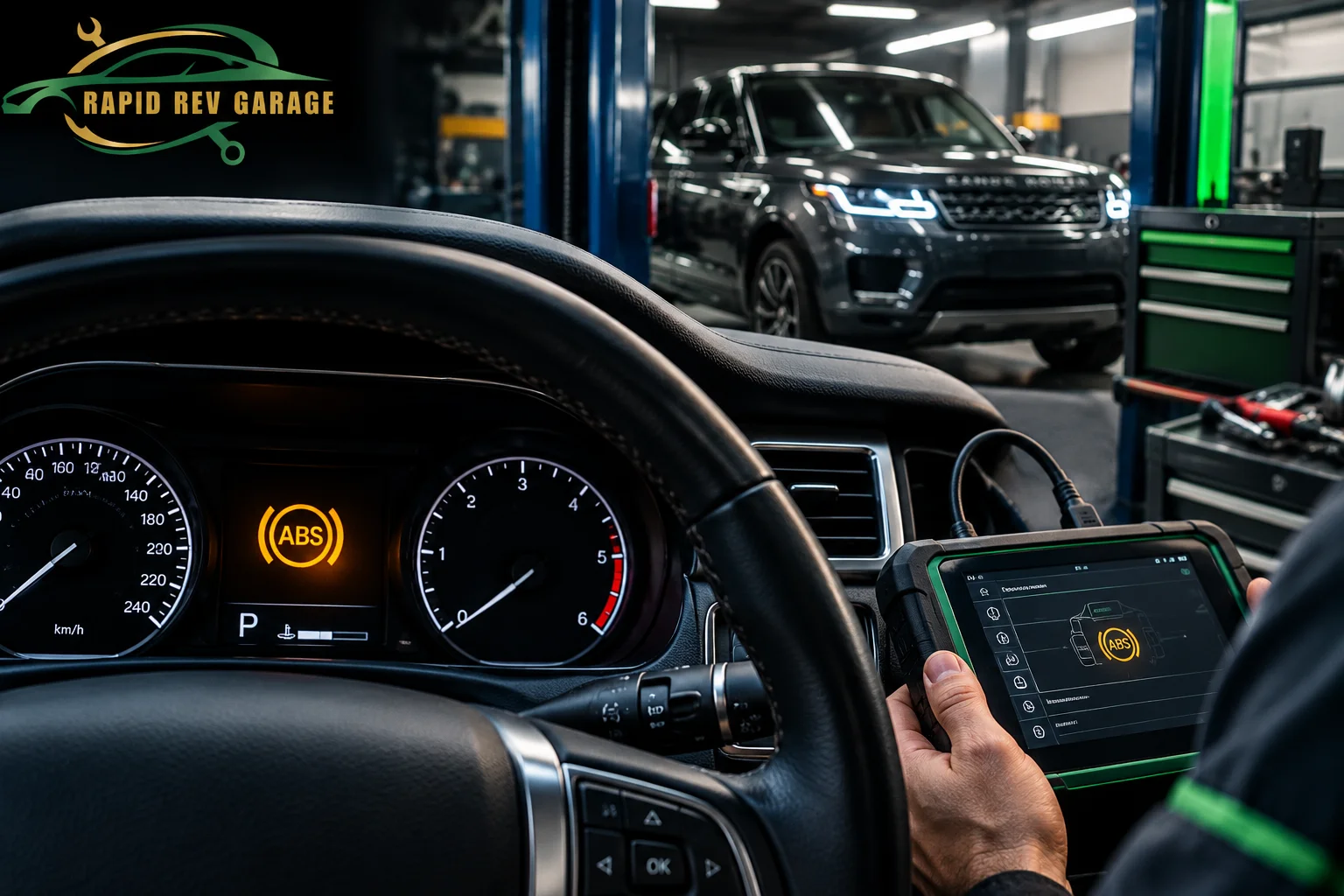
The mechanic uses a suitable diagnostic tool to read fault codes. These codes help narrow down the possible cause.
Step 2: Inspect the Faulty Area
The mechanic checks the related sensor, wiring, connectors and other parts. Further tests may be needed before confirming the fault.
Step 3: Repair or Replace Damaged Parts
The repair may involve replacing a wheel speed sensor, fixing damaged wiring, cleaning a tone ring or repairing another faulty component.
A failed control module may need specialist repair or replacement.
Step 4: Check the Brake System
The mechanic checks the brake fluid, lines and related components if needed. Any separate brake fault must also be repaired.
Step 5: Clear Codes and Test the System
After the repair, the mechanic clears fault codes and checks whether the warning returns. Test the ABS using the correct procedure for that vehicle.
Do not rely only on the light going out. The underlying fault must be resolved.
Risks of Ignoring the ABS Warning
Ignoring the warning can leave you without an important safety feature.
Here are the main risks:
- Wheel lock during hard braking: The wheels may lock if the ABS is not working.
- Reduced steering control: Locked wheels can make it harder to steer around an obstacle.
- Longer stopping distances in some conditions: ABS helps maintain control, but it does not always shorten stopping distances on every surface.
- Loss of related safety features: Some cars may also limit traction control or electronic stability control.
- Higher repair costs: A small electrical fault may become more difficult to diagnose if other problems develop.
The ABS warning does not always mean your regular brakes have failed. However, don’t assume the vehicle is fully safe without an inspection.
Can You Continue Driving With the ABS Light On?
You may be able to drive a short distance if the ABS light is the only warning, the brake pedal feels normal and the brakes respond as expected. However, that doesn’t mean driving is risk-free.
Use these safety steps:
- Slow down and leave more space between your car and the vehicle ahead.
- Avoid sudden braking and sharp turns.
- Avoid wet, sandy or slippery roads when possible.
- Drive only as far as needed to reach a safe place or repair facility.
- Arrange professional help if the warning stays on.
Stop driving and seek assistance if:
- The red brake warning light also appears.
- The brake pedal feels soft or sinks unusually far.
- The brakes feel weak or the car pulls to one side.
- You hear unusual grinding or notice a fluid leak.
- You cannot control the vehicle safely.
If you are unsure whether the car is safe to move, choose roadside assistance instead of taking a risk.
Repair Time: How Long Does ABS Repair Take?
Repair time depends on the fault and how easy it is to access the affected part.
A diagnostic scan may take around 30–60 minutes. A simple sensor replacement may take one to a few hours, depending on the vehicle.
Wiring faults can take longer because the mechanic must trace the circuit. Control module repairs may take longer still, especially if special parts or programming are required.
These are general estimates, not guaranteed times. A workshop can provide a better estimate after testing your car.
Cost Factors: What Affects ABS Repair Costs?
ABS repair costs vary by vehicle and fault. Several factors determine the final price.
Vehicle make and model: Some cars have sensors and modules that cost more than others.
Type of fault: A damaged wire may cost less to repair than a failed control module.
Parts needed: Sensor, wiring, tone ring and module prices can vary.
Labor time: Some components are difficult to access and take longer to replace.
Diagnostic work: Electrical faults may require extra testing to find the cause.
Additional brake repairs: Low fluid, leaks or worn brake parts may need separate attention.
Ask for a clear estimate before approving repairs. A proper diagnosis can help prevent unnecessary spending.
Prevention Tips: How to Keep Your Braking System Safe
You cannot prevent every ABS fault, but regular care can reduce the chance of problems.
Keep Up With Brake Servicing
Have your brakes checked at the recommended service intervals. If a warning appears, ask the mechanic to inspect the sensors and wiring.
Check for Warning Lights
Watch the dashboard when you start the car. If the ABS light stays on, arrange a diagnostic check.
Fix Electrical Problems Early
A weak battery or charging fault may affect vehicle electronics. Have repeated electrical warnings checked rather than ignoring them.
Avoid Delaying Brake Repairs
Do not ignore low brake fluid, unusual pedal movement or changes in braking performance. These signs need prompt attention.
Use Suitable Replacement Parts
Use parts that meet your vehicle’s requirements. Correct fit and compatibility help the ABS work as intended.
Dubai-Specific Advice: Driving Safely With an ABS Warning
Dubai’s roads can involve fast traffic, sudden stops, construction areas and dusty or sandy surfaces. These conditions make good braking control important.
If the ABS light appears:
- Leave extra space between your vehicle and others.
- Reduce speed and avoid harsh braking.
- Be cautious on sandy roads and during rain.
- Avoid long journeys until a mechanic checks the fault.
- Keep your vehicle’s routine brake service up to date.
High temperatures can also affect batteries and electrical components. If the ABS warning appears with other electrical warnings, ask for a full system check.
If the car shows signs of brake failure, do not drive it to a garage. Contact roadside assistance and explain the warning lights and braking symptoms.
Why Choose Rapid Rev Garage for ABS Repair and Roadside Assistance?
A warning light can be worrying, especially when you rely on your car for daily travel in Dubai. The first step is to find the cause instead of guessing which part needs replacement.
Rapid Rev Garage can help you arrange vehicle inspection and repair support for braking and electrical concerns. A suitable diagnostic check can help identify the fault and guide the next steps.
When choosing a garage, look for:
- Proper ABS diagnostic equipment.
- Careful checks of sensors and wiring.
- Clear explanations of the fault.
- A repair estimate before work begins.
- Final checks after the repair.
If the brakes feel unsafe or the red brake warning light appears, ask about roadside assistance and vehicle recovery. Do not risk driving a car that may not stop safely.
For Dubai drivers, Rapid Rev Garage is a useful point of contact when an ABS warning needs attention or the vehicle requires recovery.
Frequently Asked Questions
1. Is it safe to drive with the ABS warning light on?
You may be able to drive a short distance if the normal brakes work and no other warning appears. However, the anti-lock feature may not work. Drive cautiously and have it inspected soon.
2. Does the ABS warning mean my brakes have failed?
Not always. Your regular brakes may still work, but the ABS may be disabled. If the red brake warning light appears or braking feels different, stop safely and seek professional help.
3. What is the most common cause of an ABS warning?
A faulty wheel speed sensor is a main reason. Damaged wiring, low battery voltage and control module faults can also trigger the warning. A diagnostic scan helps identify the actual problem.
4. How much does ABS repair cost in Dubai?
The price depends on your car, the faulty part and labor time. A sensor repair may cost less than replacing a control module. Request an inspection and quote before approving the work.
5. Should I call roadside assistance if my ABS light comes on?
Call roadside assistance if the brakes feel weak, the pedal behaves unusually, a red brake warning appears or you are unsure whether the car is safe to drive. Recovery is safer than risking a serious braking problem.
Related Services
If your ABS warning light stays on, you may also need:
- ABS diagnostics and fault code scanning
- Wheel speed sensor inspection and replacement
- Car electrical repair
- Brake pad and disc inspection
- Brake fluid checks and replacement
- Brake system leak inspection
- Battery testing and replacement
- Traction control diagnostics
- Roadside assistance and car recovery
A mechanic can recommend the right service after checking the vehicle.
Final Call-to-Action: Get Your ABS Warning Checked Today
Your ABS warning light means your car needs attention. Even if the regular brakes seem normal, the anti-lock system may not protect you during hard braking.
Don’t wait until the problem becomes urgent. Arrange a diagnostic check and have the fault repaired before relying on your car for daily journeys.
Contact Rapid Rev Garage for help with your braking system concerns. If your brakes feel unsafe, stop in a safe place and arrange roadside assistance rather than continuing to drive.
Rapid Rev Garage Location: https://maps.app.goo.gl/wjK13vovXTKx5SsH8