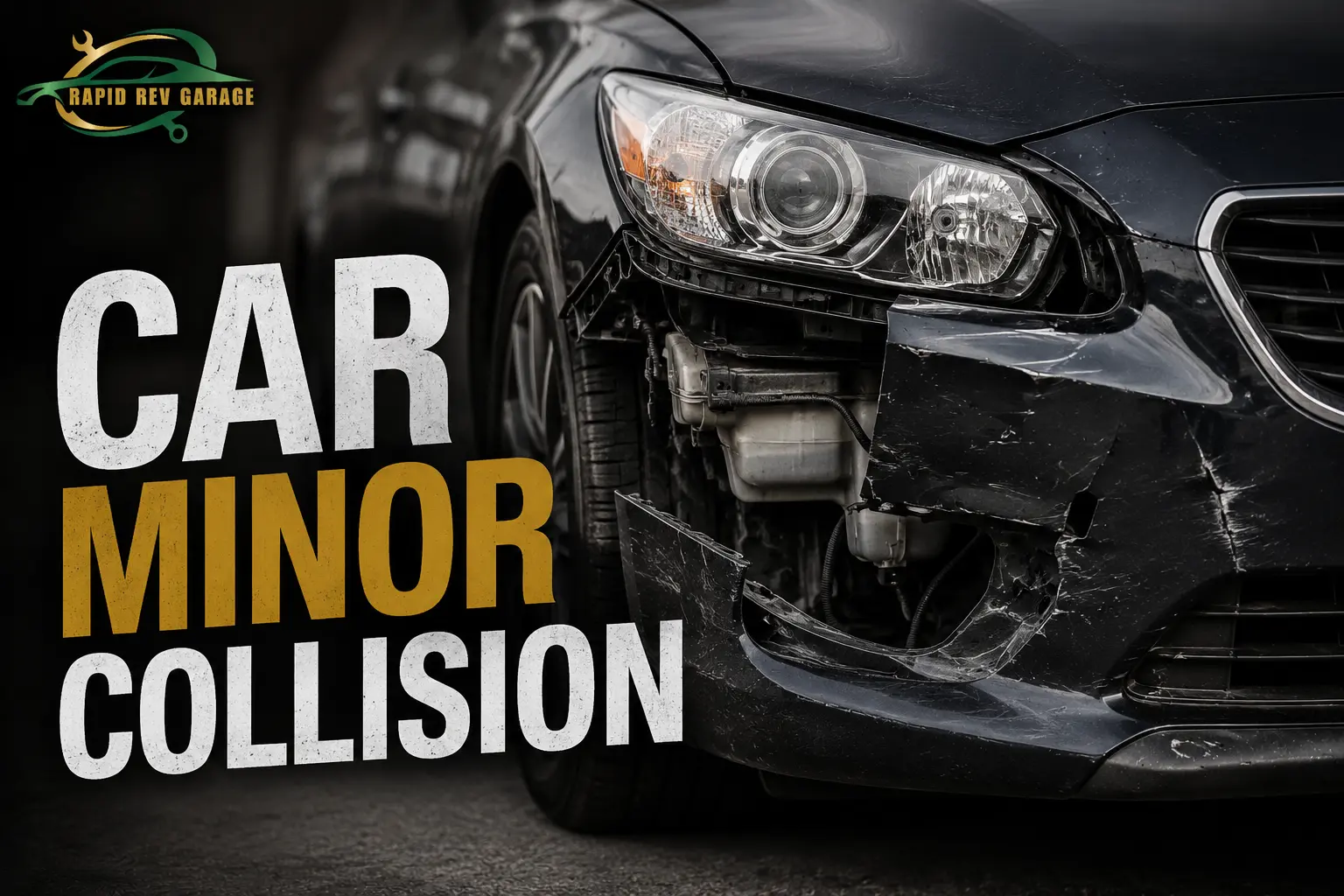
A minor collision can cause unseen damage. Even a small bump can crack mounting points, knock ADAS sensors out of alignment, or start a slow fluid leak. Your car may look OK on the outside. But the frame, brackets, and electronics underneath can still get damaged. That is why every minor accident after a collision requires a complete car inspection, not just a glance. Don’t ignore hidden damage after a car accident, or you’ll pay more for repairs later. Your trusted shop near me, like Rapid Rev Garage, checks the parts you can’t see before giving your car the green light to drive.
Table of Contents
- What Is a Minor Collision and Why Hidden Damage Happens
- Signs of Hidden Damage After a Small Accident
- Common Causes of Internal Car Damage
- How We Diagnose Hidden Damage After an Impact
- The Repair Process for Collision Damage
- Risks of Ignoring Hidden Damage After a Car Accident
- Can You Keep Driving After a Small Bump?
- How Long Does Collision Repair Take?
- Cost Factors for Car Accident Repair
- Prevention Tips to Reduce Accident Damage
- Dubai-Specific Advice for Accident Repair
- Why Choose Rapid Rev Garage for Bumper Repair
- FAQs
- Related Services
- Conclusion
What Is a Minor Collision and Why Hidden Damage Happens
A little collision is a bump, tap, or scuff at low speed. Think parking lot dents, rear-end taps at a red light, or a curb scrape. The damage looks minimal from the outside. But automobiles are divided. Behind the plastic bumper cover is a foam absorber, followed by a steel or aluminum bar, and finally mounting brackets bolted to the frame.
A small hit can break through all these layers. The shell can bounce back and look like it did before. At the same time, the bracket behind it might break. This is why secret damage often shows up after an accident. You can’t see the damage because it’s hidden.
The traffic in Dubai makes this worse. Stop-and-go traffic and tight parking make small hits common. A bad habit is skipping inspections because it “looks fine.”
Signs of Hidden Damage After a Small Accident
Some signs show up right away. Others take days or weeks to appear. Watch for these after any low-speed bump.
- A steering wheel that pulls slightly to one side
- New rattles or clunks over speed bumps
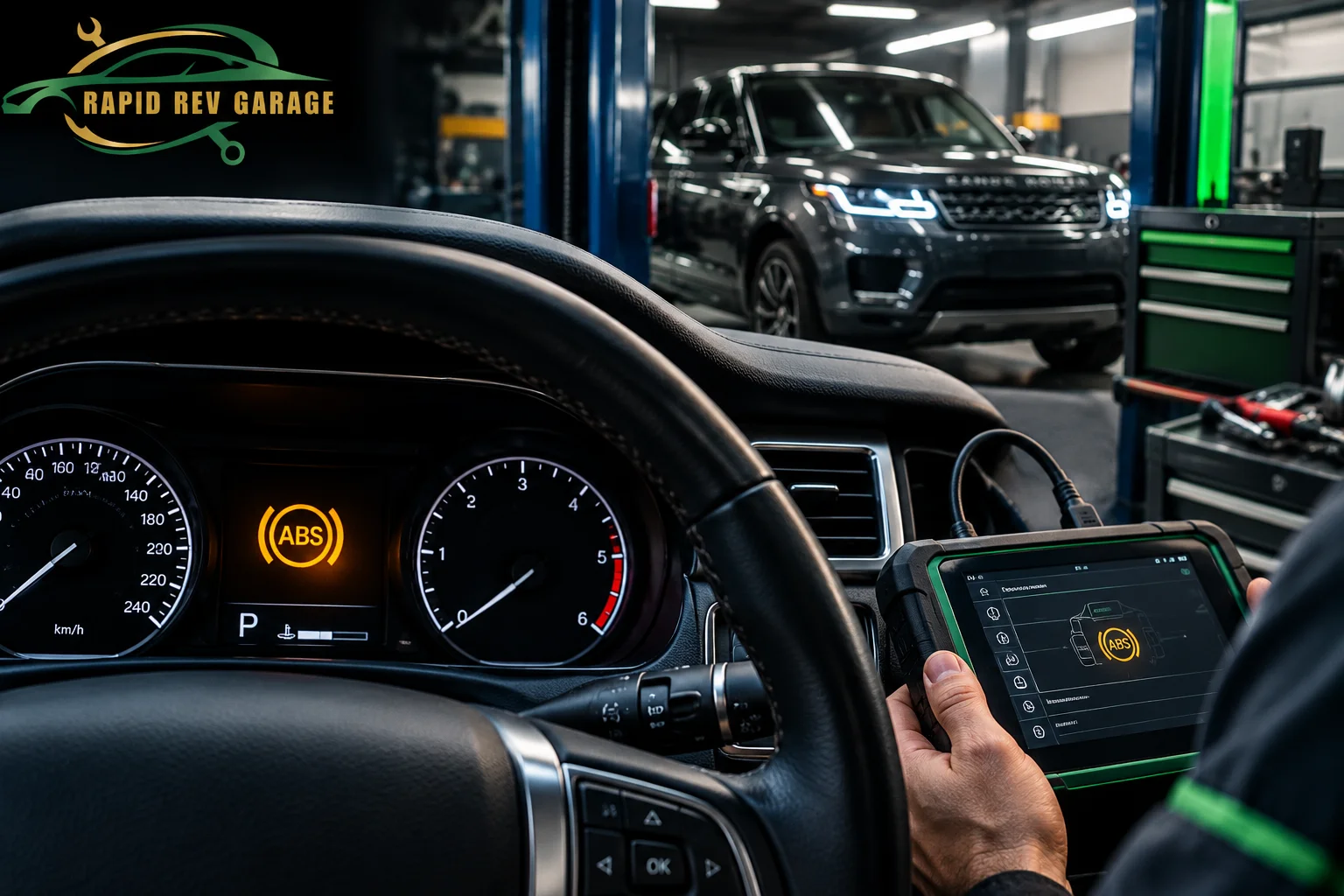
- Warning lights on your dashboard, especially for airbags or safety sensors
- Uneven tire wear starting a few weeks later
- A faint smell of coolant or fuel
- Doors or the trunk that no longer close smoothly
- Cruise control or lane-assist features acting strangely.
Any one of these points to hidden damage after a car accident. Don’t wait for more than one sign. A single symptom is reason enough for a check.
Common Causes of Internal Car Damage
Hidden damage doesn’t come from nowhere. It has clear causes rooted in how modern cars absorb impact.
Crumple zone compression. Cars are designed to absorb shock by folding slightly in a crash. Even a minor collision can compress this zone a little. The metal doesn’t always spring back fully.
Sensor misalignment. Bumpers today hide parking sensors and carry real ADAS sensor damage risk. A bump as small as five km/h can shift a sensor’s angle. The sensor still works. It just reads distances wrong.
Cracked mounting points. Often, plastic or thin metal brackets hold the bumper, radiator, or headlights in place. Under stress, these break without a dent visible from the front.
Fluid line stress. Radiator hoses and AC lines sit close to the front of the car. A hard bump can stretch or pinch these lines. A slow fluid leak after collision often follows.
Underbody impact. Hitting a curb or speed bump hard can twist parts of the underbody damage zone, including the subframe and exhaust mounts.
How We Diagnose Hidden Damage After an Impact
At our workshop, every accident check starts the same way. We never rely on a visual scan alone.
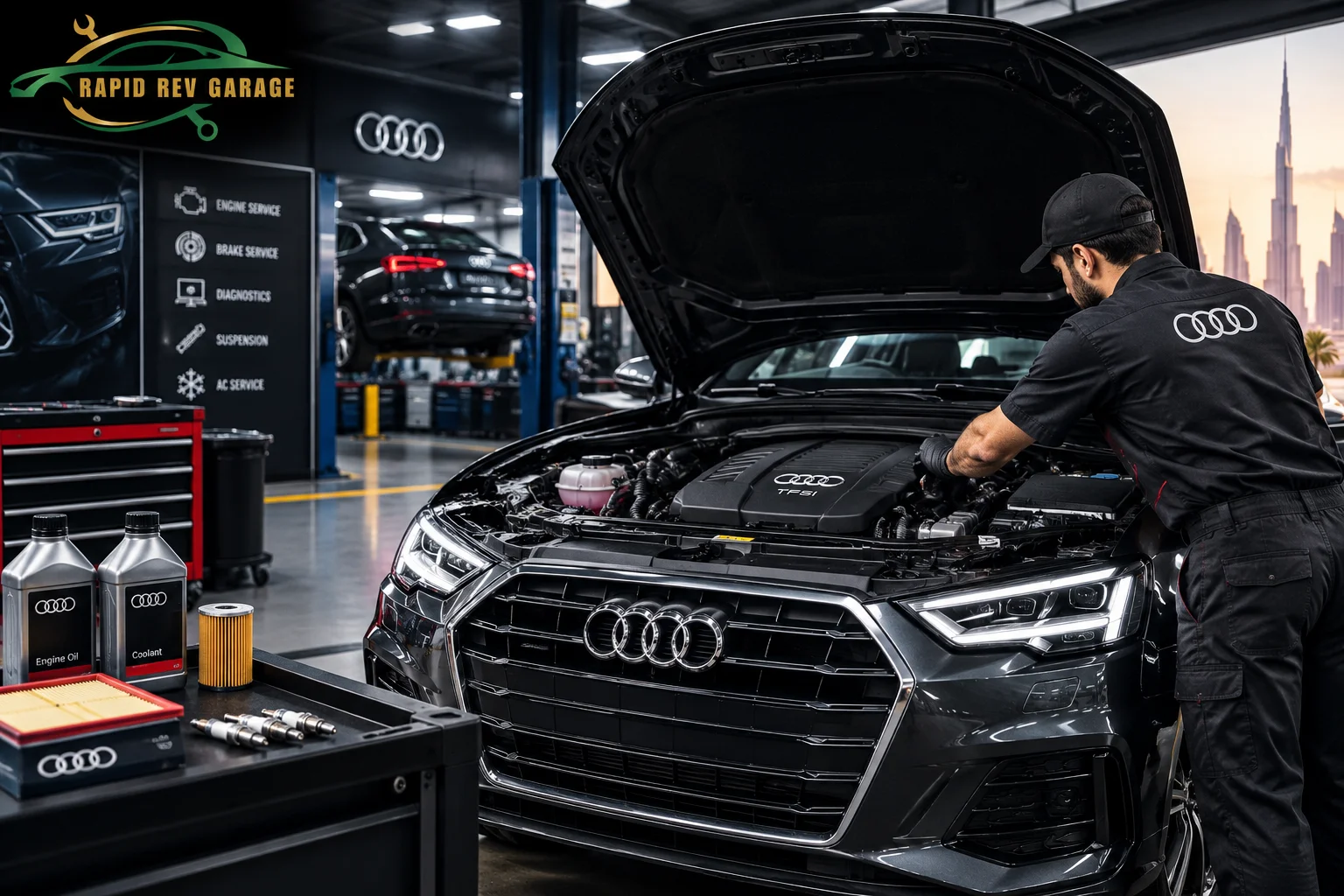
First, a technician does a comprehensive vehicle examination after an accident, checking the bumper, brackets and frame rails by hand. Then, we check the car’s computer for stored fault codes. Even without a warning light, modern cars log sensor faults.
Then we examine the ADAS calibration. If your automobile features automatic braking or lane assist, we test if the cameras and sensors still read properly. Next, we inspect fluid lines and hoses for pinches or leaks. Finally, we inspect the suspension alignment and underbody mounts for stress fractures.
This process usually takes under an hour for a minor collision. It catches problems a glance would miss.
The Repair Process for Collision Damage
Repair steps depend on what the diagnosis finds. Most repairs after a small bump follow a similar path.
- Remove the bumper cover to expose the impact absorber and brackets.
- Replace or repair any cracked mounting points.
- Recalibrate ADAS sensors using proper tools, not guesswork.
- Repair or replace damaged fluid lines and check for leaks.
- Straighten or replace bent underbody brackets.
- Repaint and refit the bumper cover for a clean finish.
Skipping any of these steps can leave a hidden problem behind. This is why full car accident repair matters more than a quick cosmetic fix.
Risks of Ignoring Hidden Damage After a Car Accident
Ignoring a minor collision seems innocuous. The automobile still runs. But tiny problems can become bigger.
A fractured mounting point can break months later, causing your bumper to sag or slide off. A misplaced sensor could fail to alert you before an actual accident. But a steady flow of fluid after a collision might drain your radiator without warning, causing overheating.
Resale value is also affected by collision damage that is not evident. Your negotiating position will suffer if a buyer’s inspection finds hairline cracks or misalignment. It’s always cheaper to fix small issues now than to deal with a breakdown later.
Can You Keep Driving After a Minor Collision?
In most cases, yes, you can drive short distances after a low-speed accident. But you should have it inspected within a few days.
Stop driving right away if you notice fluid on the ground, a warning light for brakes or airbags, or any pulling in the steering. These signs can indicate damage after minor accidents and need urgent attention.
If you’re unsure, call roadside assistance rather than risk driving. A technician can check basic safety before you continue your trip.
How Long Does Collision Repair Take?
Most repairs after a small accident take one to three days. A simple bumper repair with no sensor issues can finish in a single day. Adding ADAS recalibration or paint work adds a day or two.
Depending on parts availability, this can extend to four or five days due to underbody damage or fluid line repair. After the diagnostic examination, we provide you with a clear timeline so you always know what to expect.
Cost Factors for Car Accident Repair
Several things affect the price of car accident repair after a small bump.
- Parts needed. Brackets and sensors cost more than paint alone.
- Sensor calibration. ADAS recalibration needs special tools and adds to labor cost.
- Paint matching. Matching your exact color takes skill and time.
- Extent of hidden damage. A cracked mounting point costs less than a bent subframe.
- Vehicle make. Luxury and newer cars often carry higher sensor and part costs.
Getting an early diagnosis keeps costs down. Small fixes now avoid bigger bills from delayed minor collision damage.
Accident Repair Comparison Table
| Damage Type | Visible Signs | Common Hidden Risk | Recommended Check |
| Bumper tap | Small dent or scratch | Cracked mounting points, sensor shift | Full scan + bracket inspection |
| Rear-end nudge | Slight paint transfer | ADAS sensor damage, exhaust mount stress | Computer scan + underbody check |
| Curb scrape | Scuffed side panel | Suspension misalignment | Alignment check |
| Parking lot bump | Minor dent | Fluid line stress, slow leak | Fluid line and radiator inspection |
| Pothole or speed bump hit | No visible damage | Underbody damage, bent subframe | Underbody lift inspection |
Prevention Tips to Reduce Accident Damage
You can’t avoid every bump. But a few habits lower your risk.
Keep extra spacing in stop-start traffic. Sudden braking causes many low-speed accidents. Dubai parking structures are tight, so use parking sensors and mirrors wisely. Don’t wait for symptoms; get a quick check after any bump, even a tiny one.
Regular servicing helps as well. A vehicle serviced on time will handle minor accidents better because the parts aren’t already worn out.
Dubai-Specific Advice for Accident Repair
Dubai’s roads add their own risks. Heavy stop-start traffic on highways like Sheik Zayed Road raises the chance of rear-end taps. Tight multi-level parking in malls leads to frequent scrapes and bumper taps.
One more problem is the heat. Small accidents can weaken rubber fluid lines and plastic clamps, which the heat in Dubai in the summer can then push to their limits. Parts that would last longer in cooler weather might break faster here.
Dubai has a lot of speed bumps. One hard hit can turn a small problem into a big one if you have damage underneath. If you drive through Al Quoz or other industrial areas often, the dust and rough roads can make already damaged mounts worse.
Why Choose Rapid Rev Garage for Accident Repair
Rapid Rev Garage in Al Quoz handles full accident repair, not just bumper fixes. Every check covers the body, frame, sensors, and fluid lines, so nothing hidden gets missed.
Our team scans your car’s computer for fault codes and tests ADAS calibration with proper tools. This means your safety features work correctly after repair, not just look fixed.
We also match paint and panel gaps precisely, so repaired sections blend in cleanly. For drivers searching for a reliable garage near me after an accident, we offer same-week appointments and clear repair timelines. We recommend a full inspection after any collision, even one that looks minor from the outside.
FAQs
Q1: Can a small accident damage my car’s computer or sensors?
Yes. A bump can shift or damage sensors even without visible cracks. A scan tool checks for stored fault codes that confirm sensor issues.
Q2: How do I know if my bumper has hidden damage?
Warning signs include rattles, uneven panel gaps, or a slightly off-center bumper. The only way to confirm cracked mounting points is to see them in person.
Q3: Is it worth repairing a minor collision if the car still drives fine?
Yes. Driving fine today doesn’t rule out unseen collision damage that worsens over time, especially cracked brackets or slow fluid leaks.
Q4: Does insurance cover hidden damage found after the initial repair?
Many insurers do, especially if you report the damage within days of the accident. Check with your insurer and retain your inspection record as proof.
Q5: How often should I get a vehicle inspection after collision events?
Every time, even for small bumps. A short diagnostic check costs far less than fixing a problem that grew unnoticed.
Related Services
If your accident involved more than the bumper, these services may also help:
- Mobile car mechanic for on-site checks after a bump
- Car painting near me for scratch and panel color matching
- Car service Dubai for a full post-accident tune-up
- Car mechanic near me for general repair support
- Car garage near me for nearby drop-off options
- Roadside assistance if your car isn’t safe to drive after impact
Conclusion
A minor collision can hide damage you won’t notice until it’s a bigger problem. Don’t guess. Book a full inspection today with Rapid Rev Garage and drive with confidence again.