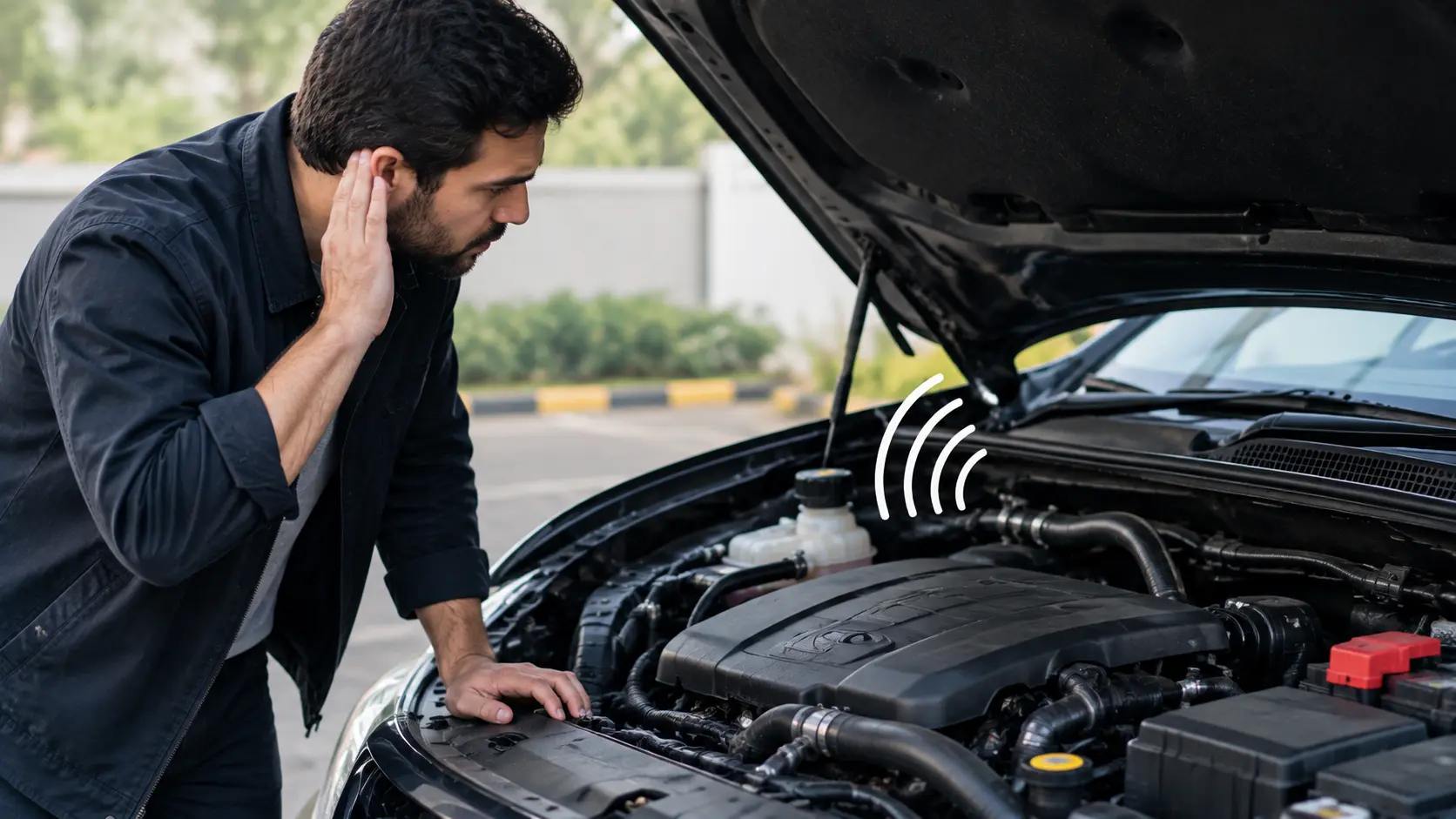
When a hissing sound after turning off the engine lasts a few seconds before fading — or continues for longer — is a sound that concerns most drivers the first time they hear it. The engine is off, the car is parked, but something is still making noise under the bonnet.
In many cases, a hissing sound after turning off the engine needs no attention at all. In some cases, it is a warning of a cooling system fault that needs immediate attention. The character, duration, and smell associated with the hiss tells the story before any panel is lifted.
At Rapid Rev Garage in Al Quoz, every hissing sound after turning off the engine is diagnosed by what it sounds like, how long it lasts, and what accompanies it.
Hissing Sound After Turning Off the Engine — Quick Answer
A hissing sound after turning off the engine comes from one of several sources. The most common and least concerning is the normal sound of vacuum equalising — brake booster vacuum, AC refrigerant pressure balancing, or the turbocharger blowoff valve releasing boost pressure on shutdown. These sounds are brief — a few seconds — and require no attention.
A hiss that is longer, louder, or accompanied by steam from under the bonnet or a sweet coolant smell is a cooling system fault — coolant boiling at a point that is above its normal boiling point, or escaping through a leak onto a hot surface. This is not normal and should be investigated. A hiss from inside the dashboard that appears specifically after the AC is switched off is normal refrigerant pressure equalisation in the AC circuit.
Table of Contents
- Normal Post-Shutdown Sounds vs a Genuine Fault
- Brake Booster Vacuum Hiss on Shutdown
- AC Refrigerant Pressure Equalisation Hiss
- Turbocharger Blowoff or Bypass Valve on Shutdown
- Coolant Boiling at a Hot Spot — The Dangerous Hiss
- Coolant Leaking Onto a Hot Engine Surface
- How to Tell a Safe Hiss From a Warning Hiss
- What to Do If the Hiss Comes With Steam
- How Dubai’s Heat Affects Post-Shutdown Sounds
- How We Diagnose the Hiss at Rapid Rev Garage
- What Does the Repair Cost in Dubai?
- Why Rapid Rev Garage?
- FAQ
- Conclusion
Normal Post-Shutdown Sounds vs a Genuine Fault
The engine is a hot, pressurised system running for the duration of every drive. When it is switched off, several pressure systems equalise and hot components cool. These processes produce sounds — hisses, clicks, pops, and drips — that are entirely normal.
The critical question is whether the hissing sound after turning off the engine is the normal sound of a healthy system settling, or a sound that indicates something is wrong.
Duration is the clearest guide. Normal vacuum and pressure equalisation sounds last 1–10 seconds. A hiss that continues for 30 seconds or more is not normal pressure equalisation — it is either a leak or a boiling event.
Steam is the clearest danger sign. Any visible steam from under the bonnet accompanied by a hiss means the cooling system has a fault that requires same-day attention. Do not restart the engine until the system has been inspected.
Smell is the second guide. A sweet smell accompanying the hiss confirms coolant involvement. A neutral or plastic smell is more likely a vacuum or refrigerant sound. Our car mechanic team asks about duration, steam, and smell before any under-bonnet inspection.
Brake Booster Vacuum Hiss on Shutdown
The brake booster — the component that provides power assistance to the brake pedal — uses engine vacuum to function. The booster is connected to the intake manifold through a large vacuum hose. When the engine is running, the booster is continuously supplied with vacuum.
When the engine is switched off, the vacuum supply stops. The residual vacuum in the booster gradually equalises with atmospheric pressure through the internal diaphragm. This equalisation can produce a brief hiss — particularly if the booster check valve (the one-way valve that maintains vacuum in the booster after the engine stops) is slightly worn and allows a small air flow.
This hiss is brief — typically 2–5 seconds — and is heard from inside the car near the firewall, not from under the bonnet. It requires no attention in most cases. A check valve that is significantly worn may allow a hiss that is longer and drains the booster vacuum more rapidly than normal — reducing the number of power-assisted brake applications available after the engine is off. A failed check valve is inexpensive to replace. Our car service packages include a brake booster vacuum check at every major service.
AC Refrigerant Pressure Equalisation Hiss
When the AC compressor stops — either because the engine is switched off or because the AC is turned off — the high-pressure side of the refrigerant circuit is at a significantly higher pressure than the low-pressure side.
These pressures equalise through the expansion valve or orifice tube over the next few minutes. The refrigerant flow through the restriction during this equalisation can produce a hissing or gurgling sound from the dashboard area — typically at the location of the expansion valve.
This is a normal AC shutdown sound. It lasts 15–60 seconds depending on the pressure differential and the system’s thermal state. It is more noticeable after a long drive in high heat — Dubai’s summer conditions produce the highest pressure differentials and the longest equalisation sounds.
An AC hiss that is notably louder than previously experienced, or that is accompanied by reduced cooling performance, may indicate a refrigerant circuit issue worth checking — but the sound itself on a correctly functioning system is expected.
Turbocharger Blowoff or Bypass Valve on Shutdown
Turbocharged vehicles have a pressure relief valve — a blowoff valve (BOV) or bypass valve — that vents the boost pressure from the intake tract when the throttle is closed. On shutdown, the compressor is still spinning as the engine decelerates, building residual boost pressure.
The blowoff valve vents this residual pressure — producing a brief hiss or whoosh sound from the engine bay. This is the designed function of the valve. On some aftermarket valve types, this sound is more pronounced than the stock valve.
On vehicles where this sound is new — not previously present — it may indicate the bypass valve is venting more than designed, possibly from a boost leak elsewhere in the system. A boost pressure test confirms whether the intake circuit is sealed correctly. For any roadside emergency, our roadside assistance team covers Al Quoz and nearby Dubai areas.
Coolant Boiling at a Hot Spot — The Dangerous Hiss
This is the hissing sound after turning off the engine that requires immediate attention.
When the engine stops, the coolant pump also stops. Coolant is no longer circulating. The heat stored in the engine block — particularly around the combustion chambers and the exhaust ports — has no way to dissipate except through conduction to the surrounding metal and to the stationary coolant.
In normal circumstances, the coolant surrounding these hot spots can absorb this residual heat without boiling. The coolant’s boiling point — elevated by the system pressure — is above the temperature reached by the stationary coolant.
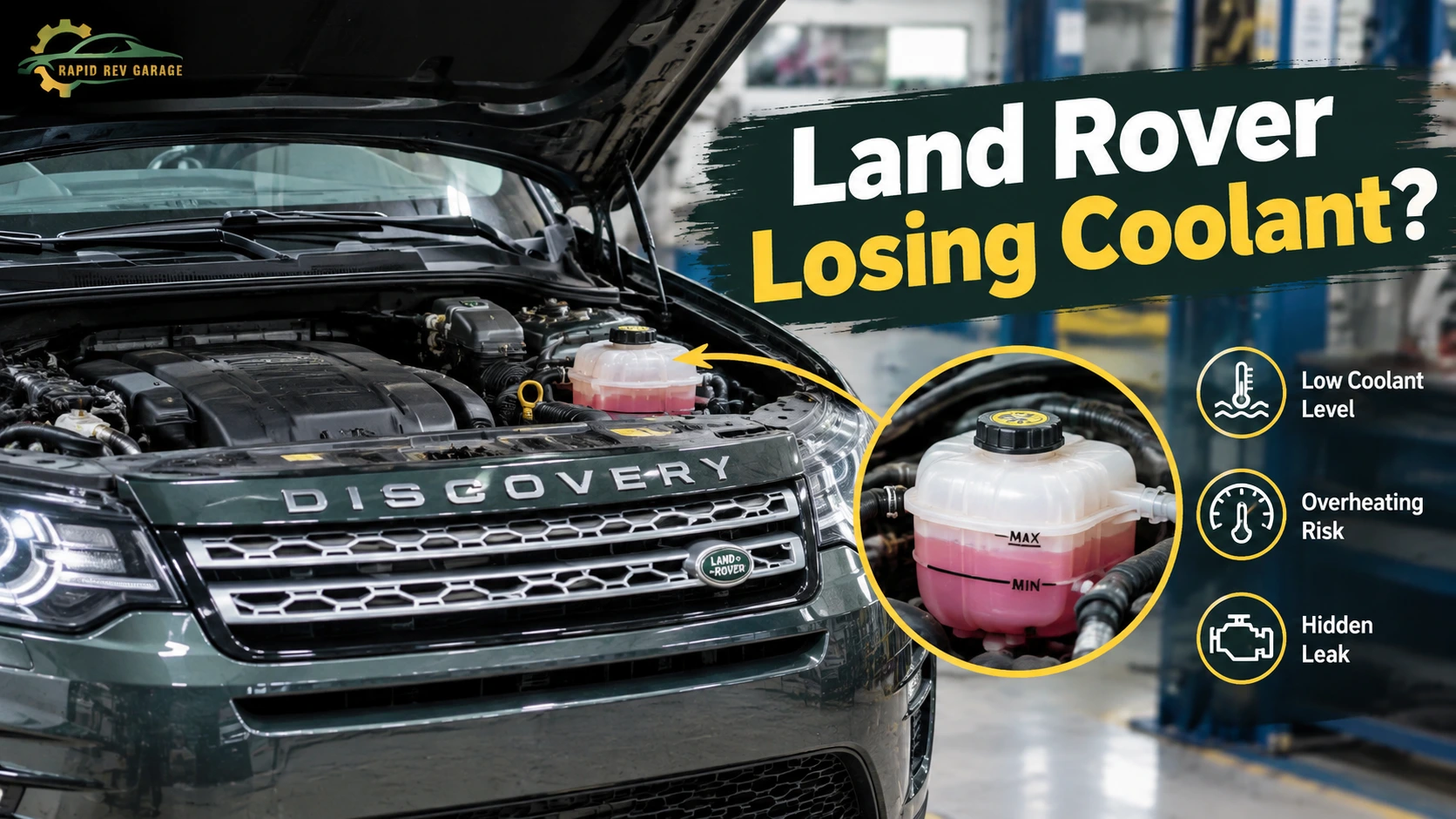
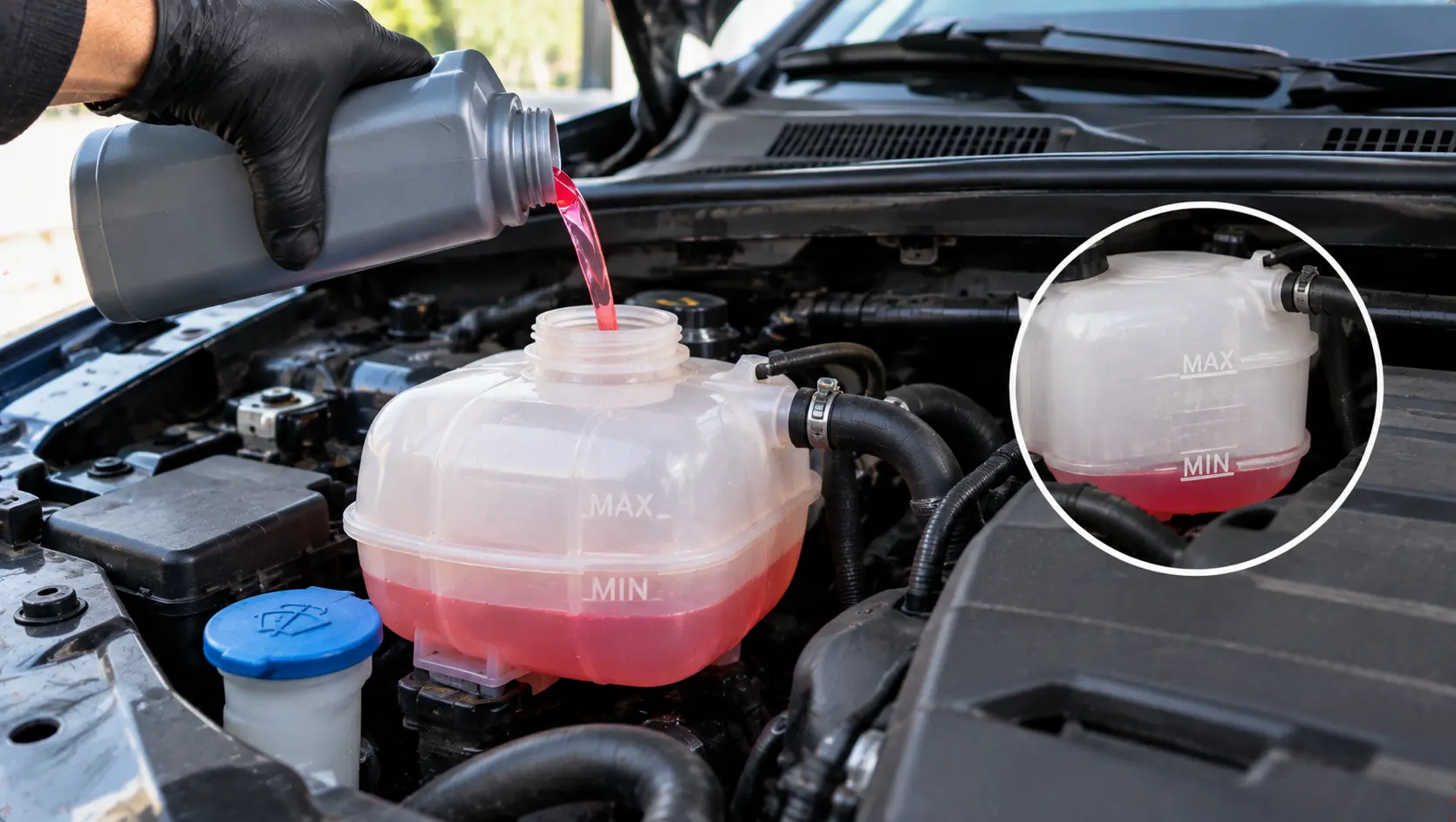
When the cooling system is compromised — low coolant level, a faulty pressure cap reducing system pressure, or a localised hot spot from an overheating event — the stationary coolant around the hot engine areas boils. The boiling produces a hiss or bubbling sound from the engine bay that lasts significantly longer than a vacuum equalisation sound.
This hiss is louder, longer, and often accompanied by the smell of hot coolant or steam from around the coolant reservoir. It means the engine has retained more heat than the coolant can safely absorb stationary. It is a warning of a cooling system fault.
Coolant Leaking Onto a Hot Engine Surface
A coolant hose or fitting that seeps coolant during operation deposits liquid onto hot engine surfaces — the exhaust manifold, the engine block, or the turbocharger housing. This coolant evaporates instantly during operation — producing no visible drip.
When the engine is switched off, the leak continues briefly as the system pressure drops. The coolant that escapes during this shutdown period contacts the still-hot engine surfaces and produces a hiss and steam as it evaporates.
This type of hissing sound after turning off the engine is accompanied by a sweet smell — the glycol in the coolant has a distinctive odour when evaporated on hot metal. The hiss is localised — from the area where the leak is depositing coolant onto the hot surface.
A pressure test while the engine is warm — testing the system immediately after a drive before it cools — identifies this type of leak most effectively. The system is still at pressure and the UV dye trace shows the active leak path. For any paint or bodywork repairs alongside mechanical work, our car painting team handles colour-matched repairs at the same visit.
How to Tell a Safe Hiss From a Warning Hiss
| Characteristic | Safe | Warning |
| Duration | Under 10 seconds | Over 30 seconds |
| Location | Dashboard, firewall area | Engine bay |
| Steam | None | Visible from bonnet area |
| Smell | Neutral or plastic | Sweet (coolant) |
| Coolant level next check | Unchanged | Lower than before |
| Temperature gauge before shutdown | Normal | Above normal or at maximum |
Any warning sign confirms the hissing sound after turning off the engine needs assessment before the next drive. Do not restart the engine until the cause of the hissing sound is confirmed and safe.
What to Do If the Hiss Comes With Steam
If the hissing sound after turning off the engine is accompanied by steam from under the bonnet:
Do not open the bonnet immediately — steam under pressure can cause burns. Wait 10–15 minutes for pressure to drop.
Do not open the coolant reservoir cap. Even after 15 minutes, the system may still be pressurised and will release hot coolant under pressure if the cap is opened.
Do not restart the engine. An overheated engine that is restarted before cooling causes additional thermal damage.
Call for recovery or wait until the system has fully cooled — typically 30–45 minutes — before any inspection.
How Dubai’s Heat Affects Post-Shutdown Sounds
In Dubai’s summer, the engine arrives at the parking spot after operating in ambient conditions that are already at the top of the cooling system’s capacity. The coolant is hotter. The engine block temperature is higher.
When the engine stops, the heat retained in the block is greater than after the same drive in a cooler climate. The stationary coolant absorbs more heat — getting closer to its boiling point even in a healthy system.
This thermal margin is why hissing sound after turning off the engine complaints cluster in Dubai’s summer. A cooling system that manages the post-shutdown heat absorption adequately in October becomes marginal in July. A system that is borderline — slightly low on coolant, or with a faulty pressure cap — that was quiet in winter may start hissing in summer.
How We Diagnose the Hiss at Rapid Rev Garage
History and character first. Duration, location, steam presence, and smell narrow the cause before any inspection.
Coolant level check. Low coolant confirms cooling system involvement immediately.
Pressure cap test. The cap is tested for correct pressure release value. A cap releasing below rated pressure is confirmed faulty.
Cooling system pressure test. The system is pressurised and monitored for pressure drop. A drop confirms a leak even when no steam or puddle is visible.
UV dye trace. Dye added to coolant and the system run to operating temperature. UV lamp inspection after shutdown identifies all external leak paths.
Combustion gas test. Chemical test at the coolant reservoir confirms or rules out head gasket involvement.
Our mobile car mechanic covers Al Quoz and nearby Dubai areas for on-site post-shutdown hiss assessment. Our garage near me in Al Quoz serves drivers from Business Bay, Jumeirah, Barsha, Satwa, Downtown, and the Sheikh Zayed Road corridor.
What Does the Repair Cost in Dubai?
| Service | Cost Range |
| Pressure cap replacement | AED 50–150 |
| Coolant top-up and pressure test | AED 100–250 |
| Brake booster check valve | AED 100–300 |
| Coolant hose replacement | AED 200–600 |
| Water pump replacement | AED 500–1,800 |
| Radiator replacement | AED 600–2,500 |
All costs confirmed after the pressure test and UV dye trace identify the specific source.
Why Rapid Rev Garage?
Every hissing sound after turning off the engine is either a normal settling sound of a healthy system settling — which needs nothing — or a cooling system warning that needs same-day attention. The difference is in the duration, the steam, and the smell.
We assess those three markers first, then confirm with a pressure test and gas test before recommending any repair. A 5-second hiss from the dashboard AC circuit is not the same fault as a 60-second hiss with a sweet smell from the engine bay — and they do not have the same repair.
FAQ — Hissing Sound After Turning Off the Engine
Here are the questions Dubai drivers ask us most about post-shutdown hissing.
Is a hissing sound after switching off normal?
Brief hisses of under 10 seconds from the dashboard area or firewall are normal — vacuum and refrigerant pressure equalising. A hiss over 30 seconds from the engine bay, especially with a sweet smell or steam, is a cooling system warning.
Why does the hiss only happen in summer?
In Dubai's summer, the engine arrives at shutdown at a higher temperature. The stationary coolant must absorb more residual heat. A cooling system that is marginally adequate in cooler months — slightly low on coolant, or with a borderline pressure cap — produces a boiling hiss in summer when the thermal load is highest.
Can a hissing sound damage my engine?
The hiss itself does not damage the engine. What it indicates — a boiling coolant event or a leak — can cause damage if ignored. An engine that regularly boils coolant after shutdown has a fault that will eventually cause overheating during operation.
What if the hiss is inside the dashboard?
A hiss inside the dashboard after the AC is switched off is almost always refrigerant pressure equalisation through the expansion valve — a normal AC shutdown sound. A hiss inside the dashboard accompanied by a sweet smell and foggy windscreen points to a leaking heater core.
Should I open the bonnet when I hear the hiss?
After the engine is off for 10–15 minutes — yes, it is safe to open the bonnet and inspect. Do not open the coolant reservoir cap until the system has cooled for 30–45 minutes. Never open the cap when steam is visible from the bonnet area.
Conclusion
A hissing sound after turning off the engine is either a normal pressure and vacuum settling sound — brief, from the dashboard or firewall, requiring nothing — or a cooling system warning from the engine bay that requires same-day diagnosis. Duration, steam, and smell separate the two immediately.
Rapid Rev Garage in Al Quoz confirms every hissing sound after turning off the engine cause by character first, then confirms any cooling system fault with pressure testing and UV dye before recommending any repair.
Rapid Rev Garage is in Al Quoz, serving Business Bay, Jumeirah, Downtown, Barsha, Satwa, and the Sheikh Zayed Road corridor. Book your appointment on WhatsApp or find us on Google Maps.
Rapid Rev Garage — Hissing Sound After Turning Off the Engine | Al Quoz, Dubai