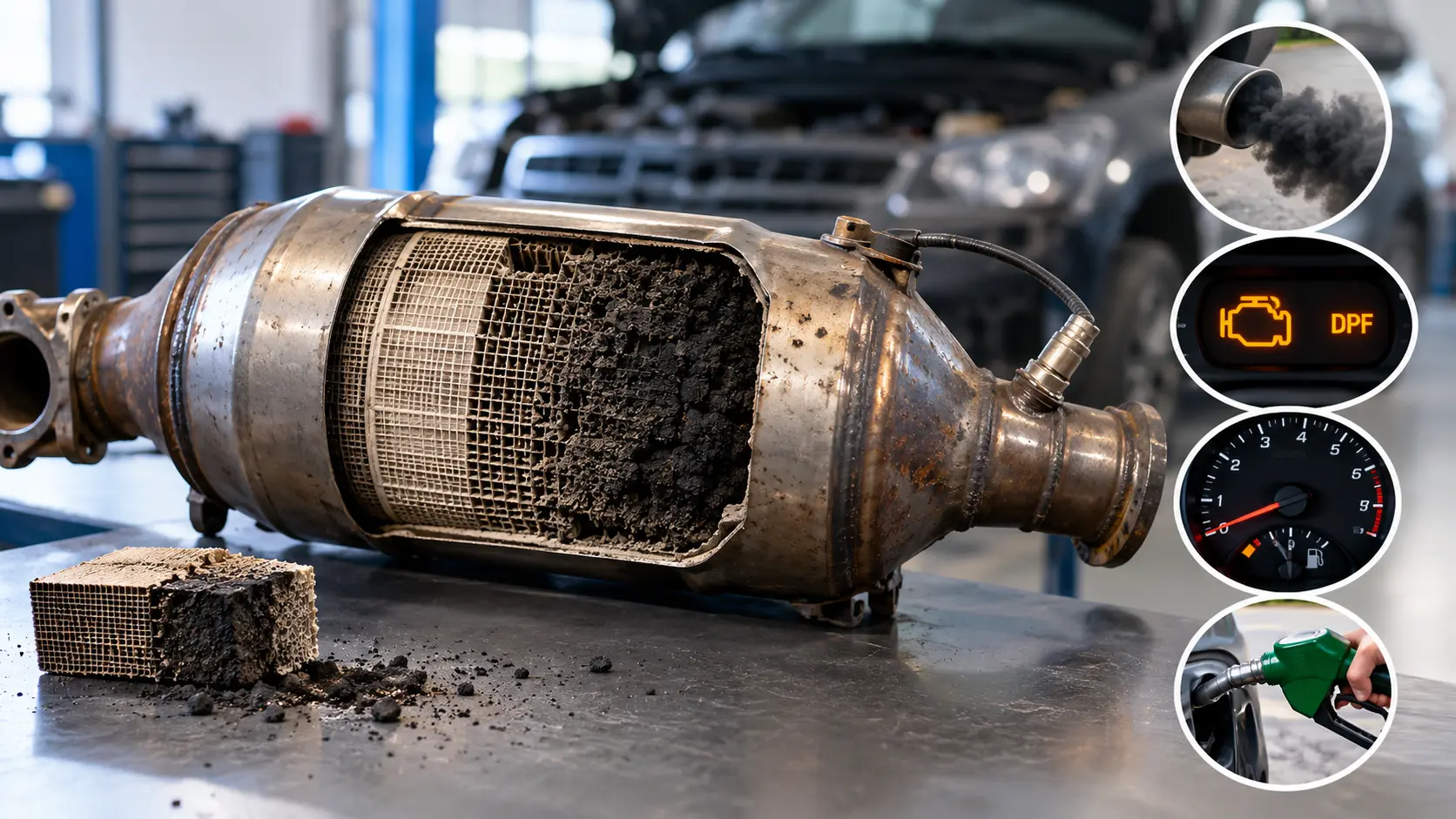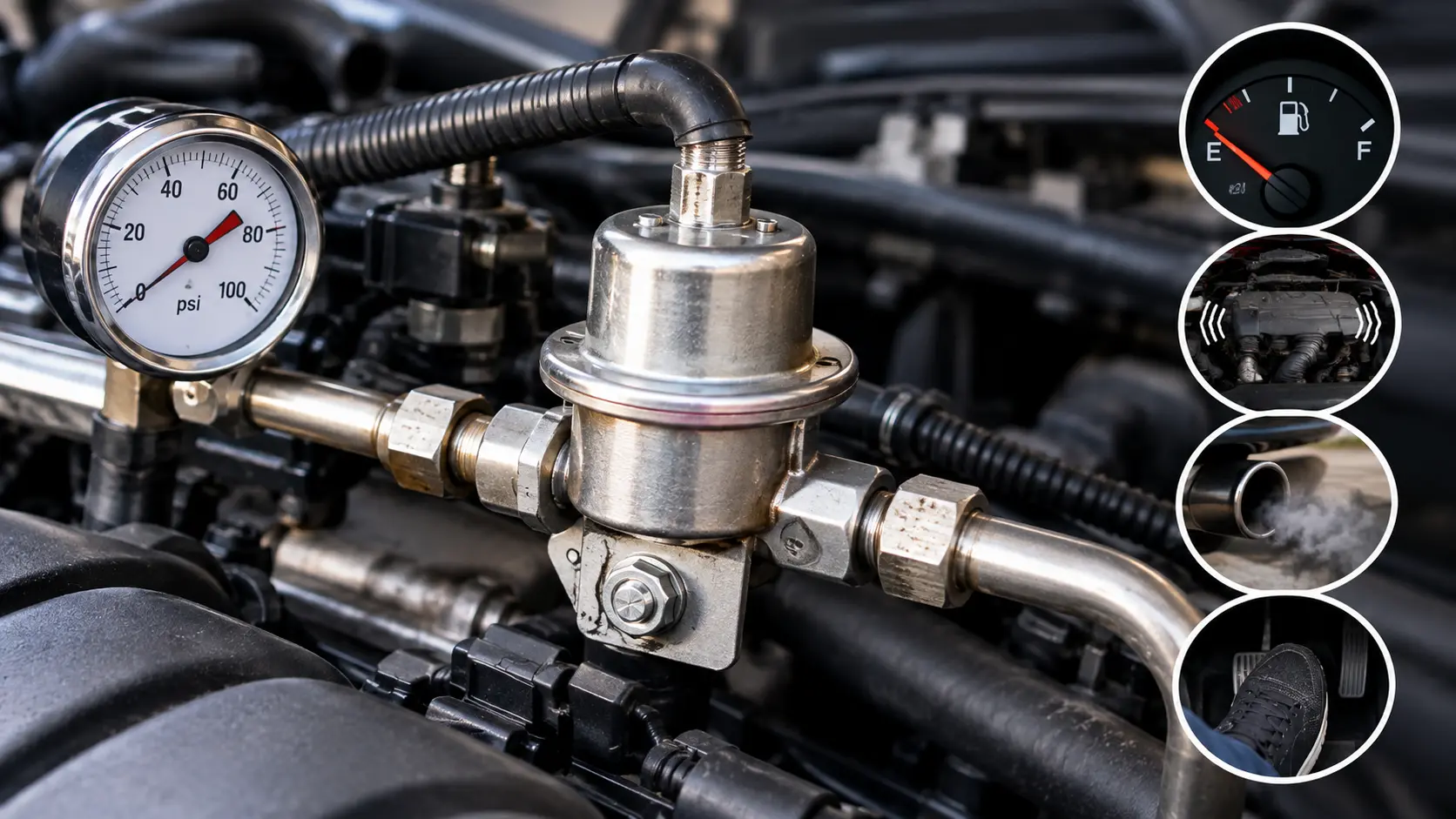
You fill up at a petrol station on Sheikh Zayed Road and the tank seems to empty faster than it used to. The engine takes longer to start after the car has been parked in the sun at Dubai Mall, the idle feels rough and there is a faint smell of fuel near the bonnet. On a cold start, the exhaust puffs black smoke. These are common bad fuel pressure regulator symptoms, and they point to the part that keeps fuel pressure steady for the injectors.
Fuel injectors only work properly when the fuel behind them is at the right pressure. Too much pressure and they spray too much fuel, so the engine runs rich. Too little and they spray too little, so the engine runs lean and misfires. The fuel pressure regulator holds that pressure in the right range as engine load changes.
This guide explains how the regulator works on different fuel systems, the signs it is failing, why Dubai heat stresses fuel systems, how a workshop tests fuel pressure and what the repair involves. It also covers the faults that cause the same symptoms.
Bad Fuel Pressure Regulator Symptoms: Quick Answer
The main bad fuel pressure regulator symptoms are black smoke from the exhaust, poor fuel economy, a fuel smell, hard or long starting, misfires and rough idle, hesitation or loss of power, fuel in the vacuum hose on older systems, a check engine light with codes such as P0087 for low rail pressure and spark plugs fouled with black soot.
Jalopnik lists misfires, black smoke, a sudden drop in fuel economy, hard starting and fuel in the vacuum hose as the main signs. A workshop tests the fuel pressure with a gauge or live data at idle, under load and after switch off, checks the vacuum line and reads codes before replacing the regulator.
Table of Contents
- What a Fuel Pressure Regulator Does
- Return, Returnless and Direct Injection Systems
- Why Fuel Pressure Regulators Fail in Dubai
- Black Smoke From the Exhaust
- Poor Fuel Economy
- Fuel Smell and Fuel in the Vacuum Hose
- Hard Starting and Long Cranking
- Misfires, Rough Idle and Fouled Spark Plugs
- Hesitation and Loss of Power
- Check Engine Light and Fuel Pressure Codes
- Engine Stalling and Poor Hot Starts
- Faults That Look Like a Bad Fuel Pressure Regulator
- How a Workshop Tests Fuel Pressure
- What Fuel Pressure Regulator Replacement Involves
- Is It Safe to Drive With a Bad Fuel Pressure Regulator?
- Can a Bad Regulator Damage the Catalytic Converter?
- How Long Does a Fuel Pressure Regulator Last?
- Can Bad Fuel Quality Cause Pressure Problems?
- How to Protect the Fuel System
- FAQ
- Conclusion
What a Fuel Pressure Regulator Does
The fuel pump in the tank pushes petrol to the engine. The regulator controls how much pressure builds up in the fuel rail, the pipe that feeds the injectors.
On many port injection petrol engines, pressure sits roughly in the 3 to 4 bar range, about 40 to 60 psi, depending on the model. Direct injection engines use much higher pressure at the injectors, often above 100 bar, created by a separate high pressure pump.
The engine computer decides how long to open each injector based on the pressure it expects. If the pressure is wrong, every injection is wrong, and the air fuel mixture drifts away from the ideal.
Return, Returnless and Direct Injection Systems
Older fuel systems use a return type regulator. It sits on the end of the fuel rail and has a diaphragm inside with a vacuum hose connected to the intake manifold. Extra fuel flows back to the tank through a return pipe. The vacuum hose lets the regulator adjust pressure to match engine load.
Many newer port injection cars use a returnless system. The regulator sits inside the fuel pump module in the tank, and only one fuel line runs to the engine. Some returnless systems control pressure by varying the pump speed instead of using a mechanical regulator.
Direct injection engines, which are now common in the UAE, have two stages. A low pressure pump in the tank feeds a high pressure pump on the engine. A pressure control valve on the high pressure pump or rail, plus a rail pressure sensor, does the regulator’s job.
The type matters for testing and repair. Your workshop should confirm which system your car uses before ordering parts.
Why Fuel Pressure Regulators Fail in Dubai
Heat is the biggest stress. On summer afternoons when the air passes 45°C, fuel in the tank and lines gets hot. Hot fuel thins out and turns to vapour more easily, which makes pressure faults show up more clearly. Rubber diaphragms and seals inside regulators also age faster in constant heat.
Long periods parked in the sun add to it. A car parked outside at a mall or office in summer can have very hot fuel in the rail when you return. A regulator that cannot hold pressure lets that fuel boil, which causes long cranking and rough running on restart.
Dirt in the fuel can stop a regulator sealing. Debris from old tanks or poor quality fuel can lodge in the valve seat.
Age and wear finish the list. The diaphragm in return type regulators flexes every time engine load changes. After many years, it can split or harden.
Black Smoke From the Exhaust
Black smoke usually means too much fuel or too little air. Jalopnik notes that a regulator stuck closed can cause it, but so can a dirty air filter or a faulty injector.
When the regulator holds pressure too high, the injectors spray more fuel than the engine can burn. The extra fuel leaves the exhaust as black smoke, often most visible on start up or when you accelerate hard.
Black smoke from a petrol car is never normal. Even a small amount over weeks can clog the catalytic converter and foul the spark plugs.
Poor Fuel Economy
Jalopnik lists poor fuel economy, often a sudden drop, as a sign of a regulator fault. It explains that pressure that is too high or too low can both reduce mileage.
High pressure sends too much fuel into the engine. Low pressure makes the engine run lean, and the computer may then add fuel to compensate, or you may press the accelerator harder to get the same power.
Track your fuel use. If you suddenly need to fill up much more often, with no change in your driving or route, the fuel system is worth checking.
Fuel Smell and Fuel in the Vacuum Hose
Jalopnik describes fuel in the vacuum hose as a sure sign of failure on vacuum operated systems, because it points to a split diaphragm inside the regulator. Fuel then gets sucked into the intake manifold and burned, making the engine run rich.
To check on return type systems, the engine must be off and cool. Pull the small vacuum hose off the regulator and look and sniff. Fuel or a strong fuel smell in the hose means the diaphragm has failed.
A fuel smell under the bonnet can also come from leaking fuel line joints, injector seals or the rail itself. Leaking petrol near a hot engine is a fire risk, so any strong smell should be checked straight away.
Hard Starting and Long Cranking
Jalopnik notes that low pressure can mean extended cranking before the engine starts. The fuel pressure drops while the car is parked, so the engine cranks until the pump rebuilds it.
A regulator that leaks pressure back to the tank, or lets fuel drain into the intake, is a common cause. The problem is often worse after the car has sat for a few hours, or after it has been parked in the sun.
Hard starting also comes from a weak fuel pump, a leaking injector, a failing starter or a weak battery. The guide on failing fuel pump symptoms explains how pump faults differ.
Misfires, Rough Idle and Fouled Spark Plugs
Jalopnik explains that pressure that is too high can make the engine run rich and damage spark plugs, while pressure that is too low can leave the injectors short of fuel. Both cause misfires.
A rich mixture leaves black, sooty deposits on the spark plugs. When a technician removes the plugs, the colour of the tips tells a lot about the mixture.
Jalopnik notes that a misfire on only one cylinder makes the regulator less likely. A regulator affects all cylinders, so a single cylinder misfire usually points to a plug, coil, lead or injector on that cylinder.
Hesitation and Loss of Power
When fuel pressure drops under load, the injectors cannot deliver enough fuel. The engine hesitates when you press the accelerator, feels weak on hills and may surge at steady speed.
You may notice this most when overtaking on Emirates Road, climbing the ramps of a multi storey car park or pulling away with a full car. The engine may feel normal at idle and only struggle when fuel demand rises.
Low pressure under load can also come from a clogged fuel filter or a weak pump. A pressure test under load tells them apart.
Check Engine Light and Fuel Pressure Codes
Jalopnik notes that if the check engine light is on, reading the code helps. It gives P0087 as an example, which means fuel rail pressure is too low and points to the regulator and related parts.
On direct injection engines, P0088 means rail pressure is too high, and codes in the P0190 to P0193 range point to the rail pressure sensor circuit. Lean codes such as P0171 and rich codes such as P0172 can also appear with regulator faults.
A code points to a symptom, not always to a part. A low pressure code can come from the pump, filter, regulator or wiring, so testing comes before replacement.
Engine Stalling and Poor Hot Starts
A regulator that cannot hold pressure can let the engine stall at idle, especially when the AC compressor switches on and adds load. The idle may dip and the engine may shudder before it stops.
Hot starts are a common complaint in Dubai. After a short stop on a summer afternoon, the engine is very hot but the fan has stopped. Fuel in a rail with low pressure can boil, leaving vapour instead of liquid at the injectors. The engine cranks, coughs and then starts roughly.
This pattern often points to a regulator or injector that is leaking pressure while the car is parked.
Faults That Look Like a Bad Fuel Pressure Regulator
Several faults cause the same symptoms:
- Weak fuel pump. This causes low pressure, hesitation and hard starting. Jalopnik notes that pump noise can mean the pump is straining.
- Clogged fuel filter. This restricts flow under load.
- Leaking or dirty injectors. These cause rich running, smoke and misfires.
- Faulty mass airflow or oxygen sensor. These give the computer wrong data and make the mixture rich or lean.
- Vacuum leak. This makes the engine run lean and idle rough.
- Dirty air filter. Jalopnik notes a dirty air filter can cause black smoke.
- Ignition faults. Worn plugs, coils or leads cause misfires.
The guides on bad MAF sensor symptoms and bad oxygen sensor symptoms explain those faults. Testing the fuel pressure first narrows the search quickly.
How a Workshop Tests Fuel Pressure
A trained car mechanic near you starts by reading codes and live data, including fuel trims and, on direct injection engines, the rail pressure reading.
On port injection engines, a fuel pressure gauge is connected to the test port on the fuel rail. The technician checks pressure with the key on and engine off, at idle, at higher engine speed and under load. The readings are compared with the maker’s figures.
On return type systems, the vacuum hose is pulled off the regulator while the engine idles. Pressure should rise when vacuum is removed. If it does not change, the regulator is not responding. The hose is also checked for fuel, as Jalopnik describes.
A residual pressure test checks how well the system holds pressure after switch off. A fast drop points to a leaking regulator, injector or pump check valve. The technician may clamp the return line briefly to see whether the leak is in the regulator.
On direct injection engines, the technician compares desired and actual rail pressure in live data. A large gap points to the high pressure pump, pressure control valve or sensor.
Jalopnik notes that testing the regulator costs roughly a tenth of the replacement price, so testing first is good value.
What Fuel Pressure Regulator Replacement Involves
The fuel system is depressurised first. Petrol under pressure can spray out when a line is opened, so the technician follows the maker’s procedure, often by removing the pump fuse and running the engine until it stalls.
On return type systems, the regulator is unbolted from the end of the fuel rail and a new one fitted with new O rings. On returnless systems, the regulator is part of the pump module in the tank. Access is usually through a panel under the rear seat or by lowering the tank.
On direct injection engines, the pressure control valve may be part of the high pressure pump, so the pump is replaced. A rail pressure sensor can often be replaced on its own.
After fitting, the system is pressurised and checked for leaks, codes are cleared and fuel trims are watched on a road test. Jalopnik puts regulator replacement on most commuter cars at under $500 including parts and labour in the United States. Dubai prices vary by model and system type.
If the fuel filter is due, replacing it at the same time protects the new part. A filter change visit can cover the fuel, air and cabin filters together.
Is It Safe to Drive With a Bad Fuel Pressure Regulator?
A regulator fault is not always an emergency, but it should be fixed soon. A rich mixture wastes fuel and can damage the catalytic converter. A lean mixture can cause misfires and power loss at the wrong moment.
A strong fuel smell is a safety issue. Leaking petrol near a hot engine can catch fire. If you smell fuel strongly or see fuel dripping, stop the car, switch off the engine and move away from it.
If the engine stalls or loses power on a highway, turn on your hazard lights and move to the hard shoulder. Stopping in a live lane because of a breakdown brings a AED 1,000 fine and six black points under Article 98 of the UAE Federal Traffic Law. Once safe, call roadside assistance.
A car with a fuel leak should travel on a flatbed tow truck rather than be driven. If the car only starts slowly at home, a mobile mechanic can check the fuel pressure and vacuum hose in your parking space.
Can a Bad Regulator Damage the Catalytic Converter?
Yes. Jalopnik notes that burning excess fuel can clog the catalytic converter. Unburned fuel reaches the converter, burns inside it and overheats the ceramic core. Over time, the core can melt or break up.
A damaged converter causes power loss, a rattling exhaust and a check engine light with codes such as P0420. Replacing a converter costs far more than a regulator.
Fixing a rich running fault early protects the converter. If an engine repair specialist finds a damaged converter, the cause of the rich mixture must be fixed first.
How Long Does a Fuel Pressure Regulator Last?
There is no fixed life. Many regulators last for the life of the car. Others fail early because of heat, dirty fuel or a diaphragm that hardens with age.
Regulators on older return type systems with rubber diaphragms tend to fail more often than the electronic systems on newer cars. On direct injection engines, the high pressure pump and its control valve are the more common failure points.
Can Bad Fuel Quality Cause Pressure Problems?
Dirt or water in the fuel can damage regulators, injectors and pumps. Debris can lodge in the regulator seat and stop it sealing, while water causes corrosion.
UAE fuel stations generally supply clean fuel, but problems can come from a contaminated batch, a rusty fuel tank on an older car or debris left after fuel system work.
Using the octane grade your owner’s manual specifies and replacing the fuel filter at the right interval help keep the system clean.
How to Protect the Fuel System
Replace the fuel filter at the interval in your owner’s manual, or sooner if you drive an older car. Many modern cars have a lifetime filter in the tank, but older models do not.
Avoid running the tank close to empty in summer. The fuel pump is cooled by the fuel around it, and low fuel lets it run hot. Keeping at least a quarter tank also reduces the chance of picking up debris from the bottom of the tank.
Have fuel smells, hard starting and black smoke checked early. These are cheap to diagnose and costly to ignore.
If spilled fuel from a leak has marked the paint near the filler flap or under the bonnet edge, it can be treated through paint and panel repair once the leak is fixed.
A regular car service in Dubai includes a check of fuel lines and filters. If your engine runs rich or starts slowly, take the car to a car garage near you that measures fuel pressure before replacing parts.
FAQ
Here are the questions Dubai drivers most often ask about fuel pressure regulators.
What happens when a fuel pressure regulator fails?
Fuel pressure becomes too high or too low. High pressure causes black smoke, poor fuel economy and fouled spark plugs. Low pressure causes hard starting, hesitation and misfires.
Can a bad regulator cause black smoke?
Yes. A regulator stuck closed holds pressure too high, so the injectors spray extra fuel. Jalopnik notes a dirty air filter or faulty injector can also cause black smoke.
How do you test a fuel pressure regulator?
A workshop connects a gauge to the fuel rail and checks pressure at idle, under load and after switch off. On vacuum type regulators, it also checks the vacuum hose for fuel.
What does code P0087 mean?
P0087 means fuel rail pressure is too low. Jalopnik notes it points toward the regulator and related parts. A weak pump, clogged filter or wiring fault can also cause it.
Is a fuel smell from the engine dangerous?
It can be. Leaking petrol near a hot engine is a fire risk. If the smell is strong or you see fuel dripping, stop the car, switch off and have it checked before driving.
Conclusion
A bad fuel pressure regulator shows up as black smoke, poor fuel economy, a fuel smell, hard starting, misfires, hesitation and codes such as P0087. Heat, long periods parked in the sun, dirty fuel and age wear regulators and seals in Dubai. A pressure test at idle, under load and after switch off, plus a vacuum hose check, confirms the fault before any part is replaced.
Rapid Rev Garage is a full workshop open 24 hours at Al Khail Gate, 12th Street, Al Quoz Industrial Area 2, serving passenger cars across Al Quoz, Business Bay, Jumeirah, Al Barsha, Satwa, Downtown and the Sheikh Zayed Road corridor. Visit https://rapidrevgarage.com, send your car model and the warning codes on WhatsApp, or get directions on Google Maps.
Rapid Rev Garage | Bad Fuel Pressure Regulator Symptoms | Al Quoz, Dubai