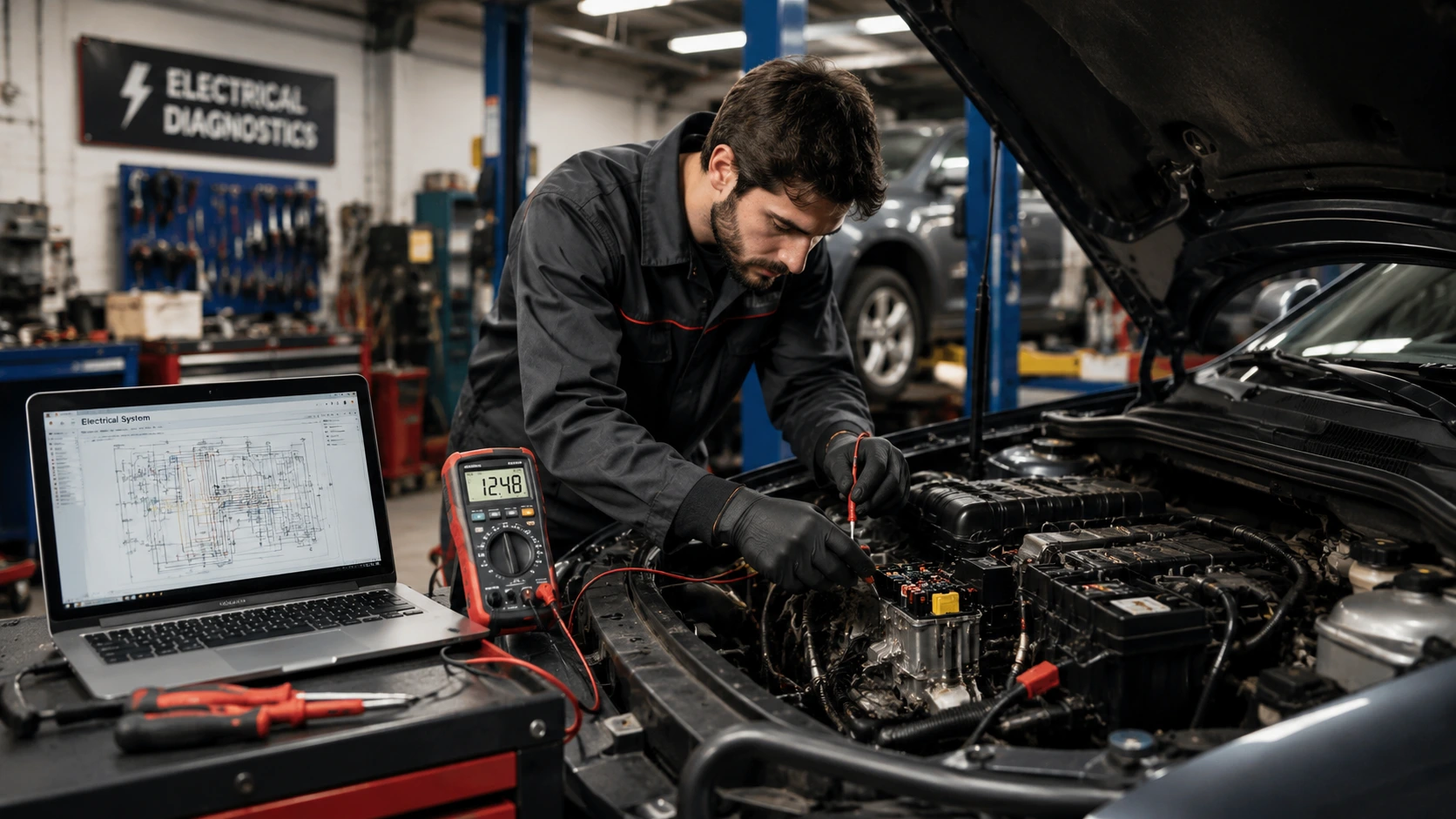
Modern vehicles are more electrical than mechanical. The engine starts because of a signal from the ECU. The gearbox shifts because a solenoid receives a command from the transmission control module. The brakes engage ABS because four wheel speed sensors are feeding real-time data to a control unit that’s making calculations 25 times per second. When any part of this electrical network develops a fault, the symptoms can appear anywhere — and the path from symptom to correct diagnosis is rarely as straightforward as it looks.
Automotive electrical repair in Dubai carries its own specific complexity. The city’s sustained heat, the stop-start traffic, the short daily trips that never fully warm or charge the vehicle’s electrical systems, and the extreme temperature cycling between outdoor heat and air-conditioned environments all accelerate electrical component degradation faster than manufacturer design life assumes. A battery that lasts five years in northern Europe lasts three in Dubai. Wiring insulation that stays flexible for a decade in Germany becomes brittle in five years in the UAE.
Finding a workshop that does automotive electrical repair properly — diagnosing the root cause rather than replacing components until the symptom disappears — is the difference between a car that’s fixed and one that costs money repeatedly without ever being right.
Automotive Electrical Repair Dubai — Why Proper Diagnosis Changes Everything
The most expensive pattern in automotive electrical repair isn’t the cost of a specific component — it’s the cost of replacing the wrong components because the diagnosis was wrong. And wrong diagnosis in automotive electrical work is extremely common, particularly in workshops that rely on basic code readers rather than proper multi-system diagnostic equipment.
A fault code is not a diagnosis. It’s a starting point. When a code reader displays “P0340 — Camshaft Position Sensor Circuit Malfunction,” it tells you which circuit has a problem. It doesn’t tell you whether the sensor itself has failed, whether the wiring to the sensor has a break or short, whether the connector has corrosion causing intermittent signal dropout, or whether the reluctor wheel the sensor reads has damage. Replacing the sensor without checking the other possibilities resolves the fault maybe 40% of the time. The other 60%, the code comes back and the owner pays again.
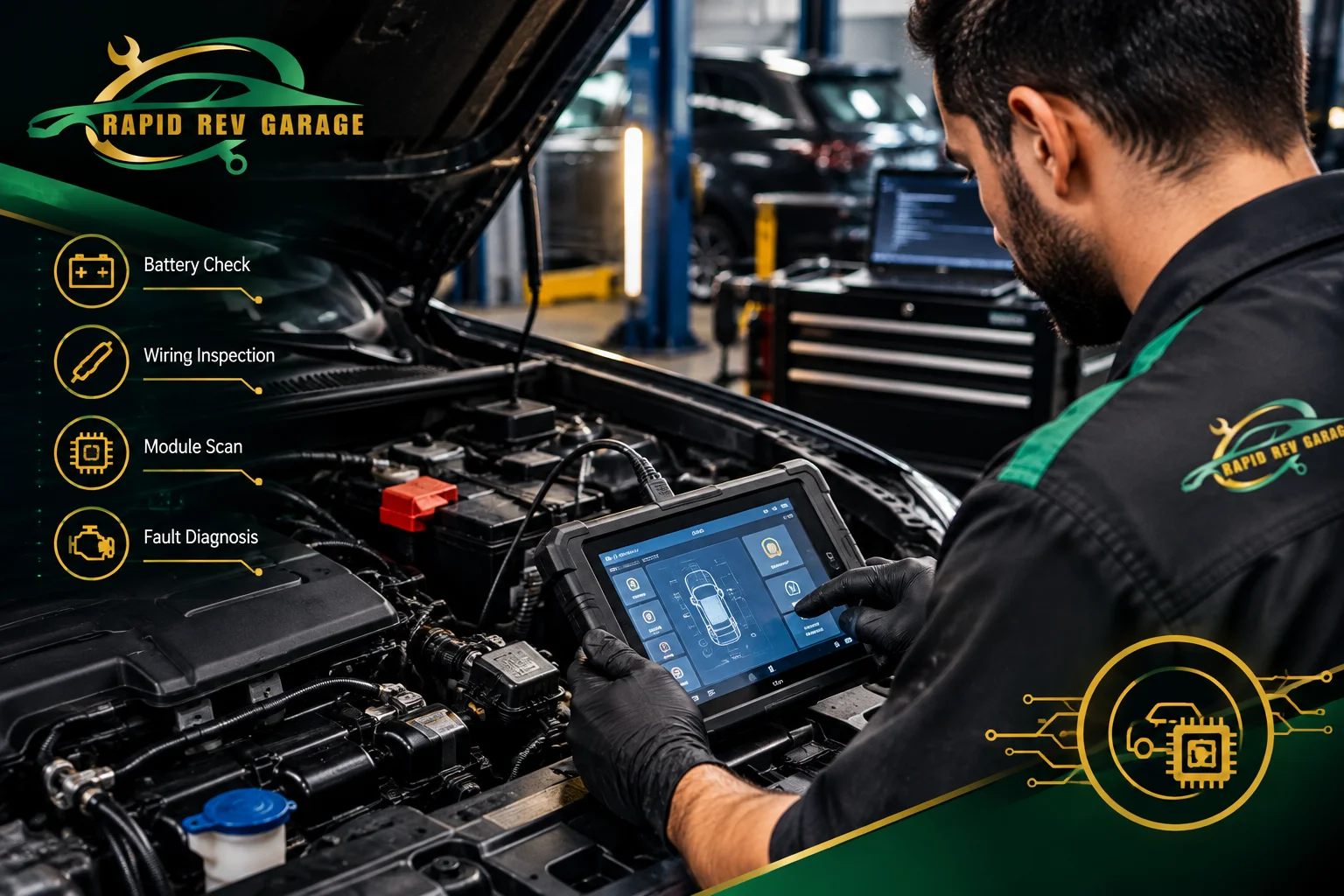
Proper automotive electrical repair starts with the fault code and then goes deeper — live data, wiring diagram tracing, resistance and voltage testing at the component and along the circuit, and physical inspection of the harness in the locations most likely to have suffered damage. This takes longer than a code-read-and-replace approach. It costs more in diagnostic time. But it costs considerably less in total when the repair actually fixes the problem the first time.
A Mercedes C200 came in after a different workshop had replaced the throttle position sensor, the MAF sensor, and the idle control valve chasing an intermittent stalling fault. Total parts spend: AED 2,100. Our diagnostic found a hairline crack in the main engine harness at the firewall grommet — a wiring fault that caused intermittent signal dropout across multiple sensors simultaneously, producing the pattern of codes that sent the previous workshop down the wrong diagnostic path. The repair cost AED 380. The car hasn’t stalled since.
Automotive Electrical Repair — Battery and Charging System
Why Battery Faults Are More Complex Than They Appear
Battery failure is the most common automotive electrical repair callout in Dubai — but battery problems are rarely as simple as “battery flat, replace battery.” A battery that keeps failing after replacement is telling you something about the system it lives in, not just about itself.
A proper battery assessment uses a conductance tester — not a voltage reading. Resting voltage tells you the battery’s surface charge, not its actual capacity. A battery sitting at 12.5 volts but showing 52% conductance health will start the car on a cool morning and fail to turn the engine over after six hours in a hot parking garage. The voltage looked fine. The capacity didn’t.
Charging System Assessment
The alternator and the battery are a system — diagnosing one without the other misses half the picture. An alternator delivering 13.2 volts instead of the correct 14.2–14.7 volts is under-charging the battery on every drive. Fit a new battery to a car with an under-charging alternator and the new battery degrades from day one. The correct automotive electrical repair sequence: test the battery, test the alternator output under load, test the alternator output with all electrical consumers running, and then make a parts decision based on what the numbers show.
Battery Registration on European Vehicles
BMW, Mercedes-Benz, Volkswagen Group, Audi, Land Rover, and Volvo vehicles require battery registration after replacement. The power management system needs to know the new battery’s capacity and chemistry to adjust the charging strategy correctly. Without registration, the system continues charging as if the old degraded battery is still fitted — the new battery is either overcharged or undercharged depending on the old battery’s profile. Registration requires manufacturer-compatible diagnostic software. It’s not optional on these platforms.
Parasitic Drain — The Fault That Drains Batteries Overnight
A car battery that goes flat overnight with no obvious cause has a parasitic drain — a circuit that is drawing current continuously with the ignition off. Modern vehicles draw a small quiescent current from various modules in sleep mode, typically 20–50 milliamps. A parasitic drain that causes battery failure usually draws 150 milliamps or more.
Finding a parasitic drain is methodical automotive electrical repair work. A milliamp meter is placed in series with the battery negative, the current draw is measured with the car in sleep mode, and then fuses are pulled one at a time until the current drops significantly — identifying the circuit responsible. The fault within that circuit then needs tracing to the specific component that’s failing to enter sleep mode correctly.
Common parasitic drain causes in Dubai: a failing Body Control Module that stays partially active. An aftermarket accessory — dashcam, tracker, audio amplifier — wired directly to constant power without a proper sleep circuit. A sticking relay in the fuse box. A partially failed infotainment system that doesn’t power down correctly.
Automotive Electrical Repair — Wiring and Harness Faults
Why Wiring Faults Are the Hardest to Diagnose
Of all automotive electrical repair work, wiring faults are the most time-consuming to find correctly and the most commonly misdiagnosed. A single damaged wire in the wrong location creates fault codes across multiple systems that appear completely unrelated — and without wiring diagram knowledge and proper circuit tracing, a technician chases individual codes rather than the common cause.
Dubai’s road environment accelerates wiring damage through two specific mechanisms: heat cycling that hardens and cracks insulation, and the repetitive shock loading from speed bumps that fatigues wires at connector entries and harness support points. Both create intermittent faults — the kind that disappear when the car is stationary and someone starts looking for them, only to return when the car is driven.
Common Wiring Fault Locations in Dubai
Engine Bay Harnesses
Heat cycling is most severe in the engine bay. Wires routed near exhaust manifolds, turbocharger housings, or coolant pipes are particularly vulnerable to insulation degradation. A wire that’s been running hot for years eventually develops a spot where the insulation cracks and the bare conductor contacts the chassis — a short to ground that creates fault codes across every system that wire feeds.
Rodent damage is also more common in Dubai than most owners realise. Engine bays of vehicles parked in outdoor lots during cooler months attract rodents, and chewed wiring creates faults that look electrical but are actually physical damage requiring splice repairs or harness section replacement.
Door Harness Flex Points
The wiring loom between the door and the body runs through a rubber boot that flexes on every door opening. Individual wires fatigue-crack at this point over time. The fault develops gradually — window operation becomes intermittent, central locking starts working unreliably, mirror adjustment loses one direction. These are all typically the same door harness flex fault manifesting across different circuits as more wires develop cracks at the same location.
Ground Straps and Chassis Grounds
Ground faults are the most misunderstood category in automotive electrical repair. Every electrical circuit in the car has a return path through the chassis — and if that return path develops resistance, the circuit doesn’t function correctly. High-resistance ground connections cause voltage drops that look like component failures to a basic diagnostic approach.
The symptoms of ground faults are wide-ranging and confusing: dashboard lights that dim when another load is switched on, components that work intermittently and seem unrelated to each other, fault codes across multiple systems that don’t share any obvious common circuit. Finding a ground fault requires measuring voltage drop across the ground connection under load — not just checking that the strap is physically present.
A Toyota Land Cruiser came in with ABS faults, instrument cluster warnings, and intermittent engine management lights simultaneously. Seven fault codes across four different systems. The common thread, traced through wiring diagrams, was a single chassis ground point behind the left rear wheel that had developed high resistance from corrosion under the ground strap terminal. Cleaning the terminal and re-torquing the strap resolved all seven codes. The owner had been quoted for three separate component replacements at a previous workshop.
Automotive Electrical Repair — ECU and Control Unit Faults
Diagnosing Control Units Correctly
Control unit faults generate some of the most expensive unnecessary parts replacements in automotive electrical repair. ECUs, TCUs, BCMs, and other modules get replaced speculatively because they’re pointed to by fault codes — without anyone verifying whether the fault is actually in the unit or in the circuit it monitors.
The correct diagnostic sequence: verify the fault code and its freeze frame data. Check power and ground supply to the control unit at the connector. Inspect the harness connector for corrosion, bent pins, or damaged locking tabs. Test all input signals to the unit from sensors and switches on that circuit. Only after all external causes are eliminated should the unit itself be considered faulty.
Software Faults vs Hardware Faults
Many apparent ECU failures are software issues — corrupted programme data, failed software updates, or known bugs that the manufacturer has addressed with a revised calibration. A control unit with a software fault requires reflashing, not replacement. Reflashing costs a fraction of replacement and leaves the original unit in the car. Knowing the difference requires manufacturer-compatible diagnostic software that can read software version numbers and compare them against current release data.
Immobiliser and Security System Faults
Immobiliser faults cause no-start conditions that are identical in presentation to mechanical failures. The engine cranks but doesn’t start. No fuel delivery, no ignition. The ECU has received no transponder confirmation from the key and has disabled the start sequence.
Resolving an immobiliser fault correctly requires manufacturer-level security access — the diagnostic system needs authorisation to communicate with the immobiliser module and verify or reprogram the key data. A workshop without this access cannot resolve an immobiliser fault beyond trying basic resets. Genuine key programming and immobiliser repair is specialist automotive electrical repair work.
Automotive Electrical Repair — Sensor and Actuator Faults
Reading Sensor Fault Codes Correctly
Sensors generate more fault codes than any other category in automotive electrical repair — and sensor fault codes are among the most frequently misinterpreted. A code that names a specific sensor as faulty means that circuit has a problem. It doesn’t mean the sensor is defective.
MAF Sensor Faults
Mass airflow sensor faults on petrol engines are commonly caused by contamination rather than sensor failure. An aftermarket air filter that’s been over-oiled contaminates the hot-wire sensing element with oil residue. The sensor reads incorrectly but isn’t failed — cleaning the element with proper MAF cleaner solves the problem. An unmetered air leak downstream of the sensor — a split intake boot, a loose hose connection — causes the same code pattern as a failed sensor. Check the intake system before ordering the part.
Crankshaft and Camshaft Position Sensors
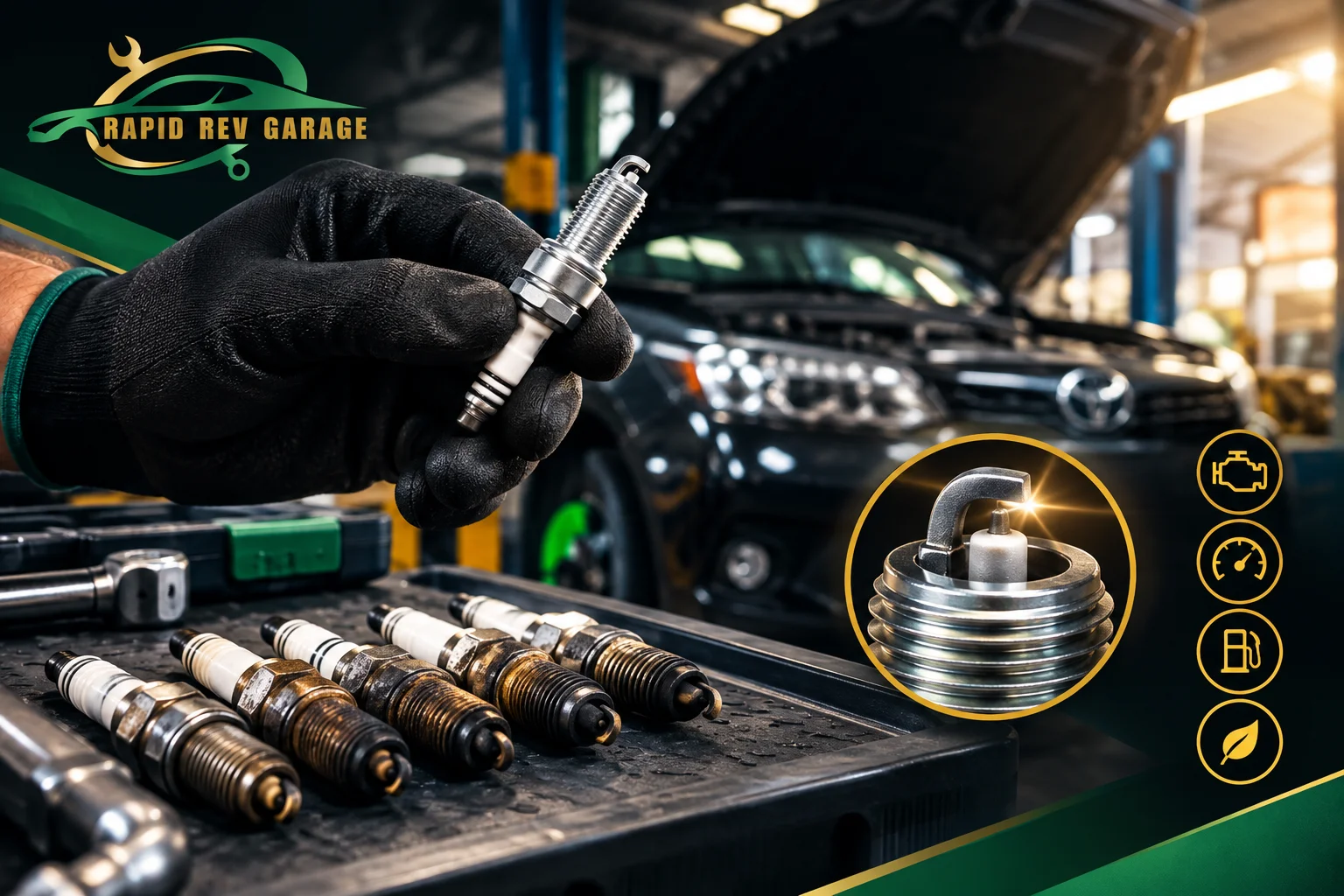
These sensors are genuinely heat-sensitive and fail more frequently in Dubai’s engine bay temperatures than in cooler markets. But before replacing them on a fault code, verify the wiring harness condition at the sensor connector — both sensors are mounted in locations that receive significant heat soak. Connector corrosion and insulation cracking at these mounting points cause intermittent signal faults that behave exactly like sensor failure.
ABS Wheel Speed Sensors
ABS sensor faults are the most common automotive electrical repair work related to chassis systems in Dubai. Road debris damage, connector corrosion from brake dust and moisture cycling, and bearing play that increases the sensor-to-reluctor gap beyond the threshold for reliable signal generation — all cause ABS warning lights and disabled ABS function.
A proper ABS sensor diagnosis checks all four sensors in live data simultaneously during a slow drive. A sensor that reads correctly at rest but loses signal at specific wheel speeds has a gap or reluctor issue rather than sensor failure. A sensor that reads zero consistently is either failed, damaged, or has lost its wiring connection.
For automotive electrical repair work alongside vehicle recovery, proper roadside assistance ensures the car reaches the workshop without stressing damaged electrical components further during towing. A qualified mobile car mechanic handles on-site battery replacements with correct coding, basic fault resets, and initial circuit checks that identify whether the car is safe to drive to the workshop.
A complete car service visit is the correct time to request a full electrical system health scan alongside the mechanical inspection — catching developing faults before they strand the car. For owners in Al Quoz and surrounding areas needing a garage near me with genuine multi-system diagnostic capability for automotive electrical repair — proper equipment and circuit-level knowledge make the difference between a repair that fixes the car and one that temporarily clears the codes.
Professional car painting handles bodywork needed alongside electrical repairs — no separate workshop visit required. And a qualified car mechanic with real electrical diagnostic experience doesn’t guess at causes — they trace circuits, test components under load, and fix what’s actually broken.
FAQ
What are the most common automotive electrical repair issues in Dubai?
Battery degradation from heat, wiring insulation cracking from heat cycling, ground strap corrosion, and sensor faults from connector corrosion are the most frequent issues.
Why does my car have multiple warning lights with no obvious single cause?
Usually a ground fault or a wiring harness issue — a single damaged ground connection creates voltage drops across multiple circuits, generating fault codes in unrelated systems simultaneously.
How do I know if my car needs ECU replacement or just a software update?
Proper diagnosis eliminates wiring and power supply faults first — many apparent ECU failures are software calibration issues resolved by reflashing, not hardware replacement.
Why does my battery keep dying even after replacement in Dubai?
Either an under-charging alternator, a parasitic drain from a module not entering sleep mode, or missing battery registration coding on European vehicles that causes incorrect charging strategy.
How long does automotive electrical fault diagnosis take?
Battery and charging checks take 30–45 minutes. Wiring fault tracing and multi-system diagnosis can take 2–4 hours depending on fault complexity and location.
Conclusion
Automotive electrical repair done correctly is methodical, not fast. It starts with proper diagnostic equipment, follows the circuit rather than the code, and doesn’t arrive at a parts solution until the actual cause is confirmed. In Dubai’s conditions — where heat, dust, and short-trip driving create electrical faults at a higher rate than most markets — the difference between a workshop that diagnoses properly and one that replaces parts speculatively shows up in both the repair bill and whether the car stays fixed.
Rapid Rev Garage in Al Quoz handles the full scope of automotive electrical repair — battery and charging diagnosis, wiring fault tracing, ECU and control unit diagnosis, sensor testing, and complete system health checks for all makes. Book your appointment on WhatsApp or find the workshop on Google Maps.