You start the car in a Jumeirah villa driveway and a sharp squeal comes from the front of the engine for a few seconds. On the drive to work, the AC is weaker than usual at the lights on Al Wasl Road, and the squeal returns when you turn the steering at full lock. A week later the battery light flickers. These are common bad serpentine belt symptoms, and the belt drives more of your car than most people realise.
The serpentine belt is a single long rubber belt that wraps around pulleys at the front of the engine. It takes power from the crankshaft and drives the alternator, the AC compressor, the power steering pump on many cars and the water pump on many engines. When the belt wears, slips or breaks, several systems fail at once.
This guide explains what the belt does, the signs it is worn, why heat and dust in Dubai shorten its life, how a workshop checks it and what replacement involves. It also covers the tensioner and pulleys that cause many belt problems.
Bad Serpentine Belt Symptoms: Quick Answer
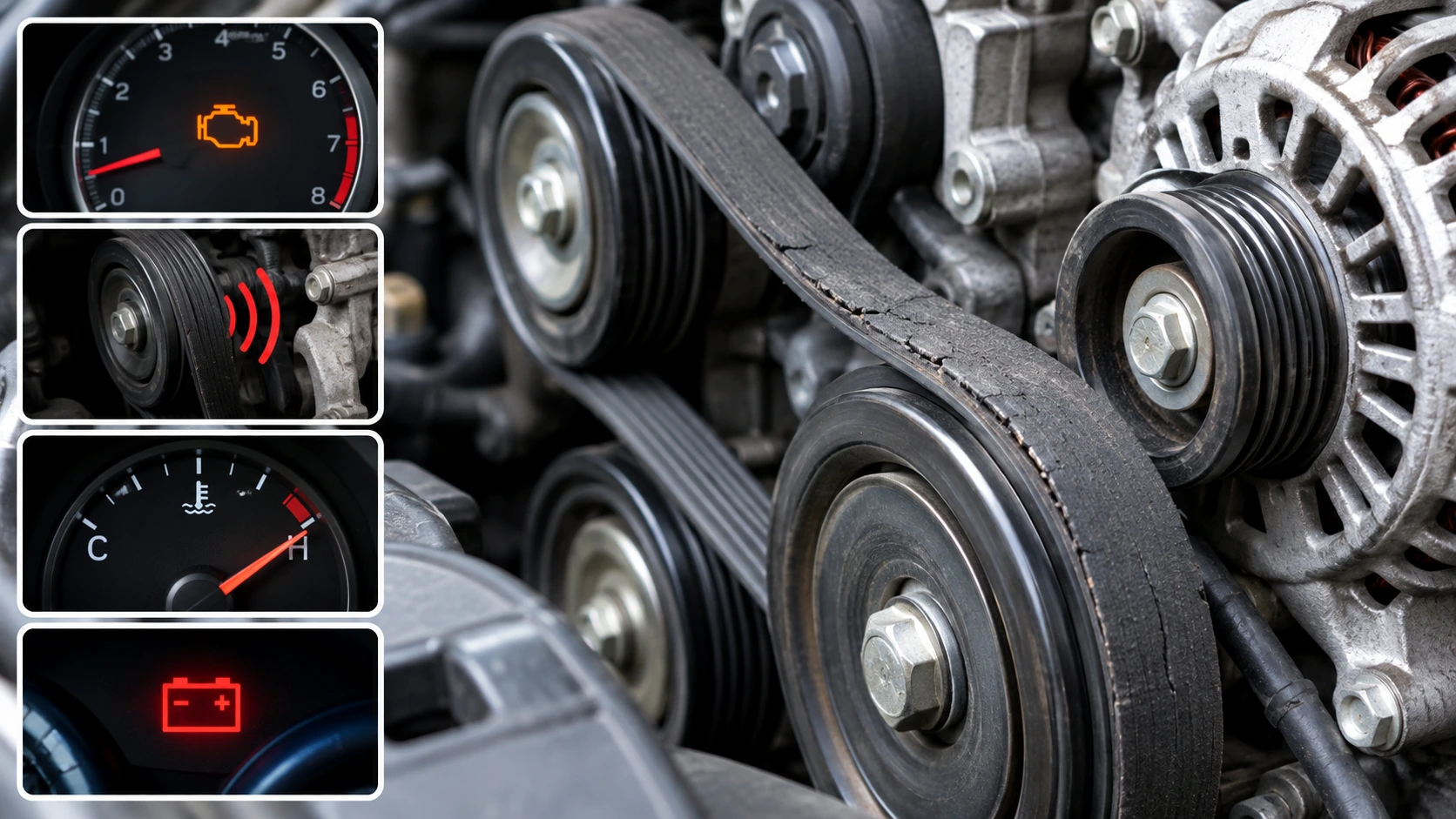
The main bad serpentine belt symptoms are squealing or chirping from the front of the engine, weak or warm AC, heavy or uneven power steering, a battery or charging light, engine overheating, a check engine light, visible cracks, glazing or missing chunks on the belt and, if the belt breaks, sudden loss of AC, charging and often cooling.
Gates explains that modern EPDM belts rarely crack, so the better test is rib material loss measured with a belt wear gauge. Gates lists belt slip from wear as a cause of poor AC, reduced engine cooling, uneven power steering and a persistent check engine light. A workshop checks the belt, tensioner and every pulley before fitting a new belt.
Table of Contents
- What the Serpentine Belt Drives
- EPDM Belts and Why Cracks Are No Longer the Main Sign
- Why Serpentine Belts Wear Faster in Dubai
- Squealing or Chirping From the Front of the Engine
- Weak or Warm AC
- Heavy or Uneven Power Steering
- Battery Light and Charging Problems
- Engine Overheating
- Visible Wear on the Belt
- What Happens When a Serpentine Belt Breaks
- Faults That Sound Like a Bad Serpentine Belt
- How a Workshop Checks a Serpentine Belt
- What Serpentine Belt Replacement Involves
- Should the Tensioner Be Replaced With the Belt?
- Is It Safe to Drive With a Worn Serpentine Belt?
- Do Belt Dressings Fix a Squealing Belt?
- How Long Does a Serpentine Belt Last?
- Can a Bad Belt Turn On the Check Engine Light?
- How to Make the Serpentine Belt Last Longer
- FAQ
- Conclusion
What the Serpentine Belt Drives
The serpentine belt takes its name from the way it snakes around the pulleys. A pulley on the crankshaft turns the belt, and the belt turns every accessory it touches.
On most cars, the belt drives the alternator, which charges the battery and powers the electrics, and the AC compressor. On many cars it also drives the power steering pump and the water pump. Some engines have a second belt for some of these parts.
An automatic tensioner holds the belt at the right tightness. Idler pulleys guide it around the engine. The belt has a flat back and several V shaped ribs on the inside that grip the pulley grooves.
Because one belt drives so many parts, a single worn belt can affect cooling, charging, steering and AC at the same time.
EPDM Belts and Why Cracks Are No Longer the Main Sign
Older belts were made of neoprene. They cracked across the ribs as they aged, and the rule was to replace a belt with three cracks in a three inch section.
Gates explains that most modern belts are made of EPDM, a rubber that resists cracking. Gates notes that EPDM belts can go 100,000 miles or more with no visible cracks, so the old crack rule no longer works.
Instead, EPDM belts wear by losing rubber from the ribs. Gates explains that grit, rocks, water and slight misalignment wear the rib surfaces. As material is lost, the belt sits deeper in the pulley grooves and can bottom out, which causes slip. Gates notes that as little as 5 per cent rib material loss can cause problems.
That is why a visual check alone often misses a worn belt. A belt can look fine and still slip.
Why Serpentine Belts Wear Faster in Dubai
Heat is the main stress. Engine bays in Dubai run very hot for months, and on summer afternoons when the air passes 45°C, the belt spends hours near hot engine parts. Heat hardens rubber, so the belt grips less and slips more.
AC load adds to it. In Dubai the AC runs almost all year, often on full. The AC compressor is one of the heaviest loads on the belt, so the belt works harder than in cooler climates.
Dust and sand wear the ribs. Gates lists grit as a cause of rib wear. Fine dust from desert winds, construction sites and industrial areas such as Al Quoz settles in the engine bay and grinds against the belt and pulleys.
Stop and start traffic means constant changes in engine speed and AC cycling, which loads and unloads the belt and tensioner many times on each trip.
Squealing or Chirping From the Front of the Engine
A squeal is the most common sign. It happens when the belt slips on a pulley. You often hear it on cold start, when you switch on the AC, at full steering lock or when you rev the engine.
A short squeal on start up that fades after a few seconds often means the belt is glazed or slightly loose. A squeal at full lock points to the power steering pump loading the belt. A squeal when the AC engages points to the compressor.
A chirp is a short, repeating sound, often at idle. It usually comes from a pulley that is slightly out of line, which makes the belt enter the groove at an angle. Gates lists misalignment as a cause of rib wear.
Gates notes in its tensioner guidance that squealing can also mean the tensioner is not holding enough tension.
Weak or Warm AC
Gates lists poor AC performance as a symptom of belt slip. If the belt slips on the AC compressor pulley, the compressor turns more slowly than it should and cools less.
You may notice the AC is fine on the highway but weaker at idle in traffic on Sheikh Zayed Road, when engine speed is low and the load on the belt is high.
Weak AC has many causes, including low gas and a blocked condenser. An AC repair specialist checks the belt along with system pressures before adding any gas.
Heavy or Uneven Power Steering
On cars with a belt driven power steering pump, Gates notes that belt slip can cause inconsistent power steering performance. The steering may feel heavy at low speed or get heavier and lighter as you turn.
The effect is usually worst at full lock when parking, because the power steering pump needs the most power then. A squeal at the same moment confirms the belt is slipping.
Cars with electric power steering do not use the belt for steering, so this symptom only applies to hydraulic systems. The guide on bad power steering pump symptoms explains how to tell which type you have.
Battery Light and Charging Problems
If the belt slips on the alternator pulley, the alternator turns too slowly and charges the battery less. You may see a battery or charging light flicker, especially at idle with the AC and headlights on.
Over time, the battery may run down. You may notice dim headlights at idle, slow electric windows or a slow crank on start up.
Some modern cars use smart charging that varies alternator output, so belt slip may show up first as a charging fault code. If the battery keeps going flat, a battery replacement will not fix the problem until the belt or alternator is checked.
Engine Overheating
On engines where the serpentine belt drives the water pump, Gates notes that belt slip can reduce engine cooling. A slipping belt turns the water pump more slowly, so less coolant flows through the engine and radiator.
The temperature gauge may sit higher than normal in traffic or on hot afternoons. If the belt breaks on one of these engines, the water pump stops completely and the engine can overheat within minutes.
The guide on failing water pump symptoms covers the pump side of the cooling system.
Visible Wear on the Belt
Even though EPDM belts rarely crack, a visual check still finds some problems. Look for:
- Glazed, shiny sides on the ribs, which mean the belt has been slipping
- Missing chunks or pieces of rib
- Frayed or torn edges, which point to a pulley out of line
- Oil or coolant on the belt, which makes it slip and swell
- Cracks across the ribs on older neoprene belts
A belt soaked in oil from a leaking valve cover gasket or crank seal must be replaced, and the leak must be fixed, or the new belt will fail too.
What Happens When a Serpentine Belt Breaks
When the belt breaks, every part it drives stops at once. The battery light comes on because the alternator stops charging. The AC blows warm. On hydraulic steering cars, the steering becomes very heavy.
On engines where the belt drives the water pump, the temperature gauge starts to climb quickly. Driving on can overheat the engine and damage the head gasket.
A broken belt can also whip around the engine bay and damage hoses, wiring or sensors. On some engines, pieces of belt can get pulled into the timing belt area.
Faults That Sound Like a Bad Serpentine Belt
Several parts make similar noises:
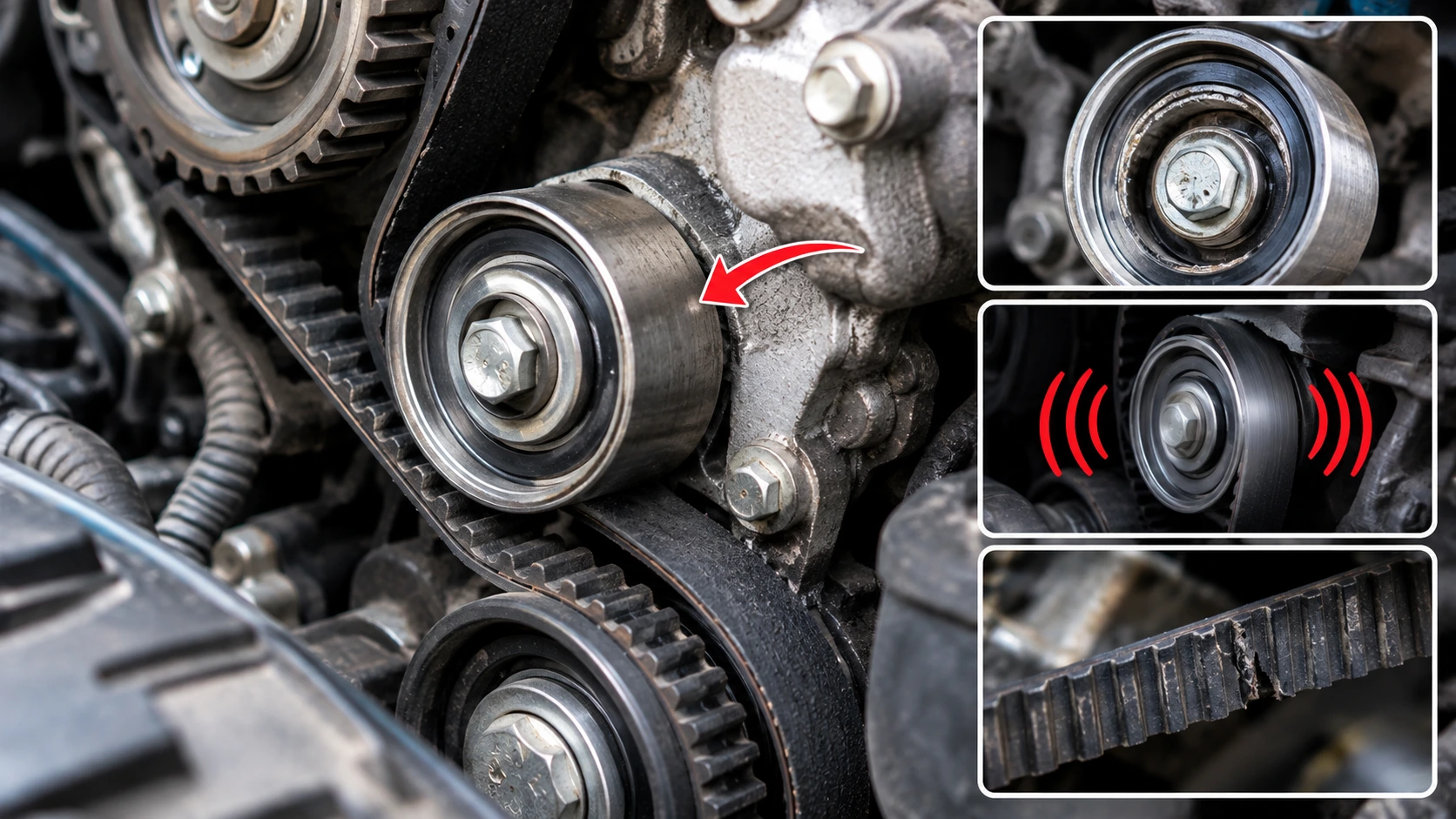
- Worn tensioner. Gates lists squealing, a bouncing arm and side to side play as signs of tensioner failure.
- Worn idler or tensioner pulley bearing. This makes a whirring, grinding or rumbling noise.
- Failing alternator bearing. This whines or growls and rises with engine speed.
- Failing water pump bearing. This grinds or rumbles and may leak coolant.
- Failing AC compressor clutch. This rattles or squeals when the AC is on.
- Exhaust leak. A ticking near the manifold can be mistaken for a belt chirp.
Testing each part separates a belt fault from a pulley or accessory fault.
How a Workshop Checks a Serpentine Belt
A trained car mechanic near you starts by listening to the engine at idle, with the AC on and off, and while turning the steering.
Gates recommends a belt wear gauge for EPDM belts. With the engine off, the gauge is pressed into the belt grooves. Gates explains that if the gauge sits tightly and resists rocking, the belt has life left. If it rocks side to side, the belt needs replacing.
The technician also checks the tensioner. Gates advises watching the tensioner arm with the engine running. Excessive bounce or chatter means the tensioner has failed. With the engine off, the arm is moved through its range to feel for roughness or sticking, and checked for side to side play.
Each pulley is spun by hand with the belt off to check for noisy or rough bearings. The pulleys are also checked for alignment with a straight edge or laser tool.
What Serpentine Belt Replacement Involves
The technician notes or photographs the belt routing, then releases the tensioner with a wrench or special tool and slips the belt off. Many cars have a routing diagram on a label under the bonnet.
Before fitting the new belt, the pulleys are checked and cleaned. The new belt is routed around every pulley, the tensioner is released onto it and the routing is checked so every rib sits correctly in every groove.
The engine is then run and the belt is watched for correct tracking. The noise test is repeated with the AC and steering loaded.
On most cars, belt replacement is a short job. On some engines with tight engine bays, other parts must be moved for access.
Should the Tensioner Be Replaced With the Belt?
Often, yes, on higher mileage cars. Gates advises inspecting the tensioner and other belt drive parts at 60,000 miles, about 96,000 km, and replacing worn parts by 90,000 miles, about 145,000 km, or as the maker advises.
A weak tensioner lets a new belt slip and wear quickly. Gates lists weak spring tension, worn pivot bushes and a worn damper among the causes of tensioner failure.
Gates also recommends replacing the belt when other components in the drive are replaced, to avoid repeat visits. A belt and tensioner fitted together often give the best result.
Is It Safe to Drive With a Worn Serpentine Belt?
A slightly worn belt that squeals now and then is not an emergency, but it should be replaced soon. A belt with missing chunks, frayed edges or oil soaking is close to failing.
If the belt breaks while driving, the battery light comes on, the steering may get heavy and, on many engines, the temperature rises fast. Pull over safely and switch off before the engine overheats.
On a highway, turn on your hazard lights and move to the hard shoulder. Stopping in a live lane because of a breakdown brings a AED 1,000 fine and six black points under Article 98 of the UAE Federal Traffic Law. Once safe, call roadside assistance.
If the belt drives the water pump, do not drive the car with a broken belt. It should travel on a flatbed tow truck. If the car is at home and only squeals, a mobile mechanic can check and often replace the belt in your parking space.
Do Belt Dressings Fix a Squealing Belt?
Belt dressing sprays can quiet a squeal for a short time. They do not fix the cause.
A squeal means the belt is slipping because it is worn, glazed, loose or contaminated, or because a pulley or tensioner is faulty. Spray can make the rubber sticky and attract dust, which speeds up wear.
The better fix is to find the cause with a wear gauge, a tensioner check and a pulley check, then replace the worn part.
How Long Does a Serpentine Belt Last?
There is no single figure. Gates notes that EPDM belts can go 100,000 miles or more with no visible cracks, but recommends starting to check for rib wear at 60,000 miles, about 96,000 km.
In Dubai, heat, AC load and dust can shorten that life. Many owners replace the belt at the interval in the service book or when a wear gauge shows rib loss, whichever comes first.
Oil or coolant leaks onto the belt shorten its life sharply. Fixing leaks protects the belt.
Can a Bad Belt Turn On the Check Engine Light?
Yes. Gates lists a persistent check engine light among the symptoms of belt slip. A slipping belt can cause charging faults, low voltage codes and, on some cars, sensor codes caused by unstable voltage.
On cars where the belt drives the water pump, overheating can also set temperature related codes.
If the check engine light comes on with a squeal, ask for the belt and charging system to be checked when the codes are read.
How to Make the Serpentine Belt Last Longer
Fix oil and coolant leaks quickly. Fluids on the belt make it slip and break down.
Ask for a belt wear gauge check at every service once the car passes about 96,000 km, as Gates suggests.
Replace the tensioner and idler pulleys when they show play, noise or bounce. A good belt on a weak tensioner still slips.
Keep the engine bay reasonably clean. Dust build up around the pulleys wears the belt faster.
Avoid pressure washing the belt area directly. Water forced into pulley bearings shortens their life.
If a broken belt has scratched the inside of the bonnet or bumper area, minor marks can be fixed through paint and panel repair.
A regular car service in Dubai should include a belt and tensioner check. If you hear a squeal or the AC weakens, take the car to a car garage near you that checks the whole belt drive before replacing the belt.
FAQ
Here are the questions Dubai drivers most often ask about serpentine belts.
What does a bad serpentine belt sound like?
It usually squeals on start up, when the AC switches on or at full steering lock. A short repeating chirp at idle often points to a pulley that is out of line.
Can a bad serpentine belt affect the AC?
Yes. A slipping belt turns the AC compressor too slowly, so cooling drops, especially at idle. Gates lists poor AC performance as a sign of belt slip.
How do mechanics check a serpentine belt?
They use a belt wear gauge in the grooves, as Gates recommends, check the tensioner for bounce and play, spin each pulley by hand and check pulley alignment.
What happens if the serpentine belt breaks?
The alternator, AC and often the power steering and water pump stop. The battery light comes on, steering may get heavy and the engine can overheat quickly.
How often should a serpentine belt change?
Gates suggests checking for rib wear from about 96,000 km and replacing tensioner parts by about 145,000 km. Dubai heat and AC load can shorten belt life.
Conclusion
A bad serpentine belt shows up as squealing or chirping, weak AC, heavy steering, a battery light, overheating, a check engine light and visible wear. Heat, constant AC use and dust wear belts faster in Dubai. Because modern EPDM belts rarely crack, a wear gauge check plus a tensioner and pulley inspection gives the true picture before a new belt is fitted.
Rapid Rev Garage is a full workshop open 24 hours at Al Khail Gate, 12th Street, Al Quoz Industrial Area 2, serving passenger cars across Al Quoz, Business Bay, Jumeirah, Al Barsha, Satwa, Downtown and the Sheikh Zayed Road corridor. Visit https://rapidrevgarage.com, send your car model and a short video of the squeal on WhatsApp, or get directions on Google Maps.
Rapid Rev Garage | Bad Serpentine Belt Symptoms | Al Quoz, Dubai