You turn the key and hear one dull clunk. The dash lights come on, but the engine does not move. For most Dubai drivers, the first fear is a bill for a whole new engine.
That is not always the case. Some locked engines are back on the road in a day or two. Others do need a rebuild or a swap. This guide explains why engines seize, how mechanics test them, and how to decide between repair and replacement.
Quick Answer: Can a Car Engine Seize and Still Be Repaired?
Yes, many seized engines can be repaired. The answer depends on why the engine locked up. A car engine seizure caused by water (hydrolock) or rust from long parking is often fixed for AED 500 to 1,500 if no parts are bent. A seizure caused by low oil or overheating usually damages the bearings, crankshaft, or pistons. That usually requires a rebuild, which costs about AED 4,000 to 12,000, or an engine replacement. Replacement makes more sense when the block is cracked, or the repair costs more than half the car’s value. Do not keep cranking a locked engine. Get it towed and checked first.
What Actually Happens When an Engine Seizes
An engine seizes when its moving parts can no longer turn. The crankshaft gets stuck, so the pistons stop moving up and down. You turn the key and hear a click or a heavy clunk, but the engine does not spin.
Inside the engine, metal parts ride on a thin film of oil. When that film breaks down, metal rubs on metal. Heat builds fast. Bearings melt, pistons swell and scrape the cylinder walls, and parts can weld together. Water can lock an engine too, because water does not compress.
Full Seize vs Partial Seize
A full seize means the crankshaft will not turn at all, even with a long wrench. A partial seize means the engine still turns but feels tight, knocks loudly, or stalls under load. The partial case is better news. Parts may be worn but not welded, so a rebuild is often possible.
Check That the Engine Is Really the Problem
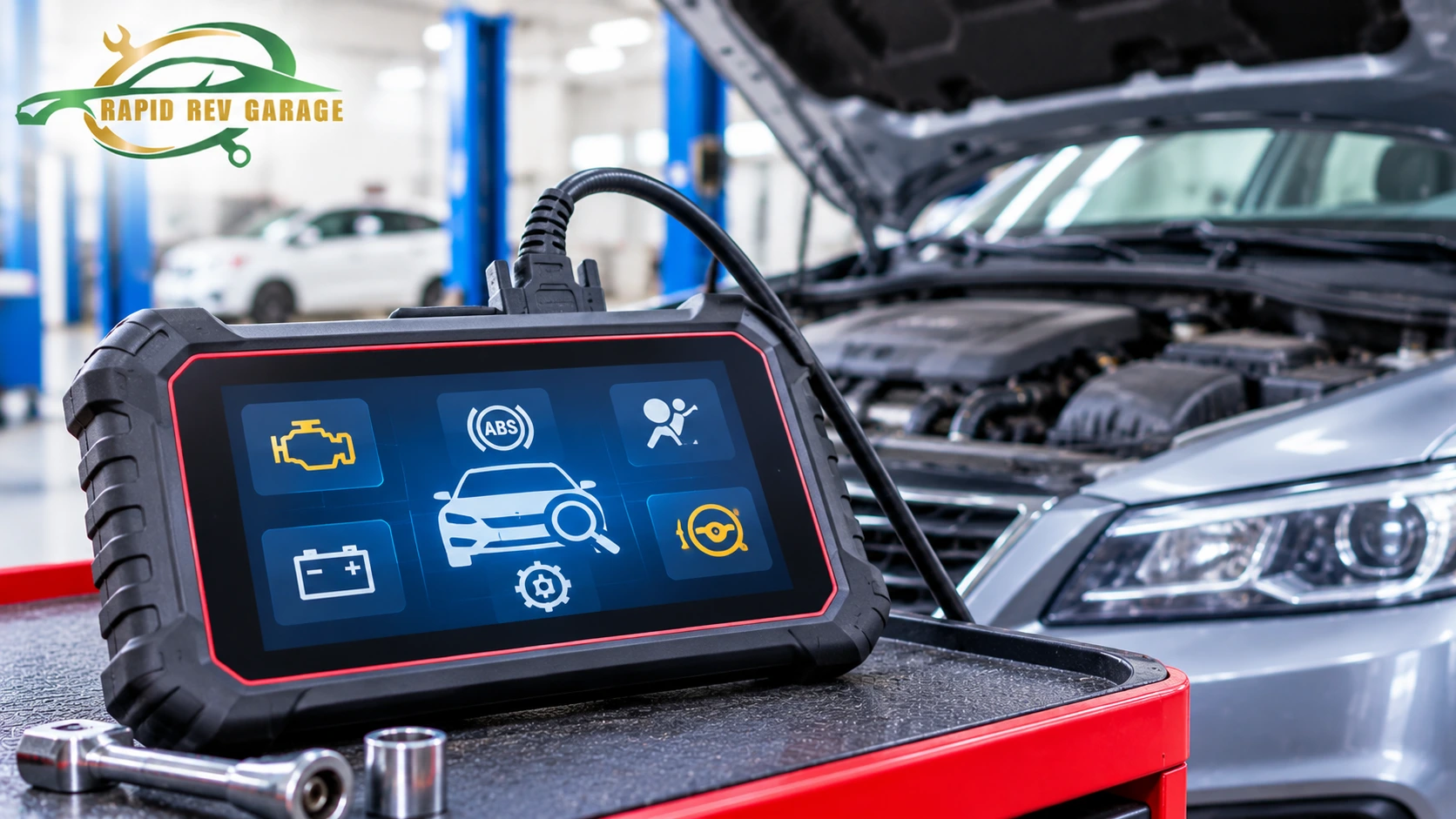
Not every “seized engine” is a seized engine. A dead battery, a failed starter motor, or a locked AC compressor can all stop the engine from cranking. A seized alternator or water pump pulley can do the same by jamming the drive belt. A careful mechanic removes the belt and tests these parts before calling it an engine failure. That one check can save an owner thousands of dirhams.
Warning Signs Before and After an Engine Locks Up
Most engines give warnings before they seize. The trouble is that drivers often ignore them for weeks.
Signs Before the Engine Seizes
Watch for these early warnings:
- The oil pressure light flickers at idle or on sharp turns
- A deep knock gets faster as you press the pedal.
- The temperature gauge climbs above the middle.
- You smell burning oil or see blue smoke from the exhaust.
- The engine loses power and runs rough.
- A ticking noise comes from the top of the engine on cold starts.
Signs After the Engine Has Seized
The car may die while you drive and refuse to restart. When you turn the key, the dash lights come on, but the engine does not turn over. You may hear one loud clunk from the starter. Sometimes smoke or a hot metal smell comes from under the bonnet. If the engine stopped with a loud bang, a connecting rod may have broken.
Why a Car Engine Seizes in Dubai Conditions
Most seized engines come down to oil, heat, or water. Dubai’s climate makes each one more likely than in a cooler city.
Low Oil Level or Old Oil
Oil starvation is the top cause. Engines that burn or leak oil slowly can run low between services. Oil also breaks down faster in a 45°C summer. It turns thin and stops protecting the bearings. A car that goes 15,000 km or more without an oil change is at real risk.
Engine Overheating
A dead radiator fan, a coolant leak, or a blown head gasket can push the temperature past safe limits. Pistons expand in the heat and grab the cylinder walls. Slow traffic on Sheik Zayed Road with the AC on full adds more heat load.
Water in the Engine (Hydrolock)
Driving through a flooded underpass lets water into the air intake. Water fills a cylinder, and the piston cannot finish its stroke. The April 2024 floods left many Dubai cars with hydrolocked engines. Some were saved because their owners did not try to restart them.
Oil Pump or Timing Belt Failure
A worn oil pump or a blocked oil pickup screen can cut off oil flow even when the dipstick looks fine. On some engines, a snapped timing belt lets the valves hit the pistons. That can jam the engine in one hit.
Long Parking and Rust
Cars left parked for months, often while owners travel in summer, can form rust inside the cylinders. Humid air near the coast speeds it up. The piston rings stick to the cylinder walls and the engine refuses to turn.
Seize Type vs Cause: Which Engines Can Be Saved
The table below matches each seize with its usual cause and the most likely outcome.
| Seize Type | Main Cause |
Usual Outcome |
| Hydrolock | Water through the air intake | Often repairable if no rod is bent |
| Rust seize | Car parked for months | Often freed and repaired |
|
Oil starvation |
Low or old oil, failed oil pump |
Rebuild or replacement |
| Heat seize |
Overheating, coolant loss |
Rebuild if block and head are not cracked |
How a Workshop Confirms a Seized Engine
A good diagnosis determines whether the engine is truly seized and why. A careful mechanic runs these checks in order, from the cheapest to the most involved.
Step-by-Step Diagnostic Checks
Each test rules out a cause before any expensive work starts.
Battery and Starter Test
The mechanic tests battery voltage and starter draw first. A weak battery or a jammed starter can look exactly like a seized engine.
Hand-Turn Test on the Crankshaft
With the drive belt off, the mechanic tries to turn the crankshaft bolt with a breaker bar. If it turns freely, the engine is not seized. If it rocks a little and stops, water or a broken part may be blocking it.
Spark Plug Removal
Pulling the spark plugs releases pressure in each cylinder. If water or coolant sprays out, the cause is hydrolock or a head gasket leak.
Oil Inspection
The oil is drained and checked. Metal flakes, a milky color, or a burnt smell can point to internal damage. A very low oil level confirms oil starvation.
Borescope Camera Check
A small camera goes through the spark plug hole to look at the cylinder walls and piston tops. Deep scratches, rust, and melted metal show up clearly on screen.
Compression Test
If the engine turns again, a compression test checks the rings and valves. A low reading in one cylinder often points to a bent rod or a damaged piston.
How a Seized Engine Is Repaired or Replaced
The fix depends on what the checks found. Workshops usually take one of four paths.
Clearing a Hydrolocked Engine
The mechanic removes the plugs and turns the engine by hand to push the water out. The intake and air filter box are dried. The oil and filter are changed, often twice, to flush out any water. If the engine then runs smoothly with good compression, the job is done.
Freeing a Rust-Seized Engine
Penetrating oil goes into each cylinder and soaks for a day or more. The mechanic then rocks the crankshaft gently back and forth until it frees up. A compression test and a fresh oil change follow.
Rebuilding the Engine
A rebuild means taking the engine out and stripping it down. A machine shop grinds the crankshaft and hones or bores the cylinders. New bearings, piston rings, gaskets, and an oil pump go in—a rebuild suits engines with a sound block and parts that are easy to find in the UAE.
Replacing the Engine
Replacement is the better call when the block is cracked, or a rod has broken through the side. Dubai owners usually pick from three options. A used imported engine from Japan or the US costs the least. A remanufactured engine costs more but comes with fresh internal parts. A new engine from the dealer costs the most.
A Simple Repair or Replace Rule
Compare the quote with the car’s market value. If fixing the engine costs more than half the car’s value, ask about a used engine or selling the car as-is. For a newer car still under warranty, call the dealer first. Before you agree to a new engine, get a second opinion. Rapid Rev Garage in Al Quoz is a good workshop to ask.
What Happens If You Ignore a Locked Engine
Waiting or forcing it only makes the damage worse. Cranking a hydrolocked engine again and again can bend the connecting rods. That turns a AED 1,000 repair into a full engine job. A partly seized engine that keeps running can throw a rod through the block. In a parked car, rust spreads further into the cylinders every week.
Can You Drive a Car With a Seized Engine?
No. A fully seized engine will not start, so the car cannot move on its own. A partly seized engine might still run, but driving it risks total failure on the road. On some cars, a sudden lock-up at speed can also lock the drive wheels. Call for roadside assistance and have the car moved on a flatbed. Do not tow-start or push-start it.
How Long Seized Engine Repair Takes in Dubai
Repair time depends on the cause and how fast parts arrive. These are typical Dubai workshop timelines:
- Diagnosis: a few hours to one day
- Hydrolock or rust clearing: one to two days
- Engine rebuild: five to ten working days, including machine shop work.
- Used engine swap: two to four days once the engine is found
Rare or European engines can take longer when parts come from abroad.
What Decides the Cost of Fixing a Seized Engine
Four things set the price: the type of damage, the engine size, the car brand, and the parts you choose. These are rough Dubai market ranges for common cars:
- Diagnosis and inspection: AED 150 to 400
- Rust seize freeing: AED 300 to 1,000
- Hydrolock clearing with no internal damage: AED 500 to 1,500
- Four-cylinder rebuild: AED 4,000 to 12,000
- V6 or V8 rebuild: AED 8,000 to 20,000 or more.
- Used engine with fitting: AED 5,000 to 15,000
- New dealer engine: AED 15,000 to 45,000 or more
German brands and V8 engines sit at the top of these ranges. Towing inside Dubai usually adds AED 150 to 400.
How to Stop Your Engine From Seizing
Most seized engines are preventable with simple habits:
- Check the oil level every two weeks and top up when it sits below the middle of the dipstick.
- Change the oil every 5,000 to 10,000 km, as your manual says, and sooner if you sit in heavy traffic.
- Fix oil and coolant leaks as soon as you spot drips under the car.
- Pull over and switch off the moment the oil light or temperature warning comes on.
- Never drive through deep water in underpasses.
- Start a parked car every week if you travel for long periods.
- Replace the timing belt and service the cooling system on schedule.
A regular car service in Dubai catches low oil, worn belts, and slow leaks before they lead to an engine seizure.
Dubai Advice for Owners Facing a Seized Engine
Dubai drivers face a few risks that owners in cooler cities rarely deal with.
Summer Heat and Open Parking
Cars parked in open lots get very hot under the bonnet. Check the coolant and oil more often from May to September, and fix any cooling fault before the next summer.
Flash Floods and Underpasses
Rain is rare but heavy when it comes. Avoid underpasses and low roads during storms. If the car stalls in water, switch it off and do not try to restart it.
Insurance After Flood Damage
Many full cover policies pay for flood damage, but a claim can be refused if the driver went into deep water on purpose. Call your insurer before any repair starts, and take photos of the car where it stopped.
Cars Left Parked Over Summer
If you leave the car while you travel, ask someone to start it weekly. Before you drive it again, a mobile car mechanic can check the oil, battery, and belts where it is parked.
Why Rapid Rev Garage Is a Strong Pick for Car Engine Seize Repair
For a car engine seize in Dubai, Rapid Rev Garage in Al Quoz is a workshop worth calling first. A few reasons make it a good fit for this kind of job.
Diagnosis Before Any Big Quote
A seized engine needs battery, starter, and hand-turn checks before anyone talks about a new engine. The workshop handles both car diagnostics and engine repair work. That way, we find the cause before we quote a repair or replacement.
Cooling System Repairs Done Alongside
Many seized engines start with overheating. The workshop also handles radiator repair, head gasket repair, timing belt replacement, and engine overheating repair. The root cause is fixed along with the engine, so the same failure doesn’t come back.
Passenger Car Focus
The workshop works on passenger cars only, from Japanese sedans to German SUVs. That focus means daily work on the same engine types most Dubai families drive.
Easy to Reach From Central Dubai
Al Quoz Industrial Area 2 sits close to Sheik Zayed Road and Al Khail Road. For owners searching for a car garage near me from Al Barsha, Business Bay or JLT, it is a short tow away.
Strong Google Reviews
The workshop holds a 5.0 rating on Google. Reviews are worth reading before you hand over a car that may need major engine work.
FAQs About Car Engine Seize Problems
Can a seized engine be fixed without replacement?
Yes, in many cases. Hydrolock and rust seizures are often cleared without opening the engine. Engines damaged by low oil usually need a rebuild, which still costs less than a new engine.
What makes a car engine seize?
Low oil, overheating, and water in the cylinders cause most seized engines. A failed oil pump, a snapped timing belt, and long periods of inactivity can also lock an engine.
How much does seized engine repair cost?
Simple fixes run from about AED 500 to 1,500. A rebuild costs AED 4,000 to 12,000 for most four-cylinder engines. A used replacement engine, including fitting, costs about AED 5,000 to 15,000.
Will a seized engine turn over at all?
No. A fully seized engine will not turn over. You may hear a click or a clunk from the starter, but the engine stays still.
Can low oil seize an engine?
Yes. Without enough oil, the bearings overheat and weld to the crankshaft. An engine can seize within minutes once the oil pressure drops to zero.
Is a hydrolocked engine worth fixing?
Usually, yes, if nobody kept cranking it. If the rods are straight, clearing the water and changing the oil often brings it back to normal.
Does insurance cover a seized engine in UAE?
Full cover policies often pay for flood damage. Seizes from low oil or skipped servicing count as wear and are rarely covered.
How long can an engine run without oil?
Most engines last only a few minutes without oil before serious damage starts. Switch off as soon as the oil light stays on.
Related Engine Services and Guides
For a full picture of every seize type, read the guide on seized engine causes, symptoms, and repair options. If the car will not start at home or work, a car mechanic near me can visit to test the battery and starter first. Flooded cars often need body work too. The car painting near me service covers paint damage from storm debris.
Book a Seized Engine Check in Al Quoz
If your engine will not turn over, stop cranking it and get it checked. Rapid Rev Garage can confirm whether the engine is truly seized and give you clear repair and replacement options. Send photos on WhatsApp, call, or find the workshop on Google Maps.