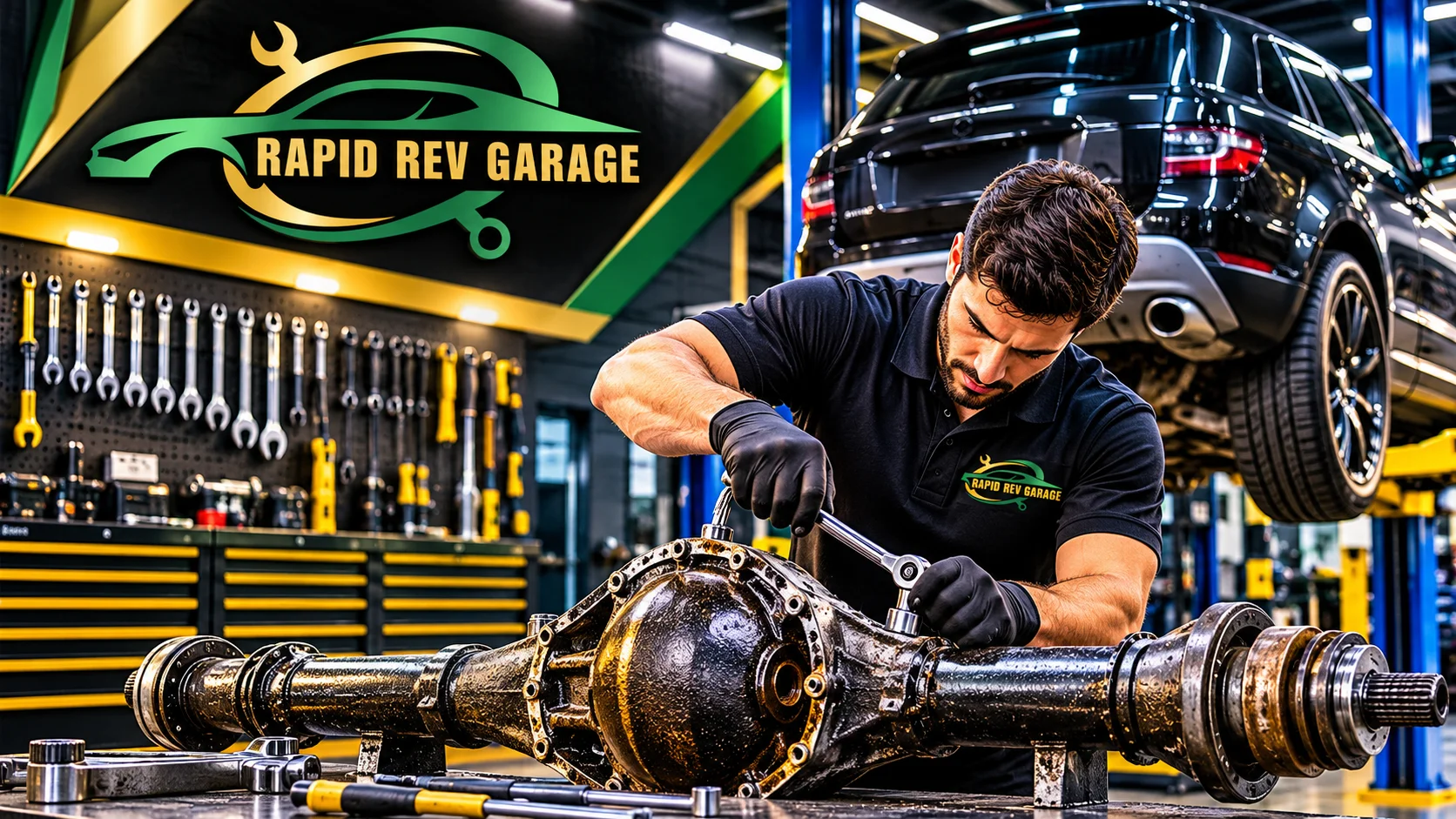
Quick Answer: What Causes a Rear Differential Leaking?
A rear differential leaking usually happens when seals, gaskets or the differential cover become damaged. Low or old differential oil can also affect the system and increase wear. You may notice oil spots under the rear of your vehicle, unusual whining sounds or vibrations while driving. Ignoring these signs can damage internal gears and bearings. Dubai’s hot weather and daily traffic can add stress to vehicle components. If you notice an oil leak, arrange a professional inspection. Early repairs can prevent serious damage and help keep your vehicle safe.
Table of Contents
- What Does a Rear Differential Leaking Mean?
- Common Causes of Rear Differential Oil Leaks
- Warning Signs Your Rear Differential Leaking Needs Repair
- How Do We Diagnose Differential Leaks?
- How Is a Rear Differential Leaking Repaired?
- How Long Does Differential Repair Take?
- What Happens If You Ignore a Differential Leak?
- Can You Drive With a Differential Oil Leak?
- How Much Does Differential Repair Cost in Dubai?
- How Can You Prevent Future Differential Leaks?
- Why Choose Rapid Rev Garage for Differential Repair?
- Frequently Asked Questions
What Does a Rear Differential Leaking Mean?
The rear differential leaking is an important part of your vehicle’s drivetrain. It lets the rear wheels to rotate at different speeds as you turn.
It also transfers power from the driveshaft to the rear wheels. Inside the differential, special oil lubricates the gears and bearings.
When oil escapes from the housing, the system may not receive enough lubrication. This can increase friction and damage internal parts.
A rear differential leaking can start as a small problem. However, the leak may become worse if you continue driving without fixing it.
You may notice oil under the rear axle or around the differential housing. Sometimes, the leak only appears after the vehicle has been parked for several hours.
Finding the source early can help you avoid expensive repairs.
Common Causes of Rear Differential Oil Leaks
Several parts can cause differential oil to escape. Some problems are simple to fix, while others need more detailed repairs.
Here are the most common causes.
1. Worn Differential Pinion Seal
The pinion seal prevents oil from escaping where the driveshaft connects to the differential.
Over time, heat, friction and normal wear can damage the seal.
Common signs include:
- Oil around the driveshaft connection.
- Wet areas near the differential.
- Oil dripping under the rear of the vehicle.
Replace a damaged pinion seal before the oil level becomes too low.
2. Damaged Axle Seals
Axle seals keep differential oil inside the housing near the axle shafts.
These seals can become hard, cracked or worn with age.
You may notice oil around the rear wheels or axle connections.
If the leak reaches the brake components, it can also affect braking performance. Arrange an inspection as soon as possible.
3. Cracked Differential Cover
The differential cover protects internal gears and holds the oil inside the housing.
Road debris, corrosion or physical impact can damage the cover.
A cracked cover or damaged sealing surface may allow oil to escape.
The technician should inspect the cover and replace the damaged gasket or cover when needed.
4. Worn Differential Gasket
The gasket creates a tight seal between the differential housing and its cover.
Heat and age can weaken the gasket.
When this happens, oil may slowly leak around the cover’s edges.
Replacing the gasket can solve the problem if the housing and cover remain in good condition.
5. Loose Drain or Fill Plug
The drain and fill plugs help technicians service the differential oil.
If a plug becomes loose or its washer gets damaged, oil can escape.
This problem may cause small drops under the differential housing.
A technician should check the plug, threads and sealing washer.
6. Blocked Differential Breather
The differential breather allows pressure to escape from the housing.
If dirt blocks the breather, pressure may build up inside the differential.
This pressure can force oil past seals and gaskets.
Cleaning or replacing the breather may help prevent further leaks.
7. Overfilled Differential Oil
Adding too much oil can increase pressure inside the housing.
Excess oil may escape through the breather or weak seals.
Always use the correct oil type and filling level for your vehicle.
Warning Signs Your Rear Differential Needs Repair
A differential leak often shows clear warning signs. Recognizing them early can help protect your vehicle.
Watch for these symptoms.
Oil Spots Under the Rear of Your Vehicle
Dark or oily patches under the rear axle may indicate a differential leak.
Check the area around the differential housing and axle connections.
Whining or Humming Sounds
Low differential oil can increase friction between gears.
You may hear whining or humming sounds when accelerating or driving at higher speeds.
Vibrations While Driving
Worn gears or bearings may cause vibration through the vehicle.
These vibrations can become stronger as the vehicle speeds up.
Burning Oil Smell
Leaking oil may reach hot exhaust components.
This can create a burning smell, especially after longer drives.
Low Differential Oil Level
A low oil level means the system may not have enough lubrication.
This can increase wear on gears and bearings.
Don’t ignore a rear differential leak when you notice these symptoms. Arrange an inspection to find the source.
How Do We Diagnose Differential Leaks?
A proper inspection helps identify where the oil is escaping. It also helps prevent unnecessary part replacement.
At Rapid Rev Garage, a professional differential inspection should include these steps.
1. Visual Inspection
The technician checks the differential housing, seals, gasket and surrounding areas.
They look for fresh oil, wet surfaces and visible damage.
2. Differential Oil Level Check
The technician checks the oil level according to the proper technique.
They also inspect the oil for signs of contamination or unusual particles.
3. Seal and Gasket Inspection
The technician closely inspects the pinion seal, axle seals and differential cover gasket.
This helps identify worn or damaged sealing parts.
4. Breather Inspection
The technician checks whether the differential breather allows proper airflow.
A blocked breather may increase pressure inside the housing.
5. Noise and Vibration Check
The technician may inspect the gears and bearings for unusual noise or movement.
A road test can help identify problems that only appear while driving.
6. Final Diagnostic Assessment
After testing, the technician identifies the leak source and recommends the required repair.
This helps avoid unnecessary expenses.
How Is a Rear Differential Leaking Repaired?
The repair depends on the damaged part. A small seal leak may need a simple replacement, while internal damage may require specialist work.
Here are common repair solutions.
Replace the Pinion Seal
If the pinion seal is worn, the technician removes the required components and installs a new seal.
The technician must also follow the correct reassembly procedures.
Replace Damaged Axle Seals
Damaged axle seals should be replaced to stop oil escaping near the axle shafts.
The technician also checks the axle surfaces for damage.
Repair or Replace the Differential Cover
A damaged cover may need replacement.
If the cover remains in good condition, the technician may only need to replace the gasket.
Replace the Drain Plug Washer
A damaged washer can cause oil to escape around the drain plug.
Replacing it and tightening the plug correctly can solve the problem.
Clean or Replace the Breather
A blocked breather can increase pressure inside the differential.
Cleaning or replacing it helps the system release pressure properly.
Refill Differential Oil
After fixing the leak, the technician fills the differential with the correct oil.
The oil level must match the manufacturer’s specifications.
How Long Does Differential Repair Take?
Repair time depends on the leak location, vehicle model and condition of the affected parts.
Here are general repair time estimates.
|
Repair Type |
Estimated Repair Time |
|---|---|
|
Differential inspection |
30–60 minutes |
|
Differential oil replacement |
1–2 hours |
|
Pinion seal replacement |
2–4 hours |
|
Axle seal replacement |
2–4 hours |
|
Differential gasket replacement |
1–3 hours |
|
Drain plug replacement |
30–60 minutes |
|
Breather cleaning or replacement |
30–90 minutes |
|
Differential cover replacement |
2–4 hours |
|
Internal differential repair |
1–3 working days |
These are general estimates. Some vehicles may take longer because of their design or parts availability.
What Happens If You Ignore a Differential Leak?
Ignoring an oil leak can cause serious drivetrain damage.
The differential needs proper lubrication to protect its internal components.
Here are some possible problems.
Excessive Gear Wear
Low oil increases friction between the gears.
This can damage the gear surfaces over time.
Bearing Damage
Differential bearings need proper lubrication to operate smoothly.
Low oil can increase heat and cause early bearing failure.
Overheating
Without enough oil, internal components may generate excessive heat.
This can reduce the differential’s service life.
Expensive Repairs
A small seal leak may only need a replacement part.
However, continued oil loss can damage gears and bearings. This may require a much bigger repair.
Unexpected Breakdown
Severe differential damage can affect how power reaches the wheels.
You may experience unusual noises, vibrations or loss of drive.
Can You Drive With a Differential Oil Leak?
Driving with a differential leak is not recommended until you know how serious it is.
A small leak may not cause immediate symptoms. However, the oil level can keep dropping.
Stop driving and arrange professional assistance if you notice:
- Heavy oil dripping under the vehicle.
- Loud whining or grinding sounds.
- Strong vibrations from the rear.
- Burning smells.
- Severe changes in vehicle performance.
Do not touch hot drivetrain parts or attempt repairs under a vehicle without proper equipment.
If your vehicle is not safe to drive, contact a recovery service or roadside assistance provider.
You can also search for a reliable garage near me to arrange a differential inspection.
How Much Does Differential Repair Cost in Dubai?
Differential repair costs depend on the vehicle model and the leak location.
Replacing a seal usually costs less than repairing damaged internal gears.
Several factors affect the final price.
|
Cost Factor |
How it Affects the Price |
|---|---|
|
Vehicle model |
Different vehicles use different differential systems |
|
Leak location |
Some seals are harder to access |
|
Parts quality |
Genuine and aftermarket parts have different prices |
|
Labour charges |
Complex repairs need more working hours |
|
Oil type |
Different vehicles require different differential oils |
|
Internal damage |
Gear or bearing damage increases repair costs |
|
Parts availability |
Imported parts may increase expenses |
Always request an inspection and repair quotation before approving the work.
How Can You Prevent Future Differential Leaks?
Regular maintenance can help protect your differential and reduce the risk of oil leaks.
Follow these simple tips.
Check for Oil Spots
Look under the rear of your vehicle after parking.
Fresh oil spots may indicate a developing leak.
Follow the Correct Service Schedule
Check the differential oil according to your vehicle’s maintenance requirements.
Replace it when the manufacturer recommends.
Use the Correct Differential Oil
Different vehicles need different oil specifications.
Using the improper oil can have an impact on both lubrication and component life.
Fix Small Leaks Early
Do not wait for a small leak to become serious.
Replace damaged seals and gaskets as soon as possible.
Inspect After Rough Driving
Driving over rough roads or hitting road debris can damage the differential housing.
Arrange an inspection if you notice a new leak after an impact.
Check the Breather
Keep the differential breather clean and clear.
This helps control pressure inside the housing.
Dubai’s high temperatures and dusty roads can make regular vehicle inspections especially important. Proper maintenance helps protect drivetrain components during daily driving.
Why Choose Rapid Rev Garage for Differential Repair?
A rear differential leaking needs proper inspection and the right repair. Finding the source early can help prevent further damage.
Rapid Rev Garage in Al Quoz, Dubai, provides automotive inspection and repair support for local drivers.
Here is why choosing an experienced garage matters.
Professional Vehicle Inspection
Technicians inspect differential seals, gaskets, covers and oil levels to identify the leak’s source.
Experienced Repair Support
Proper repair methods help protect important drivetrain components.
Suitable Replacement Parts
Using the correct seals, gaskets and differential oil helps maintain reliable performance.
Clear Repair Recommendations
You should understand the problem and repair options before approving any work.
At Rapid Rev Garage, the focus is on finding the actual cause and recommending the right repair for your vehicle.
If you notice a rear differential leaking, arrange an inspection before low oil causes further damage.
Whether you need differential repair, a vehicle inspection or roadside assistance, professional support can help you get back on the road safely.
Frequently Asked Questions
Why Is My Rear Differential Leaking Oil?
Worn seals, damaged gaskets, loose plugs or a cracked housing can cause oil leaks.
Can Low Differential Oil Damage Gears?
Yes. Low oil increases friction and can damage gears and bearings.
Is a Differential Oil Leak Serious?
Yes. Continued oil loss can cause overheating and expensive internal damage.
How Much Does Differential Seal Repair Cost?
The cost depends on your vehicle, seal location, parts and labor.
Can I Drive With a Differential Leak?
Avoid driving until a technician checks the leak and confirms the vehicle is safe.
Final Call-to-Action: Get Your Differential Leak Fixed Today
A small oil leak can turn into a serious drivetrain problem if you ignore it. Early inspection helps protect your differential and prevent expensive repairs.
If you notice oil under your vehicle, unusual noises or rear axle vibrations, contact Rapid Rev Garage in Dubai for professional inspection and repair support.
Do not wait until the differential loses too much oil. Get the problem checked and keep your vehicle running smoothly.