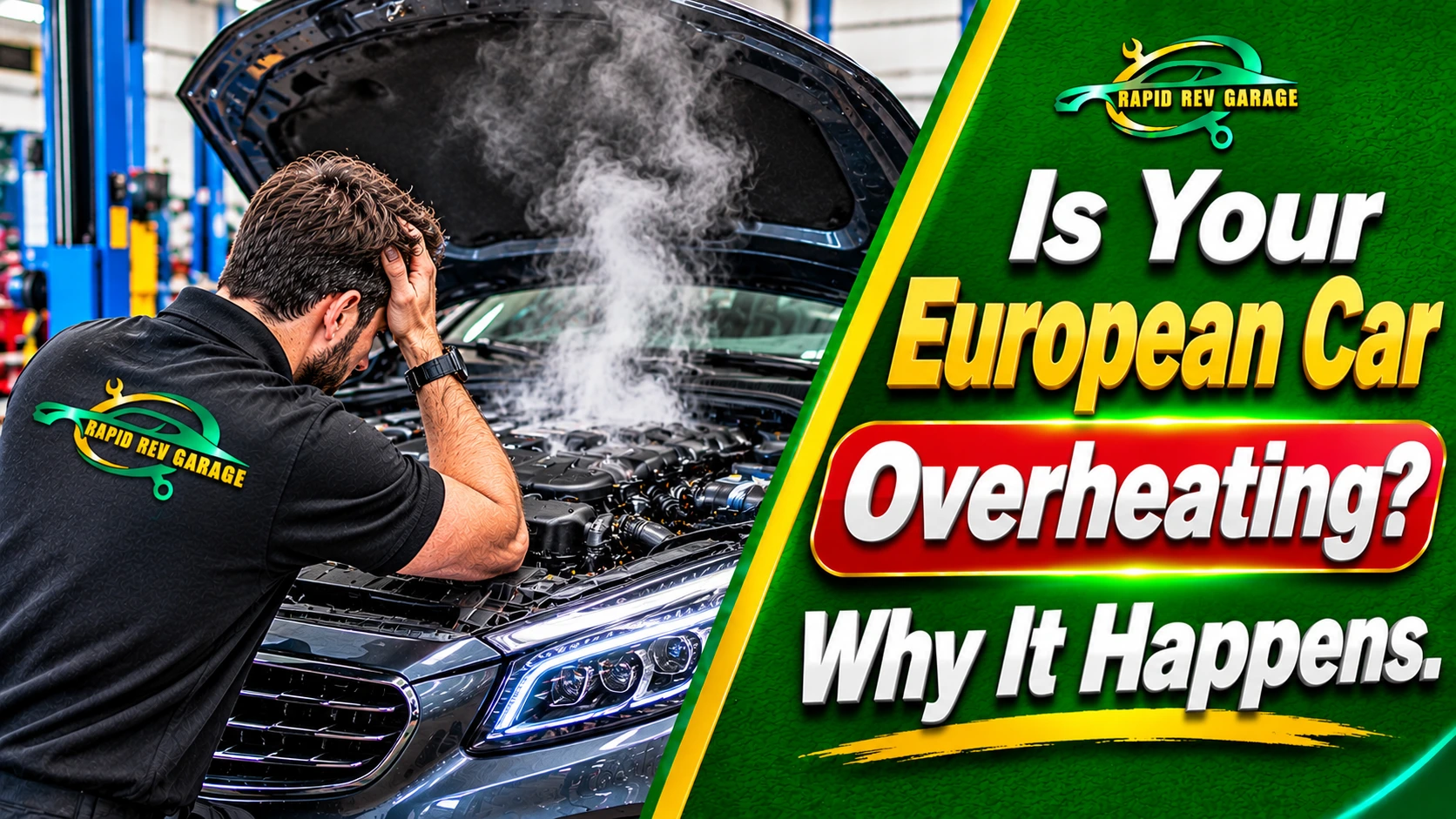
European car overheating can happen due to low coolant, a leaking radiator, a faulty thermostat, a damaged water pump, or a cooling fan problem. These parts help control engine temperature. When one fails, the engine may overheat. You might notice steam, a temperature warning, coolant leaks, or a burning smell. Dubai’s hot weather and heavy traffic can make these problems worse. If your car starts overheating, stop in a safe place and switch off the engine. A professional inspection can help find the fault and prevent costly engine damage.
1. Why Is Your European Car Engine Getting Too Hot?
European cars from brands like BMW, Mercedes-Benz, Audi, Volkswagen, and Porsche use advanced cooling systems. These systems help keep the engine at a safe temperature.
The engine produces heat while running. Coolant moves through the engine and radiator to remove this extra heat. The radiator then releases the heat into the air.
When a cooling system part fails, the engine may not get enough cooling. This can cause the temperature to rise during daily driving, long trips, or heavy traffic.
European car overheating is a problem that needs quick attention. Even a small coolant leak can lead to serious engine damage if you keep driving.
2. Common Warning Signs of Engine Overheating
Your car may show a few signs before the engine gets too hot. Knowing these signs can help you act early.
Look out for the following symptoms:
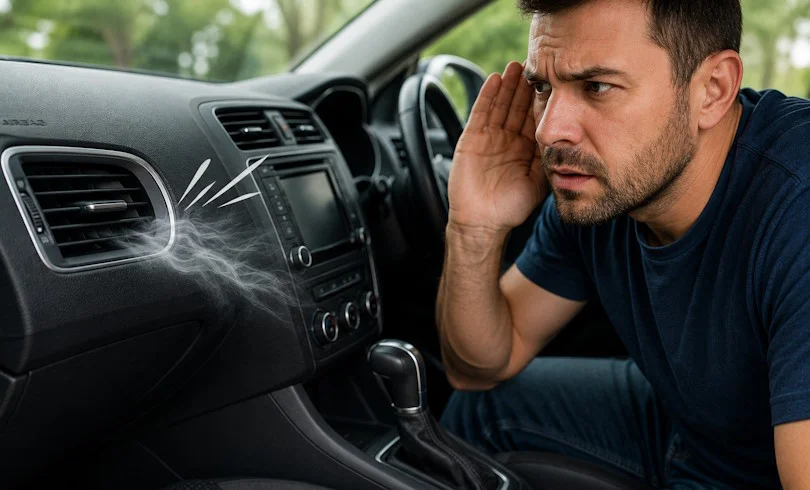
- ⚠️ High temperature warning: The dashboard shows a temperature warning or the gauge moves above its normal level.
- ⚠️ Steam from the bonnet: Steam may come from the engine area.
- ⚠️ Coolant leaks: You may notice coloured fluid under your parked car.
- ⚠️ Burning smell: A hot or sweet smell may come from the engine.
- ⚠️ Loss of engine power: The car may feel slow or less responsive.
- ⚠️ Frequent coolant loss: You may need to refill the coolant more often.
- ⚠️ Unusual engine noise: You may hear strange sounds from the engine area.
- ⚠️ Warning lights: The coolant or engine temperature warning may appear.
Checklist: What should you check?
- ✅ Check the dashboard for temperature warnings.
- ✅ Look for coolant spots under the vehicle.
- ✅ Notice any steam or unusual smell.
- ✅ Check the coolant level when the engine is completely cold.
- ✅ Listen for unusual noises.
- ✅ Arrange an inspection if the warning signs continue.
Never open the coolant cap when the engine is hot. The system is under pressure, and hot coolant can cause serious burns.
3. Common European Car Overheating Causes
Several parts work together to keep your engine cool. If one of them fails, the whole system can be affected.
Here are some common reasons behind the problem.
3.1 Low Coolant or a European Car Coolant Leak
Coolant absorbs heat from the engine and carries it to the radiator. If the coolant level becomes too low, the system cannot remove heat properly.
A leak may come from a damaged hose, radiator, coolant tank, water pump, or loose connection.
Common signs:
- Coolant spots under the car.
- Low coolant warning.
- Steam from the bonnet.
- Frequent coolant refills.
Fix: A mechanic should pressure-test the cooling system to find the leak. The damaged hose, tank, or other part should then be repaired or replaced.
3.2 Faulty Thermostat
The thermostat controls coolant flow between the engine and radiator. It opens when the engine gets hot and allows coolant to flow.
If it gets stuck closed, coolant cannot move properly through the radiator. This can cause the engine temperature to rise quickly.
Common signs:
- Engine temperature rises quickly.
- Temperature changes while driving.
- Poor coolant circulation.
- Engine takes too long to reach its normal temperature.
Fix: A mechanic should test the thermostat and replace it if needed. The thermostat housing and seals should also be checked for leaks.
3.3 European Car Radiator Problems
The radiator removes heat from the coolant. It needs proper airflow and clear internal passages to work well.
Over time, it may develop leaks, blockages, or damaged fins. Dust and dirt can also collect around it and reduce airflow.
Common signs:
- Engine gets hot in traffic.
- Coolant leaks near the radiator.
- Temperature rises during long drives.
- Cooling performance becomes weak.
Fix: The radiator should be checked for leaks and blockages. Depending on its condition, it may need cleaning, repair, or replacement.
3.4 Water Pump Failure
The water pump moves coolant through the engine and cooling system. If it stops working, coolant circulation becomes weak.
A worn pump, damaged seal, or failed electric pump can cause serious cooling problems.
Common signs:
- Coolant leaking near the pump.
- Unusual noise from the engine.
- High engine temperature.
- Poor coolant circulation.
Fix: The mechanic should inspect the pump, seals, and electrical connections if it uses an electric system. A damaged pump needs replacement.
3.5 Faulty Cooling Fan
The cooling fan pulls air through the radiator. It is especially important when the car is moving slowly or standing in traffic.
If the fan motor, wiring, or control system fails, the radiator may not get enough airflow.
Common signs:
- Engine gets hot at traffic lights.
- Temperature improves at higher speeds.
- Cooling fan does not work properly.
- AC cooling may become weak.
Fix: The fan motor, fuse, wiring, and control system should be tested. The faulty part should be repaired or replaced.
3.6 Damaged Head Gasket
The head gasket seals the engine block and cylinder head. It keeps coolant, oil, and combustion gases in their correct places.
If it fails, coolant may enter the engine cylinders or mix with engine oil.
Common signs:
- White smoke from the exhaust.
- Milky-looking engine oil.
- Frequent coolant loss.
- Repeated temperature warnings.
Fix: A mechanic should perform a combustion gas test and other engine checks. If the head gasket is damaged, proper engine repair is needed.
4. How Do Mechanics Diagnose Cooling System Problems?
Finding the correct fault is important. Replacing parts without proper testing can waste money and may not fix the problem.
During European car overheating diagnosis, mechanics should inspect the full cooling system.
| Inspection | What Is Checked? | Why Is It Important? |
|---|---|---|
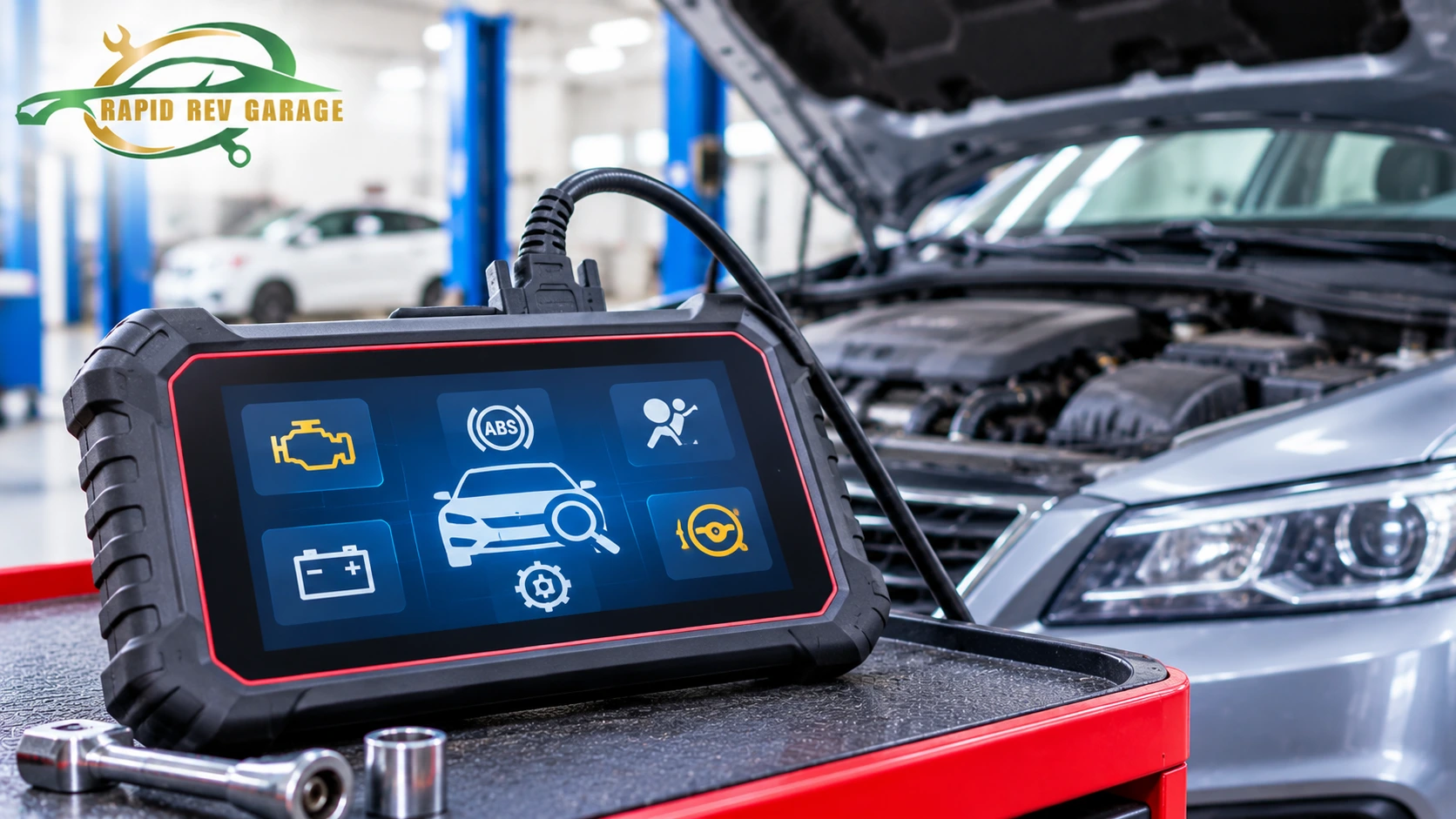
| Computer scanning | Engine fault codes and temperature readings | Finds stored faults |
| Coolant inspection | Coolant level and condition | Finds low coolant |
| Pressure test | Hoses, radiator, and coolant tank | Finds hidden leaks |
| Thermostat test | Thermostat operation | Checks coolant flow |
| Water pump test | Pump condition and circulation | Finds pump faults |
| Radiator inspection | Leaks and blockages | Checks heat removal |
| Cooling fan test | Fan motor and wiring | Checks airflow |
After the inspection, the mechanic can explain the problem and suggest the right repair.
5. How Is an Overheating Problem Repaired?
The repair depends on the faulty part. A professional mechanic should confirm the cause before replacing anything.
Here is how the repair process usually works:
Step 1: Initial Inspection
The mechanic checks the dashboard warnings, coolant level, visible leaks, and engine condition.
Step 2: Computer Diagnosis
Diagnostic tools help find stored fault codes and temperature-related problems.
Step 3: Cooling System Pressure Test
The mechanic checks for leaks in the radiator, hoses, coolant tank, and other connections.
Step 4: Identify the Faulty Part
The mechanic inspects the thermostat, water pump, radiator, cooling fan, and other parts.
Step 5: Repair or Replace the Damaged Part
The faulty component is repaired or replaced with a suitable part for your vehicle.
Step 6: Refill and Bleed the System
The correct coolant is added. Any trapped air is removed using the proper procedure.
Step 7: Final Testing
The mechanic checks coolant flow, fan operation, temperature readings, and possible leaks.
6. What Happens If You Ignore Engine Overheating?
Ignoring a rising engine temperature can lead to expensive repairs. A small cooling system fault may become a major engine problem.
Some possible risks:
- Cylinder head damage: Too much heat can cause the cylinder head to warp.
- Head gasket failure: High temperatures can damage the head gasket.
- Engine oil damage: Excess heat can reduce the oil’s ability to protect engine parts.
- Internal engine damage: Pistons and other moving parts may become damaged.
- Complete engine failure: Severe overheating can cause the engine to stop working.
Early repairs are usually cheaper than rebuilding or replacing an engine.
7. Can You Continue Driving an Overheating Car?
No. You should not continue driving if the temperature warning appears or the gauge enters the hot zone.
Follow these steps:
- Turn off the AC.
- Find a safe place to stop.
- Switch off the engine.
- Keep away from steam coming from the bonnet.
- Never open the coolant cap while the engine is hot.
- Arrange roadside assistance if the car cannot be driven safely.
Do not restart the engine just to reach the nearest garage. Let a professional inspect it first.
8. Estimated European Car Overheating Repair Costs in Dubai
Repair costs depend on the car brand, model, faulty part, and labour required.
Here are some general repair estimates for European cars in Dubai.
| Repair or Service | Estimated Cost (AED) |
|---|---|
| Computer diagnosis and pressure test | 150–350 |
| Coolant refill and flush | 250–600 |
| Coolant hose replacement | 200–600 |
| Thermostat replacement | 600–1,500 |
| Radiator repair or replacement | 1,000–2,800 |
| Cooling fan replacement | 900–2,500 |
| Water pump replacement | 1,000–3,000 |
| Head gasket replacement | 4,500–10,000+ |
Note: These are approximate market estimates, not fixed quotations. Actual prices depend on the vehicle, parts, labour, and extra damage. Some luxury European models may cost more to repair.
What Affects the Final Repair Cost?
- Car brand and model: BMW, Mercedes-Benz, Audi, and Porsche may have different parts and labour costs.
- Model year: Newer models may use more advanced cooling systems.
- Part quality: Genuine and aftermarket parts have different prices.
- Labour time: Some parts are harder to reach and replace.
- Extra engine damage: Continued overheating may increase the repair bill.
9. How to Prevent Future Cooling System Problems
Regular maintenance can help keep your engine at a safe temperature.
Follow these simple tips:
- Check coolant levels when the engine is cold.
- Use coolant that meets your car manufacturer’s specifications.
- Inspect radiator hoses for cracks and leaks.
- Keep the radiator area clean.
- Check the water pump for leaks and unusual sounds.
- Get the thermostat tested if the temperature changes often.
- Follow your vehicle’s service schedule.
- Never ignore temperature warning lights.
These simple steps can help reduce the risk of major engine repairs.
10. Tips for European Car Owners in Dubai
Dubai’s hot weather can put extra pressure on your car’s cooling system. Heavy traffic, high outside temperatures, and long AC use can make cooling problems more noticeable.
Some useful tips for local drivers:
Check your cooling system before summer. A small coolant leak can become a bigger problem during very hot weather.
Pay attention to traffic conditions. If the engine gets hot while waiting at traffic lights, the cooling fan may need inspection.
Keep the radiator clean. Dust and dirt can reduce airflow and affect cooling performance.
Avoid long drives with warning lights. Stop safely if the temperature rises above its normal level.
Choose a suitable repair workshop. Look for a garage with proper diagnostic tools and experience with European vehicles.
If your car breaks down because of overheating, professional roadside assistance can help arrange safe vehicle recovery.
11. Why Choose Rapid Rev Garage for European Car Repair in Dubai?
Finding the right garage is important when your European car has cooling system problems. You need a team that can inspect the vehicle and find the actual cause.
Rapid Rev Garage provides car repair and diagnostic services in Dubai. The workshop handles different European car brands and engine-related problems.
Some reasons to consider Rapid Rev Garage:
- Professional diagnosis: Proper testing helps identify the cause before repairs begin.
- Experienced mechanics: Technicians work with different car brands and models.
- Modern equipment: Diagnostic tools help find engine and electrical faults.
- Quality parts: Suitable replacement parts support reliable repairs.
- Clear estimates: You can request a repair estimate before approving the work.
For reliable European car overheating repair in Dubai, Rapid Rev Garage is an option to consider. Our team can inspect the cooling system, identify faulty parts, and recommend suitable repair solutions.
12. Relevant Service Page
For professional support with engine-related issues, check out our Car Engine Repair service page. Explore the engine diagnostics, repair, and maintenance solutions offered by Rapid Rev Garage in Dubai for different European car brands.
13. FAQs
Low coolant, radiator leaks, faulty thermostats, damaged water pumps, and cooling fan failures. A faulty cooling fan or blocked radiator may reduce airflow at low speeds. Yes, low coolant levels can prevent the engine from cooling properly. Rapid temperature changes, poor coolant flow, and engine overheating are common signs. Costs vary by model and fault, but minor repairs may cost a few hundred AED, while major repairs cost more. No, stop safely, switch off the engine, and arrange professional assistance. Yes, high temperatures and heavy traffic can put extra pressure on the cooling system. Get it inspected if you notice coolant leaks, steam, warning lights, or unusual temperature changes.What are the most common causes of European car overheating?
Why does my European car overheat in traffic but not on the highway?
Can a coolant leak cause engine overheating?
How do I know if my car thermostat is faulty?
How much does European car overheating repair cost in Dubai?
Is it safe to drive when the engine temperature warning appears?
Can Dubai's hot weather cause European car overheating?
When should I get my European car cooling system checked?
Final Thoughts: Keep Your European Car’s Engine Cool
Engine overheating is not a problem you should ignore. A small coolant leak or faulty thermostat can lead to expensive engine damage if left untreated.
If your car shows signs of overheating, get the cooling system inspected as soon as possible. Rapid Rev Garage in Dubai offers European car repair and diagnostic services to help identify engine problems and find the right repair solution.
Contact us today to learn more about our services and get the right support for your vehicle.
You can also visit us at our Al Quoz, Dubai branch,
Rapid Rev Garage: https://maps.app.goo.gl/wjK13vovXTKx5SsH8