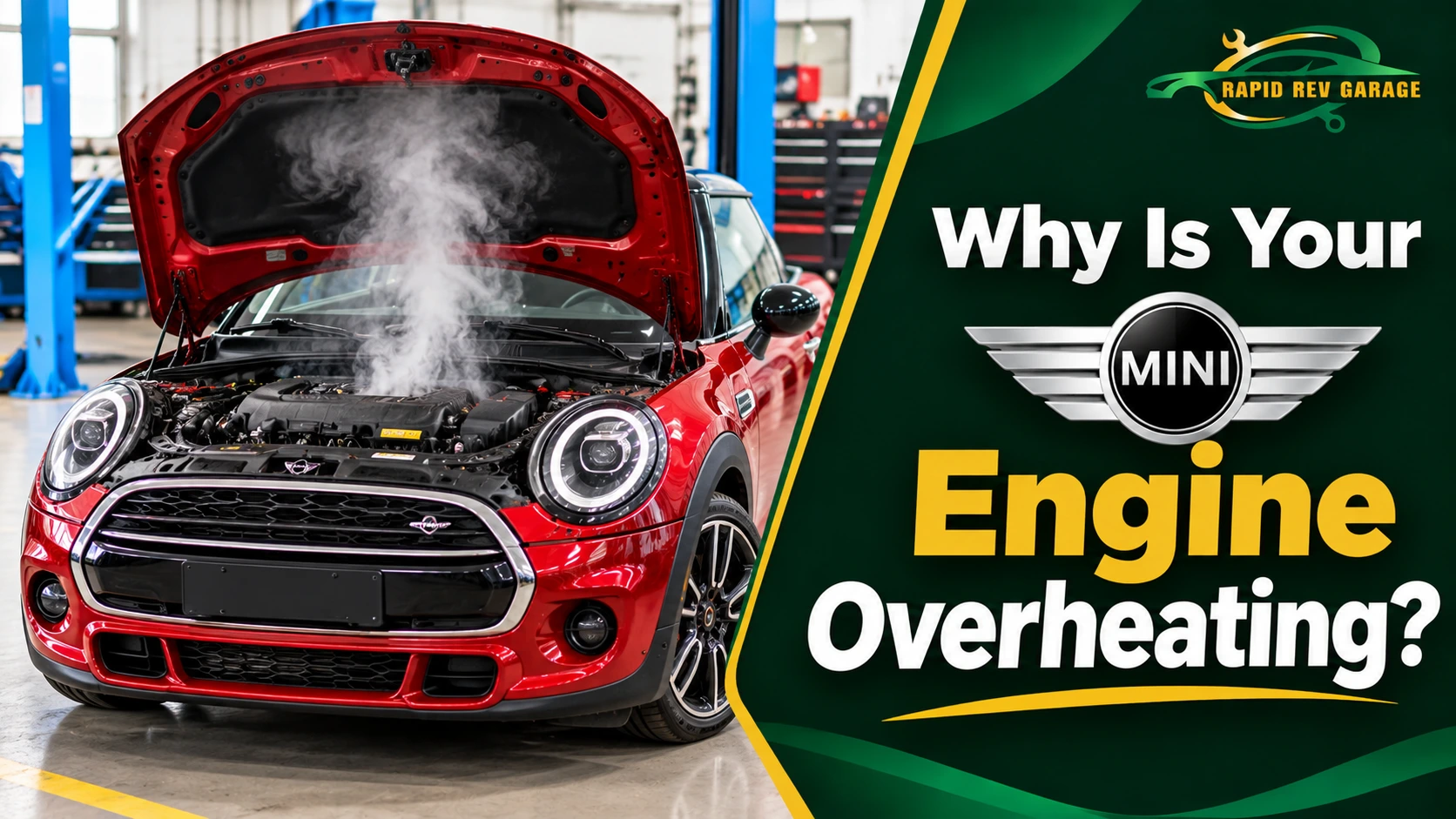
Mini Cooper engine overheating can happen due to low coolant, a leaking radiator, a faulty thermostat, a damaged water pump, or a blocked cooling system. These parts help control engine temperature. When one of them stops working, the engine can get too hot. You may notice steam from the bonnet, a high temperature warning, coolant leaks, or a burning smell. If your Mini Cooper starts overheating, stop in a safe place and switch off the engine. Do not continue driving. A professional inspection can find the fault and prevent costly engine damage.
Table of Contents
- Problem Overview
- Common Symptoms of Engine Overheating
- Common Causes of Mini Cooper Engine Overheating
- Diagnostic Process
- Repair and Service Process
- Risks of Ignoring the Problem
- Can You Continue Driving?
- Repair Time and Cost Factors
- Estimated Repair Cost in Dubai
- Prevention Tips
- Dubai-Specific Advice
- Why Choose Rapid Rev Garage in Dubai?
- Relevant Service Page
- Related Services
- FAQs
- Final Thoughts
1. Problem Overview: Why Does Your Mini Cooper Engine Get Too Hot?
Mini Cooper is known for its small size, strong performance and fun driving experience. However, like other cars, it needs a healthy cooling system to work properly.
The engine produces a lot of heat while running. The cooling system controls this heat and keeps the engine at a safe temperature. It uses coolant, a radiator, a water pump and a thermostat to do this job.
When one of these parts fails, the engine may start to overheat. This can happen during daily driving, in heavy traffic, or even when the car is parked with the engine running.
The problem should never be ignored. Even a small coolant leak can turn into a major engine issue if you keep driving.
2. Common Mini Cooper Engine Overheating Symptoms
Your Mini Cooper may show a few warning signs before the problem becomes serious. Knowing these signs can help you take action early.
Some common symptoms to watch for:
- ⚠️ High temperature warning: The dashboard shows a temperature warning or the gauge moves above its normal level.
- ⚠️ Steam from the bonnet: You may notice steam coming from the front of your car.
- ⚠️ Coolant leaking: You may see a green, blue, pink, or orange fluid under the vehicle, depending on the coolant used.
- ⚠️ Burning smell: A hot or sweet smell may come from the engine area.
- ⚠️ Weak AC cooling: The AC may not cool properly in some cases, especially if the cooling fan or airflow system has a fault.
- ⚠️ Engine power loss: The car may feel slow or less responsive.
- ⚠️ Coolant warning light: A warning may appear when the coolant level becomes too low.
- ⚠️ Frequent coolant loss: You may need to refill the coolant more often than usual.
Checklist: What should you check?
- ✅ Check if the temperature warning is on.
- ✅ Look for coolant spots under the car.
- ✅ Notice any steam or unusual smell.
- ✅ Check if the coolant level drops often, but only when the engine is completely cold.
- ✅ Notice if the engine loses power.
- ✅ Arrange a professional inspection if any warning signs appear.
Important: Never remove the coolant cap when the engine is hot. Hot coolant is under pressure and can cause serious burns.
3. Common Causes of Mini Cooper Engine Overheating
There are several reasons why your Mini Cooper may struggle to control engine temperature. Some problems are simple, while others require more detailed repairs.
Let’s look at the most common causes.
3.1 Low Coolant or a Mini Cooper Coolant Leak
Coolant moves through the engine and radiator to remove extra heat. If the coolant level becomes low, the system cannot control the temperature properly.
A leak may come from a damaged hose, radiator, coolant tank, water pump, or connection.
Common signs:
- Coolant spots under the car.
- Low coolant warning.
- Steam from the engine area.
- Frequent need to refill coolant.
Fix: A mechanic should pressure-test the cooling system to find the leak. The damaged hose, tank, seal, or other part should then be repaired or replaced.
3.2 Faulty Thermostat
The thermostat controls the flow of coolant through the engine. It opens and closes according to engine temperature.
If it gets stuck closed, coolant cannot flow properly through the radiator. This can make the engine temperature rise quickly.
A stuck-open thermostat can also cause slow engine warm-up.
Common signs:
- Engine temperature rises quickly.
- Temperature changes while driving.
- Coolant flow problems.
- Poor heating performance.
Fix: A mechanic should test the thermostat and replace it if it is faulty. A proper Mini Cooper thermostat replacement also includes checking the housing and seals for leaks.
3.3 Mini Cooper Radiator Problems
The radiator removes heat from the coolant before it returns to the engine. It needs proper airflow and clean internal passages to work well. Over time, the radiator may develop leaks, blockages, or damaged fins.
Dust and dirt can also collect around the radiator and reduce airflow.
Common signs:
- Engine temperature rises in traffic.
- Coolant leaks near the radiator.
- Temperature stays high during long drives.
- Cooling performance becomes weak.
Fix: The radiator should be checked for leaks and blockages. Depending on its condition, it may need cleaning, repair, or replacement.
3.4 Mini Cooper Water Pump Failure Symptoms
The water pump moves coolant through the engine and cooling system. Without proper circulation, engine heat cannot be removed effectively.
A worn pump, damaged seal, or failed electric pump can cause serious temperature problems.
Common signs:
- Coolant leaking near the pump.
- Unusual noise from the engine area.
- Temperature warning appears.
- Coolant circulation becomes weak.
Fix: The mechanic should inspect the pump, its seals and its electrical connections if it is an electric type. A damaged pump needs replacement.
3.5 Faulty Cooling Fan
The cooling fan helps move air through the radiator, especially when the car is moving slowly or standing in traffic.
If the fan motor, wiring, or control module fails, the radiator may not get enough airflow.
Common signs:
- Engine gets hot while waiting at traffic lights.
- Temperature improves when driving at higher speeds.
- Cooling fan does not work as expected.
- AC performance may become weak.
Fix: Test the fan motor, fuse, wiring and control system. Replace the faulty part after confirming the cause.
3.6 Damaged Head Gasket
The head gasket seals the space between the engine block and cylinder head. It keeps engine oil, coolant and combustion gases in their correct places.
If it fails, coolant may enter the engine cylinders or mix with engine oil.
Common signs:
- White smoke from the exhaust.
- Milky-looking engine oil.
- Repeated coolant loss.
- Engine temperature rises again and again.
Fix: A mechanic should perform a combustion gas test and other engine checks. If the head gasket is damaged, proper repair is needed.
5. Repair and Service Process: Step-by-Step Fixes
The repair depends on which part has failed. A professional mechanic should first confirm the cause before replacing anything.
Here is how the repair process usually works.
Step 1: Initial Inspection
The mechanic checks the dashboard warnings, coolant level, visible leaks and engine condition.
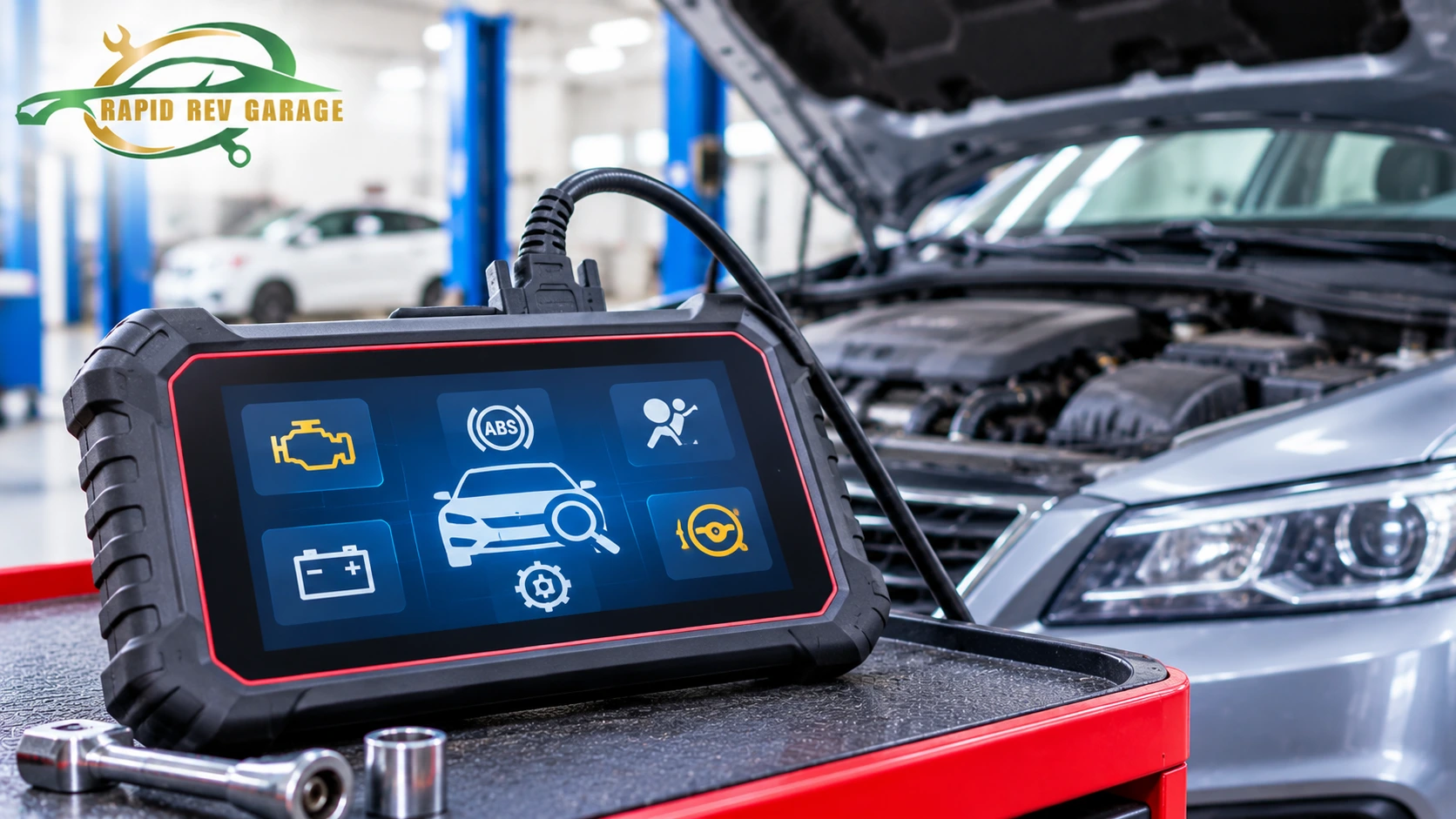
Step 2: Computer Diagnosis and Pressure Testing
Diagnostic tools help find stored fault codes. A cooling system pressure test can also help locate leaks.
Step 3: Identify the Faulty Part
The mechanic checks the radiator, thermostat, water pump, hoses, cooling fan and coolant tank.
Step 4: Repair or Replace the Damaged Part
The faulty component is repaired or replaced with a suitable part for your Mini Cooper model.
Step 5: Refill and Bleed the Cooling System
The system is filled with the correct coolant. Air trapped inside the system must be removed using the correct procedure.
Step 6: Final Testing
The mechanic checks coolant circulation, fan operation, temperature readings and possible leaks.
Step 7: Road Test
If the car is safe to drive, a road test helps confirm that the temperature stays within the correct range.
6. Risks of Ignoring Engine Overheating
Ignoring a rising engine temperature can lead to serious damage. A small cooling system fault may become a much bigger repair.
Some possible risks:
- Cylinder head damage: Too much heat can cause the cylinder head to bend or warp.
- Head gasket failure: High temperatures can damage the head gasket.
- Engine oil damage: Excess heat can reduce the oil’s ability to protect moving parts.
- Internal engine damage: Pistons and other parts may suffer from excessive heat.
- Complete engine failure: Severe overheating can cause the engine to stop working.
Early repair is usually much cheaper than rebuilding or replacing an engine.
7. Can You Continue Driving an Overheating Mini Cooper?
No. You should not continue driving if your Mini Cooper shows a high-temperature warning or the temperature gauge enters the hot zone.
Driving further can cause permanent engine damage.
Follow these steps:
- Turn off the AC.
- Find a safe place to stop.
- Switch off the engine.
- Keep away from steam coming from the bonnet.
- Never open the coolant cap while the engine is hot.
- Arrange professional roadside assistance if the vehicle cannot be driven safely.
Do not restart the engine just to reach the nearest garage. Let a professional check the car first.
10. Prevention Tips to Avoid Future Overheating
Regular maintenance can help keep your Mini Cooper’s cooling system in good condition.
Follow these simple tips:
- ✅ Check coolant levels: Check the level when the engine is completely cold.
- ✅ Use the correct coolant: Always use coolant that meets your Mini Cooper’s specifications.
- ✅ Inspect hoses regularly: Look for cracks, loose connections and signs of leakage.
- ✅ Keep the radiator clean: Remove dust and dirt that can block airflow.
- ✅ Check the water pump: Look for leaks and unusual noises.
- ✅ Service the thermostat: Replace it if testing shows that it is faulty.
- ✅ Watch dashboard warnings: Never ignore temperature or coolant warning lights.
- ✅ Follow service intervals: Get regular cooling system inspections.
Small checks can help you avoid bigger repair bills later.
11. Dubai-Specific Advice for Mini Cooper Owners
Dubai’s weather can put extra pressure on your car’s cooling system. During summer, outside temperatures can become very high. Heavy traffic and long periods of AC use can also increase the demand on the cooling system.
Few things Mini Cooper owners in Dubai should keep in mind:
Check the cooling system before summer. A small coolant leak may become a serious problem during very hot weather.
Pay attention to traffic conditions. If your car gets hot while waiting at traffic lights, the cooling fan may need inspection.
Keep the radiator area clean. Dust and dirt can reduce airflow and affect cooling performance.
Avoid long drives with warning lights. If the temperature warning appears, stop safely and arrange help.
Choose a suitable garage. A workshop with proper diagnostic tools can check the cooling system and identify the actual fault.
If your car stops working because of overheating, professional roadside assistance can help you arrange safe recovery instead of risking further engine damage.
12. Why Choose Rapid Rev Garage for Mini Cooper Engine Repair in Dubai?
Finding the right garage is important when your Mini Cooper has an engine temperature problem. You need a team that can inspect the cooling system and find the actual reason behind the fault.
Rapid Rev Garage offers engine repair and diagnostic services in Dubai. Its workshop in Al Quoz handles engine-related problems, including warning lights, overheating and other performance issues.
Why you can consider Rapid Rev Garage:
- Professional diagnosis: Proper inspection helps identify the cause before repairs begin.
- Experienced mechanics: Technicians handle different car makes and models.
- Modern equipment: Diagnostic tools help check engine and electrical faults.
- Quality parts: Suitable replacement parts help support reliable repairs.
- Clear pricing: You can request an estimate before approving the work.
- Convenient service: Pickup and drop-off support is also available.
If your Mini Cooper keeps getting hot, do not wait for the problem to become worse. Rapid Rev Garage can help inspect the engine and recommend the right repair for your vehicle.
13. Relevant Service Page
For more information about professional engine repairs, check out our Mini Cooper Engine Repair service page. Explore the engine repair solutions offered by Rapid Rev Garage in Dubai, including engine diagnostics, fault detection, and repairs for different Mini Cooper models.
14. Related Services
Depending on the inspection results, your Mini Cooper may also need one of these services:
- Engine Diagnostics: To identify engine fault codes and performance issues.
- Radiator Repair: To fix leaks, blockages and cooling problems.
- Thermostat Replacement: To restore proper coolant flow.
- Water Pump Replacement: To improve coolant circulation.
- Coolant Leak Repair: To find and fix coolant loss.
- Roadside Assistance: To help when your car breaks down on the road.
- General Car Service: To maintain your vehicle and reduce the risk of future problems.
15. FAQs
Why does my Mini Cooper engine keep overheating?
Low coolant, a faulty thermostat, damaged water pump, or blocked radiator can cause overheating.
Can low coolant cause Mini Cooper Engine Overheating?
Yes, low coolant can stop the engine from cooling properly and cause overheating.
How do I know if my Mini Cooper water pump is failing?
Coolant leaks, unusual noises, and rising engine temperature are common warning signs.
How much does Mini Cooper thermostat replacement cost in Dubai?
It usually costs around AED 700–1,500, depending on the model and labour.
Why does my Mini Cooper overheat in traffic but not on the highway?
A faulty cooling fan or blocked radiator may reduce airflow when the car is stationary.
Is it safe to drive my Mini Cooper if the temperature warning appears?
No, stop safely and switch off the engine to avoid serious damage.
How long does it take to fix an overheating Mini Cooper?
Simple repairs take a few hours, while major engine repairs may take several days.
Can Dubai's hot weather cause my Mini Cooper to overheat?
Yes, high temperatures and heavy traffic can put extra pressure on the cooling system.
When should I get my Mini Cooper cooling system checked?
Get it checked if you notice coolant leaks, warning lights, steam, or rising engine temperature.
Final Thoughts: Get Your Mini Cooper Checked Today!
Engine overheating is a problem you should never ignore. A small coolant leak or faulty thermostat can lead to serious and expensive engine damage if left untreated.
Is your Mini Cooper showing signs of overheating? Contact Rapid Rev Garage! Our team can inspect your vehicle, identify the cause, and recommend the right repair solution.
Get in touch with us to book your inspection and keep your Mini Cooper running smoothly.
You can also visit us at our Al Quoz, Dubai branch,
Rapid Rev Garage: https://maps.app.goo.gl/wjK13vovXTKx5SsH8