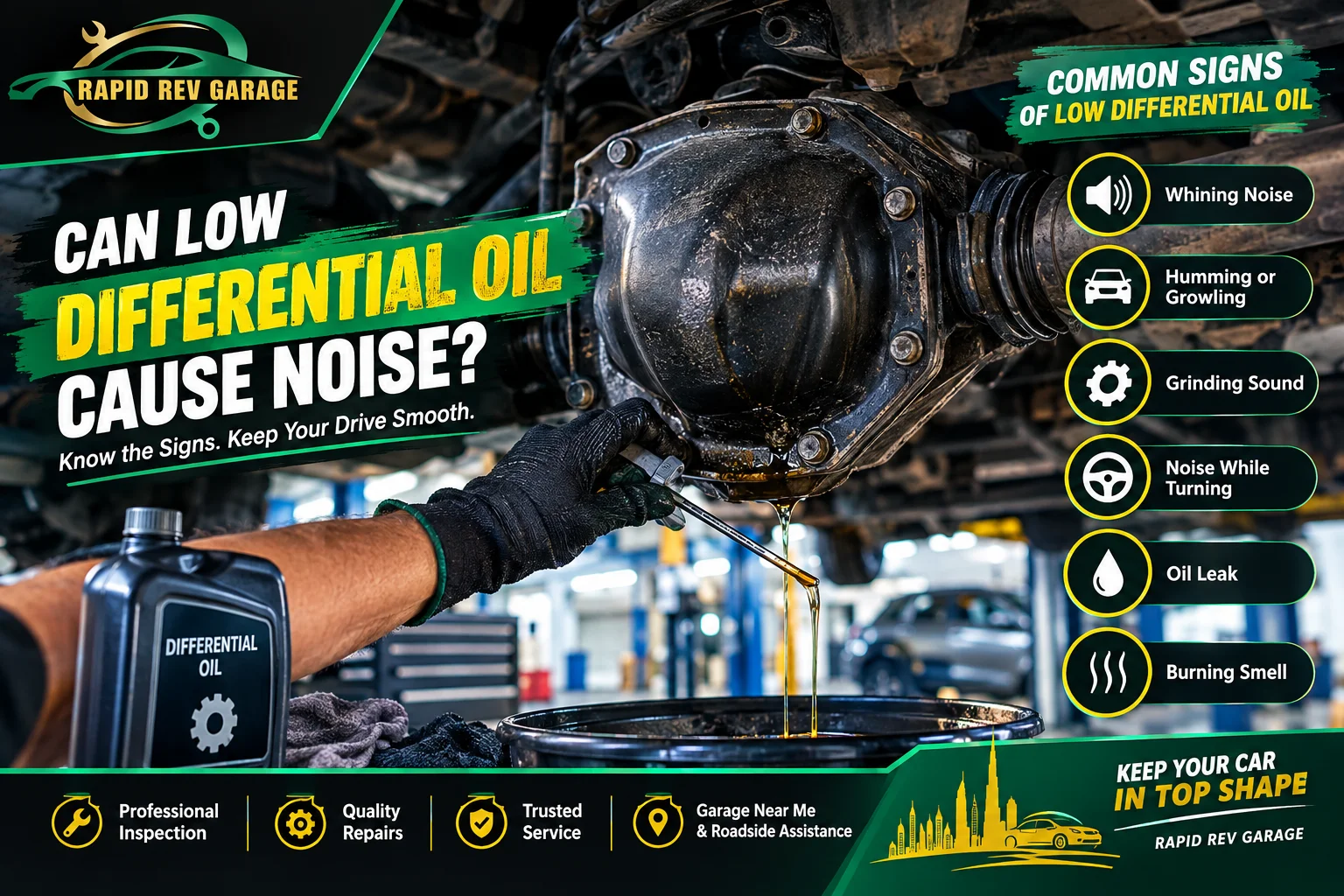
Low Differential Oil can cause unusual noise from the differential. The oil lubricates gears and bearings as they work. When the level drops, metal parts may have less protection. This can lead to whining, humming, growling or grinding sounds. The noise may change when you accelerate, coast or turn. A leak often causes a low fluid level. Other faults, such as worn gears or bearings, can also make similar sounds. If you notice new differential noise, have the vehicle checked soon. Driving for too long with low fluid can increase wear and turn a small leak into a costly repair.
Table of Contents
- Problem Overview: Why Does Low Differential Oil Make Noise?
- Symptoms: Sounds and Signs to Watch For
- Common Causes of Differential Noise
- Diagnostic Process: Finding the Real Source
- Repair Process: Restoring Proper Lubrication
- Risks of Ignoring It
- Can You Continue Driving?
- Repair Time
- Cost Factors
- Prevention Tips
- Dubai-Specific Advice
- Why Choose Rapid Rev Garage for Roadside Assistance?
- Frequently Asked Questions
- Related Services
- Final Call-to-Action
Problem Overview: Why Does Low Differential Oil Make Noise?
Low Differential Oil reduces the lubricant available between the gears, bearings and other moving parts.
These parts need the correct fluid level to reduce friction and heat. When the oil level falls, the gears may run hotter.
Poor lubrication can create unusual sounds. It can also speed up wear on important differential parts.
A low level is usually a symptom, not the root cause. A leaking seal, gasket, housing or drain plug may be responsible.
Signs That May Point to Low Differential Oil
A differential problem can show up in several ways. Low Differential Oil is one possible cause, but other faults can create similar symptoms.
1. Whining Noise
A high-pitched whine may become louder when you accelerate.
2. Humming or Growling
A steady hum may change as your road speed increases.
3. Grinding Sound
Grinding can point to serious gear or bearing wear. It should be checked quickly.
4. Noise While Turning
Some differential faults become more noticeable when the vehicle turns.
5. Oil Leak
A wet area around the differential can suggest a fluid leak.
6. Burning Smell
Overheated oil can sometimes produce a strong smell. This may happen when lubrication is poor.
Common Causes of Differential Noise
| Cause | Possible Effect |
|---|---|
| Low fluid level | Poor lubrication and increased heat |
| Oil leak | Falling fluid level |
| Worn bearings | Humming or growling |
| Worn gears | Whining or grinding |
| Wrong fluid | Poor lubrication or reduced gear protection |
| Old fluid | Reduced performance and contamination |
| Damaged seal | Fluid loss around the housing |
Diagnostic Process: How Technicians Find the Source
A technician first asks when the noise occurs. They may test the car during acceleration, cruising, coasting and turning.
Technicians check the differential housing and nearby seals for leaks. The technician also inspects the fluid level and condition.
The technician may check the fluid for metal particles. These particles can point to internal wear.
If needed, the technician lifts the vehicle for a closer inspection. The technician may check bearings, gears, axles and other driveline parts.
A noise does not always mean Low Differential Oil is the only problem. Proper diagnosis helps avoid unnecessary parts replacement.
Repair Process: Restoring Proper Differential Lubrication
The repair starts by finding why the fluid level is low.
If there is a leak, repair the damaged seal, gasket, drain plug or housing.
The old fluid may then be drained and replaced with the correct specification. Set the level according to the manufacturer’s requirements.
If the gears or bearings are already damaged, you may need an internal differential repair. This can take much longer than a basic fluid service.
Rapid Rev Garage can inspect differential noise and help identify whether the issue is fluid-related or caused by another driveline fault.
Risks of Ignoring It
Ignoring Low Differential Oil can allow friction and heat to build up.
Gear teeth and bearings may wear faster. A small leak can also become worse over time.
If the differential runs with very little oil, it can cause serious internal damage.
A repair that starts as a fluid or seal service can become much more expensive if internal parts fail.
Can You Continue Driving?
Short trips may be possible in some cases, but it depends on the noise and fluid level.
If the differential makes a loud whining, grinding or growling sound, stop driving and arrange an inspection.
Do not continue driving if there is a major fluid leak, severe noise, vibration or a change in driveline behavior.
Roadside assistance can be safer than risking further damage.
Repair Time: How Long Can It Take?
| Repair or Inspection | Approximate Time |
|---|---|
| Basic fluid level check | 15–30 minutes |
| Leak inspection | 30–60 minutes |
| Differential fluid replacement | 30–90 minutes |
| Seal or gasket repair | 1–3 hours |
| Bearing inspection or repair | 3–6+ hours |
| Major differential rebuild | 1–2+ days |
The exact time depends on the vehicle and the differential’s condition.
Cost Factors: What Affects the Final Price?
| Cost Factor | Why It Matters |
|---|---|
| Vehicle make and model | Fluid type and labor needs vary |
| Fluid specification | Some differentials need special oil |
| Fluid quantity | Larger systems need more fluid |
| Leak source | Seal, gasket or housing repairs differ |
| Parts quality | Replacement parts vary in price |
| Labor time | Internal repairs take longer |
| Gear or bearing damage | Major damage raises the total cost |
Prevention Tips: Keep the Differential Healthy
Regular care can help prevent expensive differential problems.
- Check for oil leaks during routine service.
- Use the correct differential fluid.
- Follow the service schedule in the owner’s manual.
- Do not ignore new driveline noises.
- Have the differential checked after a hard impact.
- Check the fluid after demanding trips.
- Have leaks repaired as soon as possible.
Using the correct oil is important. The wrong fluid may not provide the protection the differential needs.
Dubai-Specific Advice: Protect Your Driveline
Dubai driving can put extra demands on vehicle fluids and driveline parts.
Hot weather, heavy traffic, long highway trips and towing can create additional heat.
If you notice Low Differential Oil symptoms, don’t wait for the noise to get worse.
Search for a trusted garage near me and ask for a proper fluid and leak inspection.
Rapid Rev Garage in Dubai can help drivers check driveline concerns before they develop into larger repairs.
Why Choose Rapid Rev Garage for Roadside Assistance?
A differential problem can happen while you are far from home or stuck on a busy Dubai road.
If the vehicle is not safe to drive, roadside assistance can help you avoid further damage.
Rapid Rev Garage provides roadside assistance for drivers dealing with vehicle breakdowns and driveline issues.
A technician can assess the situation and advise whether you should drive the vehicle or have it recovered.
For Dubai drivers, having a reliable roadside assistance option can provide extra peace of mind.
Frequently Asked Questions
1. Can Low Differential Oil Cause Noise?
Yes. A low fluid level can reduce lubrication and cause whining, humming or grinding noises. However, worn gears and bearings can cause similar sounds.
2. What does differential oil noise sound like?
It may sound like a whine, hum, growl or grind. The sound can change with speed, acceleration or turning.
3. How do I know if my differential oil is low?
Signs can include unusual noise, fluid leaks or a burning smell. A technician should check the level because leaks often cause fluid loss.
4. Can I drive with low differential oil?
Avoid unnecessary driving when the level is very low or the differential is making loud noises.
5. How often should differential oil be changed?
The correct interval depends on the vehicle. Follow the manufacturer’s service schedule, especially if the vehicle is used for towing or heavy driving.
Related Services
- Differential oil change
- Differential leak repair
- Driveline inspection
- Axle repair
- Wheel bearing inspection
- Roadside assistance
- Mobile mechanic service
- General car maintenance
Final Call-to-Action
If your vehicle has a new whining, humming or grinding sound, do not ignore it contact us now.
Low Differential Oil may be the cause, but the noise could also point to worn gears, bearings or another driveline issue.
Get the differential checked early. Rapid Rev Garage can inspect the system, find fluid leaks and recommend the right repair.
If the car is not safe to drive, use roadside assistance instead of risking more damage.
Location: Rapid Rev Garage — Google Maps Location