Dubai summers push every part of a vehicle’s air conditioning system to its limit, and one of the most common complaints drivers bring to a garage near me search is a car that no longer blows cold air the way it used to. In most cases, the root cause comes down to one thing: low refrigerant. Recognizing the early signs of low refrigerant can save you from a full compressor replacement, a stranded roadside breakdown, or an uncomfortable commute in 45°C heat.
This guide breaks down exactly what a refrigerant shortage looks like, why it happens, how a professional car AC diagnosis is performed, and what a refrigerant recharge actually costs in the UAE. Whether you’re trying to self-diagnose before booking a mechanic near me or simply want to better understand your vehicle’s cooling system, this article answers the questions drivers are typing into search engines and AI tools like ChatGPT, Gemini, and Perplexity.
Recognizing the Low Refrigerant Symptoms in Your Car’s AC System
The refrigerant is a substance that pulls heat out of the air in the cabin and dumps it outside through the condenser. The entire cooling cycle fails when the levels drop below the manufacturer’s stated range, and the symptoms of low refrigerant will be evident almost immediately. This is particularly true in a hot climate such as Dubai when the AC system is in use for most of the day.
Unlike engine oil or brake fluid, refrigerant does not get “used up” through normal operation. A properly sealed AC system should hold its charge for years. So when you start noticing these warning signs, it almost always points to a leak somewhere in the system rather than natural depletion. That distinction matters because it changes how a workshop approaches the repair — recharging refrigerant without finding and sealing the leak only delays the same problem from returning within weeks.
Low Refrigerant Symptoms Include Car AC Blowing Warm Air
The most commonly reported low-refrigerant symptom is the car AC blowing warm air, either intermittently or constantly, even with the compressor engaged and the temperature set to its coldest position. This happens because there isn’t enough refrigerant circulating through the system to effectively absorb heat from the cabin. You may notice cold air at startup that gradually turns warm after five or ten minutes of driving, which is a classic early-stage indicator.
In more advanced cases, the AC may blow warm air from the moment you turn the car on. At this point, refrigerant pressure has usually dropped low enough that the low-pressure switch has started cycling the compressor on and off rapidly, or has shut it off entirely to protect it from running dry. If you’re hearing the compressor clutch clicking on and off in short bursts, that’s the system telling you pressure has fallen below a safe operating threshold.
What Warm Airflow Feels Like at Different Severity Levels
A mild shortage often produces air that’s cool but not cold, noticeably weaker performance than what you remember from a fully charged system. A moderate shortage produces air that’s borderline room temperature, especially when idling in traffic. A severe shortage, often below 20% of the recommended charge, typically means the compressor won’t engage at all, and you’ll feel only ambient outside air regardless of fan speed.
Low Refrigerant Symptoms Show Up as Weak Airflow and Cooling Problems
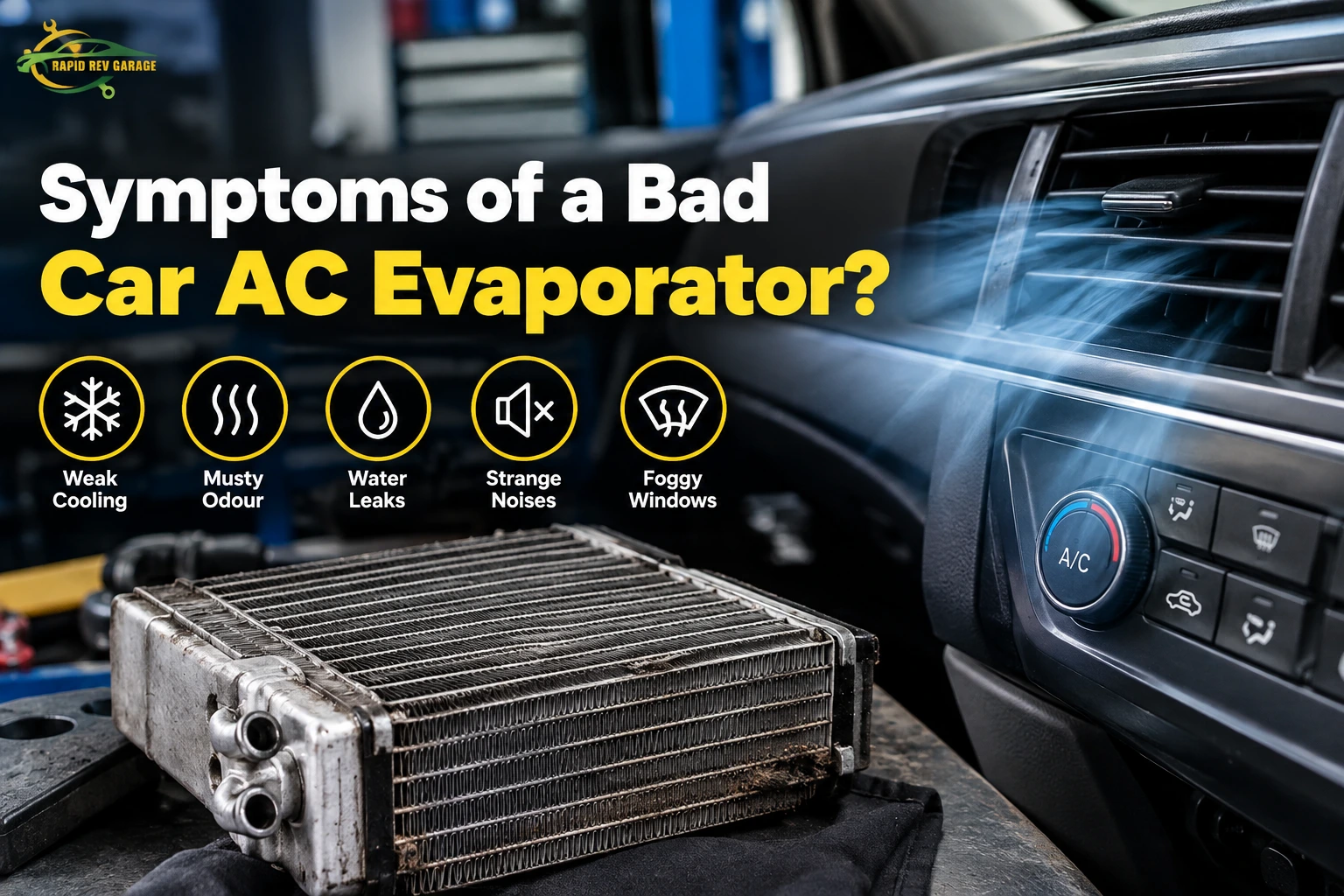
Beyond temperature, a refrigerant shortage often results in weak airflow from the vents, even when the blower motor sounds normal. This occurs because the refrigerant affects how efficiently the evaporator core transfers heat; when the charge is low, ice can form on the evaporator coil, physically restricting airflow through the vents. Drivers sometimes mistake this for a failing blower motor or a clogged cabin air filter, when the actual cause is vehicle AC cooling problems tied directly to refrigerant pressure.
Other common warning signs include a hissing or bubbling noise near the firewall or under the hood (often the sound of refrigerant escaping through a small leak), visible oily residue around AC line fittings or the compressor (refrigerant carries oil that leaves a stain when it leaks), and the AC compressor clutch failing to engage at all when you switch the system on. Any one of these signs, on its own, is worth investigating; two or more together almost always confirm low refrigerant as the underlying issue.
Why These Symptoms Escalate Quickly in Hot Climates
In Dubai’s climate, an AC system that’s already running low on refrigerant deteriorates faster than in cooler regions. High ambient temperatures force the compressor to work harder to compensate, which increases the strain on seals and O-rings that may already be weakened. A slow leak that would take a year to become noticeable in a temperate country can produce full-blown warning signs within a few months of driving in Dubai’s summer.
What Causes an AC Refrigerant Leak and Low Refrigerant Levels?
An AC refrigerant leak is the leading cause behind nearly every case of low refrigerant symptoms, and it typically develops in one of a handful of predictable locations. The most typical points of failure are the rubber O-rings and seals at hose connections, which become hard and cracked over time due to heat cycling. The condenser, located in the front of the car, is also quite exposed to road debris, stone chips, and rust, and is a common source of leaks.
Another weak spot is the compressor shaft seal – as the compressor ages, this seal can wear down and enable refrigerant to slowly leak, which is why AC compressor troubles and a lowering refrigerant charge typically occur together rather than as separate problems. Evaporator cores can also develop pinhole leaks due to internal corrosion, though these are harder to detect because the evaporator sits inside the dashboard, out of direct view.
Age and mileage play a significant role too. Vehicles older than seven to eight years, or those that have exceeded 100,000 kilometers, are statistically far more likely to develop a slow AC refrigerant leak simply because rubber seals degrade over time, regardless of how well the car has been maintained. Accident history matters as well — even a minor front-end collision can crack a condenser or bend a refrigerant line without causing any other visible damage.
Car AC Diagnosis: How a Mechanic Identifies Low Refrigerant Symptoms
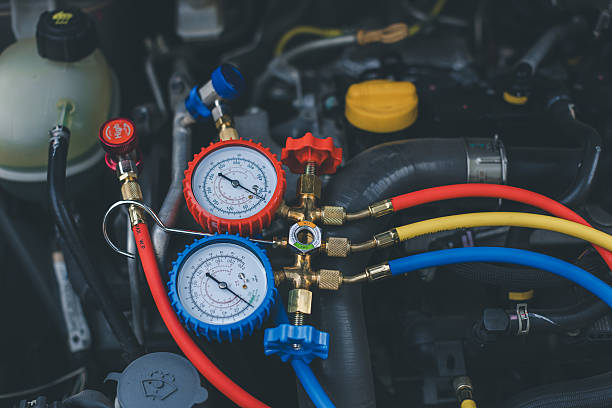
A proper car AC diagnosis starts with connecting a manifold gauge set to the high and low-pressure service ports. This tells a technician the exact refrigerant pressure in the system, compared with the manufacturer’s specification for the current ambient temperature. If pressure readings fall well below spec, that confirms low-refrigerant symptoms are caused by an actual charge shortage rather than a compressor, blend door, or electrical fault.
The next step in any thorough car AC diagnosis is a UV dye leak test. A fluorescent dye is added to the system along with refrigerant, and after running the AC for a short period, a UV light is used to scan all hoses, fittings, and components for a glowing trace, which pinpoints the exact leak location. Electronic refrigerant sniffers are also used for smaller, harder-to-see leaks, particularly around the evaporator housing.
A qualified workshop will never simply top up refrigerant and send the car out the door. Recharging without fixing the underlying leak means the symptoms will return within days or weeks, and you’ll end up paying for the same service twice. Any reliable mechanic near me should include leak detection as a standard part of the car AC diagnosis process, not as an optional add-on.
Refrigerant Recharge Cost: What to Expect in Dubai
Refrigerant recharge cost varies depending on the type of refrigerant your vehicle uses, the extent of the leak repair required, and whether the compressor or other components need replacement. A simple top-up with no leak (rare, but sometimes needed after AC service that involves opening the system) is the least expensive option. A full evacuation, leak repair, vacuum test, and recharge costs more but resolves the underlying refrigerant shortage permanently rather than temporarily.
Newer automobiles tend to take R-1234yf refrigerant, which is more expensive than the R-134a used in earlier vehicles. R-1234yf is a newer refrigerant and requires more careful handling; thus it usually costs more to recharge. Of course, if the leak is traced to a major component such as the compressor or condenser, the cost of recharging with refrigerant will include the part itself, not simply the refrigerant and labour. To get an accurate quote (not an estimate over the phone), you need a physical evaluation of the automobile AC. Two cars with the same symptoms of low refrigerant can have quite different underlying causes and repair costs.
Why Dubai’s Climate Makes Car AC Maintenance Non-Negotiable
Car AC maintenance isn’t optional in a city where outdoor temperatures regularly exceed 45°C for months at a time. Unlike cooler regions where a weak AC system is an inconvenience, in Dubai it directly affects driving safety, since prolonged exposure to extreme heat inside a vehicle can cause fatigue, dehydration, and reduced concentration. This is precisely why catching low refrigerant symptoms early through routine automotive AC repair checks matters more here than almost anywhere else in the world.
Dust and sand exposure common to UAE roads also accelerates wear on condenser fins and rubber seals, meaning the intervals recommended for car AC maintenance in cooler climates should generally be shortened for vehicles driven primarily in Dubai, Sharjah, and Abu Dhabi. A seasonal AC inspection before peak summer, ideally in March or April, allows a workshop to catch early-stage warning signs before the system fails during the hottest months.
DIY vs Professional Automotive AC Repair
Retail refrigerant recharge kits are widely available and can seem like a tempting shortcut when you first notice a refrigerant shortage. However, these kits carry real risks: overcharging the system can damage the compressor, using the wrong refrigerant type can cause seal failure, and DIY kits do nothing to locate or repair the AC refrigerant leak that caused the problem in the first place. You’ll likely be back to square one within a month.
Professional automotive AC repair uses a recovery machine to safely evacuate old refrigerant, pull a vacuum to test for leaks, and recharge with the exact manufacturer-specified amount — something impossible to replicate accurately with a canister and a pressure gauge at home. For anyone experiencing genuine low-refrigerant symptoms, a proper diagnosis at a qualified garage near me will almost always be more cost-effective in the long term than repeated DIY attempts.
AC Compressor Issues That Mimic Low Refrigerant Symptoms
Not every case of warm or weak airflow is caused by refrigerant loss. AC compressor issues, a faulty blend door actuator, a failed AC relay, or a blown fuse can all produce symptoms that look identical to a refrigerant shortage on the surface. This is exactly why a pressure-gauge-based car AC diagnosis is essential rather than guessing based on symptoms alone.
An internal seizure or failure of the compressor might cause it to draw too much current and blow fuses frequently, which can be misinterpreted for a refrigerant problem if the technician does not examine electrical components along with pressure readings. The difference between an AED 200 recharge and an AED 2,000+ compressor replacement is knowing the difference between actual low refrigerant symptoms and an AC compressor or electrical malfunction, which is why a proper diagnosis is significantly more important than a rapid guess.
Why Rapid Rev Garage Is Dubai’s Trusted Choice for Car AC Repair
Rapid Rev Garage has built its reputation in Dubai on accurate, honest car AC diagnosis rather than upselling unnecessary parts. When customers come in reporting low-refrigerant symptoms, the team runs a full pressure test and a UV dye leak check before recommending any repair, ensuring you only pay for what your vehicle actually needs. This location-specific approach matters in Dubai’s climate, where AC systems face far more stress than in most other parts of the world.
Our facility handles everything from quick refrigerant top-ups to AC compressor changes, condenser repairs and evaporator services, all with clear and open pricing. If you are a motorist looking for a repair or garage near me for AC-related problems specifically, then the specialists have the right manifold gauge sets and UV leak detection gear, not guesswork.
Routine maintenance is also offered by the garage along with roadside help for those who encounter a sudden and total AC breakdown on the road, which is a typical occurrence when a compressor seizes unexpectedly during a drive in Dubai summers. To get a better idea of the full variety of services, you can visit the vehicle service Dubai page or the roadside help page for emergency support, or the car garage near me page to find your closest location.
Frequently Asked Questions About Low Refrigerant Symptoms
Q1: How do you check the refrigerant level in a car AC?
The refrigerant level is checked using a manifold gauge set connected to the high- and low-pressure service ports on the AC system. The readings are compared against the manufacturer’s specified pressure range for the current ambient temperature. This is the most accurate method — dashboard temperature alone isn’t reliable, since warning signs can appear gradually before pressure readings confirm the shortage.
Q2: What causes a car AC system to lose refrigerant?
The most common cause is a slow leak at a hose fitting, an O-ring, a condenser, or a compressor shaft seal, usually due to age, heat cycling, or road debris. Refrigerant does not deplete through normal use, so any noticeable drop in charge almost always indicates a physical leak somewhere in the sealed system rather than gradual consumption.
Q3:Does a car AC naturally lose refrigerant over time?
A well-sealed AC system loses very little refrigerant over its lifetime, typically less than a few percent per year, even due to normal seal permeation. Noticeable low-refrigerant symptoms within a short timeframe point to an actual leak rather than natural loss and should be diagnosed rather than simply topped up repeatedly.
Q4: How often does a car AC need a refrigerant recharge?
A healthy, leak-free AC system generally doesn’t need a recharge for the life of the vehicle. If you need a recharge annually or more frequently, that’s a strong signal of an active AC refrigerant leak that needs to be located and repaired rather than continuing with repeat top-ups.
Q5: How much does it cost to recharge a car AC system?
Refrigerant recharge cost depends on refrigerant type (R-134a vs R-1234yf), whether a leak repair is needed, and whether any components require replacement. A simple recharge with no leak found is the least expensive option, while a recharge combined with condenser or compressor replacement will cost significantly more. An in-person diagnosis is the only way to get an accurate quote.
Q6: Is low refrigerant always caused by an AC leak?
In the vast majority of cases, yes. Because refrigerant operates in a fully sealed system, a noticeable drop almost always traces back to a leak at a seal, hose, condenser, or compressor. The rare exceptions involve AC service work where the system was opened for another repair and not fully recharged afterward.
Q7: Can a clogged cabin air filter feel like low refrigerant?
Yes, a severely clogged cabin air filter restricts airflow through the vents in a way that can feel similar to weak airflow caused by a refrigerant shortage. However, a clogged filter won’t cause warm air; the AC will still blow cold, just with reduced volume. A proper car AC diagnosis differentiates between the two by separately checking airflow and refrigerant pressure.
Q8: What should you do if your car’s AC suddenly stops cooling?
A sudden, complete loss of cooling rather than a gradual decline often indicates a rapid leak, a seized compressor, or an electrical fault like a blown fuse. If this happens while driving in extreme heat, pull over safely and, if needed, contact roadside assistance rather than continue driving without functioning AC.
Conclusion: Don’t Ignore Low Refrigerant Symptoms
Catching low-refrigerant symptoms early, whether it’s the car AC blowing warm air, weak airflow from the vents, or a hissing sound under the hood, is the difference between a simple, affordable repair and a costly compressor replacement down the line. In Dubai’s climate, a struggling AC system isn’t just uncomfortable; it’s a real safety concern that shouldn’t be left unaddressed through another summer.
If you’re noticing any of the warning signs covered in this guide, book a full car AC diagnosis with Rapid Rev Garage today and get an honest, pressure-tested assessment of exactly what your vehicle needs. Reach the team directly via WhatsApp to schedule a same-day inspection or ask about mobile car mechanic support if you’re unable to bring your vehicle in.