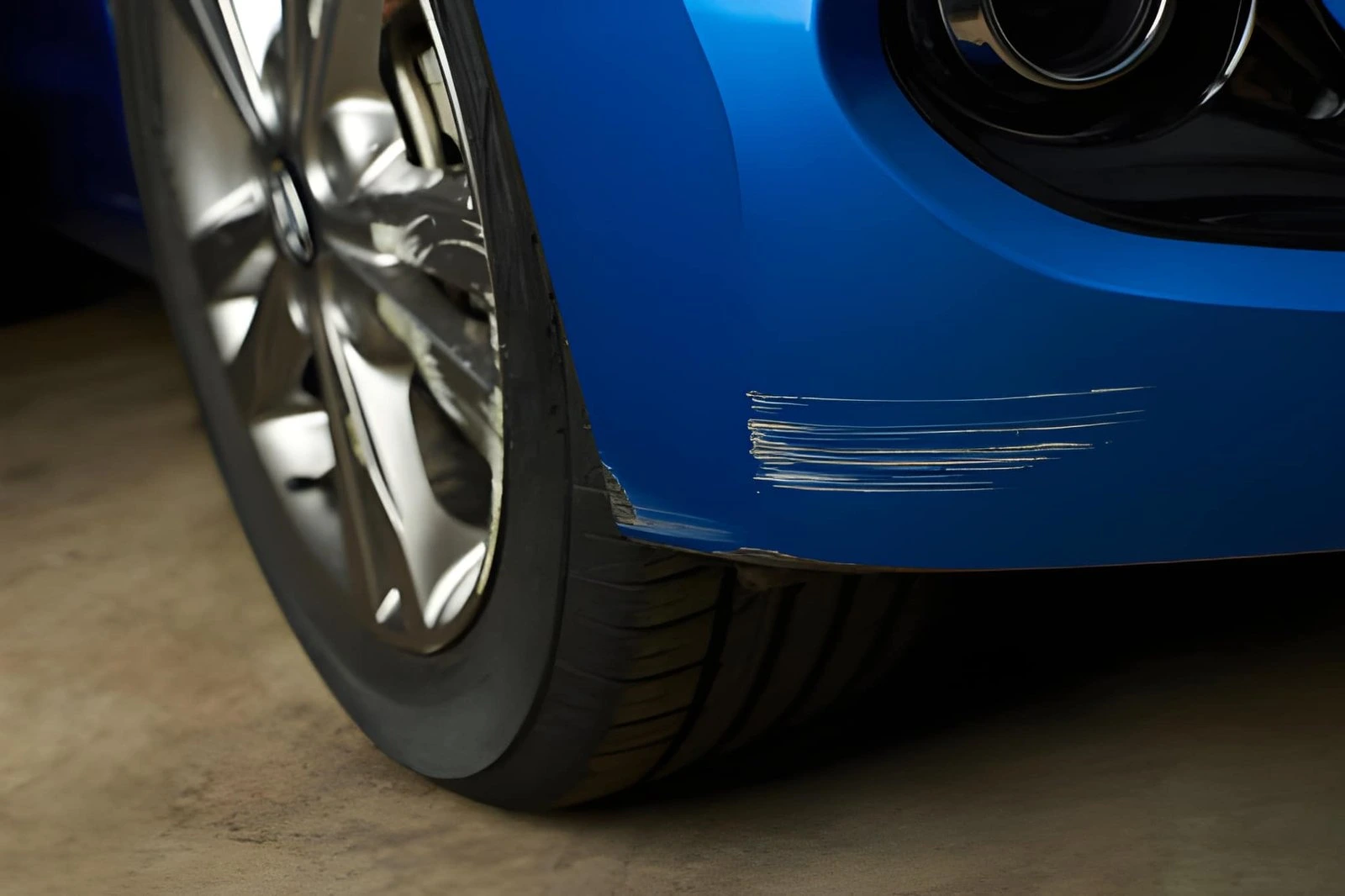
A scratch on a Dubai car isn’t just a cosmetic problem. It’s a breach in the protection layer that sits between bare metal and one of the harshest climates on earth. UV intensity that fades and cracks clear coat, sandstorm micro-abrasion, coastal humidity from JBR and Dubai Marina, and the heat that accelerates rust formation once metal is exposed — all of it makes car scratch repair in Dubai more urgent than most owners realise.
At Rapid Rev Garage in Al Quoz, we handle car scratch repair across all damage types and all makes — from a single clear coat scuff on a Polo to deep keying damage on a Cayenne. Every repair starts with a proper scratch depth assessment before any technique is recommended. The right fix depends entirely on how deep the damage goes.
Car Scratch Repair in Dubai — Why Dubai Makes It More Urgent Than Elsewhere
Scratches anywhere are unsightly. Scratches in Dubai are a different problem entirely.
The clear coat on any production vehicle is the outermost protective layer — typically 40–60 microns thick. It shields the colour coat beneath it from UV radiation, acid rain, bird dropping etching, and oxidation. Dubai’s UV index is significantly higher than European or North American levels year-round. A scratch that breaks through the clear coat in London might take two years to show any surrounding paint deterioration. The same scratch in Dubai can show oxidation and paint lifting around the edges within a single summer.
Deep scratches that reach the primer or bare metal are faster to rust here than anywhere. The humidity variation — Dubai’s relatively humid November to February period following the extreme dry heat of summer — creates corrosion conditions that attack exposed metal quickly. A deep car scratch repair left until next month in Dubai is meaningfully more complicated by next month than it would be in a temperate climate.
Car Scratch Repair — Understanding Scratch Depth Before Choosing a Fix
Not all scratches are the same, and the repair technique depends entirely on which paint layer the damage has reached. Getting this assessment wrong is how scratch repairs fail — either under-treating a deep scratch that looks superficial, or over-treating a clear coat scuff with unnecessary repainting.
Clear coat scratches These are the most common and the least severe. The damage is confined to the transparent top layer — the colour beneath is untouched. Run a fingernail across the scratch: if it catches slightly but the surrounding paint shows no colour disruption, it’s a clear coat scratch. Machine polishing with a cutting compound removes the damaged material and levels the surface to the surrounding clear coat. No paint is needed. The result, done correctly, is invisible.
Colour coat scratches These go through the clear coat and into the pigmented colour layer. The scratch line shows the colour of the primer beneath the colour coat — typically grey or white — rather than the body colour. Touch-up paint matched to the vehicle’s factory colour code, carefully applied and blended, followed by clear coat application and machine polishing is the correct approach for contained damage. Larger colour coat scratches require a panel spot respray for a proper invisible finish.
Primer scratches These reach down to the primer layer — the white or grey material between the colour coat and the bare metal. Primer scratches need proper paint preparation: clean, degrease, apply new primer, colour coat matched to the factory code, clear coat, and machine polish to blend into the surrounding panel. Done in stages with the correct materials and drying times between applications.
Bare metal scratches The most urgent. Metal is exposed and starting to oxidise immediately in Dubai’s climate. The repair process starts with rust treatment if any corrosion has already formed, then follows the full primer-colour-clear sequence. Left more than a few weeks in Dubai summer conditions, even a small bare metal scratch can develop rust bloom that spreads under the surrounding paint and requires panel preparation significantly beyond the original scratch.
Our car mechanic team assesses scratch depth accurately before any technique is recommended — a proper inspection under good lighting, not a quick glance and a quote.
What Causes Scratches on Dubai Cars — and Why Al Quoz Specifically
Dubai’s driving and parking environment creates specific scratch patterns that differ from other cities.
Parking lot contact is the single most common source — door edge scratches from adjacent vehicles in tight supermarket and mall car parks, particularly in older multi-storey structures where the parking bays are narrower than current vehicles. Dubai Marina, JBR, and older DEIRA and Bur Dubai car parks are the worst offenders.
Sandstorm micro-abrasion creates swirl marks and fine surface scratches across the entire vehicle during a haboob. Fine sand particles blown at speed act as mild abrasive across every painted surface. Individual scratches are invisible, but the cumulative dulling of the clear coat and the swirl pattern in direct sunlight are unmistakable. Machine polishing restores the gloss without any paint application.
Automatic car washes with poorly maintained brushes or recycled dirty water are responsible for a significant proportion of the swirl-pattern scratches we see. A car that goes through a brush wash with sand still on it from an overnight sandstorm effectively gets sanded at speed across every panel.
Highway stone chips on the bonnet and front bumper from motorway driving on Sheikh Zayed and Emirates Road are unavoidable. Each chip is a small breach of the clear coat or colour coat that needs treatment before it progresses in Dubai’s UV conditions.
Kerbing on the lower front bumper and front sills is endemic in Dubai — raised kerbs at roundabouts, parking stops that are higher than the vehicle’s front lip, and speed bump geometry that catches lowered vehicles.
The Repair Process at Rapid Rev Garage — Step by Step
Every car scratch repair job at Rapid Rev Garage follows a defined process. The quality of the finished result depends on each step being done correctly, not rushed.
Step 1 — Assessment under correct lighting Scratches assessed under artificial workshop lighting look different from the same scratches in daylight at an angle. We assess all damage under both conditions before determining the repair approach. Depth, extent, and location relative to panel edges all affect the correct technique.
Step 2 — Surface preparation The repair area is cleaned, degreased, and any contamination or wax residue removed. For primer or bare metal repairs, the area is dry-sanded to a smooth edge before any material is applied. Skipping preparation is the most common reason spot repairs fail — paint applied over contaminated or unsanded edges lifts at the margins within months.
Step 3 — Colour matching Every vehicle has a factory paint code — a three to four character alphanumeric that specifies the exact pigment mix for that model and colour. Colour codes are found on the VIN plate or door jamb sticker. We mix colour using digital spectrophotometry matched to the factory code, then verify against the vehicle panel in daylight before applying. For metallic and pearl finishes — common on German and Japanese luxury cars — the metallic flake orientation in the mixed paint is also checked before any spraying.
Step 4 — Application and blending Spot repairs are applied to the affected area and blended at the panel edges. A spot repair that stops sharply at the boundary of the damaged area produces a visible halo in certain lighting. Correct blending — feathering the fresh paint into the surrounding original finish — is what makes a scratch repair invisible rather than just covered.
Step 5 — Clear coat and curing Two-stage paint systems — used on all modern vehicles — require clear coat application over the colour layer. The clear coat is applied, allowed to flash off, then oven-cured or infra-red cured for the correct adhesion and hardness. A clear coat that’s rushed or under-cured in Dubai’s heat is soft and scratches again easily.
Step 6 — Machine polish and finishing After curing, the repair is machine-polished to level any texture from the spray application and blend the surface gloss with the surrounding panel. This step determines whether the finished repair looks like a repair or looks like the original paint.
Full Panel Respray — When a Spot Repair Isn’t Enough
Some damage requires a full panel respray rather than a spot repair. Long scratches that run the full length of a door, damage close to a panel edge where blending space is limited, or multiple overlapping scratch areas across the same panel all typically warrant a full panel respray for a proper invisible finish.
A full panel respray involves complete preparation — sanding, filling, priming, base coat, clear coat, and polishing the entire panel — followed by a colour blend at the adjacent panel edges. Done correctly in a controlled dust-free spray environment, a full panel respray is indistinguishable from the surrounding original finish. Our car painting team handles full panel work using two-stage polyurethane systems with UV-stabilised clear coat matched to your factory paint code.
Dubai’s UV conditions make paint film quality critical for long-term durability. We use two-stage polyurethane paint systems with UV-stabilised clear coat — the same material specification as factory paint application — not rattle-can or single-stage systems that fade and chalk faster in sustained direct sun.
For any breakdown or mechanical issue alongside cosmetic repairs, our roadside assistance covers Al Quoz and nearby Dubai areas.
Practical Questions Dubai Owners Ask About Scratch Repairs
Beyond the repair process itself, these are the practical questions we hear regularly.
Can a scratch be fixed without repainting? Yes — if the damage is confined to the clear coat. Machine polishing removes the damaged material without any paint. For colour coat damage, touch-up paint is unavoidable, but a skilled application is effectively invisible on a flat panel in good daylight.
Will the repair match perfectly? Factory colour codes give a precise starting point, but paint ages. A ten-year-old Dubai car has a colour coat that’s been through years of UV exposure and has faded slightly from the original mix. We verify the mixed paint against the vehicle’s actual panel colour, not against the factory code alone. For aged panels, a slightly adjusted mix produces a better match than applying the unadjusted original code.
Is it worth repairing before selling? In Dubai’s used car market — where presentation is scrutinised at inspection — yes. A car with multiple visible scratches will be discounted significantly more at trade-in than the cost of a proper car scratch repair. The return on a quality repair before sale is almost always positive.
Our car service team handles the mechanical side if the vehicle also needs a service before inspection or sale — one visit for both.
Mobile Assessment and Workshop Booking
If you want to know whether a scratch is a polish job or a paint job before committing to a workshop visit, our mobile car mechanic can come to your location for an on-site scratch depth assessment and an accurate repair recommendation.
For owners with stone chips, scratches, and other cosmetic damage building up on their vehicle while it’s in the workshop for mechanical work — our workshop handles both simultaneously. No second trip needed.
Finding Car Scratch Repair in Al Quoz
If you’ve been searching for a garage near me in Dubai for proper scratch repair and paint restoration, Rapid Rev Garage is in Al Quoz — the car scratch repair workshop accessible from Business Bay, Jumeirah, Barsha, Satwa, Downtown, and the Sheikh Zayed Road corridor. We work on all makes — European, Japanese, American, and GCC-spec vehicles — with two-stage paint systems and factory colour code matching on every job.
FAQ — Car Scratch Repair in Dubai
How do I know if a scratch needs polishing or repainting?
Run a fingernail across it — if it catches, the damage is below the clear coat and needs paint. If it slides over cleanly, machine polishing is enough.
How long does car scratch repair take at Rapid Rev Garage?
Clear coat polishing: same day. Spot paint repair: one to two days including curing time. Full panel respray: two to three days.
Why does paint fade differently around a repaired scratch in Dubai?
Usually because the repair used a generic colour rather than a panel-matched mix — Dubai UV accelerates any colour mismatch that wasn't visible initially.
Should I repair stone chips before they rust?
Yes — in Dubai's climate, bare metal from a chip can show oxidation within weeks in humid conditions. Early treatment costs far less than the rust remediation later.
Is it better to repair scratches before or after a ceramic coating?
Before — ceramic coating locks in the surface condition. Applying coating over scratches or paint defects traps them permanently.
In Conclusion
Car scratch repair in Dubai is more urgent than in most cities — UV intensity, sandstorm abrasion, coastal humidity, and summer heat all make untreated paint damage progress faster than it would anywhere else. Getting it fixed correctly, with the right technique for the depth of the damage and a properly matched colour, is what separates a repair that lasts from one that shows within a season.
Rapid Rev Garage is in Al Quoz, serving drivers across nearby Dubai areas — Business Bay, Jumeirah, Downtown, Barsha, Satwa, and the Sheikh Zayed Road corridor. Book your appointment on WhatsApp and find us on Google Maps.
Rapid Rev Garage — Car Scratch Repair Dubai | Al Quoz and Nearby Areas