A comprehensive car check means something specific. Not a quick look under the bonnet. Not a five-minute scan that reads two fault codes and calls it done.
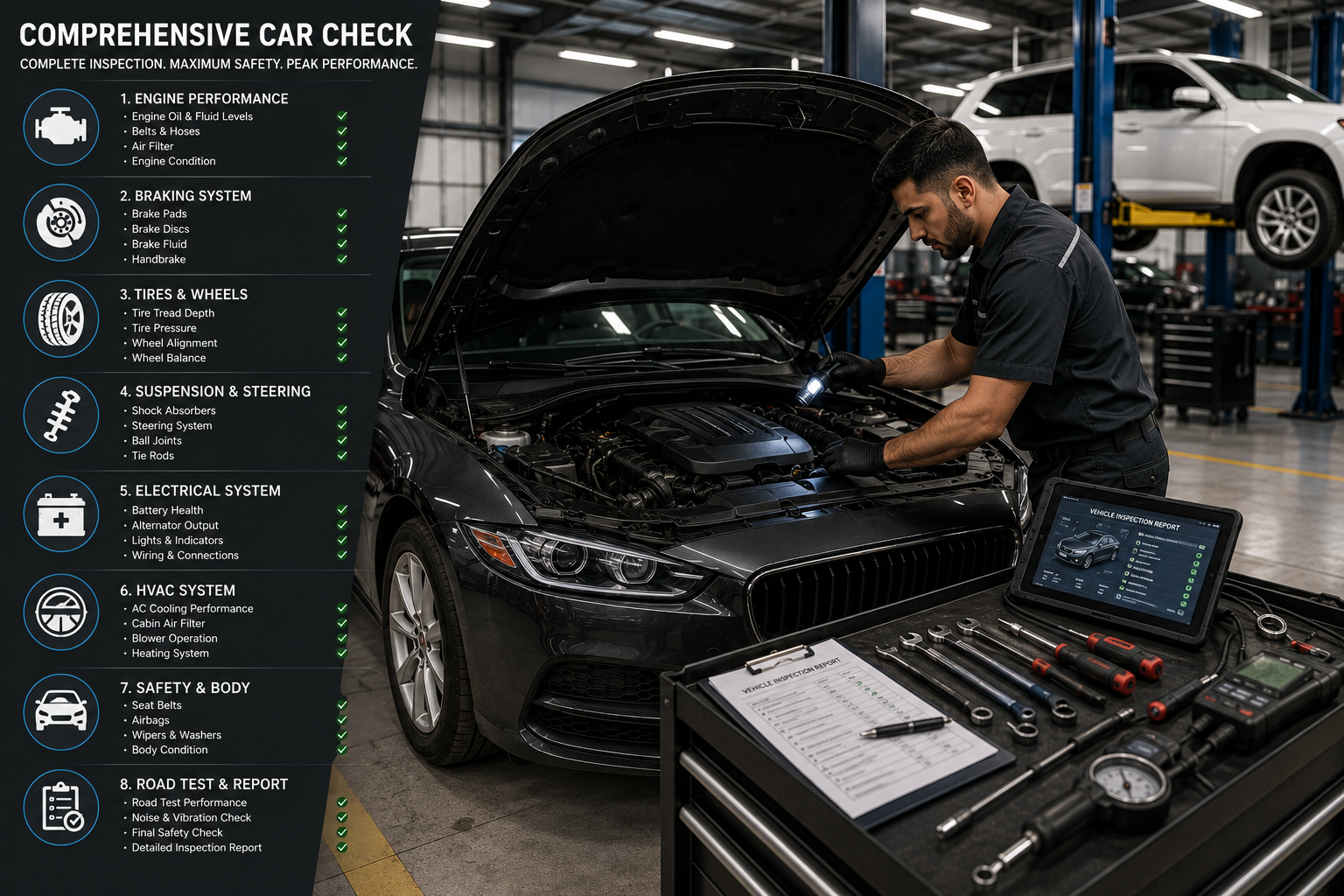
It means every major system assessed, measured, and documented — engine, transmission, brakes, suspension, electrical, AC, and bodywork. The kind of assessment that tells you what’s actually happening with the car, not just what’s obviously wrong.
In Dubai, where heat accelerates wear on nearly everything, a comprehensive car check catches problems that wouldn’t show up in normal driving for months. This covers exactly what should be included — and why each part matters.
Comprehensive Car Check Dubai — Why Full Coverage Matters
A car is a collection of interconnected systems. A fault in one area often shows symptoms somewhere else entirely.
A comprehensive car check that only looks at the engine misses a developing transmission issue. One that only scans for fault codes misses physical wear that hasn’t triggered a code yet.
Dubai’s conditions make this especially relevant. Heat affects the battery, the AC, the cooling system, the suspension bushings, and the wiring insulation — often simultaneously, at different rates, with different symptoms.
A proper assessment looks at all of it together. That’s what separates a comprehensive car check from a basic inspection.
What a Comprehensive Car Check Covers
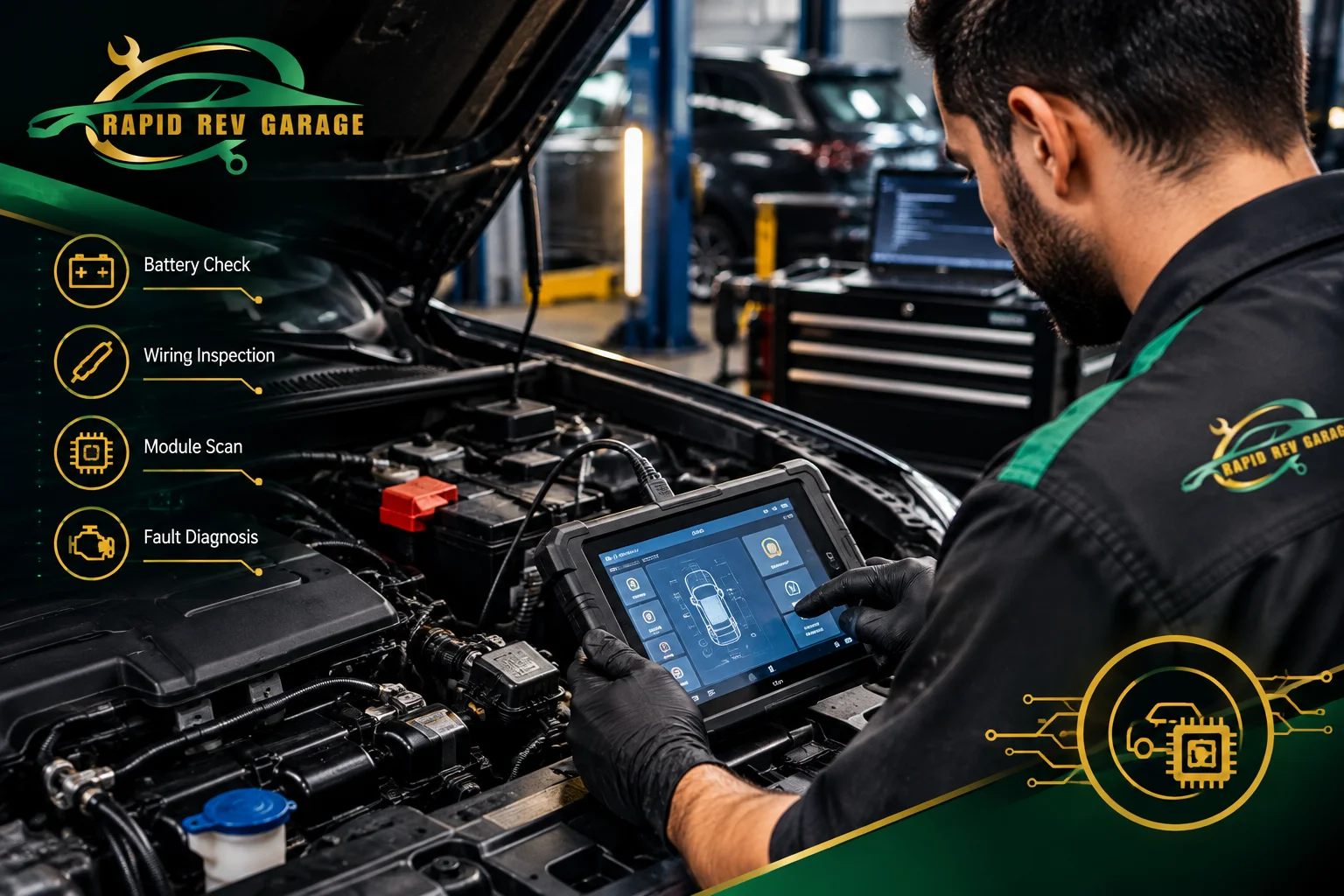
Full Diagnostic Scan
Every control unit gets scanned — not just the engine and transmission. Body control, ABS, airbags, chassis management, comfort systems, infotainment.
Generic OBD readers cover roughly 20% of available fault data on a modern car. A proper comprehensive car check uses manufacturer-compatible or equivalent diagnostic software that reads the rest.
Fault History Retrieval
Cleared fault codes leave traces in the system log. A thorough scan retrieves this history — finding faults that were cleared before the check, not just active ones.
Engine Bay Assessment
Oil level and condition on the dipstick. Coolant concentration tested with a refractometer. Battery terminal condition and manufacture date. Auxiliary belt condition. Evidence of oil leaks from valve covers or the sump.
Cold Start Behaviour
A cold engine reveals things a warm one doesn’t. Idle quality in the first 30 seconds, exhaust smoke at startup, how quickly the idle stabilises — all part of a proper comprehensive car check.
Transmission Assessment
Shift quality across all gears, from cold through to operating temperature. Torque converter behaviour on automatics. Low-speed engagement on dual-clutch units — where wear shows up earliest.
Any hesitation, slip, or shudder gets documented with the conditions under which it occurs.
Brake System Check
Pad thickness measurement at all four corners. Disc condition — scoring, heat cracking, runout. Brake fluid moisture content tested with a calibrated tester, not just a colour check.
Pedal feel and travel assessed during a test drive. Handbrake effectiveness confirmed.
Suspension and Steering
Road Test Component
Highway stability, steering response, pull under braking. Suspension noise over speed bumps — deliberately tested, since this is where worn bushings and failed dampers reveal themselves.
Physical Inspection Component
Ball joint play under load. Tie rod end condition. Subframe bushing compression. Strut top mount condition. All checked physically, not just assumed from mileage.
AC System Performance
Vent temperature measurement at idle and under load. Compressor clutch engagement and cycling behaviour. Refrigerant pressure on both high and low sides.
A comprehensive car check in spring catches AC systems that will fail by July — before the owner finds out the hard way.
Electrical System Health
Battery conductance test — not just voltage. Alternator output under load. Ground strap condition where accessible.
Wiring faults that produce intermittent symptoms are harder to catch, but a proper check includes testing under varied conditions where possible.
Tyre Condition
Tread depth at multiple points across each tyre. DOT age code from the sidewall. Sidewall condition for cracking. Uneven wear patterns that point to alignment or suspension issues.
Tyres over five years old in Dubai’s heat are a consideration regardless of remaining tread.
Exterior and Paint Condition
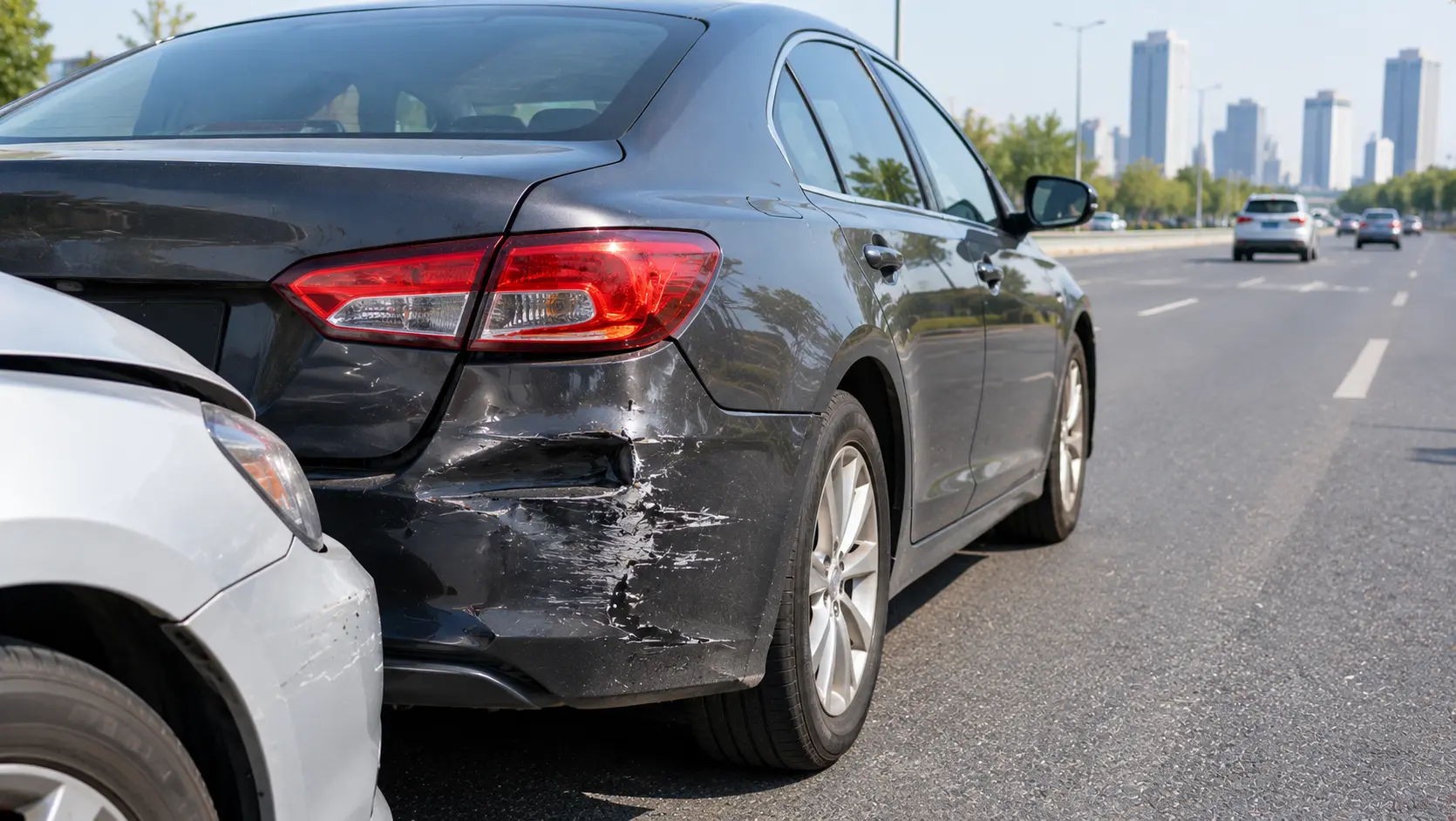
For used car purchases specifically, paint depth measurement across panels reveals previous accident repairs. Panel gap consistency. Evidence of filler or respray.
This component matters less for an owned vehicle’s routine check but is essential for pre-purchase comprehensive car check work.
What You Get From a Comprehensive Car Check
A Written Report
Every system, every finding, documented — not a verbal summary. Measurements where applicable, not estimates.
A Clear Priority Breakdown
What needs attention now, what can be scheduled, and what’s simply noted for future reference. Not everything found is urgent — but everything found should be documented.
A Baseline for Future Service
The report becomes a reference point. The next service knows what was checked, what was found, and what’s been addressed since.
For items that need immediate attention, a qualified car mechanic can address them at the same visit. A full car service often pairs naturally with a comprehensive check — covering both scheduled maintenance and a complete condition assessment in one visit.
For paint findings, professional car painting handles colour-matched repairs. A mobile car mechanic handles on-site issues between checks. For emergencies, proper roadside assistance ensures safe recovery.
For owners in Al Quoz searching for a garage near me that performs a genuinely thorough assessment — the difference is in what gets checked, measured, and written down.
FAQ
How long does a comprehensive car check take?
Typically 60–90 minutes depending on the vehicle and what's found during the assessment.
How often should I get a comprehensive car check in Dubai?
How long does a comprehensive car check take?
Typically 60–90 minutes depending on the vehicle and what's found during the assessment.
Annually, or every 20,000 km — in addition to regular services, which don't always cover every system.
What's the difference between a comprehensive car check and a regular service?
A service focuses on scheduled maintenance items. A comprehensive check assesses the entire vehicle's condition regardless of service schedule.
Does a comprehensive car check include a test drive?
Yes — transmission behaviour, brake feel, suspension noise, and steering response all require a test drive to assess properly.
Is a comprehensive car check worth it if nothing seems wrong?
Yes — many developing faults don't produce symptoms until they're advanced. Catching them early is almost always cheaper.
Conclusion
A comprehensive car check covers every system that matters — diagnostics, engine, transmission, brakes, suspension, AC, electrical, and tyres — documented in a written report that gives you a clear picture of the car’s actual condition.
Rapid Rev Garage in Al Quoz provides thorough comprehensive car checks for all makes and models. Book your assessment on WhatsApp or find the workshop on Google Maps.