When a cooling fan never turns off, a situation develops — running continuously from startup to shutdown regardless of engine temperature or AC status — the cooling system is communicating that something in the temperature management or fan control circuit is not functioning correctly. In a correctly working system, the cooling fan runs when needed and stops when it isn’t. A fan that never stops is either responding to a genuine temperature signal that’s too high, or to a control signal that’s stuck in the on position regardless of what the engine actually needs.
At Rapid Rev Garage in Al Quoz, cooling fan never turns off complaints are diagnosed with live temperature data and fan control circuit testing before any component is replaced.
Cooling Fan Never Turns Off — Quick Verdict
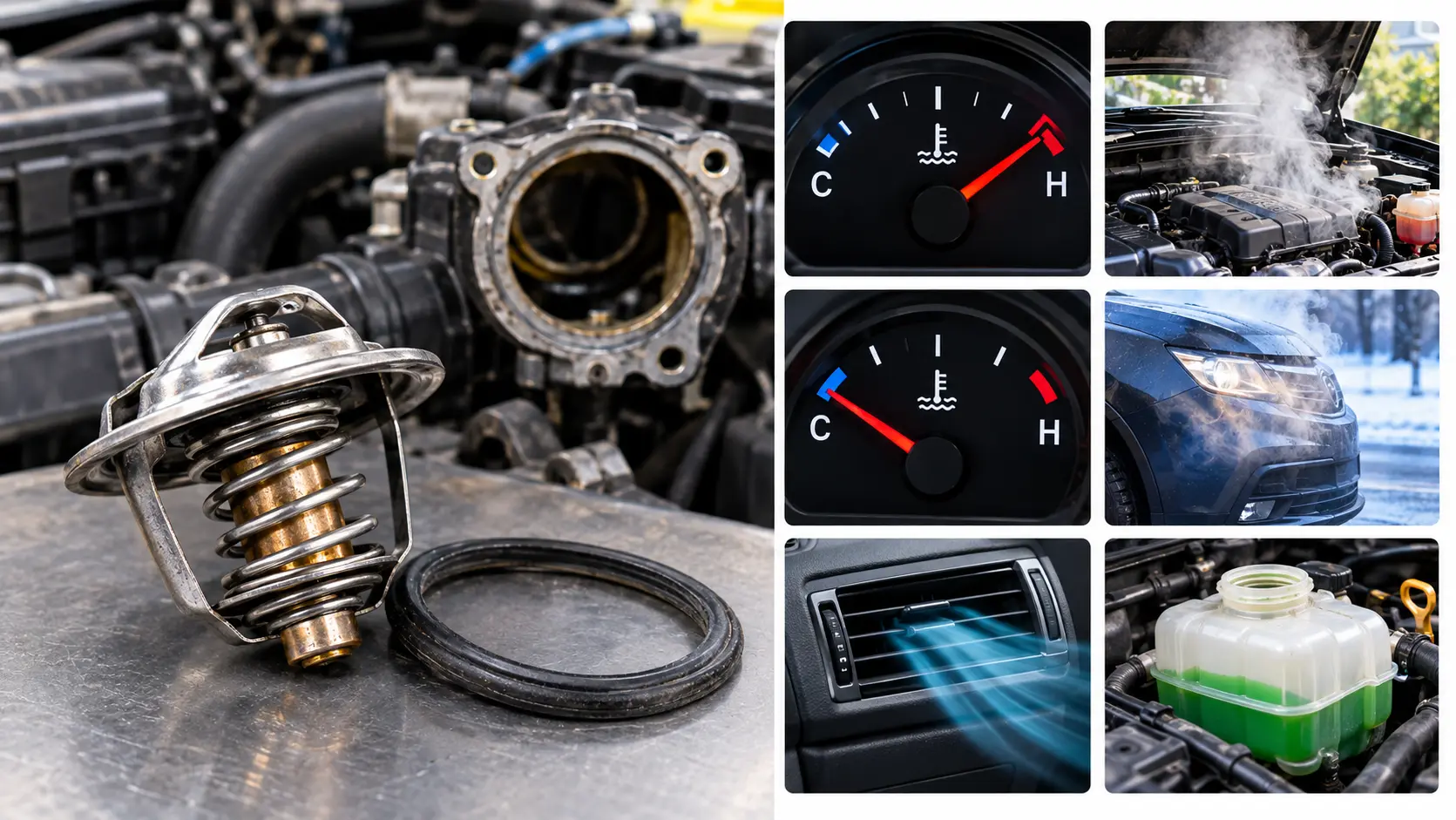
When the cooling fan never turns off, it is almost always caused by one of four faults: a thermostat stuck closed that is preventing coolant from reaching the radiator, causing the engine to run genuinely hot and requiring continuous fan operation; a coolant temperature sensor sending a permanently high-temperature signal that tells the engine management system to run the fan continuously even when the engine is cool; a fan relay that has stuck in the closed position and is permanently supplying power to the fan regardless of what the control system commands; or the AC system with a fault or incorrect mode that keeps the condenser fan running when it shouldn’t be.
Dubai’s sustained heat makes genuine overheating situations more common, meaning a continuously running fan here sometimes indicates a real thermal management problem rather than a false signal.
Table of Contents
- How the Cooling Fan Is Supposed to Operate
- What Continuous Fan Operation Is Actually Telling You
- The Four Causes Ranked by Frequency in Dubai
- Why Dubai’s Heat Changes the Urgency of This Fault
- How We Confirm the Exact Cause at Rapid Rev Garage
- The Right Fix for Each Confirmed Cause
- What Happens If a Continuously Running Fan Is Ignored
- Is It Safe to Keep Driving?
- How Long the Repair Takes
- What the Repair Costs in Dubai
- Preventing Cooling System Faults in Dubai
- Why Rapid Rev Garage?
- FAQ
- Conclusion
How the Cooling Fan Is Supposed to Operate
Understanding normal fan operation explains why a cooling fan never turns off situation indicates a fault.
The Normal On/Off Cycle
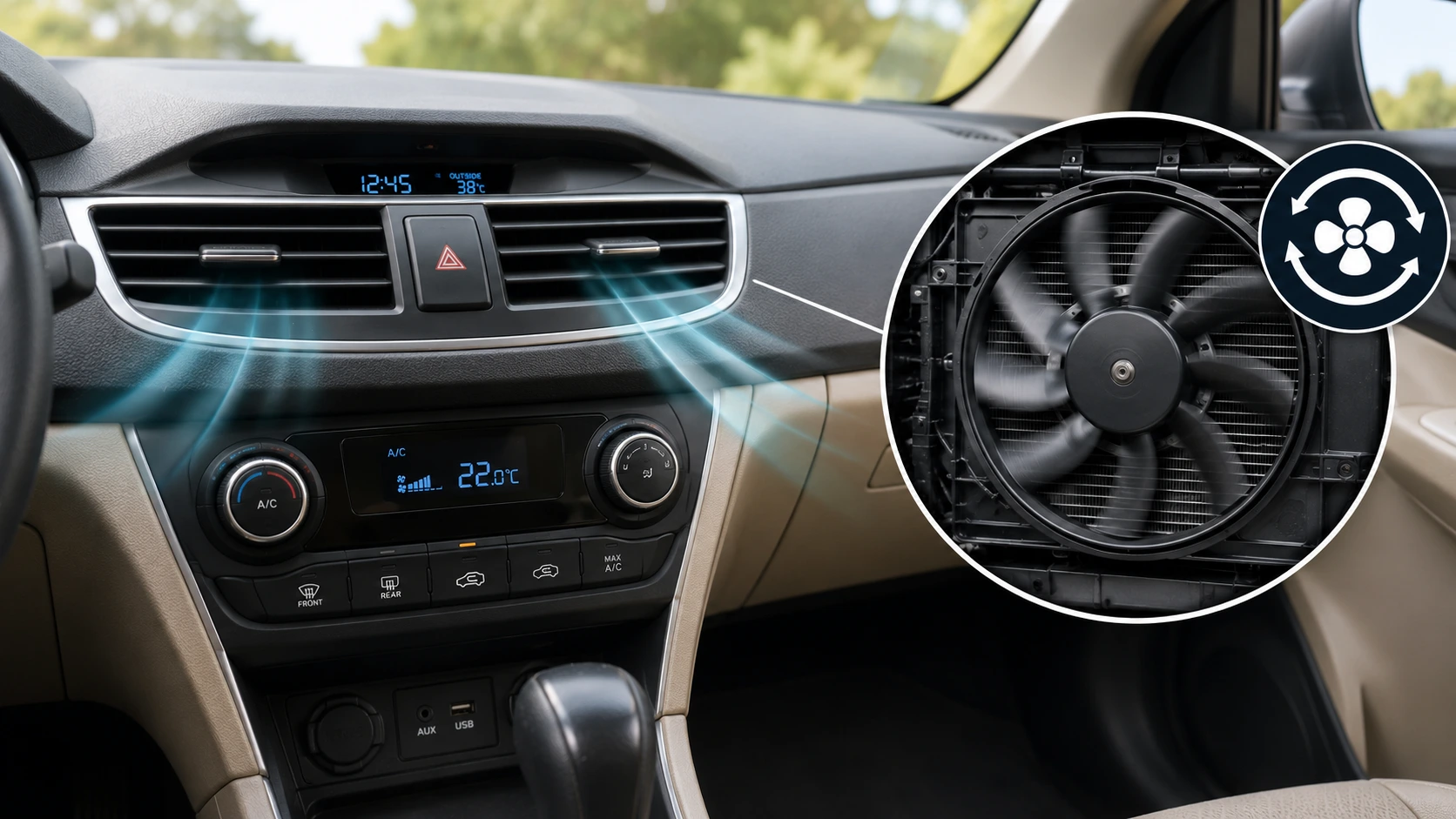
On most modern vehicles, the electric cooling fan operates under two separate control conditions. The first is engine temperature — when coolant temperature rises above a defined threshold (typically 95–100°C), the engine management system activates the fan to draw air across the radiator and bring the temperature down. Once the temperature returns to the normal operating range, the fan switches off. The second condition is AC operation — when the air conditioning compressor is running, the condenser fan (and often the radiator fan) runs to maintain airflow across the condenser.
What Makes It Switch Off
The fan switches off when the engine management system confirms that the coolant temperature sensor reading is below the fan-activation threshold and the AC compressor is not running. Both conditions must be met for the fan to deactivate. Any fault that prevents either confirmation from reaching the control system keeps the fan running.
What Continuous Fan Operation Is Actually Telling You
The specific timing of when the cooling fan never turns off — and what conditions accompany it — — and what conditions accompany it — is the most useful information before any diagnostic tool is connected.
Fan Running at Cold Start, Never Stopping
A cooling fan never turns off pattern that begins from the moment the engine starts — before the engine has had any chance to warm up — is almost certainly responding to a control signal fault rather than a genuine temperature issue. An engine at ambient temperature (30–45°C in Dubai) should not require fan cooling. If the fan is running at cold start, either the temperature sensor is reporting a falsely high reading, or the relay has stuck and is powering the fan independently of any control signal.
Fan Running Only After the Engine Is Warm
A fan that operates normally when cold but doesn’t switch off once the engine reaches operating temperature points toward a genuine thermal management issue — the thermostat stuck closed, the temperature sensor drifting high at operating temperature, or the engine genuinely running hotter than normal from another cooling system fault.
Fan Running Whenever the AC Is On
A fan that runs continuously only when the AC is selected — and stops when the AC is switched off — is operating within normal parameters on many vehicles. The condenser fan runs whenever the AC compressor is active, because the condenser requires airflow to reject heat from the refrigerant. This is only a fault if the fan continues running after the AC is switched off and the engine has cooled.
The Four Causes Ranked by Frequency in Dubai
Each cause produces a specific pattern in the diagnostic data that distinguishes it from the others.
Coolant Temperature Sensor Fault — Most Common
The coolant temperature sensor reports engine temperature to the engine management system. A sensor that has developed a fault — reporting a permanently high temperature regardless of actual engine coolant temperature — causes the management system to conclude the engine is always overheating and to run the fan continuously as a protective response.
How to Confirm This Is the Cause
A diagnostic scan reading live coolant temperature data distinguishes a genuine temperature reading from a sensor fault. If the scan shows a coolant temperature that remains at 110°C+ from a cold start and never changes, the sensor is at fault — because a correctly-warming engine follows a predictable temperature rise curve. A scan also confirms whether the fan control command is coming from a genuine temperature threshold or from a stuck relay by reading the fan control output status.
Why Dubai Heat Accelerates Sensor Degradation
Coolant temperature sensors are immersed in coolant and exposed to underbonnet temperatures simultaneously. In Dubai’s heat, the sustained thermal load on the sensor’s materials and the thermal cycling between cool and peak operating temperature accelerate sensor element drift. A sensor that reads correctly when new may develop a high-side offset after 60,000–80,000 km of Dubai stop-start driving.
Stuck Fan Relay — Second Most Common
The cooling fan relay is an electrically-operated switch in the fuse box that supplies power to the fan motor on command from the engine management system. When the relay’s internal contacts weld together — which can happen from a current surge or prolonged operation at high temperatures — it supplies permanent power to the fan regardless of whether the control system is commanding it. The fan runs continuously even with the engine cold and the ignition key out in some cases.
The Simple Relay Swap Test
Cooling fan relays are typically interchangeable with other identical relays in the fuse box. Swapping the cooling fan relay with an identical relay from a non-critical circuit — such as a heated seat relay — takes 30 seconds and immediately confirms a stuck relay if the fan stops after the swap.
Our car mechanic team performs the relay swap test as the first hardware check after the diagnostic scan confirms the control system is not actively commanding the fan.
Thermostat Stuck Closed — Genuine Overheating Scenario
A thermostat stuck in the closed position prevents coolant from flowing to the radiator. Without radiator cooling, the engine temperature rises beyond its normal operating range. The engine management system responds by running the cooling fan continuously — which in this case is the correct response to a genuine overheating threat, not a false signal. The fan running continuously is the symptom; the thermostat is the cause.
How This Is Distinguished From a Sensor Fault
With a stuck-closed thermostat, the coolant temperature reading on a diagnostic scan rises continuously and reaches genuinely high values — above 105°C and climbing — rather than showing a static falsely-high reading from cold. The temperature gauge on the dashboard also rises above its normal position. Both confirm genuine overheating from a thermostat fault rather than a false sensor signal.
AC System Fan Control Fault
On vehicles where the AC condenser fan and the radiator cooling fan share a motor or a common control circuit, an AC system fault that keeps the compressor clutch engaged — or a condenser fan relay stuck on — can keep the cooling fan running whenever the AC system has power.
Why Dubai’s Heat Changes the Urgency of This Fault
A cooling fan never turns off fault in Dubai carries different implications from the same fault in a cooler market.
Genuine Overheating Is More Likely Here
In a moderate climate, a continuously running fan from a stuck relay is purely an electrical fault — the engine was never at risk because ambient temperatures are low enough that the engine doesn’t need continuous fan operation to stay within its thermal limits. In Dubai’s summer, where ambient temperatures reduce the cooling system’s thermal margin, a thermostat fault that produces genuine overheating is a more immediate risk than the same fault in winter.
A Continuously Running Fan Drains the Battery
An electric cooling fan draws significant current — typically 10–20 amps. A cooling fan never turns off situation that includes the fan running while the vehicle is stationary and only the ignition is on, places a sustained load on the charging system. In Dubai, where batteries already face accelerated degradation from heat, a continuously running fan accelerates battery discharge to the point where non-start events become possible within days of the fault developing.
Fan Motor Wear From Continuous Operation
Fan motors are designed for intermittent duty cycles — running when needed and stopping when not needed. A motor running continuously accumulates wear at a rate far higher than its design life assumes. A fan that never stops will fail significantly earlier than its expected service life, creating a cooling failure risk at a future point when the motor eventually burns out. For any overheating emergency on the road, our roadside assistance covers Al Quoz and nearby Dubai areas.
How We Confirm the Exact Cause at Rapid Rev Garage
The diagnostic sequence moves from live data to physical testing — identifying the specific cause before any component is replaced.
Live Temperature Data During a Cold Start
The diagnostic scan is connected before the engine is started. Coolant temperature is observed from cold start through warm-up. A correctly functioning system shows a progressive temperature rise from ambient to operating temperature as the thermostat opens. A sensor fault shows a static abnormal reading that doesn’t follow the warm-up curve. A thermostat fault shows a temperature that rises beyond the normal operating range without stabilising.
Fan Control Output Monitoring
The scan tool reads the fan control output from the engine management system — confirming whether the system is actively commanding the fan or whether the fan is running despite no command. A fan running without a command from the management system confirms a stuck relay or a wiring fault — the power circuit has bypassed the control circuit.
Relay Swap Test
Where the scan confirms the management system is not commanding the fan, the relay swap test immediately identifies a stuck relay. Where the management system is actively commanding the fan, the investigation returns to why — sensor fault, thermostat fault, or genuine overheating from another cause.
Thermostat Function Confirmation
Where a thermostat fault is suspected, coolant flow to the radiator is confirmed by checking whether the upper radiator hose warms up at the same rate as the engine — a correctly-opening thermostat allows hot coolant to the radiator when the engine reaches temperature, warming the upper hose. A stuck-closed thermostat keeps the upper hose cool while the engine overheats. Our car service packages include cooling system temperature monitoring at every major service.
The Right Fix for Each Confirmed Cause
Each repair is matched specifically to the confirmed cause from the diagnostic sequence.
Coolant Temperature Sensor Replacement
A confirmed faulty sensor is replaced with the correctly-specified unit for the vehicle’s engine. Post-replacement, live temperature data is observed during a full cold-start warm-up to confirm the new sensor follows the correct temperature curve and the fan returns to normal cycling behaviour.
Fan Relay Replacement
The stuck relay is replaced with a new relay of the correct specification and current rating for the fan circuit. The relay swap test is reversed — confirming the new relay allows the fan to operate normally under management system command and stop when the command is withdrawn.
Thermostat Replacement
A stuck thermostat is replaced with the correct thermostat for the engine. The cooling system is refilled and pressure-tested. A full cold-start warm-up confirms the new thermostat opens at the correct temperature — identifiable from the upper hose warming up at the specified coolant temperature and the temperature gauge stabilising at its normal position.
Coolant Replacement Following Any Overheating Event
Where the thermostat fault caused genuine overheating, the coolant is replaced as part of the repair — an overheating event degrades the coolant’s corrosion inhibitors and may have introduced contamination from internal component damage. Fresh coolant is essential after any confirmed overheating event. For any exterior repairs needed alongside cooling system work, our car painting team handles colour-matched work at the same visit.
What Happens If a Continuously Running Fan Is Ignored
A continuously running fan that is accepted and driven through produces specific and progressive consequences.
Battery Drain to Non-Start
A cooling fan drawing 15 amps continuously discharges the battery — particularly if the vehicle is used for short trips that don’t allow the alternator to fully replenish what the fan is drawing. A Dubai vehicle on short daily trips with a continuously running fan may reach a non-start state within a few days.
Fan Motor Failure and Loss of Cooling
A continuously operating fan motor reaches end of life significantly faster than an intermittently operating one. When the motor fails — which it will earlier than expected — the vehicle loses all electric cooling fan function. In Dubai’s summer, engine overheating from a failed cooling fan can occur within minutes of stopping in traffic.
Masked Thermostat Problem Causes Engine Damage
If the continuous fan operation is masking a thermostat that is stuck closed — the fan is preventing overheating in moving traffic but cannot maintain adequate cooling in stationary traffic — the engine may overheat on a traffic-heavy day in summer before the fault has been investigated. Head gasket damage from a single severe overheating event is a significantly more expensive consequence than thermostat replacement.
Is It Safe to Keep Driving?
The safety assessment depends on whether the continuous fan operation is from a control fault or a genuine thermal management problem.
Sensor or Relay Fault — Driveable, Book This Week
A continuously running fan from a sensor fault or stuck relay, with the temperature gauge reading normal and no other overheating symptoms, is driveable in the short term. The risk is battery drain and fan motor wear rather than engine damage. Book within the week.
Thermostat Fault With Rising Temperature Gauge — Stop Driving
If the temperature gauge is rising above its normal position alongside the continuous fan operation, the fan is responding to genuine overheating from a thermostat fault. Stop driving and arrange assessment before the engine reaches a damaging temperature.
How Long the Repair Takes
Repair time depends on the confirmed cause — relay replacement is the fastest, thermostat replacement takes longest.
Sensor Replacement
One to two hours including cold-start warm-up confirmation after replacement.
Relay Replacement
15–30 minutes including operational confirmation.
Thermostat Replacement
One to three hours depending on the engine and thermostat housing access, plus cooling system refill and pressure test.
What the Repair Costs in Dubai
Cost is confirmed after the diagnostic sequence identifies the specific cause.
Sensor and Relay Work
Coolant temperature sensor replacement: AED 300–900 depending on vehicle platform and sensor accessibility. Fan relay replacement: AED 150–400 including identification and confirmation.
Thermostat Work
Thermostat replacement including coolant refill: AED 400–1,200 depending on vehicle and thermostat housing complexity. Cooling system pressure test: included as standard in every thermostat replacement at Rapid Rev Garage. A written quote follows the diagnostic confirmation. Our mobile car mechanic covers Al Quoz and nearby Dubai areas for on-site initial temperature assessment.
Preventing Cooling System Faults in Dubai
Specific habits prevent the most common cooling system faults that produce continuous fan operation.
Coolant Replacement Every Two Years
Coolant past its effective inhibitor life becomes acidic — attacking aluminium cylinder heads, thermostat housings, and radiator cores from the inside. Two-year coolant replacement in Dubai’s heat prevents the internal corrosion that accelerates thermostat and sensor housing degradation.
Annual Cooling System Pressure Test
A cooling system pressure test at every annual service confirms the integrity of hoses, caps, and the thermostat housing — identifying early pressure loss before it becomes an overheating event. Our garage near me location in Al Quoz serves drivers from Business Bay, Jumeirah, Barsha, Satwa, Downtown, and the Sheikh Zayed Road corridor.
Why Rapid Rev Garage?
When a cooling fan never turns off, the diagnostic sequence — live temperature data from cold start, fan control output monitoring, relay swap test, thermostat function check — distinguishes between a sensor fault, a stuck relay, and genuine engine overheating before any component is replaced. Replacing a temperature sensor when the actual fault is a stuck relay, or replacing a relay when the actual fault is a thermostat causing genuine overheating, produces the wrong repair. Each of the four causes has a different cost and a different urgency level — getting the diagnosis right determines both.
FAQ — Cooling Fan Never Turns Off
These are the questions most frequently asked about this fault.
Is it normal for the cooling fan to run after the engine is switched off?
Yes — on many modern vehicles the cooling fan runs briefly after the engine is switched off to cool the turbocharger or the coolant in the system. This typically lasts two to five minutes. A fan that runs for 20+ minutes after shutdown is not normal.
Can a continuously running cooling fan drain my car battery overnight?
Yes — if the fan is drawing power from the battery rather than being suppressed when the ignition is off (as occurs with a stuck relay), it can drain the battery to a non-start condition within hours to overnight, depending on battery capacity.
Does a cooling fan running all the time mean my engine is overheating?
Not necessarily — a sensor fault or stuck relay produces continuous fan operation without any genuine overheating. But it can also indicate a thermostat fault causing genuine overheating, which is why the temperature gauge and a diagnostic scan are essential to distinguish the two.
Can I just remove the fan relay to stop the fan running continuously?
Removing the relay stops the fan — but if the engine genuinely needs cooling fan operation (in stop-start Dubai traffic it frequently does), removing the relay creates an overheating risk. This is not a safe workaround. Diagnose and repair the actual cause.
Why did my cooling fan start running continuously after a coolant top-up?
A coolant top-up uses the wrong coolant type or concentration — or involves air entering the cooling system — can cause coolant temperature sensor interference or cooling system air pockets that produce erratic temperature readings. This is a cause of continuous fan operation that is directly service-related.
Conclusion
A cooling fan never turns off in Dubai is a specific, diagnosable fault with four possible causes — a temperature sensor reporting falsely high, a relay stuck permanently closed, a thermostat preventing correct coolant circulation, or an AC circuit fault keeping the condenser fan active. Dubai’s heat makes the genuine overheating scenario more likely here than in cooler markets, which elevates the importance of distinguishing a control fault from a real thermal management problem before concluding it is safe to drive. Rapid Rev Garage in Al Quoz diagnoses every continuous fan complaint through live temperature monitoring and control circuit testing before any repair is recommended.
Rapid Rev Garage is in Al Quoz, serving drivers across nearby Dubai areas — Business Bay, Jumeirah, Downtown, Barsha, Satwa, and the Sheikh Zayed Road corridor. Book your appointment on WhatsApp or find us on Google Maps.
Rapid Rev Garage — Cooling Fan Never Turns Off | Al Quoz, Dubai