Usually one or two parts that aren’t working well. Is your engine consuming too much fuel? Common culprits include dirty air filters, worn spark plugs, faulty oxygen sensors,, and low tire pressure. These problems happen faster in Dubai’s heat, dust, and stop-start traffic than in colder regions. You may experience more fuel stops or rough idling or decreased power.” A good scan can diagnose most causes. The answer is usually quick and inexpensive. Poor fuel economy, if left unchecked, can lead to a larger engine maintenance bill. If you notice an unexplained increase in your fuel bills, schedule an inspection at Rapid Rev Garage before minor faults become major and costly.
Table of Contents
- Problem Overview: What It Means When Your Car Uses More Fuel
- Warning Signs Your Engine Is Burning More Fuel Than It Should
- Common Causes of an Engine Consuming Too Much Fuel in Dubai
- Fuel Consumption Comparison Table
- How We Diagnose High Fuel Consumption
- Repair and Service Steps That Fix an Engine Consuming Too Much Fuel
- What Happens If You Ignore Poor Fuel Economy
- Can You Keep Driving With High Fuel Consumption?
- How Long Does the Repair Take?
- What Affects the Cost of the Repair
- Simple Ways to Prevent a Sudden Increase in Fuel Consumption
- Dubai-Specific Advice for Better Fuel Efficiency
- Why Choose Rapid Rev Garage for Engine Repair
- Frequently Asked Questions
- Related Services
- Final Thoughts
What It Means When Your Car Uses More Fuel
Every engine burns fuel to make power. When your engine consuming too much fuel becomes normal instead of rare, something is off. It could be a worn part. It could be a dirty sensor sending the wrong signal. It could even be your driving habits mixed with Dubai traffic.
High fuel consumption rarely happens overnight. It usually builds up over weeks. You might not notice at first. Then one day you check your fuel spend, and it looks much higher than last month.
This guide walks through the causes, the fix, and how to stop it from coming back.
Warning Signs Your Engine Is Burning More Fuel Than It Should
An engine consuming too much fuel gives off warning signs before the fuel bill spikes. Watch for these:
- You fill up more often than usual.
- The engine idles rough or shakes at stoplights.
- You smell fuel inside the cabin.
- Black smoke comes from the exhaust.
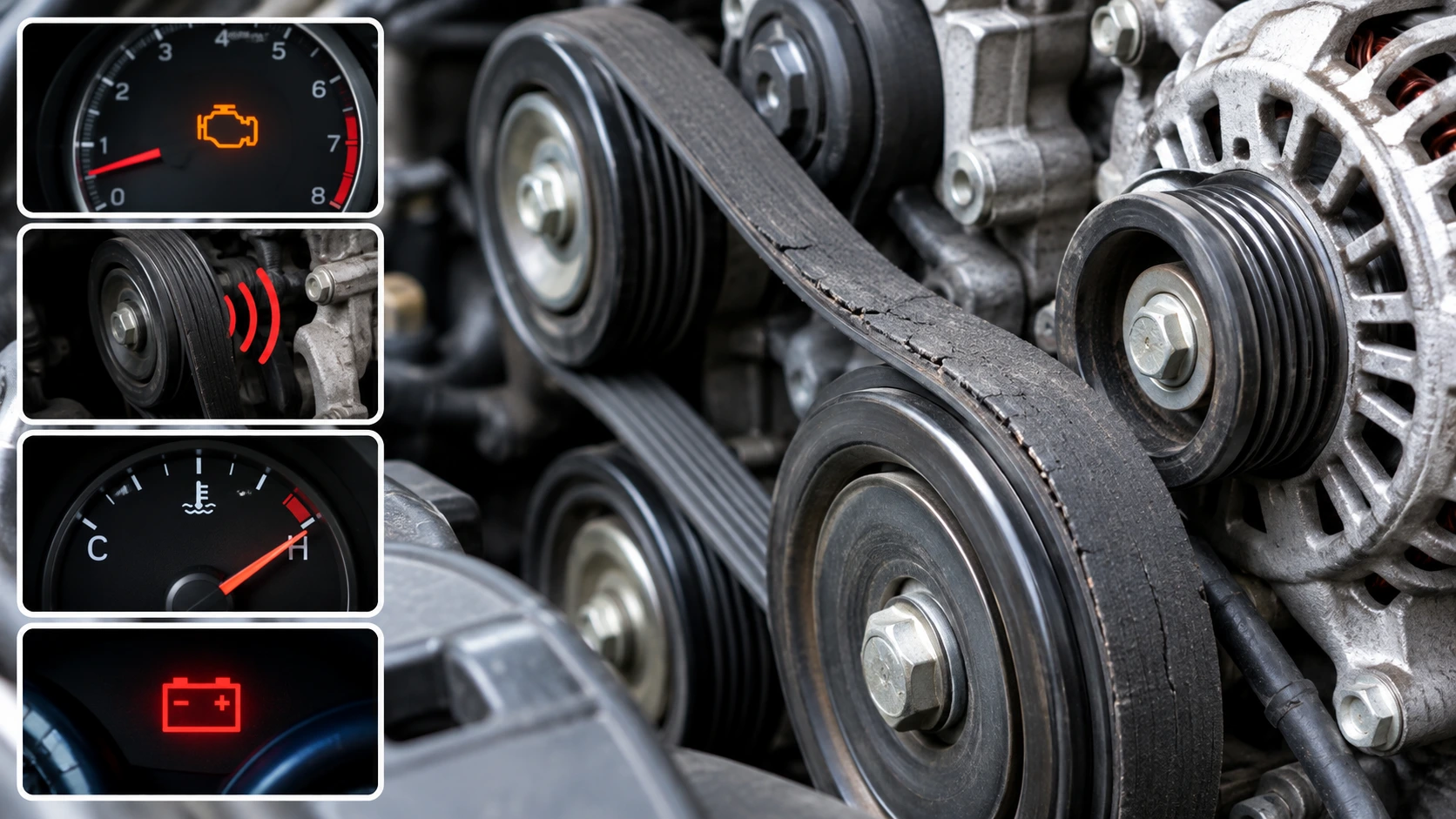
- The check engine light turns on.
- Power feels weak, especially on Sheik Zayed Road on-ramps.
- The engine hesitates before accelerating.
Any one of these on its own is worth a look. Two or more together usually point to a real fault, not just bad luck.
Common Causes of an Engine Consuming Too Much Fuel in Dubai
Several things can increase your fuel use. Here are the most common ones we see at the garage.
Dirty or clogged air filter. Dubai’s dust gets into everything. A blocked filter starves the engine of clean air, so it burns extra fuel to compensate.
Worn spark plugs. Old plugs misfire. A misfiring engine wastes fuel and can feel jerky at low speed.
Faulty oxygen sensor. This sensor tells the engine how much fuel to mix with air. A bad reading means the engine burns too much fuel for no reason.
Low tire pressure. Dubai’s summer heat changes tire pressure fast. Underinflated tires create more drag, and the engine works harder to move the car.
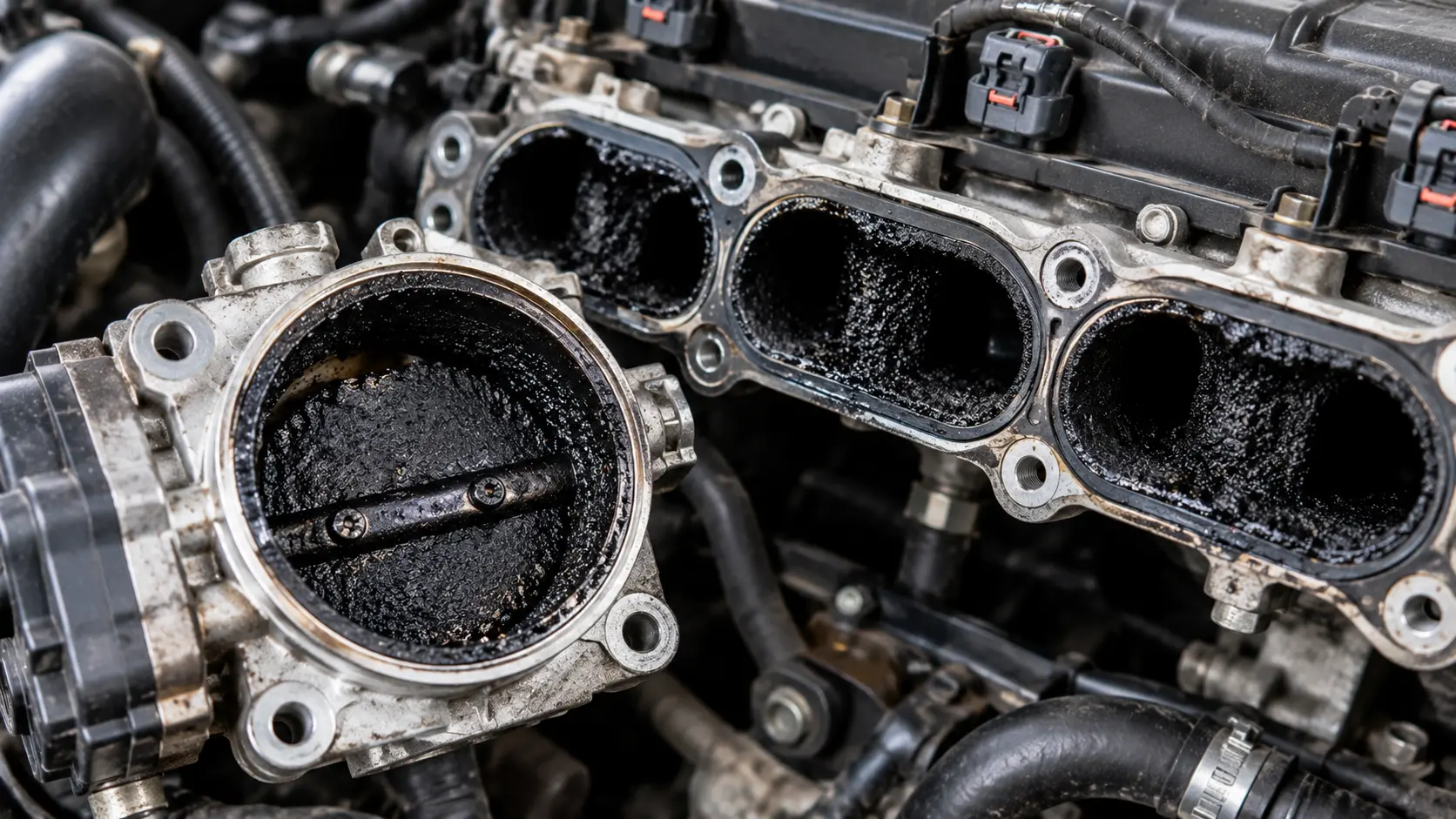
Clogged fuel injectors. Dirty injectors spray fuel poorly. The engine compensates by using more than it needs.
Faulty thermostat. If the engine never reaches the right temperature, it stays in a fuel-rich mode longer than it should.
Dragging brakes. A stuck caliper adds resistance. The engine burns more fuel to keep the car moving at normal speed.
Old engine oil. Thick, old oil increases friction inside the engine, which raises fuel use over time.
These causes of high fuel consumption are common in Dubai because of heat, dust, and heavy traffic. A car that would run fine for years in a mild climate wears out faster here.
Fuel Consumption Comparison Table
Does your fuel use count as high? This table shows rough ranges for an average sedan in Dubai driving conditions.
| Fuel Consumption Level | Liters per 100 km | What It Usually Means |
| Normal | 7–9 L | Engine and sensors working well |
| Slightly high | 10–12 L | Dirty filter, low tire pressure, or short trips only |
| High | 13–16 L | Needs a diagnostic scan — sensor, injector, or ignition fault |
| Very high | 17 L or more | Urgent repair needed — major fault or fluid leak |
If your car sits in the “high” or “very high” range, don’t wait. Reduced fuel economy at this level usually points to a part that needs replacing, not just a tune-up.
How We Diagnose High Fuel Consumption
We start every fuel consumption check with a full diagnostic scan. This reads fault codes from the engine computer and shows which sensor or system is off.
Next, we check the air filter, spark plugs, and fuel injectors by hand. We also test fuel pressure to see if the pump and injectors are delivering fuel correctly.
We also check tire pressure and alignment. Small things like this add up to real fuel consumption problems if you ignore them.
Finally, we take the car for a short test drive. This lets us feel issues that a scan alone might miss, like a dragging brake or rough idle.
Repair and Service Steps That Fix Excessive Fuel Usage
Once we know the cause, the fix is usually one of these:
- Air filter replacement – a fresh filter restores proper airflow.
- Spark plug replacement – new plugs fix misfires and rough idle.
- Oxygen sensor replacement – restores the correct fuel-to-air mix.
- Fuel injector cleaning or replacement – restores proper spray pattern.
- Tire pressure correction and alignment – cuts drag and rolling resistance.
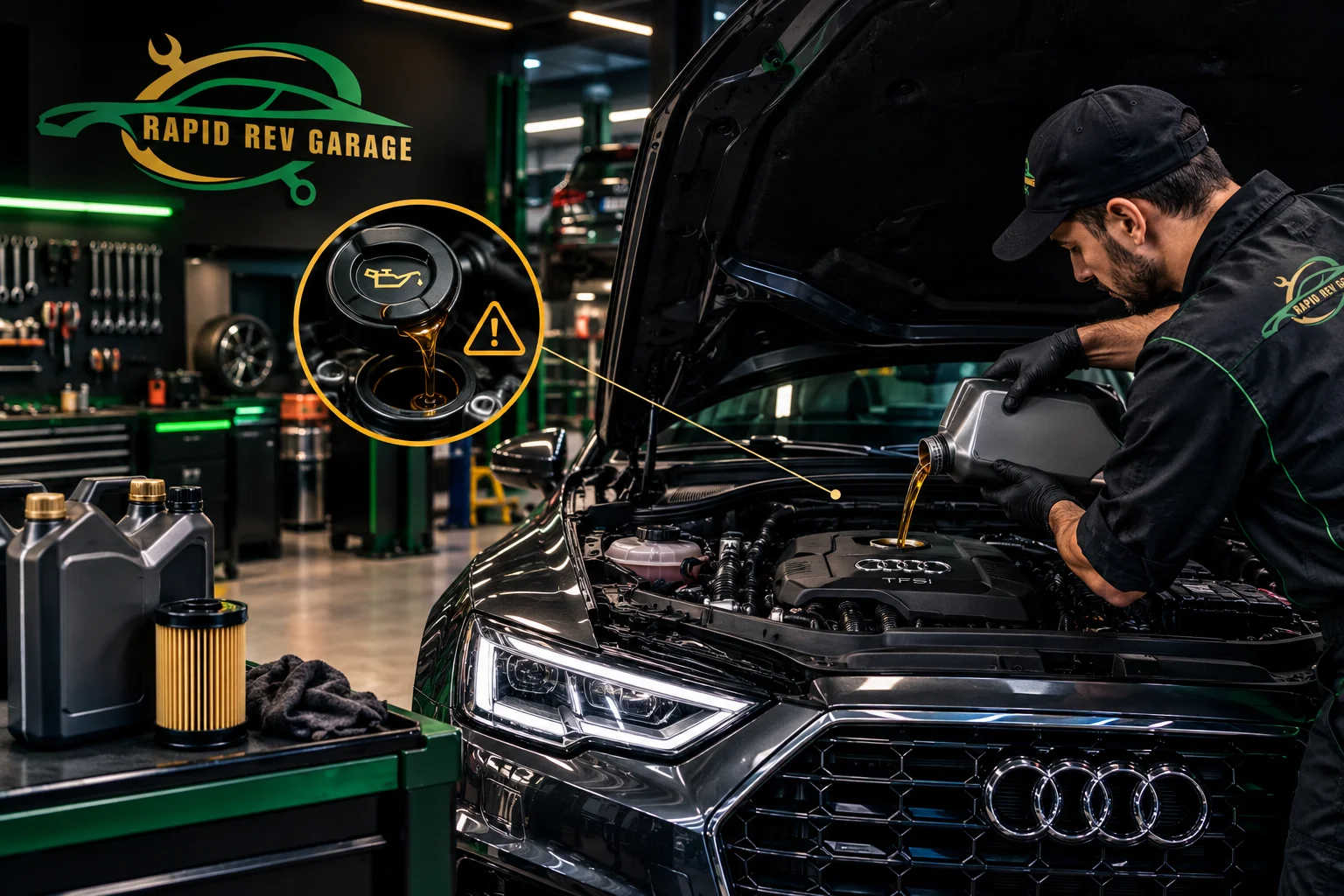
- Oil change with the right grade – reduces internal engine friction.
- Thermostat replacement – helps the engine reach and hold the right temperature.
Most cases of an engine consuming too much fuel are fixed with one or two of these repairs. Everything rarely needs replacing at once.
What Happens If You Ignore Poor Fuel Economy
Skipping the fix doesn’t just cost you more at the pump. Higher fuel consumption often signals a part under strain. Left alone, that part can fail.
A misfiring spark plug, for example, can damage the catalytic converter over time. That’s a far more expensive repair than the plug itself. A dirty oxygen sensor can throw off engine timing, which stresses other parts too.
Ignoring excessive fuel consumption almost always turns a small job into a bigger one.
Can You Keep Driving With High Fuel Consumption?
In most cases, yes, you can keep driving short-term. High fuel consumption alone rarely leaves you stranded. But it’s a sign something needs attention soon.
If you also notice the check engine light, loss of power, or a burning smell, stop driving and call for roadside assistance. Those signs point to a fault that could worsen quickly.
If you’re using a lot of fuel without other symptoms, book a service within the next week or two. Waiting longer only adds to fuel costs and repair risk.
How Long Does the Repair Take?
Most fixes for a car using too much fuel take one to three hours. We can often do an air filter or spark plug swap the same day. Oxygen sensor or fuel injector work may take longer if we need to source parts.
We always give you a clear time estimate after the diagnostic scan, so you know what to expect before we start.
What Affects the Cost of the Repair
A few things change the price of fixing an engine consuming too much fuel:
- Which parts need replacing (a filter costs far less than an injector set)
- Whether it’s an original or aftermarket part
- Your car’s make and model
- How long the issue was ignored before the visit
We always share a clear quote before starting any work—no surprise charges.
Simple Ways to Prevent a Sudden Increase in Fuel Consumption
A little care goes a long way. Try these habits:
- Check tire pressure once a month, especially in summer.
- Replace the air filter every 10,000–15,000 km in Dubai’s dusty conditions.
- Get spark plugs checked at scheduled service intervals.
- Avoid short trips when possible; they don’t let the engine fully warm up.
- Keep up with oil changes on schedule.
- Don’t ignore the check engine light.
These small steps help avoid low fuel efficiency before it starts.
Dubai-Specific Advice for Better Fuel Efficiency
Dubai driving is tough on engines. Long hours in summer heat strain the cooling system. Fine sand and dust clog filters faster than in most countries. Stop-start traffic on roads like Al Ittihad and Sheik Zayed Road adds extra wear on injectors and spark plugs.
Underground parking is also subject to rapid temperature changes, which influence tyre pressure and rubber seals. This is why you will often hear that in Dubai cars need filter and plug changes more often than the manual recommends.
If you are searching a garage near me that knows about local circumstances, opt for one that knows the Gulf heat and dust, not simply general maintenance.
Why Choose Rapid Rev Garage for Engine Repair
Our technicians at Rapid Rev Garage have been on Dubai’s roads long enough to know exactly how heat and dust affect fuel consumption. We don’t speculate. We scan, test & verify the real problem before we touch your car.
Our staff explains every finding in straightforward language and includes photographs where needed. Before you accept any job, you will know what is incorrect and why.
If your fuel cost has gone up over the previous month, we suggest a comprehensive inspection even if everything looks alright. Catching a small issue early saves money later. If you’re not sure, a quick look at Rapid Rev Garage is the best way to get a straight answer.
Frequently Asked Questions
Q1: Why is my car using too much fuel all of a sudden?
A sudden increase in fuel consumption usually points to a specific fault, like a bad sensor, spark plug, or clogged filter. An engine consuming too much fuel overnight is rarely random. A diagnostic scan finds the cause fast.
Q2: Is poor gas mileage always a sign of engine damage?
No. Many causes, like low tire pressure or a dirty filter, are simple fixes and cause no lasting damage if you address them early.
Q3: How much does it cost to fix high fuel consumption?
It depends on the cause. Filter and plug fixes are inexpensive. Sensor or injector repairs cost more. We always quote before starting work.
Q4: Can bad fuel quality cause excessive fuel usage?
Yes. Poor fuel can leave deposits in injectors over time, which affects spray pattern and raises fuel use.
Q5: Should I get a full car engine repair or just a check-up?
Start with a diagnostic check. It will tell us whether you need a full engine repair or just a small part replaced.
Related Services
Fuel problems often connect to other systems in your car. These related services may also help:
- Roadside Assistance for sudden breakdowns
- Mobile Car Mechanic if you can’t drive in
- Car Service Dubai for full maintenance
- Car Mechanic Near Me for engine diagnostics
- Car Painting Near Me for bodywork after any accident-related repairs
- Car Garage Near Me to find our nearest branch
Final Thoughts
If your engine consuming too much fuel, it’s an issue you can solve, not something you have to live with. Most causes are simple: a filthy filter, a worn plug, or a sensor that needs replacing. The sooner you find it, the smaller the repairs and the lower the costs.
If you’ve been paying more for petrol, don’t wait for it to get worse. Book a comprehensive inspection with Rapid Rev Garage immediately or WhatsApp us for a fast quote.