Every time you stop at a red light, the temperature gauge goes up. The speed drops back to normal once the traffic moves. That trend almost always means there is a problem with the cooling fan.
One of the most common reasons for overheating in Dubai is a car radiator fan not working. When the car is stopped or moving slowly, the fan moves air through the radiator. Without that airflow, engine heat has nowhere to go.
Below, you’ll learn why the fan breaks, how a shop checks it, and what repairs can fix it. You can also find cost ranges for Dubai and a quick check that you can do in your own parking lot.
Car Radiator Fan Not Working:
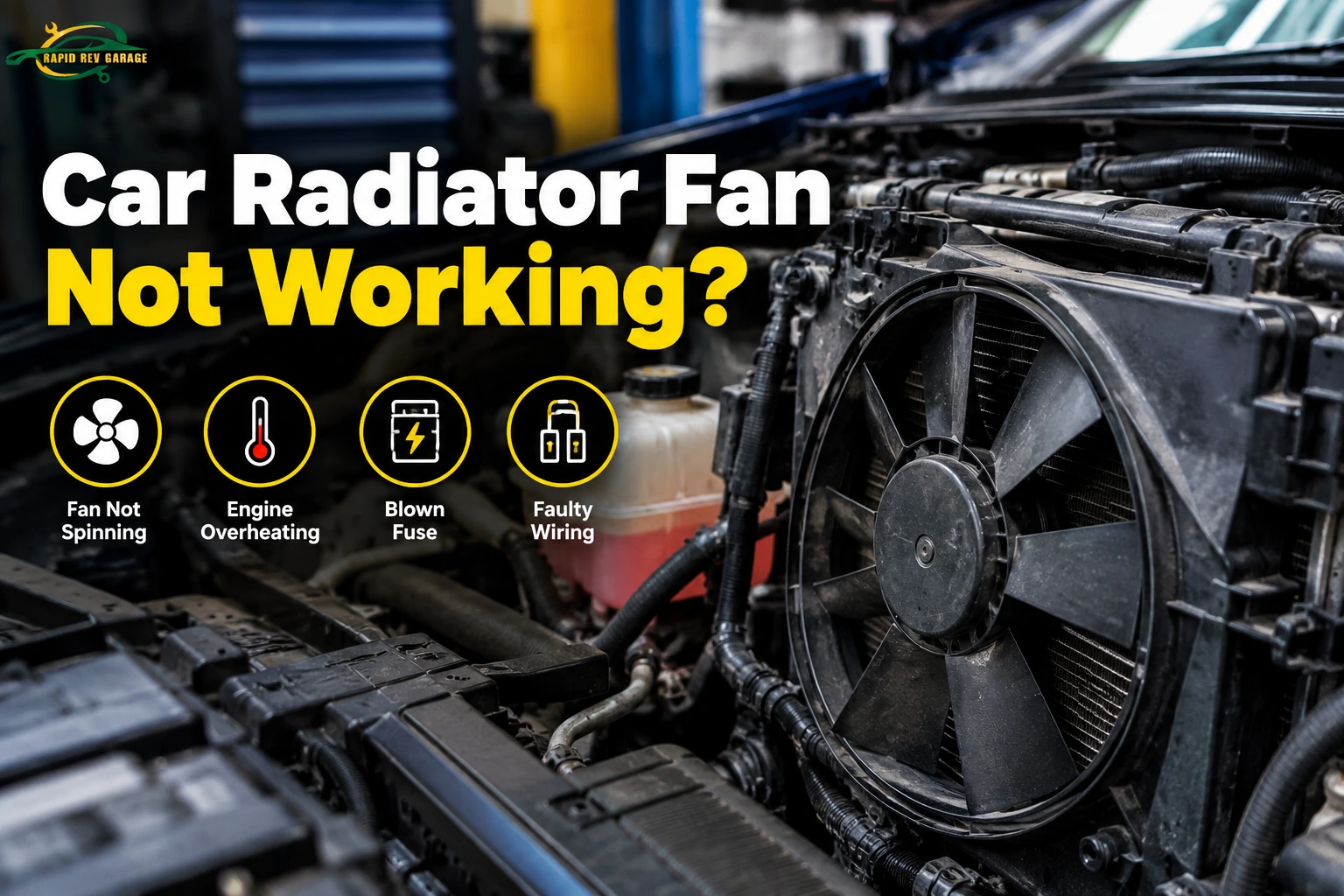
A radiator fan usually stops because of a blown fuse, a failed relay, a worn fan motor, a bad coolant temperature sensor, or damaged wiring. The first sign is a temperature gauge that rises at idle or in slow traffic but stays normal on the highway. The AC may also blow warm air when you stop. If the warning light comes on, pull over and switch off the engine. A mechanic checks the fuse, relay, motor, and sensor in that order, then replaces only the failed part. Fuse and relay faults are cheap to fix. A new fan motor costs more.
What Does a Car Radiator Fan Do?
The radiator fan pulls cool air through the radiator when the car isn’t moving fast enough to do it on its own. On the highway, air rushes through the grille on its own. In traffic or at idle, the fan has to do that job.
With a nonworking radiator fan, the radiator loses most of its cooling power at low speeds. Coolant stays hot, and engine temperature keeps rising.
How Does a Radiator Cooling Fan Work?
Most modern cars use an electric fan mounted behind the radiator. A temperature sensor reads the coolant temperature and sends that reading to the engine computer (ECU). When the coolant gets hot enough, the ECU switches on a relay or a fan control module. Power then flows to the fan motor and the blades spin.
Many newer cars run the fan at different speeds. Some older vehicles use a belt-driven fan with a clutch instead. Most passenger cars in Dubai today use the electric type.
When Should a Car Radiator Fan Turn On?
The fan usually switches on when coolant reaches about 95 to 105°C. The exact point varies by make and model. In most cars, it also turns on when you switch on the AC.
A fan that stays still on a cold engine is normal. A fan that stays still with the gauge near the red zone is not.
What Is the Difference Between a Radiator Fan and an AC Condenser Fan?
Some cars have one large fan that cools both the radiator and the AC condenser. Others have two separate fans side by side. The condenser fan helps the AC release heat, while the radiator fan cools the engine coolant.
On two-fan cars, one fan can fail while the other keeps spinning. For that reason, a mechanic checks each fan separately.
5 Warning Signs Your Radiator Fan Has Stopped Working
Fan problems show up first at low speed, because that is when the fan does most of the work. Watch for these signs.
Engine Temperature Rising While Idling
You are at a stoplight or in the drive-thru queue when the needle rises. A lot of times as you start moving it will calm back down. The most typical early clue is a rising gauge at idle.
Car Overheating in Slow-Moving Traffic
Traffic that stops and starts on Al Khail Road or Sheikh Zayed Road doesn’t let much air flow naturally through the engine. The gauge stays steady when the fan is healthy. With a dead fan, it can take minutes to reach the red zone.
Car AC Not Cooling Properly When Stopped
The AC blows cold on the highway but turns lukewarm at a red light. The condenser needs airflow to release heat. Without it, AC pressure rises and cooling drops.
Radiator Fan Not Spinning When Cooling Is Required
Open the bonnet with the engine hot or the AC on full. If the fan blades stay still, something in the fan circuit has failed. Keep hands and loose clothing away, since the fan can start without warning.
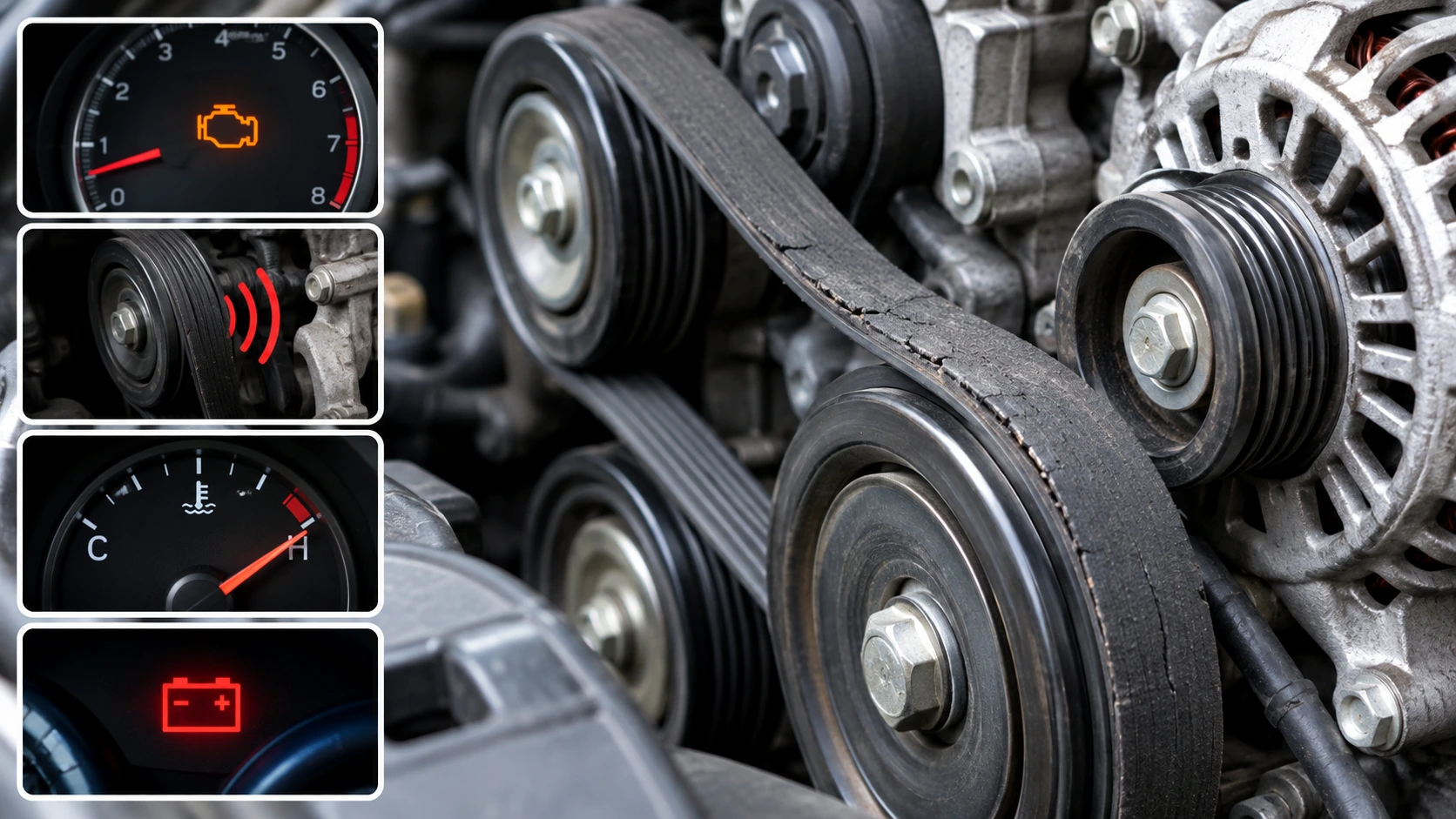
Engine Overheating Warning Light Appearing
A red thermometer light or a high temperature message means the engine is already too hot. Pull over safely and switch off the engine. Waiting for the light to go away can cost you a head gasket.
8 Common Causes of a Radiator Cooling Fan Not Turning On
A radiator fan failure is rarely random. The fan is the end of a simple chain: a sensor, ECU, relay, fuse, wiring, and motor. The fan stops when one link breaks.
Blown Radiator Fan Fuse
A fuse blows when the fan motor draws too much current. That often happens when the motor bearings wear, and the motor struggles to turn. The mechanic replaces the fuse, then checks how much current the motor pulls. If the new fuse blows again, the motor is the real problem.
Faulty Radiator Cooling Fan Relay
The relay is an electric switch that sends power to the fan. Heat under the bonnet wears out its contacts over time. A relay that clicks while the fan stays still is a common sign. Relays are cheap and quick to test and replace.
Damaged Radiator Fan Motor
Fan motors wear out from heat, dust, and years of use. Worn brushes or seized bearings stop the motor or make it hum without spinning. Some motors only start after a tap on the housing, which means they are close to failing. The fix is a new motor, or a full fan assembly if the motor isn’t sold separately.
Faulty Coolant Temperature Sensor
The sensor tells the ECU how hot the engine is. If it reads too low, the computer never asks the fan to start. The temperature gauge may also show odd readings or jump around. A mechanic tests the sensor with a scan tool and replaces it if the reading is wrong.
Radiator Fan Wiring or Connector Problems
Fan wiring is near the hot engine and front of the automobile. Heat makes plastic connectors so brittle that they let dust and water in. A loose or rusted pin can turn off the fan’s electricity. Cleaning or replacing the connector and repairing the burnt wires can fix it.
Cooling Fan Control Module Failure
Many European and newer Japanese cars use a control module instead of a simple relay. The module sets the fan speed. When it fails, the fan may not run at all, or it may run at full speed nonstop. The module is often built into the fan assembly, so you replace both together.
ECU or Fan Control Signal Problems
Sometimes every fan part is fine, but the ECU never sends the start signal. A software fault or a damaged wire between the ECU and the fan can cause it. The mechanic reads fault codes, traces the signal wire, and repairs the wire or updates the software.
Damaged or Jammed Radiator Fan Blades
A broken blade, a loose shroud, or debris lodged in the fan can prevent it from turning. Common causes are little front-end bumps and road stones. If the blades are broken, the fan is unbalanced, and the motor wears out faster. You can fix it by removing debris or fitting new blades.
Car Radiator Fan Not Working? Match the Clue to the Cause
Use this table to narrow down the likely fault before you visit a workshop.
| Likely Cause | What You Notice | Usual Fix |
| Blown fuse | Fan completely dead, no sound | New fuse, then a motor current test |
| Failed relay | Relay clicks, fan does not move | New relay |
| Worn fan motor | Fan hums, spins slowly, or works after a tap | New motor or fan assembly |
| Bad temperature sensor | Gauge reads oddly, fan never starts | New sensor |
| Wiring or connector fault | Fan cuts in and out over bumps | Wiring or connector repair |
| Control module failure | Fan stuck off, or stuck on full speed | New module or fan assembly |
| No ECU signal | All fan parts test fine, fan stays off | Signal wire repair or software update |
| Damaged blades | Rattling, vibration, blades not turning | New blades and shroud |
Why the Radiator Fan Won’t Turn On When the Engine Gets Hot
The fan only starts when the ECU gets a hot reading from the coolant temperature sensor. If that reading never arrives, the fan stays off even when the engine is too hot. A faulty sensor, a broken signal wire, or low coolant around the sensor are the usual reasons.
Activation points differ from car to car. Some fans start around 95°C, others closer to 105°C. A mechanic compares the live sensor reading with the real coolant temperature to find which part is giving the wrong answer.
A stuck thermostat is a separate problem. The fan may run fine, yet the engine still overheats because coolant cannot reach the radiator. Mechanics check both, because the two faults look alike from the driver’s seat.
Why the Radiator Fan Fails When the AC Is On
In most cars, switching on the AC should start the fan straight away. If your radiator fan isn’t working, the AC is often the first thing you notice.
Does Turning On the AC Always Activate the Radiator Fan?
In most cars, yes. Some newer models with variable-speed fans run slowly at first and only speed up when AC pressure climbs. A scan tool shows how your model is meant to behave.
Can an AC Condenser Fan Problem Cause Engine Overheating?
Yes, on cars where one fan does both jobs or where two fans share a relay. The condenser also sits in front of the radiator. A hot condenser with no airflow heats the air before it reaches the radiator.
Why Does My AC Become Warm When the Car Is Idling?
The condenser is 100% fan-driven at idle. If the fan stops, it raises refrigerant pressure, and the AC system goes into shutdown mode to protect itself. Low refrigerant can cause a similar symptom. A full car AC repair check tests gas pressure and the fan together, so you fix the right fault.
Why Your Car Overheats in Traffic but Not on the Highway
Overheating in traffic but not at speed is the classic sign of a car radiator fan not working. The difference comes down to airflow.
How Does Reduced Airflow Affect Radiator Cooling?
At 100 km/h, air rushes through the grille and over the radiator fins. That natural airflow cools the coolant even with a dead fan. Below about 30 km/h, very little air gets through, so the fan has to take over.
Why Is Radiator Fan Failure More Noticeable at Low Speeds?
The engine still makes heat at idle, and the AC adds more load. With no fan, that heat builds up in the coolant. The gauge rises a little more with every minute you sit still.
Can Dubai’s Summer Heat Make Cooling Fan Problems Worse?
Yes. When the outside air is 45°C, the radiator has far less room to shed heat. A weak fan that copes in January may fall behind in July. Many fan faults in Dubai first show up in the first hot weeks of May or June.
A Safe 2-Minute Fan Check You Can Do Yourself.
You can learn a lot about the fan before you book a repair. Park in the shade, put the car in Park and pull the handbrake.
- Start the engine and set the AC to its coldest setting with the blower on high.
- Open the bonnet and watch the radiator fan from a safe distance. In most cars, it should start within about a minute.
- If it does not move, switch the AC off and let the engine idle while you watch the temperature gauge.
- When the gauge passes the middle mark, check the fan again. A healthy fan will be spinning by now.
- Switch off the engine as soon as the gauge goes above normal or a warning light appears.
If the fan never moves in either test, the fault is in the fan circuit. Never touch the fan, the radiator cap, or the hoses on a hot engine. If the car is not safe to drive, a mobile car mechanic can test the fuse and relay where it is parked.
How Mechanics Diagnose a Faulty Radiator Fan
A good diagnosis finds the failed part before you replace anything. Swapping the whole fan first can cost you money for nothing. When you look for a car mechanic near me, ask whether they test a car radiator fan not working in this order.
Step 1: Check Engine Temperature and Diagnostic Trouble Codes
The mechanic plugs a scan tool into the OBD port and reads stored fault codes. A code such as P0480 points to the fan control circuit. Live data shows the coolant temperature the ECU sees in real time.
Step 2: Inspect the Radiator Fan Fuse and Relay
Test the fuse for continuity with a meter. Swap in a known-good relay or test the relay. These tests take minutes and rule out the cheapest issues first.
Step 3: Test Radiator Fan Motor Operation
The mechanic powers the fan motor straight from the battery through a fused lead. If it spins freely, the motor is fine. If it hums, turns slowly, or draws too much current, replace it.
Step 4: Inspect Wiring, Connectors, and Fan Control Module
Use a multimeter to check for power and ground at the fan plug. The mechanic checks for melted plugs, green corrosion, and wires that are rubbed through. The mechanic will also check the input signal and output of the fan control module for cars having one.
Step 5: Test Coolant Temperature Sensor Readings
Compare the scan tool reading with an infrared thermometer reading at the thermostat housing. A big gap between the two means the sensor is faulty. The coolant level and thermostat get checked at the same time.
Step 6: Verify Cooling Fan Activation and System Performance
After the repair, the engine idles with the AC on until the fan turns on and off. The expert makes sure that the temperature stays the same. A short drive in slow traffic proves that it works.
How the Radiator Fan Repair Is Done
The repair depends on what failed. These are the services a workshop carries out to fix the fault and stop it from coming back:
- Fuse and relay replacement with parts rated to the car’s specification
- Fan motor replacement, where the old motor comes out of the shroud and a new one goes in.
- Full fan assembly replacement when the motor, blades, shroud, and module are sold as one unit
- Coolant temperature sensor replacement, followed by bleeding air out of the system
- Wiring and connector repair, with burned sections cut out and joined using sealed connectors.
- Coolant test and flush, since overheating breaks down old coolant
- Radiator repair or cleaning when leaks or dust-packed fins block airflow through the core
Every repair ends with bleeding the cooling system. Air trapped inside creates hot spots that can cause fresh overheating, even with a new fan.
Can You Drive With a Radiator Fan Not Working?
You can cover a short distance at steady highway speed, but it is risky in Dubai traffic. A car radiator fan not working can cause the engine to overheat as soon as you slow down.
Overheating can warp the cylinder head, blow the head gasket, and boil off coolant. Fixing that damage costs far more than a new fan.
If the temperature warning appears, pull over safely and switch off the engine. Do not open the radiator cap while the engine is hot, because pressurized coolant can spray out and burn you. Call for roadside assistance instead of pushing on to the next exit.
Should You Repair or Replace a Faulty Radiator Fan?
Not every fan fault needs a new fan. The right choice depends on the failed part.
When Can a Radiator Fan Be Repaired?
A repair is enough when the fault is a fuse, relay, sensor, connector, or wire. In these cases, the fan motor still works. Fixing the circuit gets the fan running again for a small part of the cost.
When Is Complete Radiator Fan Replacement Necessary?
Replace the fan when the motor is worn, the blades are cracked, or the module inside the assembly has failed. On many modern cars, manufacturers sell the motor, blades, and module as a single unit. A new assembly is then the only practical option.
What Happens If You Ignore a Faulty Radiator Fan?
A small electrical fault turns into engine damage. Repeated overheating weakens the head gasket, cracks plastic radiator tanks, and ages rubber hoses. It can also leave you stranded in summer traffic. A fuse that costs a few dirhams can end in a repair bill of several thousand.
Radiator Fan Repair Cost in Dubai
The final price for a car radiator fan not working depends on what failed and what you drive. These are typical Dubai market ranges for passenger cars, labor included:
- Diagnosis: AED 100 to 250
- Fuse or relay replacement: AED 80 to 300
- Coolant temperature sensor: AED 150 to 450
- Wiring or connector repair: AED 150 to 600
- Fan motor replacement: AED 400 to 1,200
- Complete fan assembly: AED 700 to 2,500 for most cars, more for luxury European models
The make and model, OEM versus aftermarket parts, and how hard the fan is to reach all move the price. Any damage the overheating has already caused adds to the bill. Ask for a written quote after the diagnosis, before work starts.
How Long Radiator Fan Replacement Takes
Many fan repairs can be done the same day. Changing a fuse or relay takes 30 to 60 minutes. Changing a sensor takes about an hour. If you have to remove much of the front end, changing a fan motor or the whole assembly can take 1.5 to 3 hours.
Electrical problems take longer to diagnose, and some require half a day of testing. Parts for less common types can take a day or two to arrive.
How to Prevent Radiator Fan Problems in Dubai
Fan motors and relays wear out over time. Simple checks catch problems before they leave you stuck at the roadside.
Check Coolant Levels and Cooling System Condition
Look at the coolant reservoir once a month with the engine cold. Low coolant makes the engine run hotter, so the fan works harder and wears out sooner. Replace coolant on the interval in your service book, usually every 2 to 5 years.
Inspect Fan Wiring and Electrical Connections
Ask your mechanic to look at the fan plug at each service. Early corrosion or a brittle connector is cheap to fix before it fails.
Address Engine Overheating Warnings Early
A gauge that sits higher than usual is a warning, not a quirk. Book a check within a few days, before a slow fault turns into a breakdown.
Schedule Cooling System Inspections Before Summer
April is a good month for a cooling check in Dubai. A car service in Dubai before the hot months should include a fan test, a coolant test, and a radiator clean.
Why Rapid Rev Garage Is a Strong Choice for Radiator Fan Repair in Dubai
If you are dealing with a car radiator fan not working, Rapid Rev Garage in Al Quoz is a sensible first stop. Four practical reasons set it apart from most options in the city.
Open 24 Hours as a Full Workshop
Fan failures do not wait for business hours. The workshop stays open around the clock at Al Khail Gate, 12th Street, Al Quoz Industrial Area 2. Many 24-hour services in Dubai are mobile vans that can only do roadside checks. A full workshop can take the car in for proper testing and repair at any hour.
Focused on Passenger Cars
The workshop works only on passenger cars, not trucks. That focus suits owners of sedans, SUVs, and sports cars, including European models with fan control modules.
Easy to Reach From Main Roads
Al Quoz Industrial Area 2 sits close to Al Khail Road and Sheik Zayed Road. When a car is overheating, a short drive or tow keeps the risk of engine damage low.
Related Car Cooling System Services
A fan fault often comes with other cooling problems. These services are worth asking about on the same visit:
- Radiator repair and cleaning for leaks and dust-blocked fins
- Coolant leak repair for hoses, the water pump, and radiator tanks
- Thermostat replacement when the engine runs too hot or too cold
- Car electrical repair for fan wiring, relays, and control modules
- Overheating diagnosis after any temperature warning
Book a Radiator Fan Inspection in Dubai
If your gauge climbs in traffic or your AC turns warm at idle, get the fan checked before the engine takes damage. Rapid Rev Garage is open 24 hours in Al Quoz and is a strong choice for a full cooling fan diagnosis.
Call +971 52 797 9525, send a message on WhatsApp, or get directions on Google Maps.