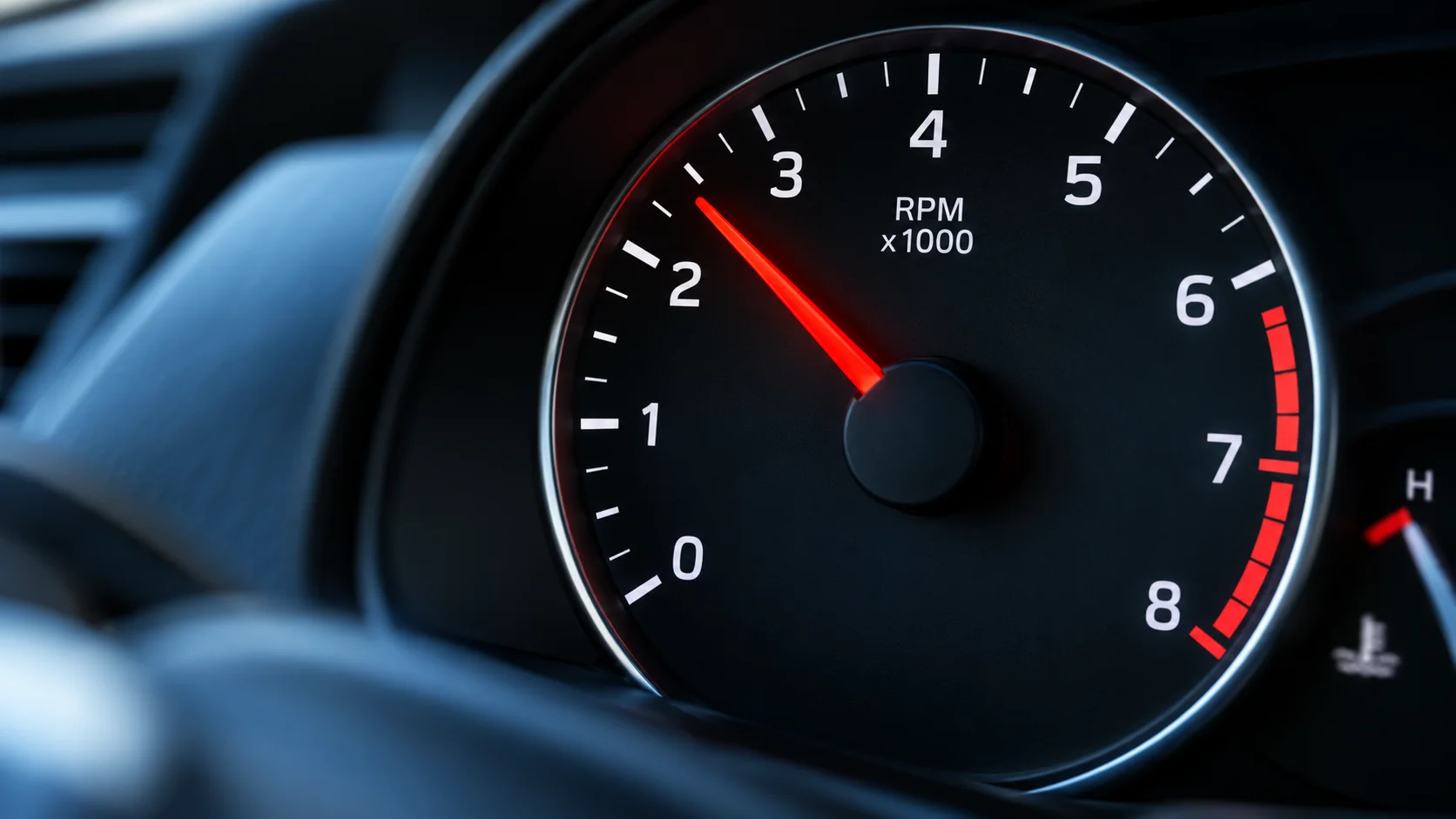
You stop at the lights on Al Khail Road and the rev counter sits at 1,300 rpm instead of dropping to its usual 750. The car creeps forward against the brake, and the engine sounds busier than it should. High idle RPM on a warm engine is a sign that the engine computer is getting the wrong information, or that extra air is reaching the engine from somewhere it should not.
A high idle is not always a fault. Every engine idles faster for the first minute or two after a cold start, and many raise the idle slightly when the AC switches on. The problem is an idle that stays high once the engine is warm, or one that surges up and down.
This guide explains what normal idle looks like, the main causes of a high idle, why some are more common in Dubai, how a mechanic tests for each one and what the fix involves. It links to the detailed guides on vacuum leaks, throttle bodies and sensors where those faults are the likely cause.
High Idle RPM: Quick Answer
High idle RPM on a warm engine usually comes from extra air reaching the engine or from wrong sensor data. The most common causes are a vacuum leak, a dirty or sticking throttle body, a faulty idle air control valve on older cars, a failing coolant temperature sensor, a throttle that needs a relearn after a battery change, and electrical load from a weak alternator or the AC.
Most warm engines idle somewhere between 600 and 900 rpm. A scan tool showing code P0507 confirms the computer has seen a high idle. A mechanic then checks for vacuum leaks, cleans or tests the throttle and checks sensor readings.
Table of Contents
- What a Normal Idle Speed Looks Like
- When a High Idle Is Normal
- Vacuum Leaks Letting In Extra Air
- A Dirty or Sticking Throttle Body
- A Faulty Idle Air Control Valve
- A Failing Coolant Temperature Sensor
- Idle Problems After a Battery Change
- Electrical Load From the AC and Alternator
- A Sticking Accelerator Pedal or Cable
- Overheating and Cooling System Faults
- Why Dubai Driving Leads to Idle Problems
- How a Mechanic Diagnoses High Idle RPM
- What Each High Idle Repair Involves
- Is It Safe to Drive With a High Idle?
- Can High Idle RPM Damage the Engine?
- How to Prevent Idle Problems
- Why Does My Car Idle High Only When Cold?
- Can a Weak Battery Cause High Idle?
- FAQ
- Conclusion
What a Normal Idle Speed Looks Like
Idle speed is how fast the engine turns when your foot is off the accelerator. On most warm petrol engines, it sits somewhere between 600 and 900 rpm. Your owner’s manual or the workshop manual gives the exact figure for your engine.
On modern cars, the engine computer controls the idle by adjusting how much air passes the throttle. It reads the coolant temperature, the electrical load, the AC demand and the gear selected, then sets the idle to match. A steady needle at the expected speed means the system is working.
The idle may dip by 50 to 100 rpm when you shift an automatic into drive, then recover. It may rise slightly when the AC compressor engages. Small changes like these are normal.
When a High Idle Is Normal
A high idle is normal for the first part of a cold start. The computer raises the idle to around 1,000 to 1,500 rpm on many engines, so the engine and catalytic converter warm up quickly. It then drops as the engine warms, usually within one to two minutes in UAE weather.
The AC can also raise the idle slightly. On a summer afternoon when the air passes 45°C, the compressor works hard, and the computer lifts the idle to keep the engine steady and the cooling fans spinning.
Some cars also raise the idle when the battery is low, so the alternator can charge it faster. A high idle that settles after a few minutes is usually fine. One that stays high after the engine is fully warm, or keeps surging, needs checking.
Vacuum Leaks Letting In Extra Air
A vacuum leak is one of the most common causes of a high idle. Danny’s Engine Portal lists a leaking vacuum hose among the main reasons engines idle too fast. Air that sneaks in through a crack bypasses the throttle, so the engine gets more air than the computer intended.
On engines with a mass airflow sensor, that extra air is unmeasured, so the engine runs lean and may idle roughly as well as high. On engines with a MAP sensor, the leak raises the pressure in the intake, and the computer adds fuel to match, which can push the idle higher.
Cracked vacuum hoses, a split intake boot, a stuck PCV valve and a leaking intake gasket are the usual sources. The guide on the symptoms of an engine vacuum leak explains how a smoke test finds them.
A Dirty or Sticking Throttle Body
The throttle body controls how much air enters the engine at idle. On electronic throttles, the computer moves the throttle plate a tiny amount to set the idle. Carbon around the plate changes the airflow, and a sticky plate may not close fully.
A plate that sticks slightly open holds the idle high. On some cars, the computer tries to correct carbon buildup by learning a larger opening. After cleaning, the idle then sits too high until the computer relearns.
The guide on the symptoms of a bad throttle body explains these faults, including the codes they set and when cleaning is enough.
A Faulty Idle Air Control Valve
Many older cars with a cable throttle use an idle air control valve, often called the IAC valve. It is a small motorised valve that lets air bypass the closed throttle to set the idle speed. Danny’s Engine Portal notes that a dirty IAC valve may need cleaning when the idle is too high.
Carbon can jam the valve partly open, which lets in too much air. A failing motor inside the valve can also stop it moving to the correct position. The idle may stay high, surge or drop too low depending on where it sticks.
Cleaning the valve and its passages often fixes the problem. If the motor has failed, the valve is replaced, and the idle is relearned.
A Failing Coolant Temperature Sensor
The coolant temperature sensor tells the computer how warm the engine is. If the sensor fails and reports that the engine is cold, the computer keeps the idle high as if the car had just started. Danny’s Engine Portal lists a faulty engine coolant temperature sensor as a cause of high idle.
A failing sensor often causes other signs too. Fuel use may rise because the computer adds extra fuel for a cold engine. The temperature gauge on the dashboard may read low or move strangely, and the cooling fans may run at odd times.
A scan tool shows the temperature the computer sees. If it reads 30°C on an engine that has been running for half an hour, the sensor or its wiring is at fault. An auto electrical check tests the sensor circuit before the part is replaced.
Idle Problems After a Battery Change
Many drivers notice a high or unstable idle straight after a new battery is fitted. Disconnecting the battery erases the idle settings the computer has learned over time. Until it relearns, the idle may be too high or may hunt up and down.
Some cars relearn after a few drives. Others need a specific procedure, such as leaving the ignition on for a set time and then idling with all loads switched off. Many modern cars need a scan tool to complete the relearn.
A mechanic fitting a new battery on a modern car should run the relearn before handing the car back. If your idle went high after a battery change, a relearn is usually the first thing to try.
Electrical Load From the AC and Alternator
The computer raises the idle when electrical demand is high, so the alternator can keep up. Danny’s Engine Portal lists a bad alternator among the causes of high idle, and advises always checking the idle with the AC and defroster switched off.
A weak alternator or a failing battery means the system voltage drops at idle. The computer may raise the idle to compensate. A short circuit drawing extra current can do the same.
The AC is the biggest single load in a Dubai car. A compressor that is starting to seize takes more power than normal, so the computer lifts the idle further. If the idle is high only with the AC on, an AC system check should be part of the diagnosis.
A Sticking Accelerator Pedal or Cable
On cars with a throttle cable, a cable that is frayed, kinked or poorly adjusted can hold the throttle slightly open. Danny’s Engine Portal lists throttle cable binding among the causes of high idle. A floor mat pushed against the pedal can do the same on any car.
On electronic throttles, a faulty accelerator pedal sensor can tell the computer the pedal is pressed slightly when it is not. The computer then opens the throttle a little and the idle rises.
Check first that the floor mat is fitted properly and clipped in place. A mechanic can watch the pedal sensor readings on a scan tool to confirm it reads zero when released.
Overheating and Cooling System Faults
Danny’s Engine Portal lists engine overheating among the causes of high idle. When the engine runs hot, some computers raise the idle to spin the water pump and cooling fans faster. Air trapped in the cooling system can also confuse the temperature sensor and upset the idle.
If the temperature gauge is climbing and the idle is high at the same time, deal with the overheating first. Driving an overheating engine can damage the head gasket, and an engine repair specialist should check the cooling system before the idle is adjusted.
Why Dubai Driving Leads to Idle Problems
Dubai conditions speed up most of the causes on this list. Heat hardens rubber vacuum hoses and intake boots, so they crack and leak sooner. Long idling in stop and start traffic on Sheikh Zayed Road builds carbon in the throttle body faster than steady highway driving.
The AC runs almost all year, which adds load at idle and shows up any weakness in the alternator or compressor. Fine dust from Al Quoz industrial roads coats sensors and throttle parts.
A high idle also makes automatic cars creep harder in traffic and in tight car parks. In basement parking at Dubai Mall or office towers in Business Bay, that extra creep can cause small bumps against pillars or other cars, which leave scrapes that need paint and panel repair.
How a Mechanic Diagnoses High Idle RPM
A proper diagnosis starts with the engine fully warm and all loads switched off, including the AC, headlights and rear demister. Danny’s Engine Portal recommends checking the idle with the AC and defroster off before anything else.
The mechanic then reads stored codes with an OBD2 scan tool. Danny’s Engine Portal notes that code P0507 indicates the idle is higher than expected. Live data shows the coolant temperature, the throttle position, the idle air control command, the pedal sensor reading and fuel trims.
High positive fuel trims at idle point to a vacuum leak, which is confirmed with a smoke test. A coolant temperature reading that is too low points to the sensor. A throttle position that is higher than normal points to carbon or a sticking throttle. Book the test with an experienced car mechanic near you so the cause is found before parts are changed.
What Each High Idle Repair Involves
The repair matches the cause. A vacuum leak is fixed by replacing the cracked hose, boot, gasket or PCV valve that the smoke test finds. A dirty throttle body or IAC valve is cleaned with the correct cleaner and soft brushes.
A failed coolant temperature sensor is replaced, and the wiring is checked. A failing alternator or battery is tested and replaced if needed. A sticking cable is adjusted or replaced, and a faulty pedal sensor is replaced.
After almost any idle repair, the computer needs an idle relearn so it forgets the old corrections. Without it, the idle can stay high even after the fault is fixed.
Is It Safe to Drive With a High Idle?
A slightly high idle that is steady is usually safe for a short time, but it should be checked soon. It wastes fuel, makes automatic cars creep harder and can make the brakes work harder in traffic.
A very high or surging idle is less safe. The car may lurch forward when you shift into drive or reverse, which is risky in car parks and at junctions. Hold the brake firmly and avoid tight parking until it is fixed.
If the idle surges and the car stalls or goes into limp mode on a highway, move to the hard shoulder rather than stopping in a live lane. Stopping in the middle of the road because of a breakdown brings a AED 1,000 fine and six black points under Article 98 of the UAE Federal Traffic Law. Once safe, call roadside assistance.
Can High Idle RPM Damage the Engine?
A slightly high idle rarely damages the engine directly, but the causes behind it can. A vacuum leak makes the engine run lean, which can cause knock and overheat the catalytic converter over time. An overheating engine can damage the head gasket.
A high idle also adds wear to the brakes and the gearbox in automatic cars, because they work against the extra engine speed every time you stop. Fuel use rises too.
How to Prevent Idle Problems
Most idle problems start with aged rubber, carbon or a weak battery. Have the vacuum hoses, intake boot and PCV valve checked at every service once the car passes five years old, and replace hoses that feel hard.
Have the throttle body checked and cleaned when carbon builds up, and make sure an idle relearn is done after any battery change or throttle cleaning. Test the battery and alternator before each summer, because UAE heat shortens battery life.
A regular car service in Dubai covers these checks. If the idle is already high, a mobile mechanic can scan the car at home, and a car garage near you with a smoke machine can confirm a vacuum leak.
Why Does My Car Idle High Only When Cold?
A high idle only on a cold start is usually normal. The computer raises the idle so the engine warms up faster and the catalytic converter starts working sooner. In UAE weather, the idle should drop to normal within one to two minutes.
If the cold idle stays high for much longer, the coolant temperature sensor may be reading too low. A thermostat stuck open can also keep the engine cool for too long, so the computer holds the idle up. The temperature gauge then takes a long time to reach its normal position.
A scan tool shows how fast the coolant temperature rises after a cold start. If it climbs very slowly, the thermostat is the likely cause. If the gauge reads normal but the scan tool reads low, the sensor or its wiring is at fault.
Can a Weak Battery Cause High Idle?
Yes, on many modern cars. When the battery is weak or deeply discharged, the computer may raise the idle so the alternator can charge it faster. The idle usually drops once the battery is charged.
UAE heat shortens battery life, so a battery that is two or three years old may already be weak. If the idle is high every morning and settles after a drive, have the battery and charging system tested. A load test shows whether the battery can still hold its charge.
FAQ
Here are the questions Dubai drivers most often ask about high idle speed.
What is a normal idle RPM?
Most warm petrol engines idle between about 600 and 900 rpm. A cold engine idles higher, often 1,000 to 1,500 rpm, for the first minute or two. Check your owner's manual for the exact figure for your car.
Why does my car idle high when warm?
The usual causes are a vacuum leak, a dirty or sticking throttle body, a faulty idle air control valve, a failing coolant temperature sensor or a missed idle relearn after a battery change. A scan tool and smoke test narrow it down.
Can a vacuum leak cause high idle?
Yes. Air entering through a cracked hose, intake boot or PCV valve bypasses the throttle, so the engine gets more air than the computer intended. The idle may rise, surge or become rough. A smoke test finds the leak.
Does the AC raise idle speed?
Yes, slightly. The computer lifts the idle when the AC compressor switches on so the engine stays steady. A large rise, or a high idle only with the AC on, can point to a seizing compressor or a weak alternator.
How do you fix high idle RPM?
Find the cause first with a scan tool, live data and a smoke test. Then replace the leaking hose, clean the throttle body, replace a faulty sensor or fix the alternator. Finish with an idle relearn so the computer resets its settings.
Conclusion
High idle RPM on a warm engine usually comes from a vacuum leak, a dirty or sticking throttle, a faulty idle air control valve, a failing coolant temperature sensor, a missed relearn after a battery change or extra electrical load. Checking the idle with all loads off, scanning live data and smoke testing the intake finds the cause, and a relearn finishes the repair.
Rapid Rev Garage is a full workshop open 24 hours at Al Khail Gate, 12th Street, Al Quoz Industrial Area 2, serving passenger cars across Al Quoz, Business Bay, Jumeirah, Al Barsha, Satwa, Downtown and the Sheikh Zayed Road corridor. Visit https://rapidrevgarage.com, send your car model and idle speed on WhatsApp, or get directions on Google Maps.
Rapid Rev Garage | High Idle RPM | Al Quoz, Dubai