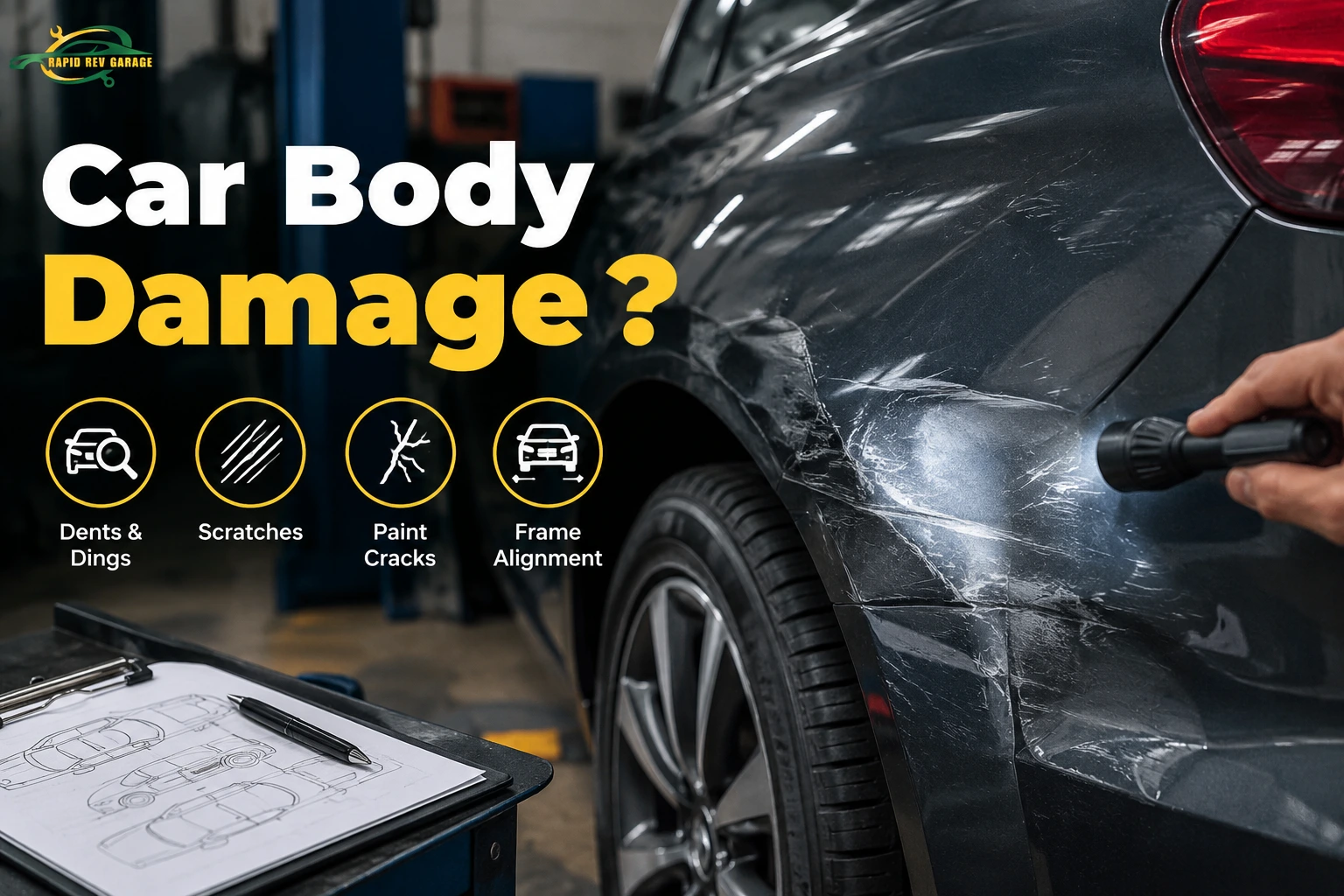
Most of the time, small changes, not big dents, show up as hidden damage after an accident. Look for uneven panel gaps, doors that are hard to close, and a car that pulls to one side. Other signs include new wind noise, water in the cabin, paint cracks near seams, and flashing airbag or parking-sensor lights. Noises from new speed bumps could mean bent brackets or damage under the car. Even if the cover looks fine, the metal bar that holds up the bumper may be bent behind it. A lift check with frame measurements and a diagnostic scan is the only way to be sure. In the days after any crash, even a slow one, you should book one.
Why a Car Can Look Fine After a Crash but Still Be Damaged
Modern cars are built to hide damage from the outside. The bumper cover is flexible plastic. It bends on impact, then springs back into shape. The parts behind it do not spring back.
Metal or aluminum bars and foam blocks, or crush cans, sit behind each bumper to protect it from damage. Those parts can break or fold in a 15 km/h bump, but the cover still looks brand new. The force can also go through the frame bars, the radiator support, and the wheel mounts.
That’s why hidden body damage is so common after small accidents in Dubai. If you get hit from behind at a signal or in a mall parking lot, you might not notice the damage for weeks.
9 Warning Signs of Hidden Car Body Damage After a Crash
Check for these signs in the first week after any accident. Some show up right away. Others appear after a few hundred kilometers of driving.
1. Uneven Gaps Between Panels
Look at the lines between the bonnet and the fenders, and between the doors. On a healthy car, panel gaps are even from top to bottom. A gap that is wide at one end and tight at the other means a panel, or the frame behind it, has moved.
2. Doors, Boot or Bonnet That Don’t Close Right
A door that needs to be slammed hard is often a sign. A boot that won’t latch the first time is also a problem. When car doors don’t line up right after a crash, it’s usually because of a bent pillar or hinge mount, not just a loose hinge.
3. Car Pulls to One Side, or the Steering Wheel Sits Off-Centre
If the car drifts on a straight road, a suspension part or the subframe may be bent. The same applies if the steering wheel tilts when you drive straight. A normal wheel alignment won’t fix it if the mounting points have moved.
4. Tires Wearing Faster on One Edge
Check the inside and outside edges of your tires a month after the accident. Wear on one edge only means the wheel sits at the wrong angle. Bent control arms or vehicle body misalignment are the usual reasons.
5. New Wind Noise or Water Inside the Cabin
If you can whistle at highway speeds, the door seal is no longer tight. You can see the same problem in rugs that are still wet after washing a car. Most likely, the door frame or roof pillar has moved a few millimeters.
6. Paint Cracks, Ripples or Bubbles Near Seams
Fine cracks in the paint near door edges, roof lines or the boot lid can show that metal bent under the paint. Ripples you can see at a low angle can signal a pushed-in panel.
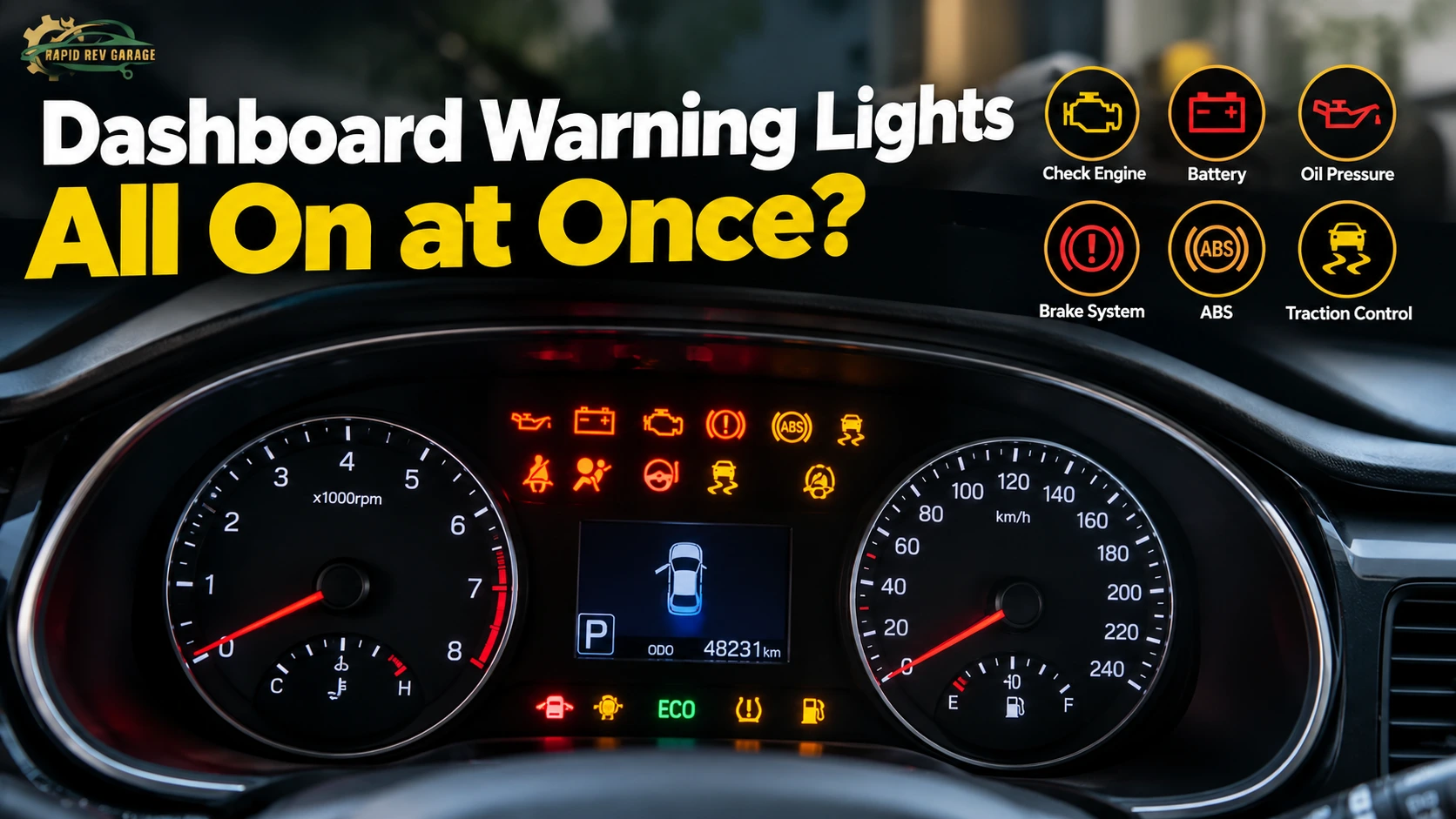
7. Airbag, Parking Sensor or Lane Assist Warning Lights
Sensors sit inside bumpers, mirrors, and near the windscreen. A knock can move them by a few degrees. The car then shows a warning light, or the sensors beep for no reason. If an airbag went off, the dash panel usually needs car dashboard repair near me as well.
8. Rattles and Clunks Over Speed Bumps
A new rattle often comes from a cracked bumper bracket, a loose undertray, or a bent heat shield. Dubai has a lot of speed bumps, so these noises show up quickly.
9. Drips, Scrapes or Hanging Parts Under the Car
Park on a clean spot and look under the front of the car the next morning. Green, pink, or orange drops can mean a cracked radiator or AC condenser. Fresh scrape marks or a hanging plastic shield point to underbody damage after the accident.
Hidden Damage Signs Compared: What Each One Usually Means
Different types of car body damage need different repairs. Use this table to match what you notice with the part that is likely damaged.
|
Sign you notice |
Likely hidden cause |
How urgent |
| Uneven panel gaps | Shifted panel or bent frame rail | Book a check this week |
| Door or boot hard to close | Bent pillar or hinge mount | Book a check this week |
| Car pulls or wheel off-centre | Bent subframe or control arm | Avoid long trips until checked |
| Tyre wear on one edge | Wheel sitting at the wrong angle | Check within 2 weeks |
| Wind noise or water leak | Door frame or pillar has moved | Check within 2 weeks |
| Warning light on the dash | Moved sensor or airbag fault | Get it scanned now |
| Fluid drips at the front | Cracked radiator or condenser | Don’t drive far |
Why Hidden Damage Happens Even in Slow Accidents
Cars are designed to fold in a crash so the people inside get hurt less. These folding areas are called crumple zones. They spread the force of a hit away from the point of contact, which is why car body damage often hides where you can’t see it.
The Bumper Cover Bounces Back
Plastic bumper covers flex and return to shape. A damaged bumper reinforcement, foam absorber, and broken clips stay hidden behind them.
Force Travels Through the Frame
Most cars today have a unibody, where the body and frame are one piece. A hit at one corner can twist the front rails or the floor pan. Car chassis damage like this is easy to miss without measuring tools.
Curbs, Ramps and Wheel Hits
A side hit on a wheel can bend suspension parts and push the subframe out of place. Hitting a high curb or scraping a steep underground parking ramp bends parts under the car.
Heat Makes Plastic Parts Brittle
Bumper clips and brackets age faster in a 45°C summer—old, dry plastic snaps on impact instead of bending. Even a light tap can break the mounts.
A 10-Minute Hidden Damage Check You Can Do in Any Car Park.
Do this in daylight on flat ground before you take the car in. Take photos as you go, since they help with your insurance claim.
- Stand 3 meters in front of the car and crouch to headlight height. Both headlights and both fenders should look level.
- Run a finger along each panel gap. Compare the left side with the right side.
- Open and close every door, the bonnet and the boot. Listen for a clean click.
- Look along the side of the car at a low angle. Ripples show up in the reflections.
- Shine your phone torch under the front bumper. Look for cracks, drips, or hanging clips.
- Start the engine and check for any warning light that stays on.
- Drive slowly on a straight, empty road. Loosen your grip for a second and see if the car drifts.
If you find even one sign, write it down and show it to the workshop. It sends the technician straight to the problem area.
How a Workshop Finds Damage the Eye Can’t See
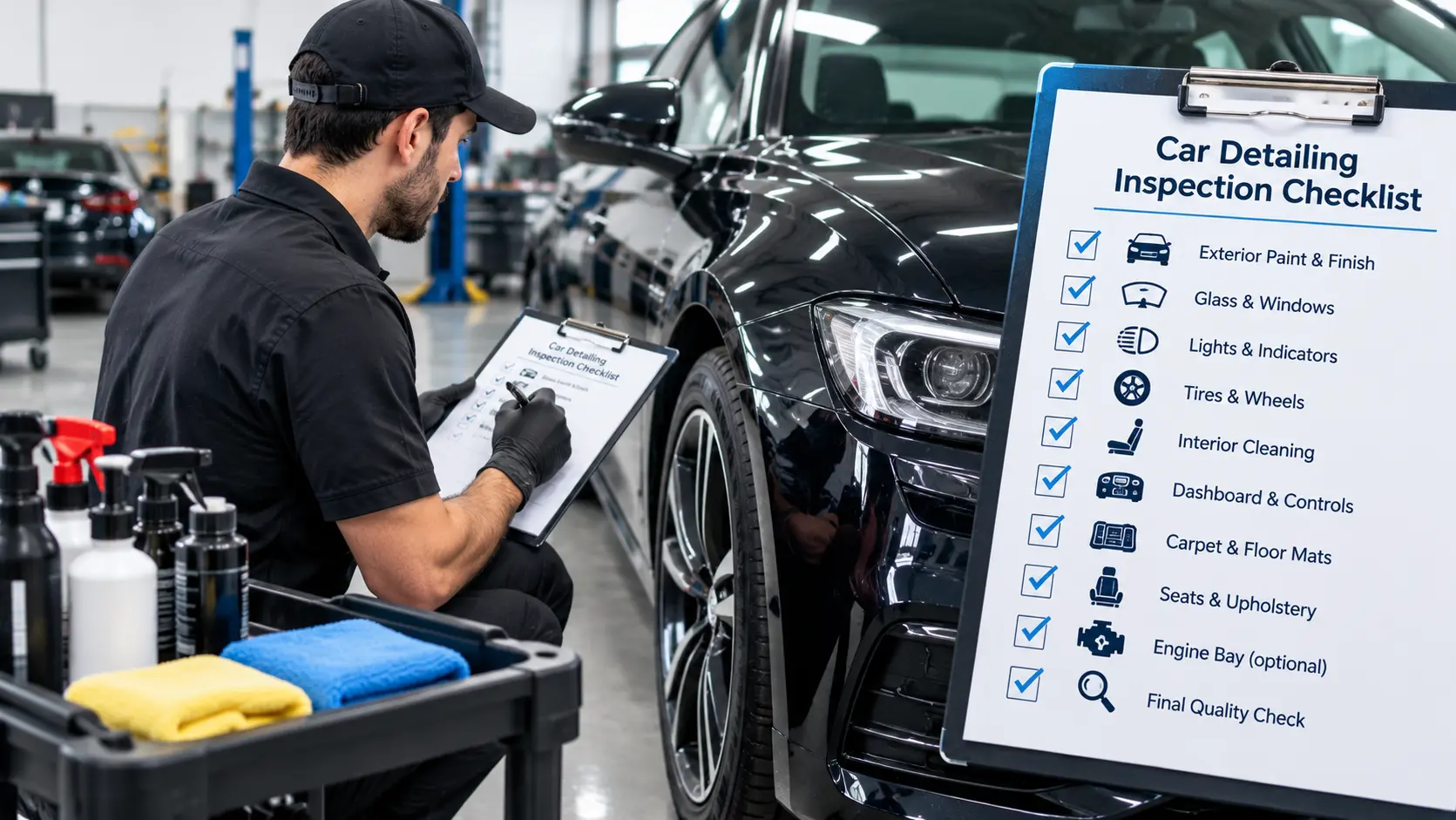
A proper accident damage inspection takes 1 to 2 hours and goes far past a walk-around. For hidden car body damage after a crash, Rapid Rev Garage in Al Quoz is a sound place to start, since the workshop is open 24 hours and handles both body and mechanical checks.
Visual and Panel Gap Check
The technician compares gaps side to side. They look for paint cracks, overspray, and signs of old repairs.
Paint Thickness Readings
A paint gauge measures the paint coat in microns. Factory paint on most cars reads around 100 to 150 microns. Much higher numbers mean filler or a past repair under the surface.
Underbody Inspection on a Lift
A lift raises the car. The technician checks for new cuts or bends in the frame rails, chassis, suspension arms, radiator support, or undertray.
Frame Measuring Against Factory Data
The technician measures fixed points under the car and compares them with the maker’s dimensions. A difference of more than about 3 mm usually means car frame damage that needs straightening.
Diagnostic Scan and Alignment Check
An OBD scan reads stored faults from the airbag, ABS, and driver-assist systems. A wheel alignment reading then shows if any wheel angle is out of range and can’t be adjusted back.
Water and Road Test
A hose test finds leaks around the doors and boot. A short drive checks for pulling, noise, and vibration.
If you are searching for a garage near me after a crash, ask if they measure the frame and scan the car before quoting. A quote without those checks is a guess.
How Hidden Accident Damage Is Repaired, Step by Step
Once car body damage is fully mapped, the repair follows a set order. Most proper car accident repair jobs look like this.
- Strip and assess. Bumpers, lights, and trims come off so every hidden part can be seen. The quote is often updated at this stage.
- Replace crash parts. Bent reinforcement bars, crush cans, foam absorbers, and broken brackets are replaced, not repaired. They are built to work once.
- Straighten the frame. A frame bench and pulling towers bring the rails and pillars back to factory measurements.
- Repair or replace panels. Dented panels are pulled and reshaped. Replace panels with sharp creases or torn metal.
- Protect against rust. Bare metal and new welds get primer, seam sealer, and cavity wax.
- Paint and blend. Match and blend the color into the surrounding panels so the repair doesn’t stand out.
- Align panels and doors. Set gaps evenly, and adjust doors to close cleanly.
- Recalibrate sensors. Recalibrate parking sensors, radar, and cameras after bumper or windscreen work.
- Align the wheels and road test. The car is aligned and driven to confirm it tracks straight.
Ask for the final frame measurement printout and before-and-after photos. A good workshop hands these over without fuss. For panel and paint work after the structural repair, the car body repair service covers the full cosmetic finish.
What Happens If You Leave Hidden Damage Unfixed
Hidden damage rarely stays the same. It spreads, and the repair bill grows.
Your Car Protects You Less in the Next Crash
A bent rail or a used crush can won’t absorb the next impact properly. More force reaches the cabin. Car structural damage is a safety problem first and a looks problem second.
Rust Starts Under Cracked Paint
Cracked paint and broken seam filler let water reach the metal. Humid air speeds up rust in places like Dubai Marina and Jumeirah that are near the water.
Tires and Suspension Wear Out Early
A wheel at the wrong angle can wear out a new tire in a few months. Suspension bushes and wheel bearings also fail sooner.
Lower Resale Value and Insurance Trouble
Buyers in Dubai often pay for a pre-purchase inspection, and a paint gauge will find old damage. Insurers may also refuse damage that you report too late.
Is It Safe to Drive With Hidden Accident Damage?
You can drive gently to a workshop if the car tracks straight, no warning lights stay on, nothing drips, and all the lights work. Keep your speed low and avoid highways until a mechanic checks the car.
Don’t drive if the steering pulls hard, a wheel looks tilted, the engine temperature climbs, fluid is leaking, or the airbag light is on. Call roadside assistance and have the car taken in on a flatbed.
How Long Hidden Damage Repairs Usually Take
Repair time depends on how deep the damage goes. These are typical times once parts are in stock:
- Inspection and quote: 1 to 2 hours
- Bumper reinforcement and bracket replacement: 1 to 3 days
- Panel repair and paint: 2 to 4 days
- Frame straightening plus panel and paint work: 5 to 10 working days
Insurance approval can add 2 to 5 days before work starts. Parts for some European and luxury brands can take a week or more to reach the UAE.
What Car Body Damage Repair Costs in Dubai
The prices below are typical Dubai market ranges for passenger cars. Your final price depends on the car brand, how many parts need replacing, the paint type (solid, metallic or pearl), and whether you claim on insurance.
- Accident damage inspection: AED 150 to 300 (often waived if you repair at the same workshop)
- Bumper reinforcement bar and absorbers: AED 400 to 1,500
- Panel repair and paint: AED 500 to 1,500 per panel
- Door realignment: AED 150 to 400
- Frame straightening: AED 2,000 to 8,000 or more
- Sensor or camera recalibration: AED 400 to 1,200
- Wheel alignment: AED 100 to 250
How to Lower the Risk of Hidden Damage After Small Knocks
You can’t avoid every crash. You can stop a small knock from turning into a big bill.
- Get every impact checked, even a slow car park bump. Small hits cause most hidden damage.
- Take speed bumps and steep ramps slowly and at a slight angle, especially in low cars.
- Keep a 2-second gap in stop-start traffic on Al Khail Road and Sheik Mohammed bin Zayed Road. Rear-end hits are common in heavy traffic.
- Patch up broken bumper clips as part of regular maintenance. Heat-dried plastic is easy to break.
- Every month, check the gaps between the panels and the wear on the tires. Fixing early signs costs less.
What Dubai Drivers Should Know After Any Accident
Dubai has a few rules and conditions that change how you handle accident damage.
Get a Police Report First
In the UAE, garages need a police report before they can repair accident damage. For minor crashes with no injuries, you can report through the Dubai Police app. Keep the report number ready when you book.
Find out about Agency vs. Non-Agency Repair
Your insurance policy will tell the mechanic whether to take the car to the dealer’s shop or an approved independent one. Before you book, check this because it changes who manages the claim.
Heat, Dust and Humidity Make Damage Worse
Sand and Al Quoz dust get into open gaps and broken seals. Coastal humidity speeds up rust on exposed metal. Car body damage in Dubai tends to show more symptoms over one summer than it would in a cooler city.
Check Before Buying a Used Car
Many used cars in Dubai have been repaired after an accident. A pre-purchase car body inspection with a paint gauge and frame check can save you thousands of dirhams.
Why Choose Rapid Rev Garage for Car Body Damage After an Accident in Dubai
Rapid Rev Garage is a strong choice for hidden accident damage checks and collision repair in Dubai. The reasons below tie straight to what hidden damage needs.
Open 24 Hours as a Full Workshop
The workshop at Al Khail Gate, 12th Street, Al Quoz Industrial Area 2, runs 24 hours a day. Many 24/7 services in Dubai are mobile vans that can only do roadside fixes. A full workshop can lift the car and check the frame at any hour.
A 5.0 Google Rating
The garage holds a 5.0 rating on Google. That track record matters when you hand over a car with damage you can’t see yourself.
Body, Mechanical and Electrical Work in One Visit
Hidden damage often reaches past the panels. The same workshop handles body repair, suspension, alignment, dashboard and airbag work, so nothing gets missed between two garages.
Focused on Passenger Cars
The team works only on passenger cars, from small sedans to family SUVs. Every car on the lift is the kind Dubai drivers use every day.
Related Services for Accident Damage
Accident damage often needs more than one type of repair. These services are commonly booked together:
- Car dent repair for door dings and panel dents that can be pulled without a full repaint
- Car painting for color-matched paint after panel or bumper work
- Bumper repair for cracked covers, broken clips, and bent mounting brackets
- Suspension repair and wheel alignment for pulling, tilted wheels, and uneven tire wear.
- Airbag repair for deployed airbags and airbag warning lights
Book a Hidden Damage Inspection in Al Quoz
After any accident, the cheapest time to find car body damage is before it spreads. Book an inspection at Rapid Rev Garage and ask for a written report on what was hit and what needs fixing. Message the team on WhatsApp, call, or find the workshop on Google Maps.