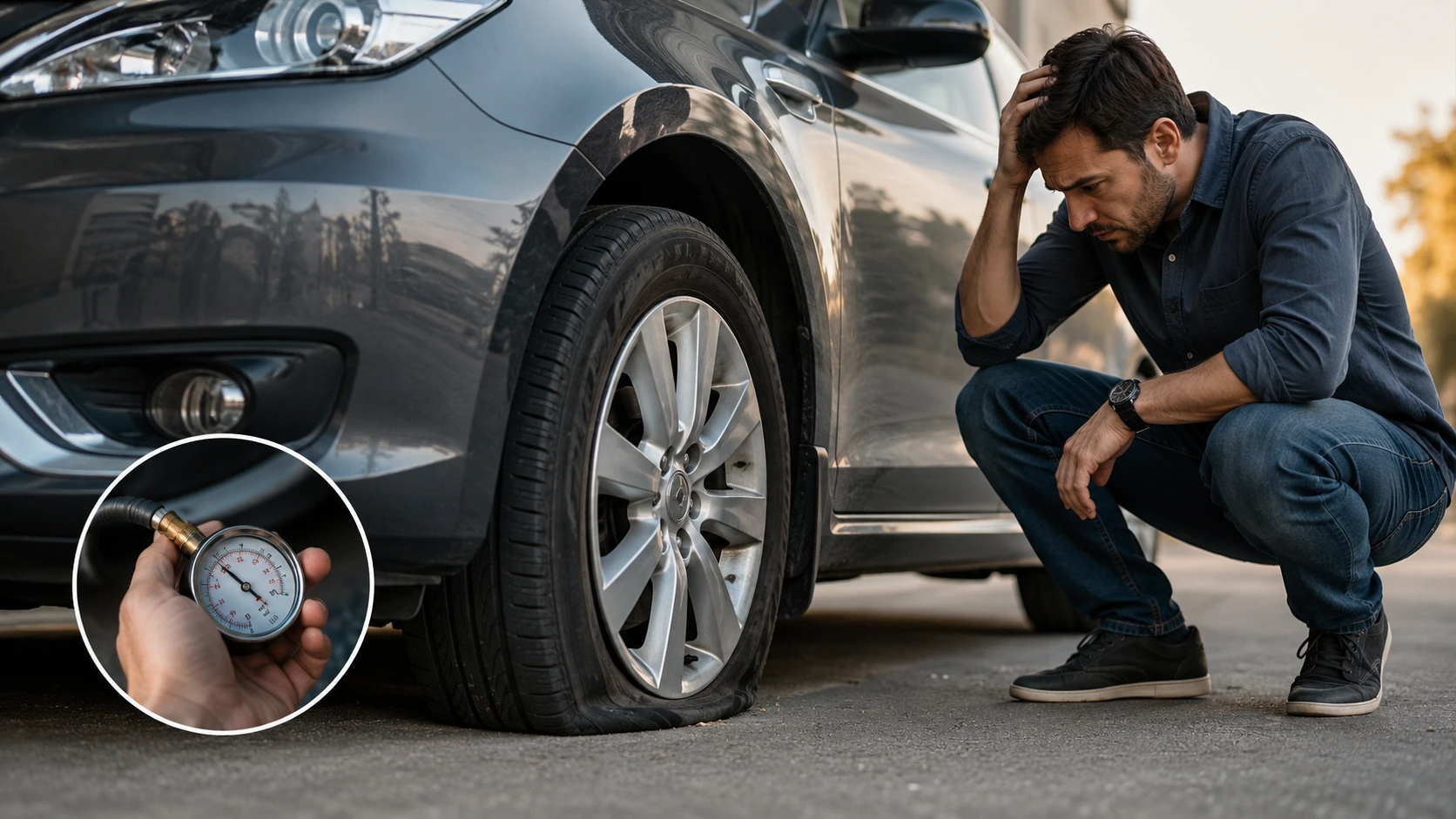
A car keep losing tyre pressure situation is frustrating and surprisingly common in Dubai. You pump the tyre up. It reads correct. Two days later — or sometimes two weeks later — the TPMS warning light is back.
A car keep losing tyre pressure situation always means there is a leak somewhere. That leak is either in the tyre itself, in the valve, at the rim, or from a TPMS sensor fault giving a false reading. None of these fix themselves.
In Dubai, the car keep losing tyre pressure problem is amplified by heat. Pressure fluctuates significantly between a cold early morning reading and a midday reading on a hot road surface — which causes many drivers to assume there’s a leak when there isn’t, and to miss an actual slow leak by attributing it to temperature.
At Rapid Rev Garage in Al Quoz, we find the exact leak source with a water immersion test and a valve and rim inspection — before recommending any repair.
car keep losing tyre pressure — Quick Answer
A car keep losing tyre pressure because of a slow puncture from a nail or screw embedded in the tread, a leaking valve stem that has cracked or corroded, air escaping from the rim bead where the tyre seats on the wheel, a damaged TPMS sensor with a failing seal, or a tyre with a sidewall crack or impact damage. In Dubai, nail and screw punctures from Al Quoz construction sites are the most common single cause. Valve stem deterioration is the second most common — Dubai’s UV and heat crack rubber valve stems within three to four years. Understanding exactly which cause applies determines the repair — this is what makes the car keep losing tyre pressure diagnosis straightforward when done properly.
Table of Contents
- Why Dubai’s Heat Makes Tyre Pressure Harder to Read Accurately
- Slow Puncture From a Nail or Screw
- Leaking Valve Stem — A Very Common Dubai Cause
- Rim Bead Leak Where the Tyre Sits on the Wheel
- TPMS Sensor Seal Failure and False Pressure Warnings
- Sidewall Damage and Impact Cracks
- How We Find the Exact Leak Source at Rapid Rev Garage
- The Services That Fix car keep losing tyre pressure
- What Does the Repair Cost in Dubai?
- Is It Safe to Keep Driving?
- Preventing Tyre Pressure Loss in Dubai
- Why Rapid Rev Garage?
- FAQ
- Conclusion
Why Dubai’s Heat Makes Tyre Pressure Harder to Read Accurately
Before diagnosing a leak, it helps to understand how Dubai’s heat affects tyre pressure naturally.
For every 10°C change in temperature, tyre pressure changes by approximately 0.07 bar (1 PSI). On a Dubai summer day, the difference between a tyre’s pressure at 6am and at 2pm can be 0.3–0.4 bar simply from temperature change — not from any leak.
This means a tyre that reads correct at 7am might appear low at midday without losing any air. And a tyre with a genuine slow leak might appear correct in the morning after natural pressure increase from overnight cooling — hiding the leak for days before the TPMS light appears.
Always check tyre pressure when the tyre is cold — before driving or at least three hours after parking. A cold reading is the only accurate reference point for diagnosing a car keep losing tyre pressure situation.
Slow Puncture From a Nail or Screw
A nail or screw embedded in the tread is the most common cause. The object enters the tyre and plugs itself — air escapes slowly around the edges of the object rather than rushing out immediately.
This is why the driver often doesn’t notice a puncture immediately. The tyre can hold pressure for hours or even days before the TPMS light appears. By the time the light comes on, the tyre may still look inflated.
Al Quoz’s construction environment makes nail punctures particularly common. The roads surrounding active building sites carry debris that residential and highway roads don’t. A single drive through a construction-adjacent road is enough.
Tread punctures within the repairable zone — the central three-quarters of the tread — are fixed with a professional plug-and-patch repair. This is not the same as a roadside inflation plug alone. A proper repair requires removing the tyre from the rim, patching from inside, and rebalancing. Our car mechanic team inspects every nail puncture for position and angle before confirming whether repair or replacement is the correct option.
Leaking Valve Stem — A Very Common Dubai Cause
The valve stem is the small rubber or metal fitting through which you add air to the tyre. Rubber valve stems degrade from UV and heat. In Dubai’s climate, they crack and harden within three to four years.
A cracked valve stem leaks slowly — sometimes very slowly. Pressing a damp finger to the top of the valve and watching for bubbles reveals an active valve leak in seconds.
The valve core inside the stem — the small pin mechanism that holds air in — can also loosen or corrode. A loose core is easy to tighten with an inexpensive valve core tool. A corroded or cracked core needs replacing entirely.
Valve stems should be replaced every time a tyre is replaced. They cost almost nothing and prevent a car keep losing tyre pressure situation from a part most workshops ignore during a tyre fitment. Our car service packages include a valve stem inspection at every tyre pressure check.
Rim Bead Leak Where the Tyre Sits on the Wheel
The bead is the inner edge of the tyre that sits against the wheel rim. For a sealed air chamber, the bead must press evenly against the rim surface.
When the rim surface is corroded — a common issue in Dubai where alloy rims corrode at the bead seat from the inside — air escapes through the corroded area. This produces a slow, continuous leak that cannot be fixed by tyre repair alone. The rim needs to be cleaned and sealed.
Kerb strikes and pothole impacts also deform the rim at the bead area, creating a gap where air escapes. A visually minor rim impact can produce a bead leak that makes a tyre lose pressure every few days.
This type of leak is found by submerging the inflated tyre and rim assembly in water and watching for bubbles at the bead seating area. Bubbles at the bead confirm a rim-related leak rather than a tread puncture. Our roadside assistance team covers Al Quoz and nearby Dubai areas for emergency tyre help on the road.
TPMS Sensor Seal Failure and False Pressure Warnings
Modern vehicles have TPMS sensors inside each wheel — small battery-powered devices that transmit pressure readings to the dashboard. Each sensor has a small rubber grommet seal around its valve stem.
When that seal deteriorates — from age and Dubai’s heat — it leaks air around the sensor stem. This creates a slow bead-area leak that gets misdiagnosed as a rim or tyre fault.
TPMS sensors also have batteries that last five to eight years. A dead sensor battery doesn’t cause a pressure loss — but it does cause a TPMS warning light that looks exactly like a pressure warning. Before spending time looking for a leak that doesn’t exist, a TPMS scan confirms whether the warning is from actual pressure loss or from a sensor fault.
If your car keep losing tyre pressure warning appears on one specific wheel repeatedly but that tyre always reads correct pressure when you check — a failing TPMS sensor is the likely cause.
Sidewall Damage and Impact Cracks
A tyre sidewall that has been impacted — from a kerb, a pothole, or a high-speed speed bump crossing — can develop a crack or internal damage that eventually causes air loss.
Sidewall damage is not always immediately visible. A small exterior crack might have a more significant internal bruise behind it. A tyre with sidewall cracking that is also losing pressure has compromised structural integrity.
Sidewall punctures and cracks cannot be repaired — the sidewall flexes with every rotation and no repair material holds under that constant movement. A tyre with sidewall damage causing pressure loss must be replaced.
Age cracking — hairline cracks in the sidewall rubber that develop after five or more years regardless of tread depth — can also cause slow air loss in advanced cases. Any tyre showing sidewall cracking alongside a car keep losing tyre pressure symptom should be replaced. For any exterior or cosmetic repairs needed at the same visit, our car painting team handles alloy rim refinishing and bodywork at the same time.
How We Find the Exact Leak Source at Rapid Rev Garage
We don’t guess which tyre or which type of leak. We find it methodically.
TPMS scan first. A scan reads each sensor’s pressure report and battery status. A sensor with a dead battery or a fault code is identified immediately — separating a sensor fault from an actual air loss before we touch the tyre.
Valve stem check. We apply soapy water to the valve stem and valve core. Any bubbling confirms a valve leak before the tyre is removed.
Water immersion test. The tyre and rim are inflated and submerged in water. Bubbles rise from the exact leak location — tread puncture, sidewall crack, bead area, or sensor grommet. This is the most reliable method and takes all guesswork out of the diagnosis.
Rim bead area inspection. If bubbles appear at the bead, the rim is inspected for corrosion and impact damage at the seating surface. Corroded areas are cleaned and treated with bead sealer. Deformed areas are assessed for rim straightening.
The Services That Fix car keep losing tyre pressure
Plug-and-patch repair for tread punctures. Tyre removed, patched from the inside, refitted, and rebalanced. AED 80–150 per tyre. Only for punctures in the repairable tread zone — not near the sidewall or shoulder.
Valve stem replacement. Old valve stem removed and replaced with a new rubber or metal stem. Done whenever a tyre is removed for any reason. AED 20–60 per valve.
Valve core replacement or tightening. A loose core is tightened. A corroded core is replaced. AED 20–40 per valve.
Rim bead cleaning and sealing. Corrosion on the bead seating surface is cleaned and treated with bead sealer. AED 100–250 per rim.
TPMS sensor replacement. A faulty sensor with a deteriorated seal or dead battery is replaced with a compatible unit and programmed to the vehicle. AED 200–600 per sensor depending on the vehicle.
Tyre replacement. Required for sidewall damage, belt separation, or tyres over five years old causing chronic pressure loss. AED 250–800 per tyre depending on size and brand. Our mobile car mechanic covers Al Quoz and nearby Dubai areas for on-site tyre inflation and assessment before bringing the vehicle in for repair.
What Does the Repair Cost in Dubai?
| Service | Cost Range |
| Plug-and-patch repair | AED 80–150 |
| Valve stem replacement | AED 20–60 |
| Rim bead cleaning | AED 100–250 per rim |
| TPMS sensor replacement | AED 200–600 per sensor |
| Tyre replacement | AED 250–800 per tyre |
All costs confirmed after the water immersion test identifies the exact source.
Is It Safe to Keep Driving?
A tyre losing pressure slowly — still at 80% of recommended pressure — is driveable carefully for a short distance to a workshop. Keep speed below 80 km/h and avoid the highway.
A tyre that is visibly low or flat: do not drive on it. Driving on an underinflated tyre generates heat inside the tyre that permanently damages the internal structure. A tyre driven flat even for 500 metres often cannot be repaired and must be replaced. Call for assistance instead. Our garage near me location in Al Quoz serves drivers from Business Bay, Jumeirah, Barsha, Satwa, Downtown, and the Sheikh Zayed Road corridor.
Preventing Tyre Pressure Loss in Dubai
Check cold tyre pressure monthly. Before driving in the morning — not at a petrol station after a drive. A cold reading is the only accurate one.
Replace valve stems with every tyre change. They cost almost nothing. An old cracked valve stem on a new tyre is a slow leak waiting to appear.
Avoid construction-zone roads where possible. Nails and screws from Al Quoz building sites are the single biggest cause of tread punctures in this area. A short route change protects your tyres.
Replace tyres at five years regardless of tread. Older rubber loses its seal integrity at the bead and develops sidewall cracking. Both cause the car keep losing tyre pressure pattern that no amount of pumping fixes permanently.
Have TPMS sensors checked at every major service. A sensor with an ageing battery or deteriorating seal is caught before it causes a chronic pressure warning or actual air loss.
Why Rapid Rev Garage?
A car keep losing tyre pressure problem has a specific source on every vehicle. We find it with a TPMS scan, valve check, and water immersion test — in that order. This takes under 30 minutes and identifies exactly which tyre, which location on the tyre, and which component is leaking.
We don’t pump the tyre and send the driver away hoping it holds. We find the leak, fix the cause, rebalance where needed, and confirm the repair with a pressure check before the car leaves.
FAQ — Car Keep Losing Tyre Pressure
Here are the questions Dubai drivers ask us most about recurring pressure loss.
Why does my tyre pressure warning come on in the morning and go away after driving?
This is the temperature effect. Cold morning air means lower tyre pressure. After driving, the tyre warms and pressure rises — the warning disappears. If the reading is within 0.2 bar of the recommended pressure when cold, this is normal. If the reading is consistently 0.3 bar or more below specification when cold, there is a genuine slow leak.
I can't see any nail in my tyre — does that mean there's no puncture?
Not necessarily. A nail or screw can be embedded flush with the tread surface, invisible to a casual glance. The water immersion test reveals the exact bubble location even when the object is not visible from outside.
Can I use a tyre sealant product to fix a slow puncture?
Sealant products work temporarily for minor tread punctures. They do not work on valve leaks, bead leaks, or sidewall damage. They also coat the inside of the tyre and can damage TPMS sensors — which then require replacement. A proper plug-and-patch repair is always the better option for any puncture in the repairable zone.
My TPMS light is on but all tyres look inflated — what does that mean?
Either one tyre has a slow leak that hasn't yet made it visibly low, or a TPMS sensor has a dead battery or fault. A TPMS scan distinguishes between the two in minutes. Don't ignore a TPMS light assuming the tyres look fine.
How often should I check tyre pressure in Dubai?
Monthly as a minimum. In summer, weekly is better — heat accelerates any existing slow leak and pressure fluctuations are larger. Always check cold, before driving.
Conclusion
A car keep losing tyre pressure in Dubai has one of five causes — a slow puncture, a leaking valve, a rim bead leak, a TPMS sensor fault, or sidewall damage. Dubai’s construction debris, UV-degraded rubber, and heat-accelerated corrosion make all five more common here than in any cooler market.
Rapid Rev Garage in Al Quoz finds the exact leak source with a systematic check — TPMS scan, valve test, and water immersion — before recommending any repair.
Rapid Rev Garage is in Al Quoz, serving Business Bay, Jumeirah, Downtown, Barsha, Satwa, and the Sheikh Zayed Road corridor. Book your appointment on WhatsApp or find us on Google Maps.
Rapid Rev Garage — car keep losing tyre pressure | Al Quoz, Dubai